




 View Count:32
 Date:2026-09-21
Sourcing an anti-mould agent for your plant: how do you compare two quotes without getting the cheaper one wrong? Price per kilogram tells you nothing; the right comparison is active content times dosage per unit. Convert iHeir-TQ at 2-3% of system weight, iHeir-JS117 at 0.5-1.0% of part weight, iHeir-BJ at 2-3% owf, then stack minimum order quantity, lead time and batch documents on top. This article covers the conversion examples, the four qualification documents and the sampling chain.
1. The comparison: from price per kilogram to cost per unit
Put two quotations side by side and read three numbers before the totals: active content, the recommended dosage band, and pack size. The arithmetic is plain: anti-mould cost per tonne equals unit price times dosage. Take our own range as the worked example. iHeir-TQ coating mould inhibitor doses at 2-3% of system weight, so a tonne of coating carries 20-30 kg; a low-content rival dosing at 4% is not automatically cheaper even at a 20% lower unit price. Plastics widen the gap: iHeir-JS117 doses at 0.5-1.0% of part weight, only 5-10 kg per tonne of product, so a competitor dosing at 2% needs to be half the price just to break even. Textiles run on owf: iHeir-BJ goes into the pad bath at 2-3% owf relative to dry fabric weight, so 100 kg of cloth takes 2-3 kg of stock solution.
| System | Product | Dosage | Per tonne | Protection and shelf life |
|---|---|---|---|---|
| Coatings / water-based | iHeir-TQ | 2-3% of system weight | 20-30 kg | Wall adhesion 5-10 years; shelf life 1 year+ |
| Plastics | iHeir-JS117 | 0.5-1.0% of part weight | 5-10 kg | Non-releasing, lasts with the part |
| Textiles | iHeir-BJ | 2-3% owf | 2-3 kg per 100 kg cloth | 2% holds 1 year+, 3% holds 2-3 years+ |
Ask for shelf life while you compare: iHeir-JS keeps one year, iHeir-YQ three or more, BJ stock solution one year; a slow-turning plant that buys a short-dated agent is buying its own write-off.

2. Qualification: four documents, none optional
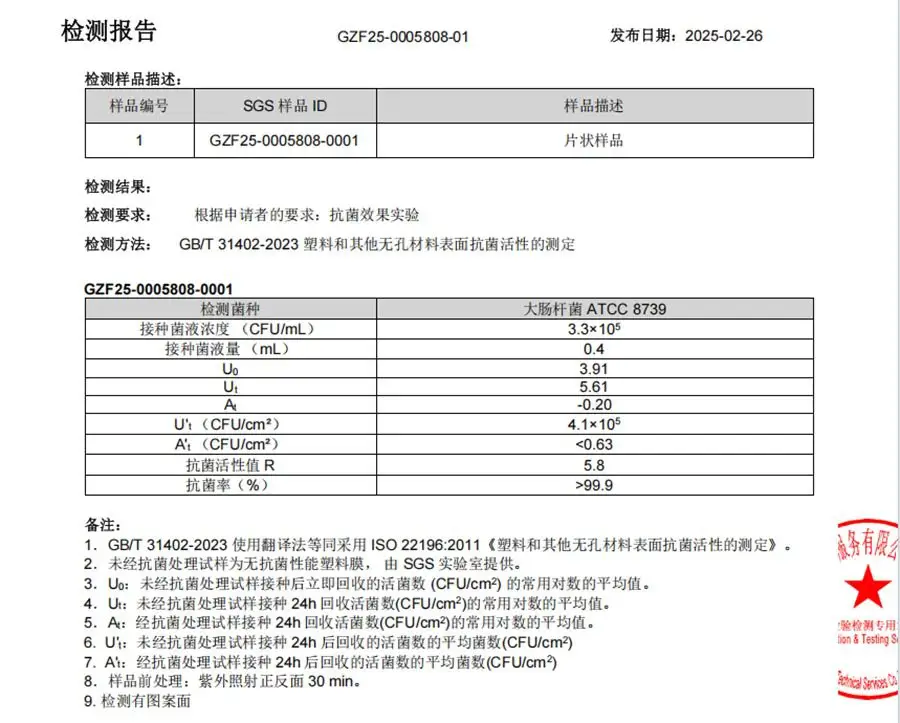
A good price with an incomplete file is a filter-out. Document one, composition and MSDS: active class, concentration, toxicology, plus the handling constraints that belong on the TDS, such as the rule that iHeir-G must never be used above pH 8; an MSDS that does not match the goods is an automatic rejection. Document two, third-party test reports: check the method and standard number, antibacterial activity on plastics to GB/T 31402-2023 (equivalent to ISO 22196), mould resistance to ASTM G21 or GB/T 1741, and match the report batch number to the sample batch; template or expired reports count as no report. Document three, a written compatibility note: send your system parameters, water content, pH, processing temperature, and require a written answer with the recommended dosage and addition point; verbal promises do not count. Document four, references from the same substrate and process: at least one production-scale case, better if the reference customer is contactable.
A practical rule for reading reports: method, organisms, values, batch number, four elements or the report is void. A report that quotes “99.9% antibacterial rate” without naming the method cannot be reproduced; one that names the method but describes the sample vaguely, “sample 1” with no material or treatment process, expires with the next lot. Whether the supplier will run a custom report against your system is also the fastest way to tell a factory from a trader: a trader can only resell an existing report, a factory can submit per-batch samples for testing.
3. Sampling: from sample to first lot in four steps
Run samples only after the four documents pass, in this order. First, dose the lab batch exactly at the label dosage: coatings at the grinding or let-down stage, plastics blended with the resin at the mixing stage, textiles through a pad bath, because dosing in the wrong position voids every data point that follows. Second, screen on site: the bromophenol-blue water test confirms the antibacterial layer in two minutes, and the iHeir instant mould test pen reads solid materials in ten, which eliminates most losing options without waiting for a third-party round each time. Third, third-party confirmation: once the lab batch passes, send it for a report against the target standard, and let the report travel with the batch. Fourth, first-lot inspection: on arrival, match the batch numbers to the documents, pull samples for the key checks, active content, pH, antibacterial rate, and archive them beside the retained samples. Once this chain is running, later lots need only the matched spot check, and procurement turns from a gamble into an audit.

4. Order terms: two clauses worth writing in
Two points to fix in the contract. Pack size drives the real minimum order: iHeir-TQ comes in 25 L and 160 L, iHeir-JS117 in 25 kg drums, BJ by drum on enquiry; take the 25 kg pack for trials and negotiate drum pricing only after the process is fixed, instead of locking cash into 160 L drums on day one. Solution life constrains delivery rhythm: BJ baths should be used up promptly after make-up, so textile plants mix per order rather than holding treated bath, and the supplier’s stocking must keep pace with the production schedule. Write the lead time into the contract with a batch-document list, COA, batch numbers, test reports, and hold any lot short one document as provisional receipt. Tie the payment tail to verification: the balance releases after the first-lot retest passes, which is standard practice, and a serious supplier will not refuse it.
5. FAQ
Q: The supplier shares a client list but no case detail. What then?
Two checks: whether the test reports carry a traceable laboratory and batch numbers, and whether they will return a written dosage plan against your system parameters. A supplier that writes the plan is worth more than a long client list.
Q: Lab batch passed, production underperforms. Why?
Nine times out of ten it is position and shear: the lab stirs thoroughly while the line under-mixes or doses late, leaving dispersion patchy. Copy the lab addition point onto the line exactly and verify the mixing time.
Q: How often should we review the supplier?
Per-lot COA and spot checks cover routine supply; ask for a dosage review whenever the raw-material lot changes, the rainy season raises the microbial load, or the line reformulates.
Q: How do we start the first order?
Send the system parameters, substrate, solids content, pH, processing temperature and target protection period, and we return the selection, dosage band and addition point; sample first, then start on the smallest pack. Contact us.