




 View Count:26
 Date:2026-09-21
How do you stop wicker mould on export baskets? Willow shoots drink water, and one container opened at port with white mould on the weave means a rejected batch plus rework and freight bills that outweigh the goods. Dip by material: loose fibres like willow and straw go through iHeir-FT anti-mildew powder at 1:200 to water until parts gain 10-15% weight, and iHeir-D anti-mould paper at 0.1-0.2 g per sheet protects the carton in transit. This article covers the dipping, drying and packing steps with the dosing that works on the line.
1. Sort by material first: the loose and the dense need different strengths
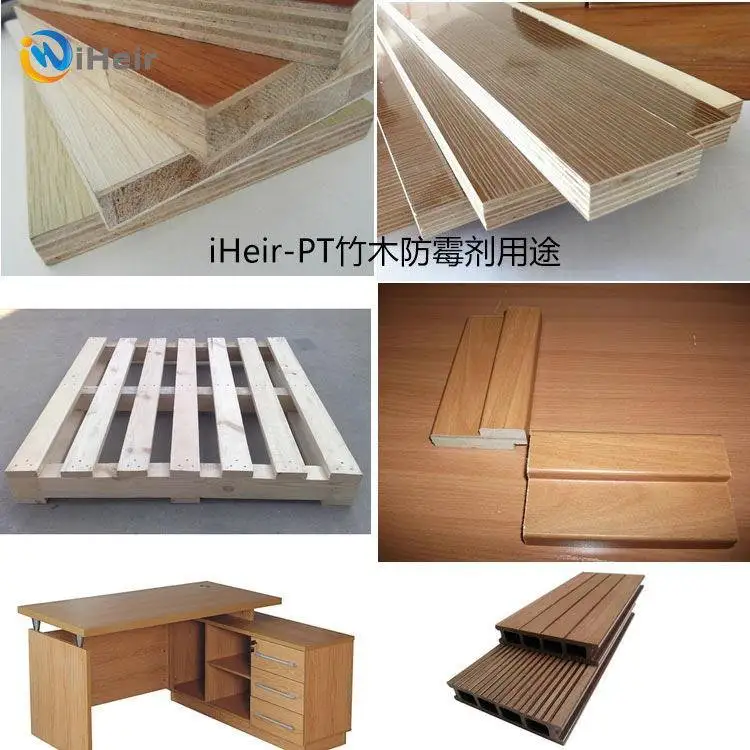
Most export baskets from a wicker plant are not pure willow. Storage baskets and flower baskets mix willow shoots with straw weave, and often carry a wooden base or handle. The three materials take up treatment liquid at very different rates. Loose straw and willow fibre has open gaps, so a mild bath works: iHeir-FT at 1:200 to water soaks through fully. Dense bamboo and wood parts need 1:100, twice the concentration, to take up enough active in the same dip time. For mixed construction, dose for the worst part: any basket with a wooden base or handle runs at the dense-material strength, because a skipped base is where the mould starts. Chopsticks for food contact run at 1:500 on a separate line; never copy that number onto storage ware.
2. The dipping step: mix the bath and read the weight gain
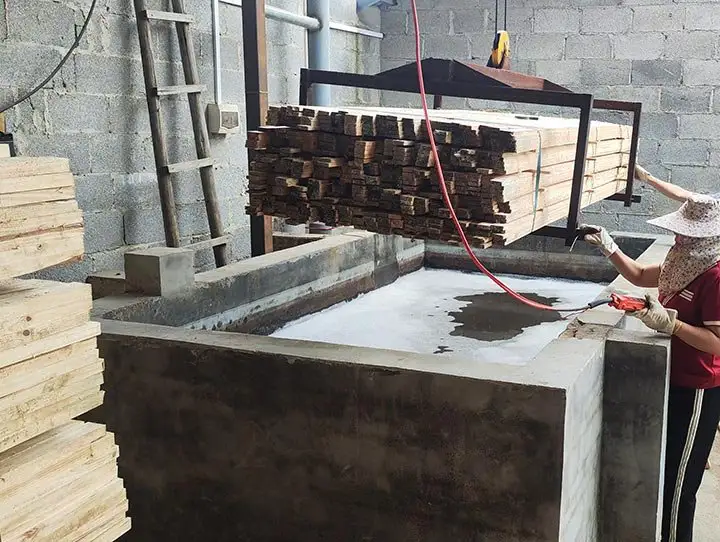
Treat weight gain as the acceptance number, not minutes in the tank. Mix iHeir-FT with water at 45°C or warmer so the powder dissolves fully and the bath stays even. Submerge the pieces completely and lift them at 10-15% weight gain. Under that, the fibres have not taken enough active and the protection fades early; far over it, drying drags and the surface may show powder marks. Baskets dipped with their packing ties on should be turned once or twice so the inner shoots drink as well as the outer layer.
For heavier builds with wooden frames, or when the buyer wants a longer protection window, switch to iHeir-JP bamboo and wood anti-mildew agent: one part to fifteen parts water, dipped to 10-20% weight gain, then drained. It bonds to the substrate at room temperature and survives heat afterwards; the stock keeps one year below 60°C, the drum three. Touch-ups can be sprayed at 1:10-20 with water or alcohol, and a mixed bath should be used within a month rather than topped onto a new order.
3. Drying and in-house checks
Lifted baskets drip first, then air-dry or sun-dry. The bar for warehousing is simple: no damp core when you touch the weave. Baskets crated while damp lose their protection inside the warehouse, and in a rainy season a damp core grows mould again within days. Run two quick checks on each dried batch. The simple one pairs a treated sample with an untreated one in the same closed packaging in a dark, humid corner for 7-15 days. For a report, send pieces to the dish: 28°C and 90% RH for 3-7 days gives a clear answer. Light-coloured willow shows grey spots early, so a verified batch ships with confidence.
Seasonal discipline matters too. Willow that arrives in the rainy season carries a higher mould background, so mix the bath at the top of the range and top up with fresh agent every shift instead of just adding water. Reorders that return after a season change get a spot check before dispatch, whatever the previous batch record says.
4. Packing and the container: paper for the box, desiccant for the hold
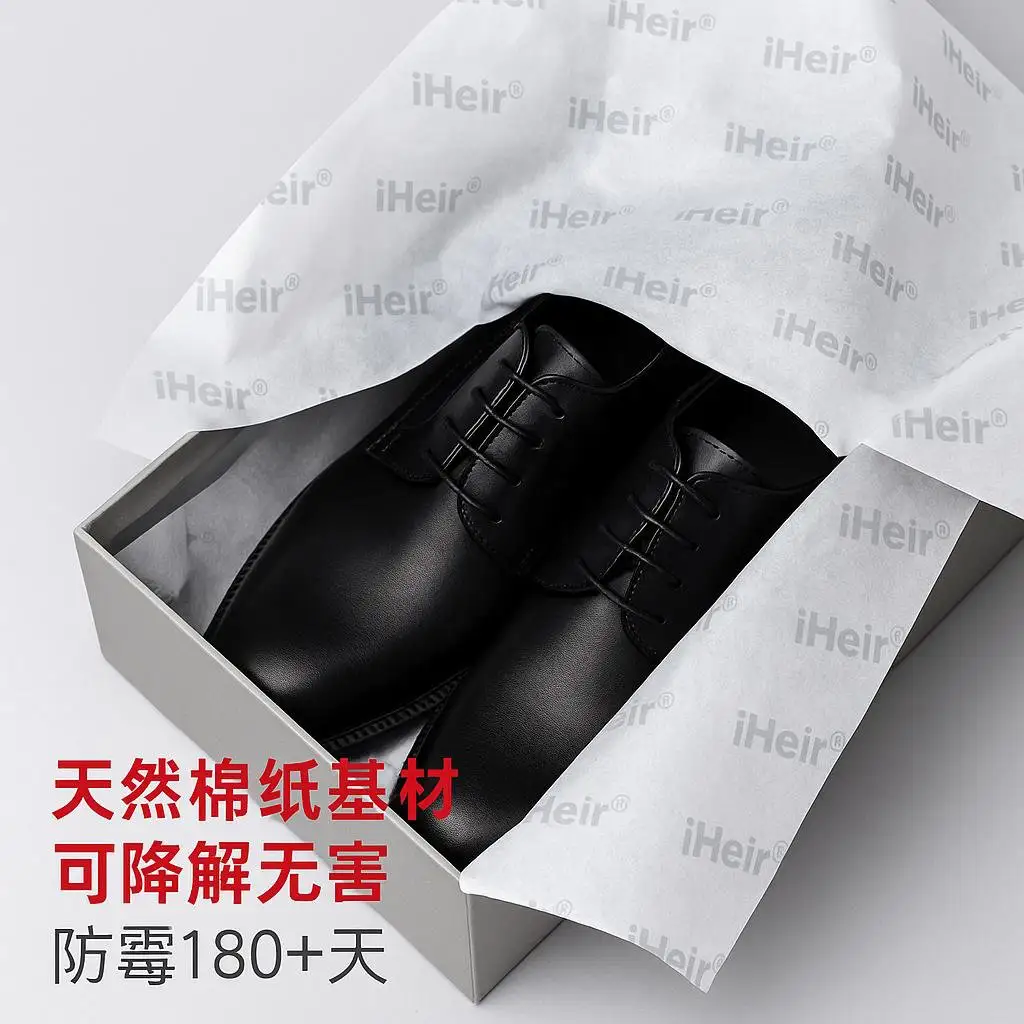
Wicker shapes leave large air gaps in a carton, and spores in the box air will still settle during a sea voyage. Line the carton with iHeir-D gas-phase anti-mould paper: the paper carries the active in a printed ink layer, which releases inside the closed box and protects corners no sheet touches, at 0.1-0.2 g of active per sheet. Poor dyes can bleed, so dyed wicker runs a compatibility trial first: three times the normal quantity in a closed box with a sample for several days, then check for colour change and corrosion on metal fittings. Pass, and the paper goes on every carton.
For full-container loads add hold-level protection: moisture comes up through the floor and container walls, more than carton-level paper can carry. Line the hold with CH-10 drying and deodorizing packs, a montmorillonite mineral desiccant, absorb over 200% of their own weight and hold a container stable for 270-300 days, so the boxes land dry. Bath, paper, desiccant: three layers together are what carry a natural-fibre product through more than a month at sea.
5. Dosing at a glance
The four products and their dosage numbers, ready to copy when you mix the bath or pack the boxes:
| Product | Step | Rate | Notes |
|---|---|---|---|
| iHeir-FT anti-mildew powder | Dipping, loose straw and willow | 1:200 to water, 10-15% weight gain | Dense bamboo-wood parts 1:100; mix at 45°C+; DMF-free, EU compliant |
| iHeir-JP anti-mildew agent | Dipping, heavy and wood-framed pieces | 1:15 to water, 10-20% weight gain | Spray touch-ups 1:10-20; use mixed bath within a month |
| iHeir-D anti-mould paper | Carton packing | 0.1-0.2 g active per sheet | Compatibility trial at 3x dose for dyed pieces |
| CH-10 drying pack | Container hold | Absorbs 200%+ of its weight | Holds 270-300 days, boxes land dry |
Weight gain is the number that runs the whole chain: weigh dipped pieces before drying, check moisture after, and a batch that sits inside both windows ships steady. New moulds, a new willow supplier and a season change are the three moments to re-run a small trial at these rates.
6. FAQ
Q: If the willow is sun-dried, is dipping still needed?
Yes. Drying fixes today’s moisture only. On the water the pieces re-absorb, and untreated shoots that pick up that moisture are food for mould. The dip protects the whole transit and shelf period, not one warehouse day.
Q: How long does a 1:200 bath take on wicker?
Read weight gain, not the clock. Loose fibre drinks fast and often reaches 10-15% in ten-odd minutes, but shoot thickness and tie tension change the speed. Weigh one drained piece before lifting the batch: inside the window, lift the whole tank.
Q: Will the paper stain dyed wicker?
Poor dyes can bleed, which is why the compatibility trial comes first: three times the normal dose, sealed in a box with a sample for several days, then check colour and metal fittings. Pieces that pass run the paper on every carton; pieces that do not fall back to a drying pack in the box.
Q: How do samples and orders connect?
FT, JP, iHeir-D and CH-10 all ship as samples. Send the material mix, unit weight and target storage period, and we come back with the bath strength and packing plan; after your trial passes, order by the drum. Welcome to contact us.