




 View Count:51
 Date:2026-09-02
Mold on wood instruments (guitar, violin, guzheng) – what to do? Guitars with rosewood, mahogany or spruce panels can grow black or green mold on the soundboard, fingerboard or inside the sound hole when shipped overseas or stored in southern rainy seasons. Severe cases corrode strings and affect tone, leading to batch returns. This article explains why wood instruments mold, the export anti-mold steps, and how to choose anti-mold agents for makers, retailers and traders.
1. Why Do Wood Instruments Mold Easily?
- Wood feeds mold: spruce/cedar tops are porous, rosewood/mahogany backs contain oils and sugars – natural organics are mold’s food;
- Poor airflow inside: the closed sound box traps strings, bridge and tailpiece – with internal humidity above 65%, mold grows on braces in 1-2 weeks;
- Hot humid shipping: container day temperatures 60-70℃, RH 80%-95% – a “sauna” delivered overseas;
- User environment: southern rainy season, unventilated music stores, putting the guitar straight into its case after practice – case humidity spikes and the instrument molds within six months.
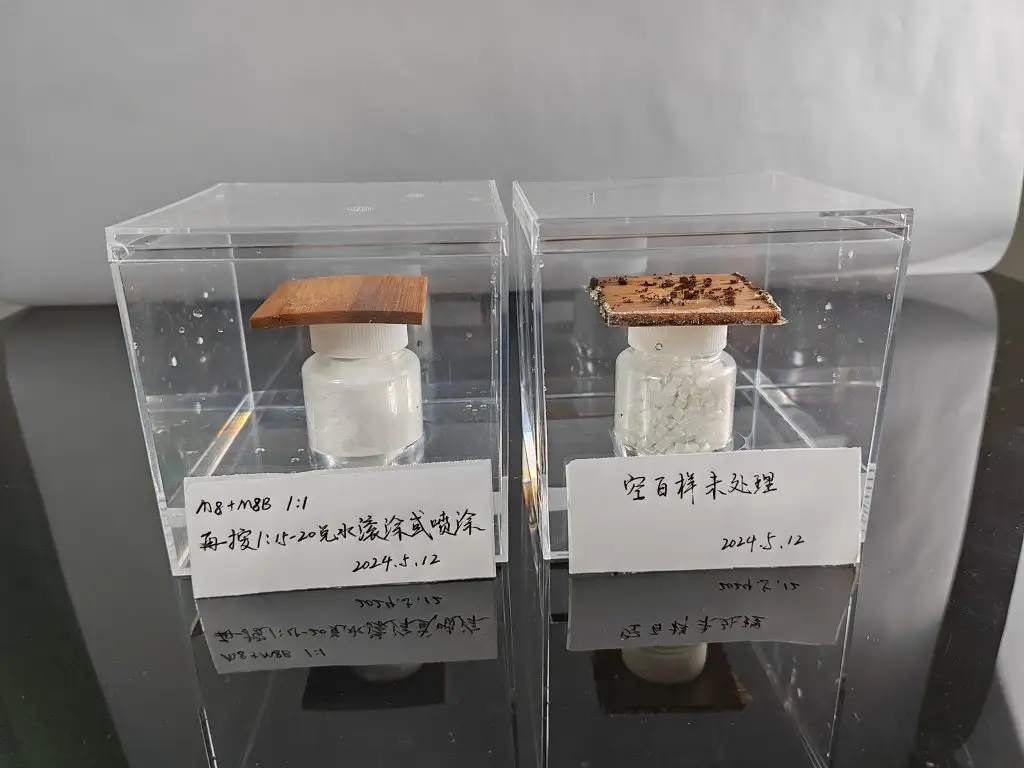
▲ Guitar wood with anti-mold treatment (left) vs control (right) – M8+M8B spray, no mold
2. Three Export Steps (Maker Implementation)
- Wood moisture ≤12%: the panel moisture before sealing must meet the spec (6%-8% in the north, 8%-12% in the south) – every 1% over the spec raises mold risk by 20%. Wet wood absorbs moisture in transit, causing panel mold and finish bubbling;
- Spray bamboo/wood anti-mold agent: before the painting step, use iHeir-JP (soak type) or iHeir-YQ paint anti-mold as the anti-mold layer. iHeir-JP: dilute the 25kg drum 4-6x with water, soak wood for 30 minutes, drain and cure at 80℃. iHeir-YQ: add 1%-2% directly into the paint, spray on the top and back/sides – the active embeds in the film and lasts 3-5 years without mold;
- Sachet in case: one Power Pak per guitar, placed by the sound hole or in the case slot – vapor-phase active slowly releases and covers the whole case;
- Desiccant in master carton: 50-100g silica gel per guitar master carton to absorb box humidity;
- Pre-shipment anti-mold test: sample 5% of finished units for challenge test (GB/T 24346 or AATCC 30), only grade 0-1 may ship.
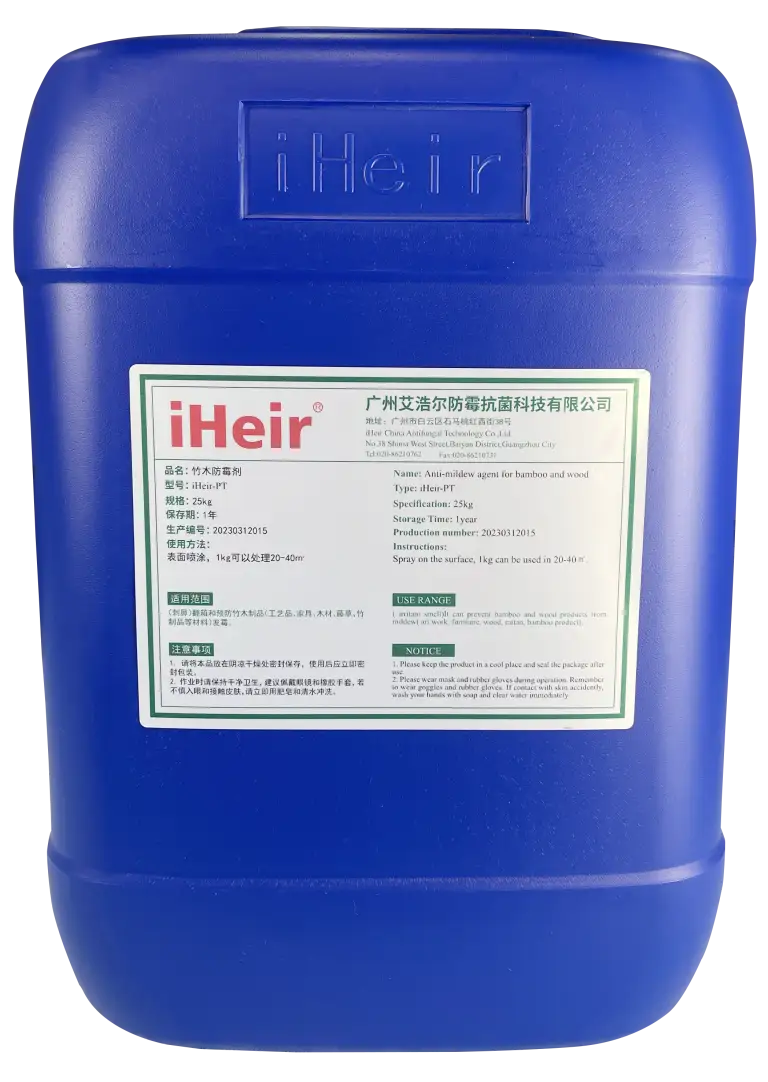
▲ iHeir-PT spray-type bamboo wood anti-mold agent (1kg covers 20-40㎡)
3. What Should Each Role Do?
- Instrument factories: insert a “spray anti-mold” station between sanding and painting in the process flow and keep anti-mold reports for each batch;
- Music stores/dealers: keep warehouse RH ≤60%, place sachets in display cases, check quarterly;
- End users: wipe the guitar with a dry cloth after practice and leave the sound hole open 10-15 minutes before closing the case; southern users should have a dehumidifier.
A Guangdong guitar factory shipped a batch of rosewood guitars to Hamburg, Germany last year. After 35 days at sea, 47 of 200 guitars had panel mold and green mold inside the sound hole, leading to a EUR 120,000 claim. After switching to “moisture below 11% + iHeir-JP soak 30 min + 1.5% iHeir-YQ in paint + Power Pak in case”, the same product this year arrived with mold rates below 0.5%. For general bamboo/wood care, see Bamboo Wood Moldy Care in Humid Environments.
4. How to Treat Moldy Panels/Fingerboards?
Do not throw away a moldy guitar. Follow “remove mold first, then prevent”:
- Wipe with iHeir-CM mold remover: wear gloves, use a soft cloth soaked in remover to wipe the mold – light mold wipes off in 1-2 passes; heavy mold (thick layer, musty smell) spray, wait 5 minutes, then wipe;
- Inspect the finish: check for bubbling or peeling after mold removal – light mold leaves the finish intact and you can apply anti-mold directly; heavy damage requires re-sanding and repainting;
- Re-spray anti-mold: after drying, spray the top and sides with bamboo wood anti-mold agent (1:4 with water) and let it dry before closing the case.

▲ Wood instrument anti-mold spray application
5. FAQ
Q1: Will anti-mold spray affect the guitar tone?
A: A music-grade agent (iHeir-JP/iHeir-YQ) at low dosage (<5g/㎡) does not block wood pores and does not muffle resonance; cheap agents block pores and damp tone – always pick music-grade.
Q2: Is it safe to put a sachet in the case?
A: Power Pak releases vapor-phase active (like camphor balls) – safe for metal, paint and plastic strings, no corrosion.
Q3: Southern users with high humidity?
A: A dehumidifier in the music room/bedroom keeping RH at 50%-60% is the “hard target” for guitar care.
Conclusion
Guitar anti-mold in three phrases: keep wood moisture ≤12%, spray anti-mold agent or add it to the paint, place a sachet in the case. For instrument solutions, contact us or browse anti-mold products; related: Wall Mold Causes.