




 View Count:24
 Date:2026-11-07
Can you prevent mould on pencil cases? Yes, but the mould does not start on the print, it starts in the size the canvas never gave up, and starch in that size is food for mould. The routine is iHeir-BJ textile mildew inhibitor at 2%-3% o.w.f. in the finishing bath after desizing, plus one iHeir-D vapour sheet behind the printed card at 0.1-0.2g of active matter per sheet. This article covers bath recipe, wet pickup and carton practice.
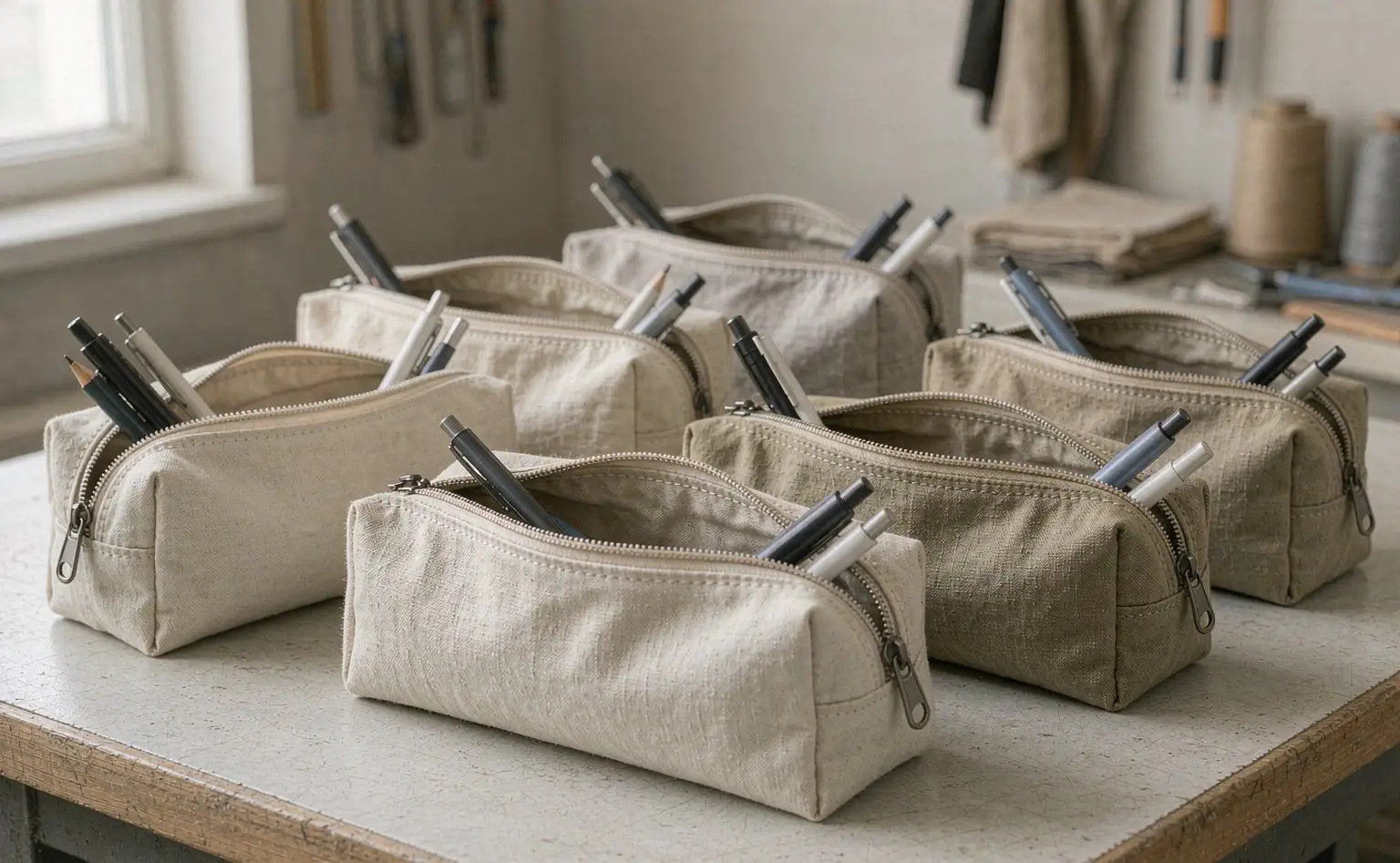
1. Mould starts in the canvas size, and print does not stop it
Take a pencil case apart: canvas or poly-cotton, the print, a lining, a zip and its tape, binding tape, a printed card, a poly bag, an outer carton. Zip teeth and card do not absorb water; what fails is the canvas, the binding and the zip tape, and the card and the carton.
Size is food. Canvas is sized before weaving and the size is mostly starch. Desize it incompletely and sugar stays in the weave, so the first damp week brings spots that follow the weave rather than sitting on top; they do not wipe off and they leave a mark after washing.
Heavier cloth is harder to desize. Pencil cases commonly use 12oz or 16oz canvas, and a heavier cloth carries more size, so bath temperature, dwell time and auxiliaries all move with it. Run thin and heavy cloth on the same line and the heavy one is always under-desized.
The card is the second door. The card is pressed against the case, coated board takes water fast and reaches an equilibrium moisture content above 12% in a wet season, and that water goes straight into the cloth. With no air gap between card and fabric, it stays there.
2. Canvas and card take separate counts
The table lines up the cloth, the zip tape, the card and the carton. Fabric is counted in o.w.f., paper in sheets of active matter, and the two are not the same unit.
| Part | Material | Product and level | Stage | Control point |
|---|---|---|---|---|
| Canvas, lining | 12-16oz canvas, poly-cotton | iHeir-BJ 2%-3% o.w.f. | Finishing bath after desizing | 21-50℃, pH 4.5-8.5 |
| Binding, zip tape | Polyester | iHeir-BJ in the same bath | Shared bath | Wet pickup held at 70% |
| Printed card | Coated board | iHeir-D 0.1-0.2g per sheet | Carding, bagging | On the back of the card |
| Outer carton | Corrugated | iHeir-D one sheet on the wall | Packing | Only works in a closed box |
One boundary. The BJ in the fabric handles the canvas and the seams, the vapour sheet handles the card and the packing space. Do the cloth only and the card and carton still mould; do the paper only and the spots inside the weave stay.
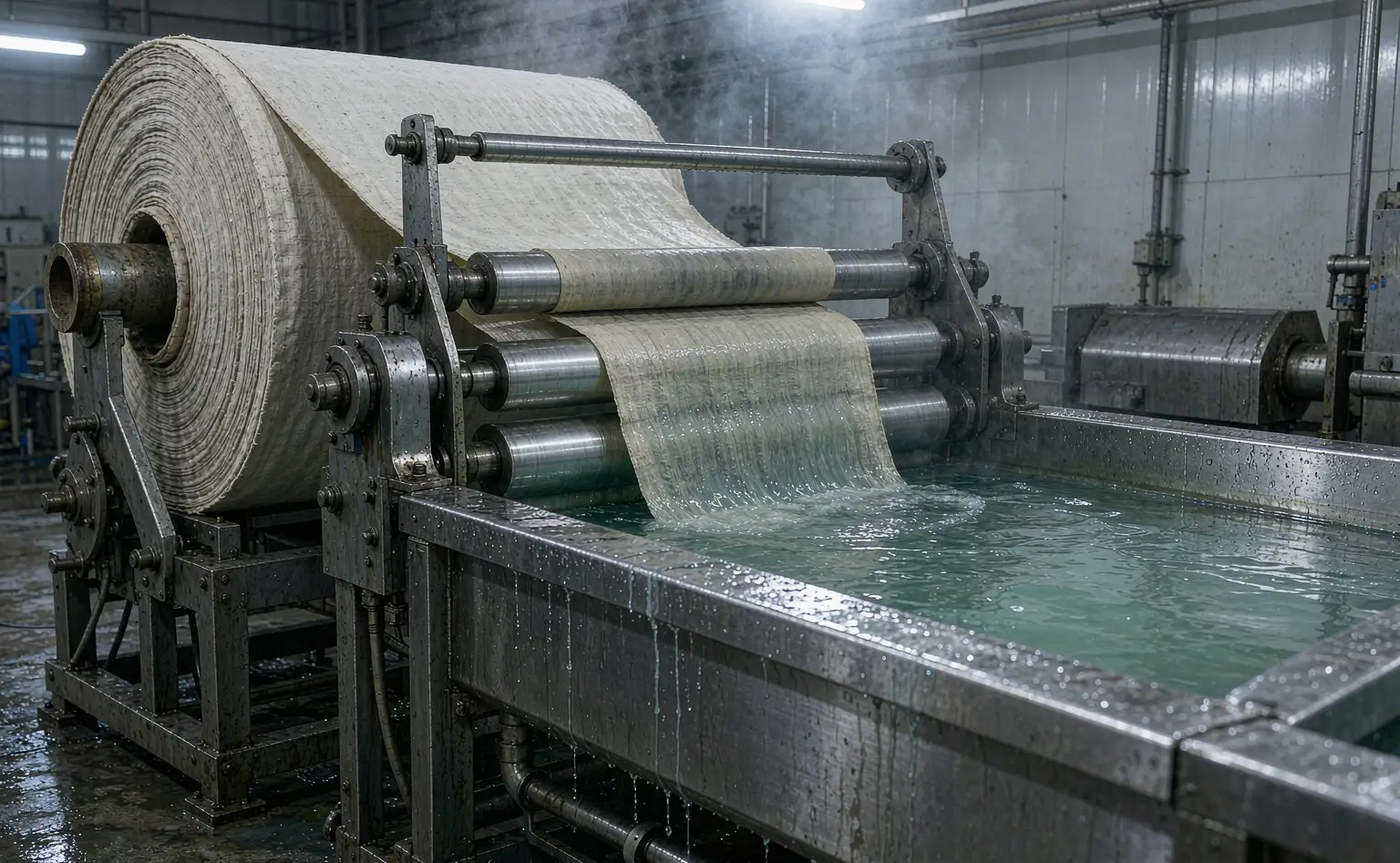
3. Through the bath after desizing, at 2%-3%
Desize properly first. Starch size comes off with an enzyme route at the temperature and dwell the recipe calls for, and the cloth is checked for desizing rate and absorbency before it goes near the finishing bath. Dosing an anti-mould agent onto cloth that still holds size is putting the additive on top of the food.
Level and bath conditions. Pad at 2%-3% o.w.f.: 2% gives roughly a year of protection, 3% reaches 2-3 years, so fast domestic turnover takes 2% and a container that sits at sea takes 3%. Hold the bath at 21-50℃ and pH 4.5-8.5, ideally 6, and use softened water because calcium and magnesium in hard water react with the additive.
How to add it. Pre-mix with 9-13 times its own volume of water and add slowly, never neat. Hold wet pickup at 70% and keep mangle pressure and line speed steady, because a 5% drift in pickup is a 5% drift in dose.
Check the ionic side. Canvas is usually softened, and many softeners are anionic, which cancels BJ in the same bath. Confirm the ionic type before the run, split the baths, or switch to a non-ionic softener.
4. A vapour sheet behind the card, and one per how many
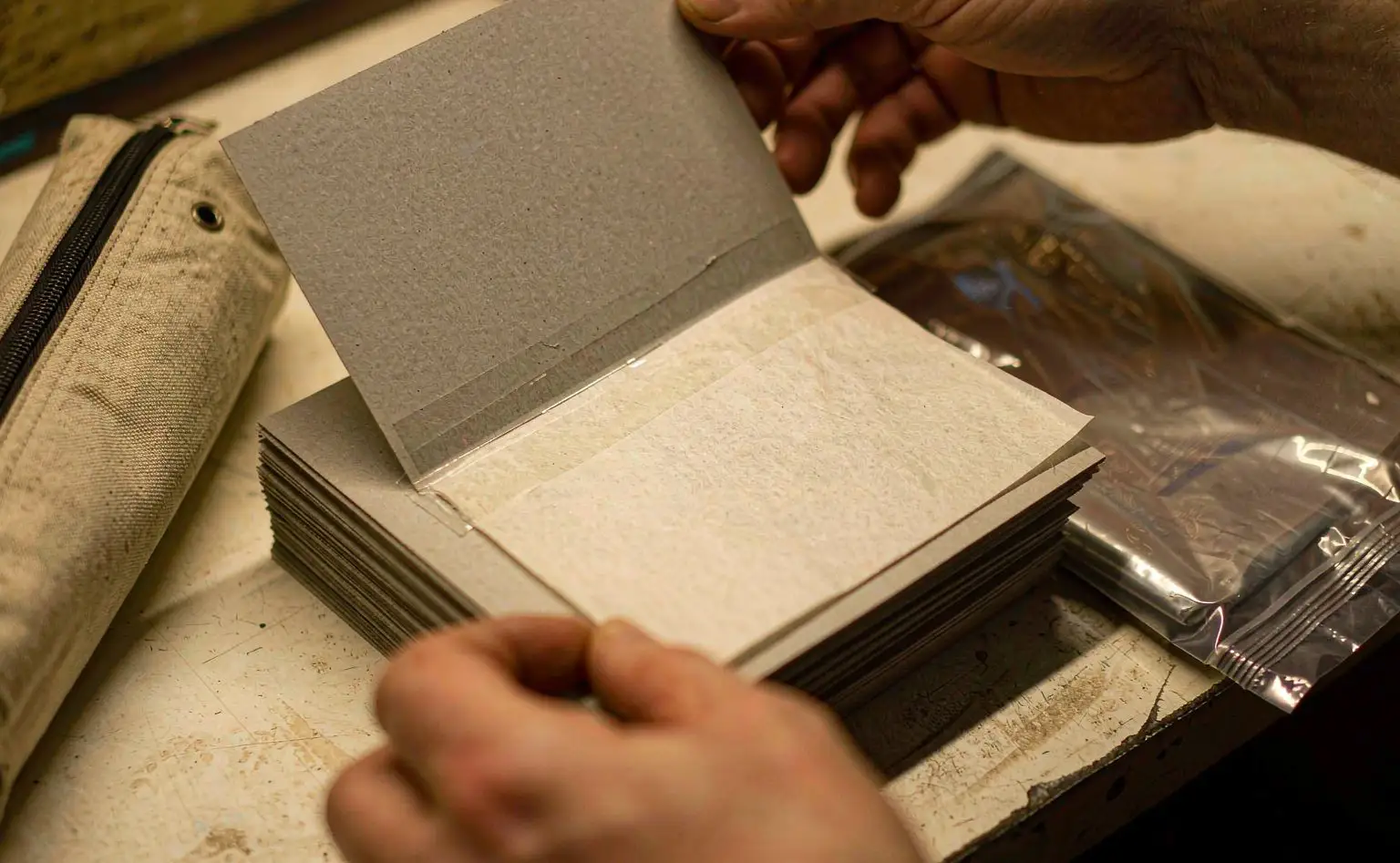
The card is the closest packing item to the case, so when the case is carded, fix one iHeir-D vapour sheet on the back of the card at 0.1-0.2g of active matter per sheet. It works by holding a concentration in a closed volume, so it only starts once the poly bag is on and the carton is sealed.
Which face. The back, the unprinted side, never over the artwork, and a thin sheet of paper between the vapour sheet and the case so pale canvas does not take a mark from the sheet itself.
How many per carton. For a thirty-piece carton, one per card plus one on the carton wall; more for a large carton, many layers or a long sea route. Leave the poly bags micro-perforated rather than vacuumed, because a sealed bag traps its own moisture and the paper cannot hold it back.
Trial compatibility first. Seal three times the normal dose with a finished case, mist a little water, separate with paper, and inspect after a few days for yellowing canvas, a dulled print or a darkened zip. iHeir-D carries 70%±5 solids and can corrode poor-quality metal when damp, so metal pullers get the trial.
5. Cartoning and storage, with regain checked first
Cases leaving the finishing bath need a full dry, and regain is measured before rolling or bagging: canvas goods go into the carton below 8%, and cloth that feels cool or slightly tacky is not dry. Bagging a damp case seals the water in.
Order of work. Case onto card, vapour sheet in, carton sealed, and no sampling after sealing; a carton that was opened is sealed again. Pallets stand 10cm off the floor and off the wall.
Store humidity. Hold the store below 60% RH with dehumidifiers in the wet season, keep the hygrometer at mid-shelf, and run first in, first out so no pallet sits in a corner through a whole wet season.
How to verify. Grade mould resistance to GB/T 24346-2009 and hold a full carton 30 days at 30℃/85% RH before reopening. Any antimicrobial claim on the fabric goes to GB/T 20944.3 or AATCC 30 at the laboratory the buyer names. Shared-bath settings for canvas goods follow the same figures.
6. Questions on canvas, print and paper
Q: Does a canvas pencil case always need the anti-mould step?
Export lots, sea freight and long storage do. Fast domestic turnover that reaches the store in a fortnight can rely on card and carton control, but the desizing still has to be complete.
Q: Will the agent affect the print?
Print first, finish second at the recommended dose and pH 6, and colour shift stays low; over-dosing or a hot bath makes it worse, so run a sample and compare shade and whiteness.
Q: Is one sheet per card worth the cost?
The sheet is a small quantity and lands well under the cost of the graded packing; against a rejected lot and a re-pack it is cheap.
Q: Can a mouldy case be reworked?
Light spotting is brushed off, re-finished and dried again; spots that have gone into the weave and cloth that has gone brittle are downgraded or scrapped, never mixed into a good carton.
Four points to take away: desize through, then pad iHeir-BJ at 2%-3% o.w.f. at 21-50℃ and pH 4.5-8.5 in soft water, pre-mixed with 9-13 times water, wet pickup at 70%, anionic softener split off; run the binding and zip tape through the same bath and trial metal pullers at three times the dose; fix one iHeir-D sheet on the back of each card at 0.1-0.2g, one more on the carton wall, with micro-perforated bags; grade to GB/T 24346-2009 and hold a carton 30 days at 30℃/85% RH. A kilogram of inhibitor and a pack of sheets go out for a trial, with MOQ on the iHeir-BJ product page.


