




 View Count:24
 Date:2026-11-16
How should moisture-proof mat mould be treated? An EVA or IXPE mat has a dense skin, so anything sprayed on it sits on the face and never reaches the cells. The route is 0.5%-1.5% of iHeir-FP foam antimicrobial compounded into the foam, moisture held below 0.5% before winding, and a 0.1-0.2 g iHeir-D sheet sealed in each bag. This article covers the dosing point, the moisture criterion and the sheet count.
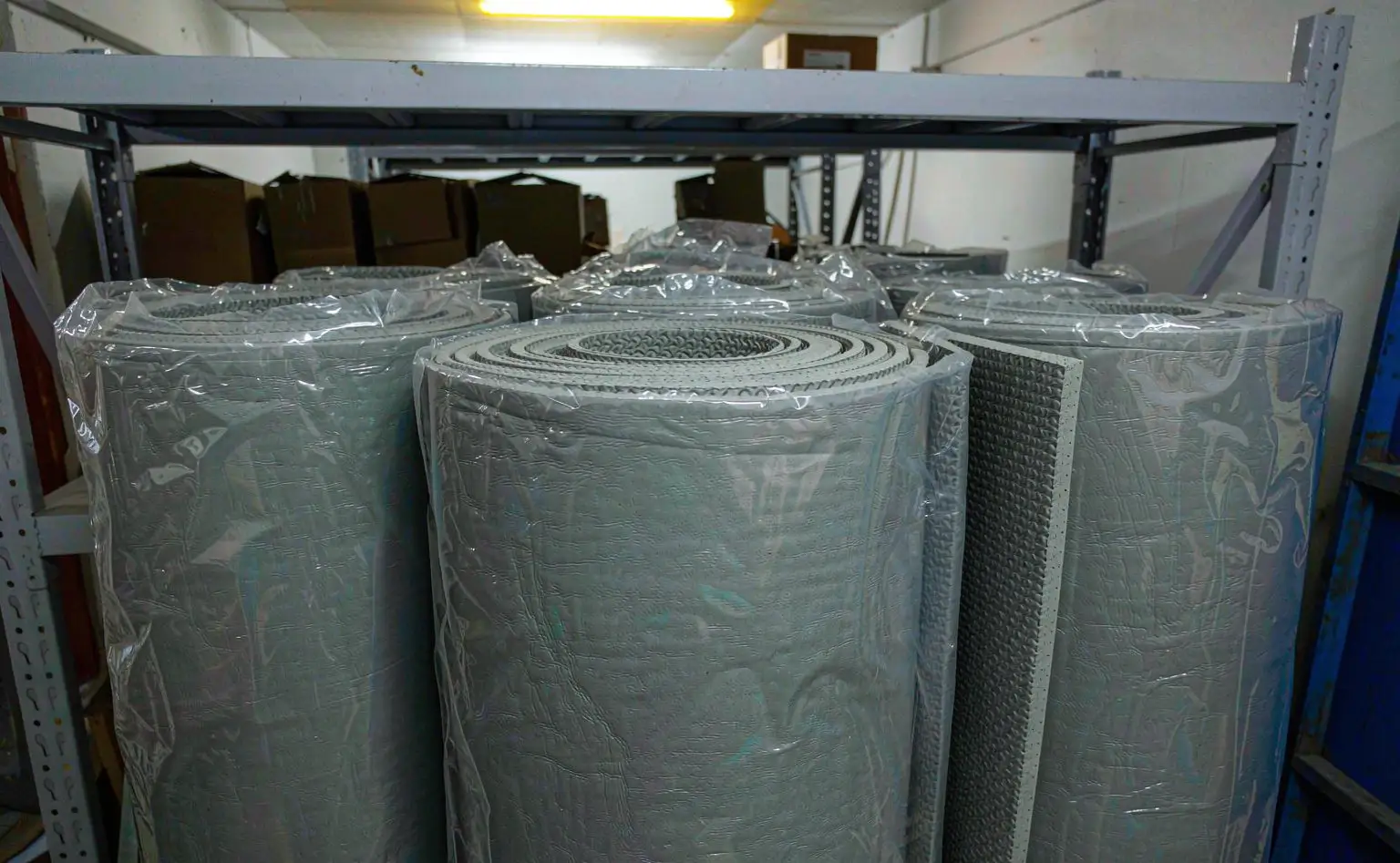
1. Where mat mould comes from: the skin, the roll core, the sealed bag
A mat is usually an EVA or IXPE foam sheet, embossed or smooth, wound into a roll and bagged, with some sizes folded flat instead.
The dense skin comes first. The face cools before the core during foaming, so it forms a tight skin with few open cells. That slows water uptake, but it also means spray and dip never reach the cells behind it, and growth starts at scratches, trimmed edges and embossed grooves where the skin is broken.
The roll core comes second, and is the usual source of a comeback. Wound while still warm and above the moisture target, the layers press together, air cannot move between them and the water is trapped in the middle. Two weeks later the centre of the roll shows spots while the outside is clean.
The sealed bag comes third. Once bagged, the humidity of the air inside and the water in the sheet stay there, and the day-night swing condenses it on the inside of the film, against the mat face.
2. How much goes into the foam: 0.5%-1.5% at the mixing stage
This is the part that decides the outcome: the antimicrobial belongs in the foam, not on the surface.
How much. 0.5%-1.5% of total foam weight. Ordinary EVA mats run 0.5%-1.0%; IXPE, high-ratio foams and long-lane or long-storage orders run 1.0%-1.5%, and thin low-gsm specs take the upper end because there is more cell surface per unit volume.
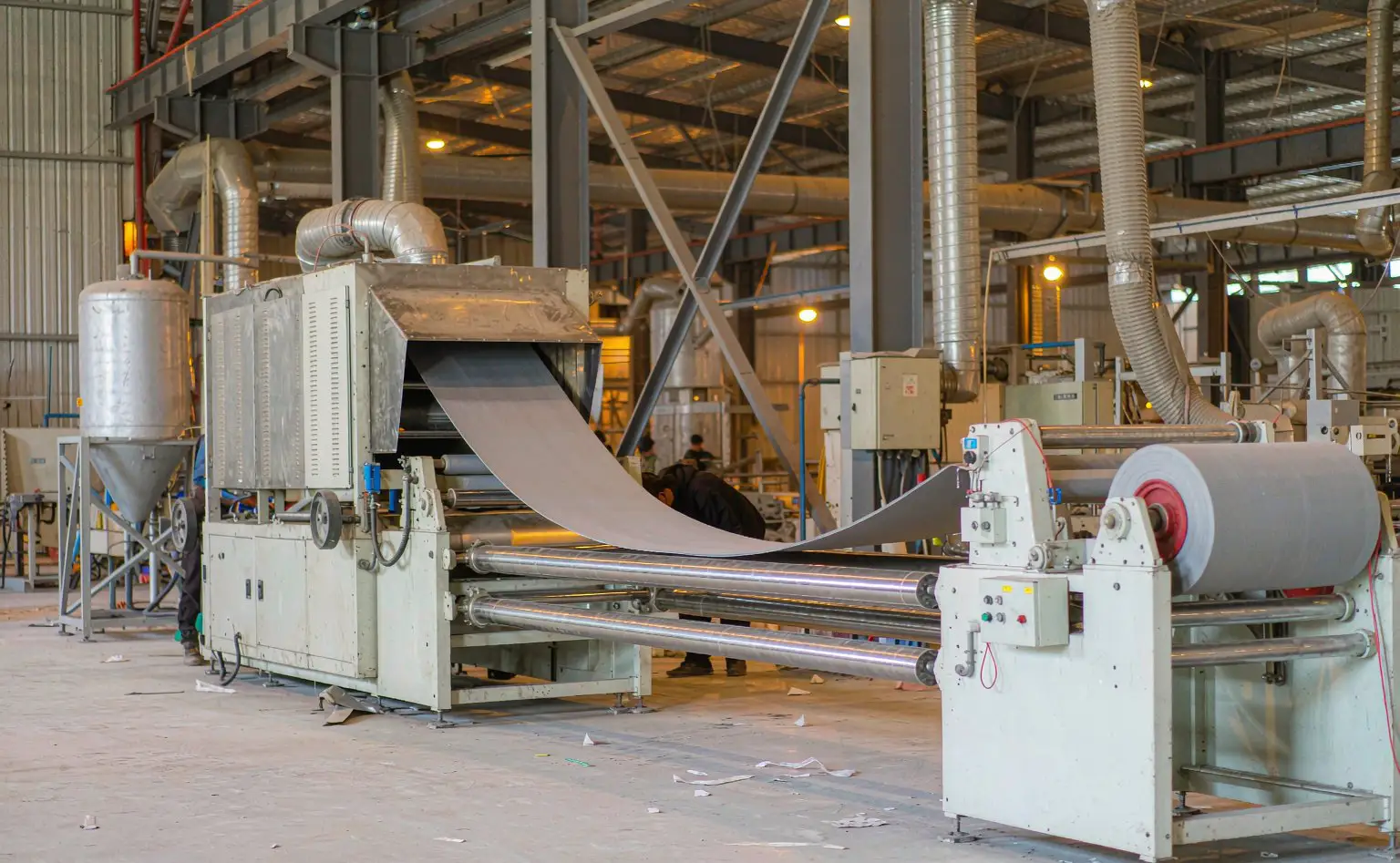
Where it goes. At the mixing stage before foaming, charged with the resin pellets, blowing agent and crosslinker into the high-speed mixer. A liquid additive is pre-mixed with a portion of the pellets or sprayed onto them and tumbled, so no puddle forms.
Process window. iHeir-FP is stable from pH 1 to 11 and stable to light and heat, so the foaming temperature does not conflict with it. Measured antimicrobial rate reaches 99.99%, and the level is set by starting at 0.5% and confirming with a test. The additive is a clear, odourless liquid, so light and natural-colour mats keep their appearance.
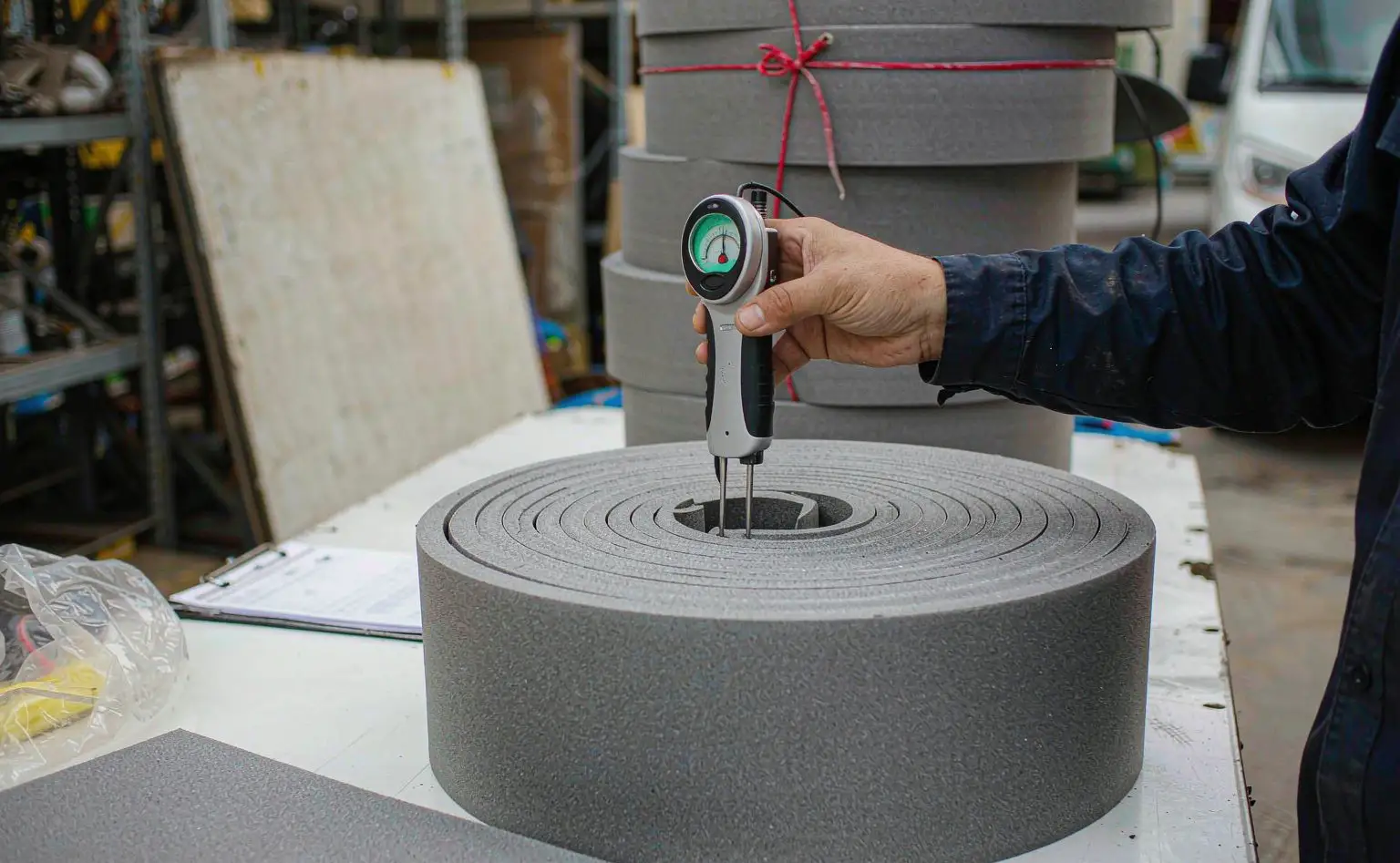
3. Check before winding: hold moisture under 0.5%
“It feels dry” is the worst test on foam, where the skin dries while the cells stay wet. The criterion has to be a number.
Where to measure. Take five readings on the face and at the trimmed edge with a portable meter, across both sides and the middle; use the average and keep drying any section above 0.8%. Let sheet coming off the cooling rollers reach shop temperature first, because a warm sheet reads low.
What line to set. Wind at below 0.5%, at 0.4% in the humid season and on long lanes to the Middle East and South East Asia. If it will not come down, extend the rest time or slow the line rather than raising the foaming temperature, which shifts density and thickness.
How to lay it out. Rest sheet single-layer on racks, never stacked or pre-rolled, with the area below 60%RH and no open buffer to the line. Leave the roll ends open until bagging so the core can breathe.
| Stage | Material | Product and level | Parameters | Control point |
|---|---|---|---|---|
| Foam mixing | EVA / IXPE pellets | iHeir-FP 0.5%-1.5% of foam weight | Stable from pH 1 to 11 | Pre-mixed with pellets, mixed before foaming |
| Rest and winding | Foam sheet | No additive, control water | Moisture at or below 0.5% (0.4% in season) | Read cool, average several points |
| Bagging | PE bag | iHeir-D 1-2 sheets (0.1-0.2 g each) | By bag volume | Outside the core, bag sealed |
| Finished store | Rolls on pallets | No additive, control humidity | Below 60%RH | Upright, no stacking, off floor and wall |
One boundary. The additive in the compound covers the cells and the sheet itself, the moisture check covers the water sealed into the bag, and the vapour sheet covers storage and shipping. Miss one and that is where it fails.
4. How many sheets per bag: by bag volume, in before sealing
Inside the bag the work is done by vapour-phase paper, counted on volume and closed time, not on the number of rolls.
How many. Each sheet carries 0.1-0.2 g of active. A standard 180×60 cm roll in film is about 0.06 m³ and takes one or two; a large folded pack takes two, and humid-season stock or a sea lane over 30 days adds one more.
Where to put them. Between the outside of the roll and the bag mouth, or between film and face. Never pushed into the core layers, where the vapour cannot escape and the sheet saturates early. Seal or tie the bag and patch any tear, because a tear wastes the sheet.
The bag has to be dry too. Test incoming PE film and dry any that has taken up water. Skip paper labels and cards inside the bag, which absorb moisture and carry spores, making them a source rather than a protection.
5. Storage and export: upright, dry, unloaded
Foam crushes under load, so this stage has to protect against water and pressure at the same time.
In the store. Hold below 60%RH, stand rolls upright and stack no more than two high, and keep pallets 10 cm off the floor and 30 cm off the wall. Rolls laid flat and stacked distort, and where the film presses into a distorted face is exactly where moisture collects.
In the container. Fit desiccant sticks by container size on the inside of the door without loading against them, leave air gaps between cartons and rolls, and open two bags before loading to check the core and the trimmed edge for smell and water marks. Related foam work is in yoga block foam and packing liner and foam roller EVA foaming and packing.
Verification. Test antimicrobial performance to GB/T 31402 and ISO 22196, and mould resistance to ASTM G21, cutting samples from the production sheet of each batch rather than substituting a lab plaque. Keep three 10×10 cm samples per batch, labelled with the mixing batch number, stored with the shipment.
6. Questions from the line
Q: Can we just spray the mat surface?
A: No. The skin is dense, so a spray stays on the face while the trimmed edges and embossed grooves still take water; compound it so every cell wall carries the additive.
Q: 0.5% or 1.5%?
A: On total foam weight: 0.5%-1.0% for ordinary EVA, 1.0%-1.5% for IXPE, high-ratio foam and long lanes, confirmed on a small batch before the bulk recipe is fixed.
Q: Is 0.5% moisture too strict?
A: Foam holds water inside the cells where a surface meter cannot see it, and only below 0.5% can the core stay clear once bagged. If it will not come down, add rest time or slow the line, not heat.
Q: With sheets in the bag, is warehouse humidity still relevant?
A: Yes. Sheets cover the small volume in the bag while the warehouse sets the load on the film and the pallet, so hold the store below 60%RH and wrap the pallet.
Four closing points: charge iHeir-FP at 0.5%-1.5% of total foam weight at the mixing stage, pre-mixed with the pellets before foaming, 0.5%-1.0% for ordinary EVA and 1.0%-1.5% for IXPE and long lanes; rest sheet single-layer and read moisture at several points before winding, holding it below 0.5% and 0.4% in season or on long lanes, re-drying anything above 0.8%; put one or two iHeir-D sheets at 0.1-0.2 g in each bag between the roll and the bag mouth and seal it; hold the store below 60%RH with rolls upright and no more than two high, and open two bags before loading. Antimicrobial performance can be verified to GB/T 31402 and ISO 22196, and lead times are on the iHeir-FP product page.


