




 View Count:33
 Date:2026-09-09
Nantong home-textile anti-mold & antibacterial guide: from greige cloth to container loading
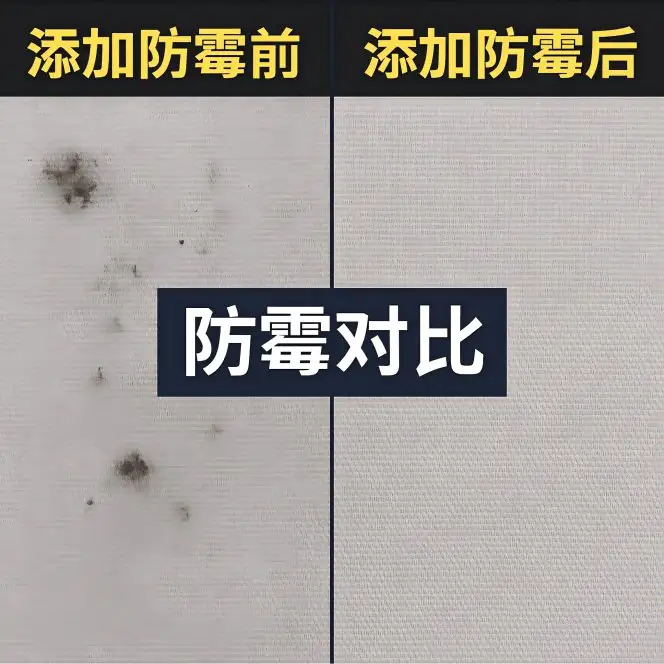
Nantong — and specifically the twin towns of Dieshiqiao and Zhihao — is the heart of China’s home-textile export industry, hosting over 4,000 home-textile factories and trading companies with annual output exceeding RMB 60 billion across bed linens, towels, curtains and upholstery fabrics, shipped to hotel and retail channels across Europe, the US, the Middle East, Southeast Asia and Africa. Every year between April and October — the plum-rain season, typhoon season and the hot-humid sea-freight cycle — mold claim incidents spike across the cluster. One recent incident: a Nantong four-piece-set exporter shipped 30,000 cotton sets to Los Angeles only to have the customer open cartons at the warehouse and find 12% of the sets spotted with mold and musty odor, triggering a full-batch return and an RMB 880,000 claim. Another towel mill lost RMB 350,000 when 18% of 120,000 hotel-grade towels arrived with mold spots after a 32-day voyage. The root cause is rarely a single process step — it is one or two weak links across six process ports: greige-cloth pre-treatment, pre-printing anti-mold, post-dyeing finishing, accessory anti-mold, finished warehouse humidity control, and container sea-freight. This guide strings those six ports into a ready-to-deploy anti-mold and antibacterial SOP for Dieshiqiao fabric mills, towel factories, and foreign-trade companies.
1. Mold risk chain in Nantong home-textile: 4 high-risk ports from greige cloth to container
The home-textile supply chain is long, but mold typically appears at four high-risk ports:
1. Greige-cloth warehouse and pre-printing treatment: The greige-cloth warehouses of the 50+ large weaving mills around Dieshiqiao rarely control humidity. Cotton fiber ships out with 8%-10% moisture content; in the Dieshiqiao summer warehouse at 35°C and above 85%RH, surface mold spots can appear on the greige cloth within 7-10 days. Once the greige cloth carries mold, post-dyeing finishing cannot wash it out.
2. Post-dyeing finishing and softening: Silicone oil, softener and fixing-agent baths contain significant water. If drying is incomplete and the moisture content remains above 8%, finished fabric stacked in the workshop for 2-3 days will develop local mold spots — this is the single most common port among small Dieshiqiao mills.
3. Cutting / stitching / finished warehouse: Four-piece-set cut pieces stay at the stitching workshop 3-5 days; towel rolls sit in the packing area 7-15 days. During plum rains with workshop humidity above 75%RH, the finished product begins to mold. At the same time, paper cards, webbing, sewing thread, buttons and PE bags shipped with the set can themselves carry mold, causing cross-contamination.
4. Finished warehouse and container sea-freight: Four-piece sets are placed into PE bags, color boxes and outer cartons, then enter the finished warehouse. If the finished warehouse does not control humidity, the boxes absorb moisture and the entire batch molds. Inside the container, the “container rain” effect kicks in: daytime sun bakes the box at 50-70°C, nighttime drops to 25°C with humidity above 95%, and condensation drips onto the boxes — doubling the mold risk.
This is why “just add an additive” never works — anti-mold and antibacterial control has to run across all six ports: greige moisture, pre-treatment, post-dyeing finishing, accessory anti-mold, finished warehouse humidity, and container desiccation.
2. Nantong home-textile deployable SOP: six-port anti-mold and antibacterial plan
Below is a procedure directly insertable into the production flow of a Nantong home-textile mill:
1. Greige-cloth warehouse and pre-treatment: Spray cotton fiber with iHeir-BJ textile mildew inhibitor diluted 1:8 with water (2-3 kg of diluted solution per tonne of fiber) before warehousing, and air-dry for 30 minutes. Install dehumidifiers in the greige-cloth warehouse to hold RH below 60%RH. Place plastic spacers between cloth rolls, and drop 1 Power Pak powerful anti-mildew tablet per cubic meter.
2. Post-dyeing finishing (anti-mold): After the final wash in the dye bath, apply iHeir-BJ textile mildew inhibitor via pad-dry-cure (1.5%-2.5% on weight of fabric, bath temperature 30-40°C, two-dip-two-pad, cure at 100-110°C). iHeir-BJ forms a covalent bond with the fiber and retains anti-mold performance through 30+ washes (per AATCC 100), without affecting hand-feel or whiteness.
3. Post-dyeing finishing (antibacterial): Apply in the same bath or a separate bath iHeir-BJ1000 silver-ion textile antimicrobial agent (0.5%-1% owf) or iHeir-333 textile antimicrobial agent (1%-2% owf). BJ1000 silver-ion delivers ≥99% inhibition against Staphylococcus aureus, Escherichia coli and Candida albicans (per AATCC 100 and JIS L 1902), ideal for hotel towels and medical bedding. 333 is ideal for retail-channel anti-mite and antibacterial needs on home linens. Combined use of BJ (anti-mold) + BJ1000/333 (antibacterial) passes OEKO-TEX Standard 100 Class II baby-direct-contact testing (see the anti-mite finishing agent guide for home textiles).
4. Drying and moisture control: Cure at 100-110°C for 90-120 seconds, bringing fabric moisture content below 6%-8%. High residual moisture drives repeat mold (export standard: ≤8% for bed linens, ≤10% for towels — see the textile anti-mold agent buying guide).
5. Accessory anti-mold and finished packaging: Run paper cards, webbing, sewing thread, buttons and PE bags through a separate gas-phase anti-mold cycle, and place iHeir-D gas-phase antimicrobial and mold inhibitor in the accessory warehouse. For each finished four-piece set, place 1 Power Pak S tablet inside the PE bag, line the color box with a sheet of iHeir anti-mold packaging paper, and drop 1 Power Pak M tablet into each of the four corners of the outer carton. For towel rolls, place 1 Power Pak inside the roll wrap and stick 1 iHeir-D 5 series gas-phase patch to the outer carton.
6. Finished warehouse and container sea-freight: Run industrial dehumidifiers in the finished warehouse to hold RH below 60%RH, lay moisture-proof mats on the floor, and cap stacking height at 4 layers. Hang 6-8 T-1000 container desiccant sticks in a 20 ft container, 10-12 in a 40 ft high cube. Inspect the door gasket for damage, and stick moisture-proof aluminum foil reflective film to the inner walls to deflect the “container rain” path. T-1000 uses calcium chloride base material that absorbs moisture even at -20°C, covering the 18-22 day transit from China to the US West Coast and bringing in-container humidity from 95%RH down to below 35%RH.
3. Real anonymized mold case at a Nantong home-textile exporter with product test data
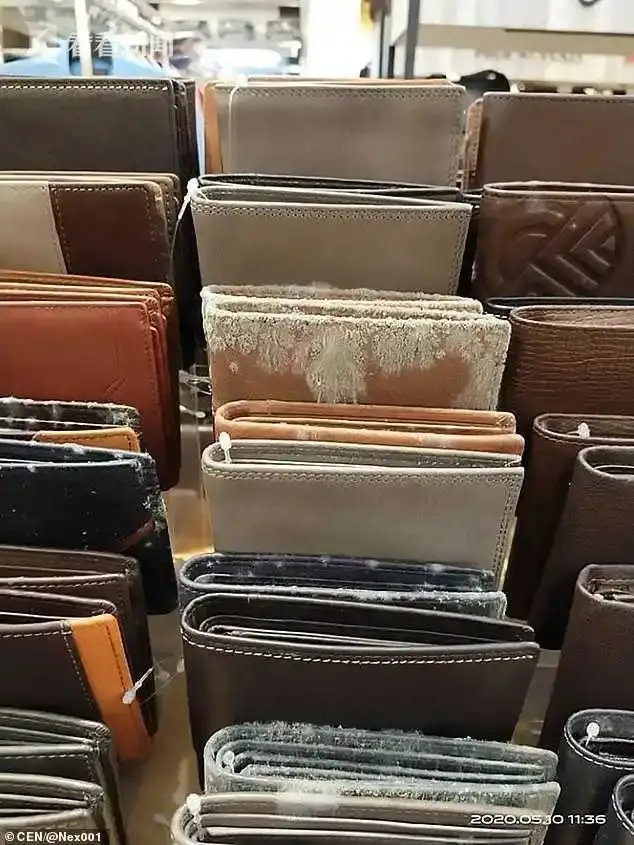
A Nantong Dieshiqiao four-piece-set exporter (annual output 800,000 sets, supplying US Target and European Zara Home) shipped 30,000 all-cotton sets to Los Angeles in June 2024 with FOB value RMB 2.6 million. After 22 days at sea, the customer sampled the cartons at the warehouse and found 12% of sets with mold spots and a musty odor, triggering a full-batch return and RMB 880,000 claim under contract annex 4.
Root cause review: greige-cloth warehouse had no humidity control (humidity 88%RH during plum rains); post-dyeing finishing did not apply BJ mildew inhibitor; finished sets had no Power Pak inside; container had no T-1000 sticks; outer cartons used plain corrugated board with no anti-mold paper. Lab testing of the mold samples identified three mixed colonies: Aspergillus niger, Aspergillus flavus, and Penicillium, primarily spreading from the webbing accessory and paper-card cross-contamination.
Remediation plan: dehumidifier added to greige-cloth warehouse; pad-dry-cure of iHeir-BJ textile mildew inhibitor at 2% owf after the final dye wash; in the same bath iHeir-BJ1000 silver-ion antimicrobial agent at 0.8% owf; gas-phase anti-mold treatment for paper cards, webbing and sewing thread; 1 Power Pak S tablet per finished set inside the PE bag; iHeir anti-mold packaging paper lined in every outer carton; 6 T-1000 sticks per 20 ft container. In the second half of 2024 across 8 shipping containers, the mold rate dropped to under 0.2%.
A Nantong Tongzhou towel mill (annual output 15 million towels) serving Marriott, Hilton and similar hotel chains (general guide at the yarn mold prevention guide) saw mold rates fall from 14% to 0.5% after switching to iHeir-333 antibacterial finishing and tightening post-dryer moisture to ≤9%. Antibacterial and anti-mite testing both cleared OEKO-TEX Standard 100 Class II baby-direct-contact requirements (a similar finish applies to socks, see the Zhuji socks antibacterial deodorizing guide).
4. Anti-mold and antibacterial product selection guide for Nantong home-textile mills
Nantong home-textile mills typically use four categories of anti-mold and antibacterial products, and the right model must be chosen per process port:
1. Pre-treatment + post-dyeing mildew inhibitor (pad-dry-cure type): iHeir-BJ textile mildew inhibitor, non-toxic and odorless, with a silver-ion composite formula, can be applied in the same bath as dyeing, and retains performance through 30+ washes. Suitable for cotton, poly-cotton, modal, Tencel, bamboo fiber and all natural fibers. Mix ratio: greige-cloth pre-treatment spray at 1:8 with water; post-dyeing pad-dry at 1.5%-2.5% owf. Spray application: dilute 1:5 with water and spray on the semi-finished surface, air-dry 15-20 minutes.
2. Post-dyeing antibacterial agent (pad-dry-cure or spray type): iHeir-BJ1000 silver-ion textile antimicrobial agent (broad-spectrum silver-ion antibacterial, retains 50+ washes, ideal for hotel towels and medical bedding); iHeir-333 textile antimicrobial agent (quaternary ammonium antibacterial plus anti-mite, ideal for retail bed linens and comforter fills); iHeir-PG composite nonwoven antimicrobial agent (for nonwoven shoe fabrics, linings and home-textile backings).
3. In-pack anti-mold (tablet type): Power Pak powerful anti-mildew and deodorizing tablets, selected by volume: 1-2 L space — Power Pak S, 2-5 L — M, 5-15 L — L, 15-50 L — XL. Power Pak was the #1 anti-mold tablet sold in Dieshiqiao in 2024, priced at RMB 1.5-3 per tablet (also widely used in garment and sock anti-mold, see the garment mold prevention guide).
4. Container sea-freight moisture control (stick type): 6-8 T-1000 container desiccant sticks per 20 ft container, 10-12 per 40 ft high cube. For high-value hotel towels and medical bedding, layer in 1-2 packs of silica gel desiccant as backup.
5. Compliance essentials for Nantong home-textile exports: REACH, OEKO-TEX, Zara Inditex, M&S
Home-textile exports to Europe, the US and the Middle East must pass the following compliance checks:
1. EU REACH Annex 17: Azo dyes (22 aromatic amines, limit 30 mg/kg), dimethyl fumarate (DMFu, limit 0.1 mg/kg), phthalates (DEHP/DBP/BBP, limit 0.1%). iHeir-BJ, BJ1000, 333 and PG have passed SGS REACH 171-item full testing, with English reports available (the same applies to sock antibacterial finishing, see the Zhuji socks antibacterial deodorizing guide).
2. OEKO-TEX Standard 100: Class II (direct skin contact, pH 4.5-7.5, formaldehyde ≤75 mg/kg, extractable heavy metals ≤0.5 mg/kg). OEKO-TEX Standard 100 Class II is mandatory for retail channels (Zara Home, MUJI, IKEA). iHeir-BJ, BJ1000 and 333 have passed OEKO-TEX 100 pre-screening and can be applied toward direct certification.
3. Zara Inditex Clear to Wear (CtW) / M&S Restricted Substances List: Formaldehyde ≤20 mg/kg, aromatic amines ≤20 mg/kg, tighter extractable heavy metals. The 2024 Inditex restricted substances list added PFAS (per- and polyfluoroalkyl substances) at 25 ng/m² — iHeir products have no detectable PFAS, compliant with Inditex CtW 2024 v10.5.
4. China GB 18401 “National basic safety technical specification for textile products”: Class A infant products, Class B direct skin contact, Class C non-direct contact. Export home-textile should reach at least Class B, with some reaching Class A (similar level applies to garment safety grading).
5. Export commodity inspection and certificate of origin: Nantong Dieshiqiao home-textile exports via Nantong Customs or Shanghai Yangshan Port, requiring CIQ commodity inspection certificates, FORM A / E / F certificates of origin; textiles containing antibacterial agents must note “contains antibacterial agent” on the customs declaration packaging description.
6. Nantong home-textile mill anti-mold and antibacterial checklist (printable)
Below is a six-port checklist that the Dieshiqiao mill owner or quality manager can print and post on the wall:
☐ Cotton fiber / poly-cotton greige cloth sprayed with iHeir-BJ at 1:8 before warehousing (record batch number, time, operator)
☐ Greige-cloth warehouse RH ≤60%RH (dehumidifier running 24h), plastic spacers between rolls, 1 Power Pak per roll
☐ After the final dye wash, pad-dry iHeir-BJ at 2% owf + iHeir-BJ1000 at 0.8% owf (cure at 100-110°C × 90-120 seconds)
☐ Post-dry fabric moisture ≤8% (bed linens) / ≤10% (towels), spot-checked per roll with a moisture meter
☐ Paper cards, webbing, sewing thread and buttons separately treated with gas-phase anti-mold, iHeir-D gas-phase tablets in the accessory warehouse
☐ Each finished four-piece set: 1 Power Pak S inside the PE bag, iHeir anti-mold packaging paper at the color-box bottom, 1 Power Pak M at each of the 4 outer-carton corners
☐ Each towel roll: 1 Power Pak inside the wrap, iHeir-D 5 series gas-phase patch on the outer carton
☐ Finished warehouse RH ≤60%RH, stacking height ≤4 layers, gas-phase patches on outer cartons
☐ 6-8 T-1000 sticks per 20 ft container, 10-12 per 40 ft high cube, intact door gasket, moisture-proof aluminum foil reflective film on inner walls
☐ Customs declaration marked “contains antibacterial agent”, with SGS REACH 171-item report, OEKO-TEX 100 pre-screening, CIQ inspection certificate and Inditex CtW report
Run this checklist through one full cycle at the Dieshiqiao or Zhihao mill and the mold claim rate drops from 5%-15% to below 1%, with container loads of RMB 1 million+ home-textile effectively achieving zero-mold delivery. For home-textile anti-mold and antibacterial samples, Power Pak bulk pricing, or a complete T-1000 container desiccant plan, please contact us.