




 View Count:3
 Date:2026-10-23
How is mould on an oxford bag dealt with? Separate the two places first: the fabric and the inside of the bag. The fabric is a finishing-stage job, the inside is a sachet job. The fabric takes iHeir-BJ at 2%-3% o.w.f., and each sachet inside the bag carries 0.1-0.2g of iHeir-D. A container that spends a month at sea can come back with tacky fabric and a spotted lining, and returning it costs the shipment. This article gives the bath conditions and the compatibility test.
1. Half the mould is in the fabric, half inside the bag
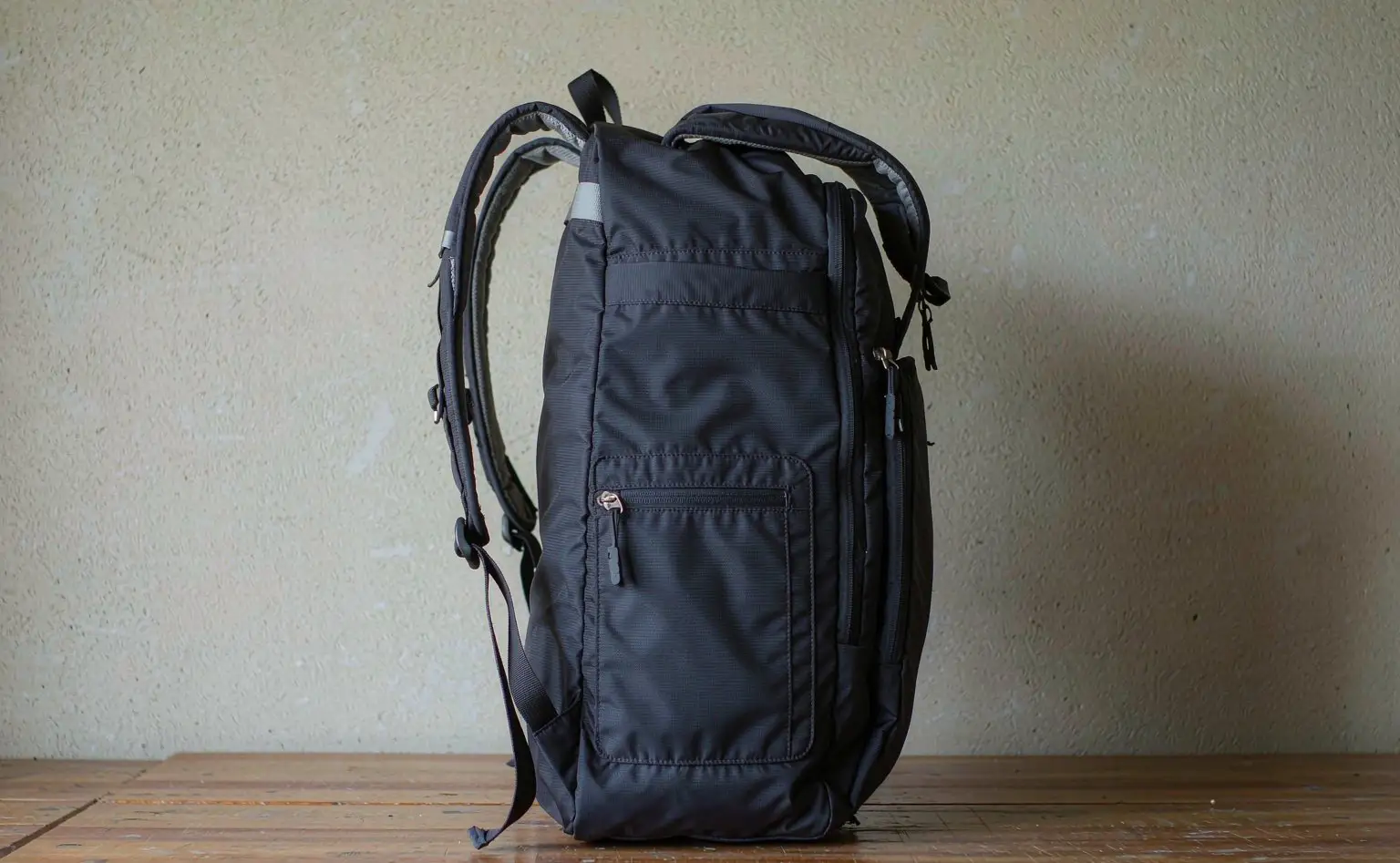
Oxford cloth is a plain or dobby weave of polyester filament, coated or calendered on the face. It looks sealed, but water still sits between the fibres. The fabric passes through water repeatedly during weaving, dyeing, coating, cutting and sewing, and if the last drying stage does not carry the water out, what is left in the roll migrates inwards in store and mould starts between the face and the coating.
The inside of the bag is the second place, and the more hidden one. The lining is usually polyester or nonwoven, and the body also holds foam, board and stiffener, all of which take up moisture. Once the bag is closed there is almost no air movement, so the water cannot leave; in a container the temperature swings and the inner wall condenses, mould grows between lining and foam, and nothing shows from the outside until the customer opens the packing.
The third place is the hardware. Zips, buckles and adjusters oxidise in damp conditions, and the corrosion products mix with the spots; leather or PU handle bindings also spot first. The order of work for this type of product is therefore: the fabric at the mill, the inside and the hardware at the finished-goods stage.
2. Fabric and bag interior: two locations side by side
The table sets out the material, the product, the level and the stage for each. One is a wet process, the other a dry placement, and the methods have nothing in common.
| Location | Material | Product and level | Stage | Points to watch |
|---|---|---|---|---|
| Fabric | Polyester oxford | iHeir-BJ 2%-3% o.w.f. | Finishing, padding and mangling | No anionic agent in the same bath |
| Bag interior and lining | Polyester lining, foam | iHeir-D 0.1-0.2g per sachet | Finished packing | Against the lining, not pressed flat |
| Hardware | Zips, buckles | Compatibility test with D | Before packing | Test at three times the level |
| Export stacking | Packed bags | Desiccant and container humidity control | Cartoning and loading | No tight film wrap |
The basis is where this goes wrong most often. The fabric level is calculated on fabric weight as o.w.f., and a 70% pick-up means the liquor carried in is only seventy per cent of that weight; the sachet dose is grams of active per sachet, set by bag size and internal volume and having nothing to do with fabric weight.
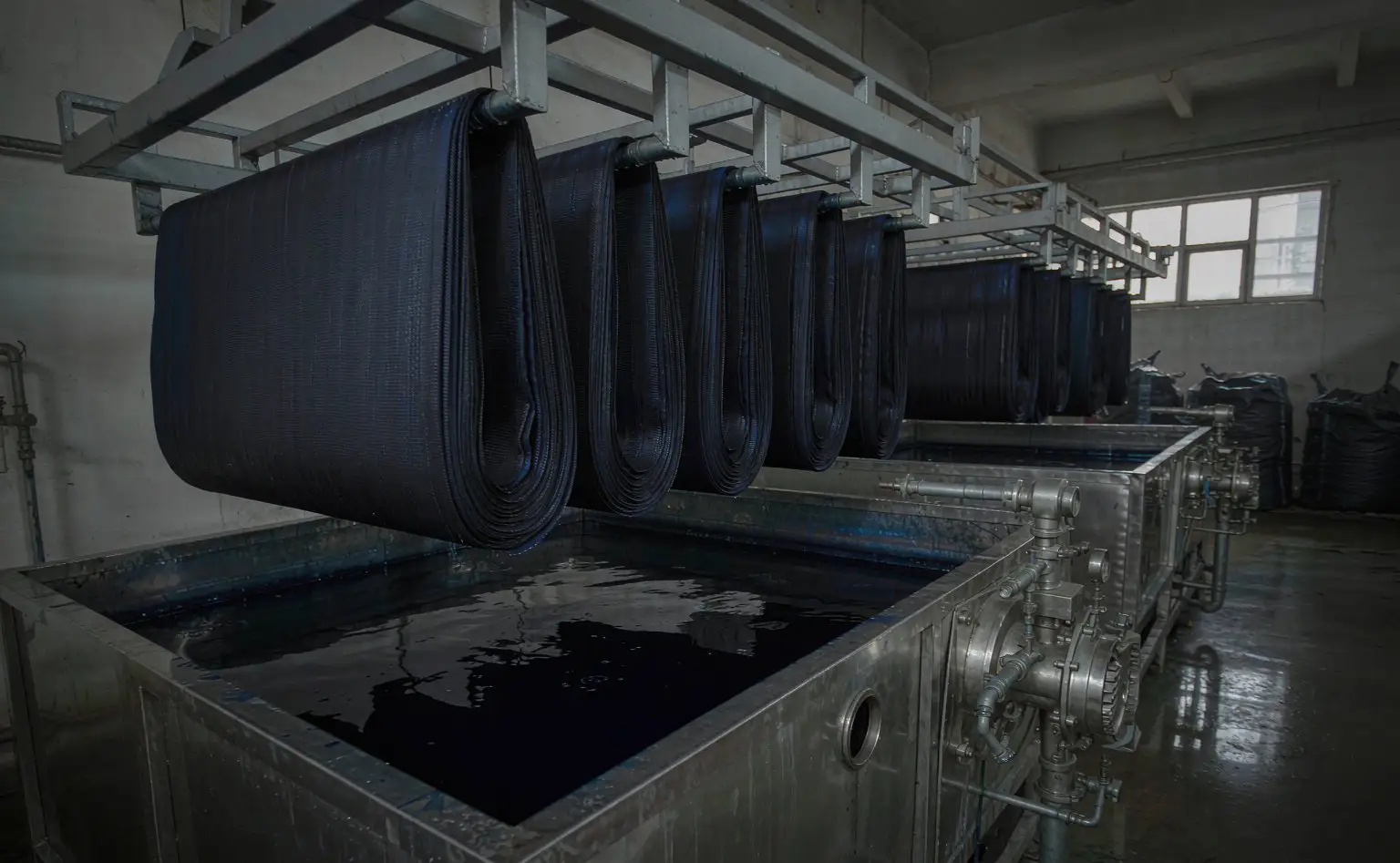
3. Fabric: iHeir-BJ at 2%-3% o.w.f., bath at 21-50C
iHeir-BJ textile mildew inhibitor is applied by padding: 2%-3% o.w.f., bath temperature 21-50C, bath pH 4.5-8.5 with 6 as the target, in soft water. One step must be followed exactly: pre-mix BJ with 9-13 times its weight of water, then add the pre-mix to the bath in portions. Pouring concentrate straight in raises the local concentration, forms lumps and leaves patches bonded to the fabric face.
The two bands correspond to two protection periods: 2% gives more than a year, 3% gives two to three years. The order decides: fast-moving domestic styles run 2%, export orders with long sea transit and a two-year requirement run 3%. Calculate the bath make-up from fabric weight and the 70% pick-up rather than guessing at a liquor ratio.
Three prohibitions. No anionic agent in the same bath: BJ is cationic, an anionic softener, wetting agent or antistatic will precipitate it and kill the effect, so check the ionic nature of everything sharing the bath. Soft water only, because calcium and magnesium in hard water react with the agent and dilute the result. And keep bath pH below 8.5, since a strongly alkaline bath decomposes the agent, so adjust pH as the chemicals go in.
Drying decides the outcome. The moisture content of the roll off the machine has to be brought under control, because an under-dried roll is a water reservoir in the warehouse. The practice matches what is set out in buying a textile anti-mould agent.
4. Bag interior and lining: iHeir-D at 0.1-0.2g per sachet
The inside of the bag takes iHeir-D gas-phase antimicrobial and mould inhibitor, an anti-mould ink used to make antimicrobial paper and sachets whose vapour phase reaches the gaps inside the bag. The level is 0.1-0.2g per sheet or per sachet, set by the storage environment and the volume to be protected. Solids are 70%±5, packing is 25kg drums, it must be kept sealed, dry and dark with a one-year shelf life, and an opened drum is used immediately.
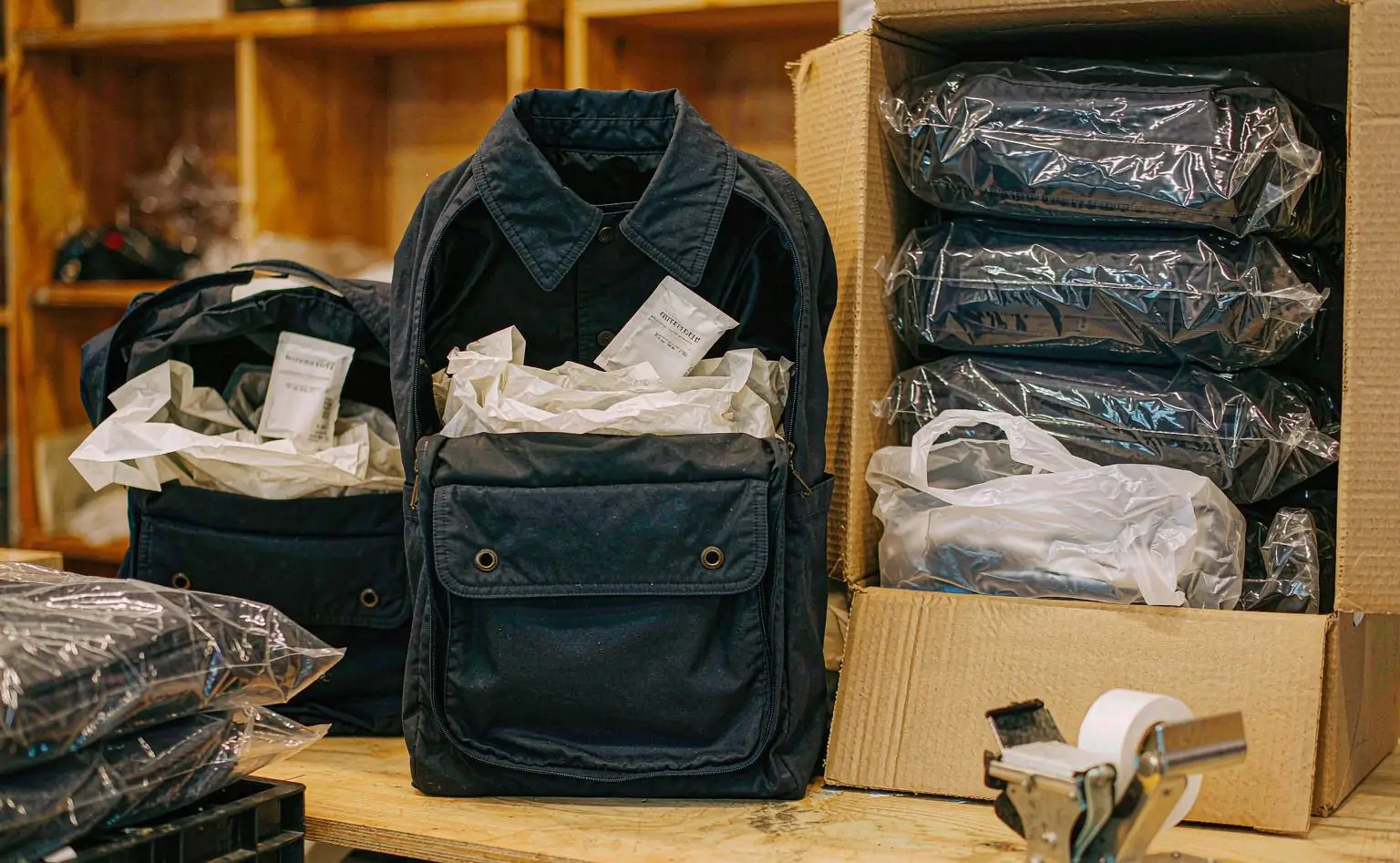
Three points on placement. Against the lining, or dropped into an inner pocket, never pressed into the middle of the main compartment, because vapour cannot reach what it covers. Count by volume: one sachet for a small shoulder bag, two for a mid-size backpack, three or four in a large travel bag, with sea freight at the upper end. Timing: place it once the bag is finished and before it is bagged, then close the bag at once, since an open bag lets the vapour escape.
The part most often missed is the hardware. In damp conditions D can corrode poor-quality metal, which includes zip pulls, buckles and rivets. Run the compatibility test at three times the normal level: seal hardware with three times the D in a bag, hold it in damp heat and watch for discolouration or white corrosion, before running production.
5. Export stacking: keep the water outside the carton
With the fabric and the interior done, export closes three points. Cartoning: stuff the bags with dry paper or air pillows, since damp paper feeds water into the bag, and add desiccant sized to the carton. Stacking: do not wrap cartons tight in film, which seals water against the board; pallets off the floor and a gap to the wall. Loading: absorbent material in the container and a ventilation path; open two cartons before loading and smell for a musty note.
The wider export practice for bags is set out in export bag and luggage mould prevention and the Shiling bag cluster case.
6. Questions we get: is one of the two enough, and will the hardware corrode
Is treating the fabric enough without a sachet? No. The fabric treatment protects the cloth, while the water inside the bag comes from the lining, the foam and condensation, which the fabric treatment never reaches. A fabric-only bag looks clean outside and grows mould inside, and that is a return. Both, and the loop is closed.
Will D blacken the zips and buckles? Poor-quality hardware does carry a corrosion risk in damp conditions, which is why the three-times-level compatibility test comes first. If it fails, there are two routes: move to better hardware, or keep the sachet against the lining at a distance from the metal.
How is the result verified? Fabric mould resistance goes to GB/T 24346 or AATCC 30 for a growth grade, with the sample taken from treated fabric rather than greige. For the interior, simulate a packed bag: bag it with a sachet and hold at 30C and 85% relative humidity for fourteen days, then open and inspect the lining and the foam. Both products have samples and TDS for a trial on your own fabric and bag construction.
The four points to take away: iHeir-BJ at 2%-3% o.w.f. at finishing, bath 21-50C, pH 4.5-8.5, pre-mixed with 9-13 times the water and no anionic agent in the bath; one sachet of iHeir-D at 0.1-0.2g against the lining, closed at once; hardware tested at three times the level first; dry stuffing paper, pallets off the floor and humidity controlled in the container.


