




 View Count:24
 Date:2026-10-20
Where does wooden box mould come from, and why check the lining first? A storage box is closed most of its life, so the moisture inside ends up in the cloth and the foam, and eight times out of ten the spots start on the lining rather than on the timber. The body takes iHeir-M8 bamboo and wood fungicide sprayed at 1:20 on the inner walls and the base, and the lining and the space inside the box take anti-mould paper made with iHeir-D gas phase antimicrobial and mold inhibitor, at 0.1-0.2g per sheet. This article gives both ratios, the closing rule and the export requirements.
1. Check the lining cloth before the body
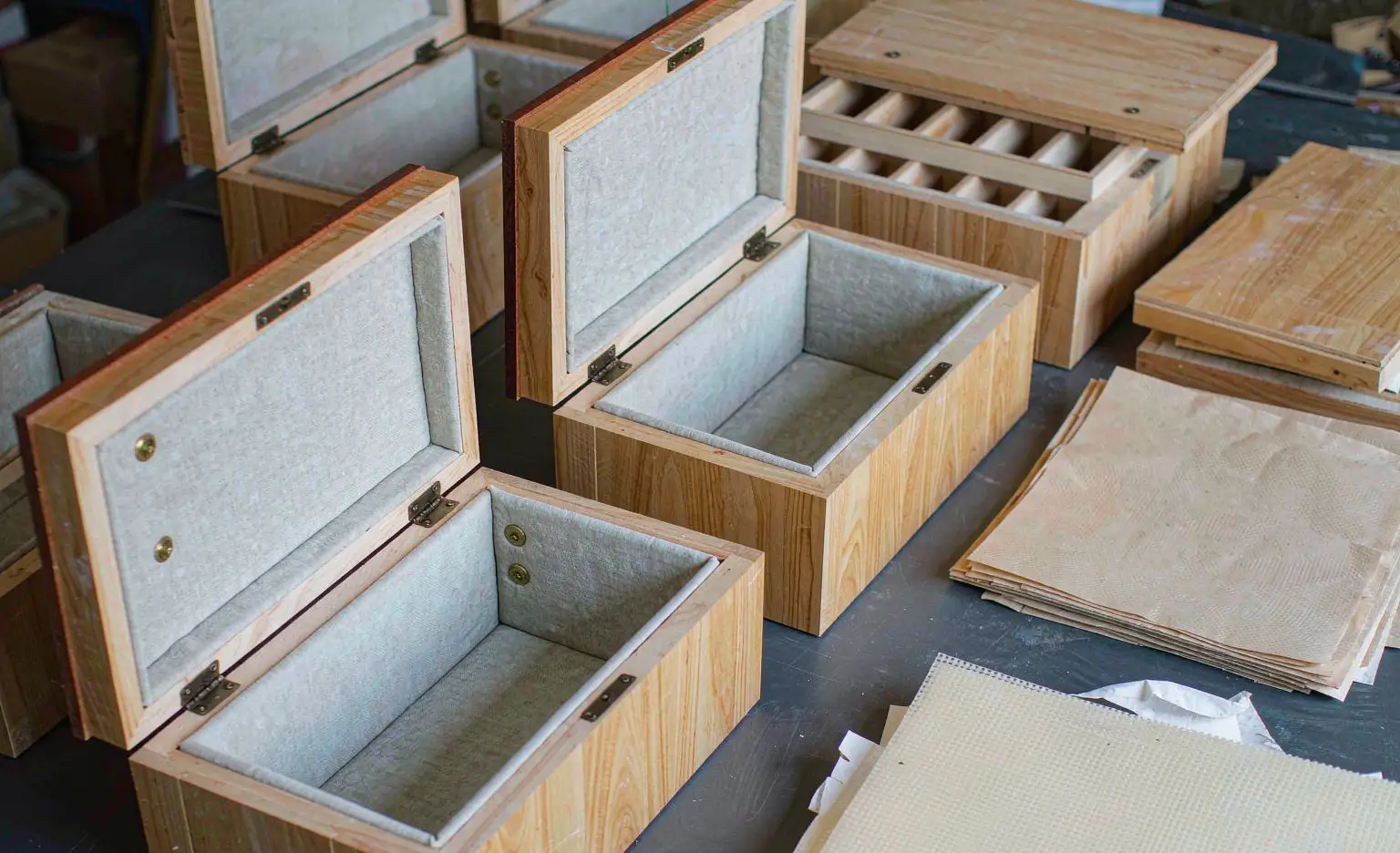
A box is a body plus a lining: timber outside, cloth, foam or flock inside, and glue between them. Mould shows on the lining first for three reasons. Cloth and foam take up moisture far faster than timber, so any damp inside the box reaches them first. Once the lid closes, the box is a small sealed space where moisture goes in but does not come out. And the glue line between lining and body is a nutrient source, so mould starts there and pushes through the cloth.
So the inspection has an order: the lining face and its corners, then the inner walls and the base, then the lid fit. Mould on the lining with a clean body means the timber is fine and the problem is that the space has no way to vent. Mould on the inner walls as well means the timber moisture is high and the investigation moves back up the line.
2. Body, lining and the space inside compared
The table sets out what is treated, with what, how much and against which criterion.
| Part | What is treated | Product and amount | Criterion | Points to watch |
|---|---|---|---|---|
| Body | Inner walls, base, inside of the lid | iHeir-M8 at 1:20, sprayed | Full coverage, air dried | Inner walls and base first, not the outside only |
| Lining | Cloth, foam, flock face | Anti-mould paper with iHeir-D, 0.1-0.2g per sheet | Vapour protection on the cloth and in the box | Paper goes against the lining, never against the product |
| Space inside | The sealed volume after closing | As above, one or two sheets by volume | No smell on opening, no spots on the cloth | Put it in before closing, not after packing |
| Closing and store | Finished boxes | – | Moisture stable, store dry | After M8, protection is rated at more than one year below 25% moisture |
The first two rows are two different processes: the body is a liquid spray, the lining and the space take vapour-phase paper. Neither replaces the other – a body sprayed perfectly still leaves the cloth unprotected, and mould starts on the cloth.
3. The body: M8 at 1:20, inner walls and base included
iHeir-M8 bamboo and wood fungicide is a clear amber liquid with a sharp acidic odour, its active fraction soluble at 5-7ppm in water. Dilute 1:20 (1kg of M8 to 20kg of water), stir, then spray or brush the inner walls, the base and the inside of the lid so the surface is covered completely, and let it air dry. Packing is 25kg to the drum, shelf life three years, and it must not be stored in a metal container.
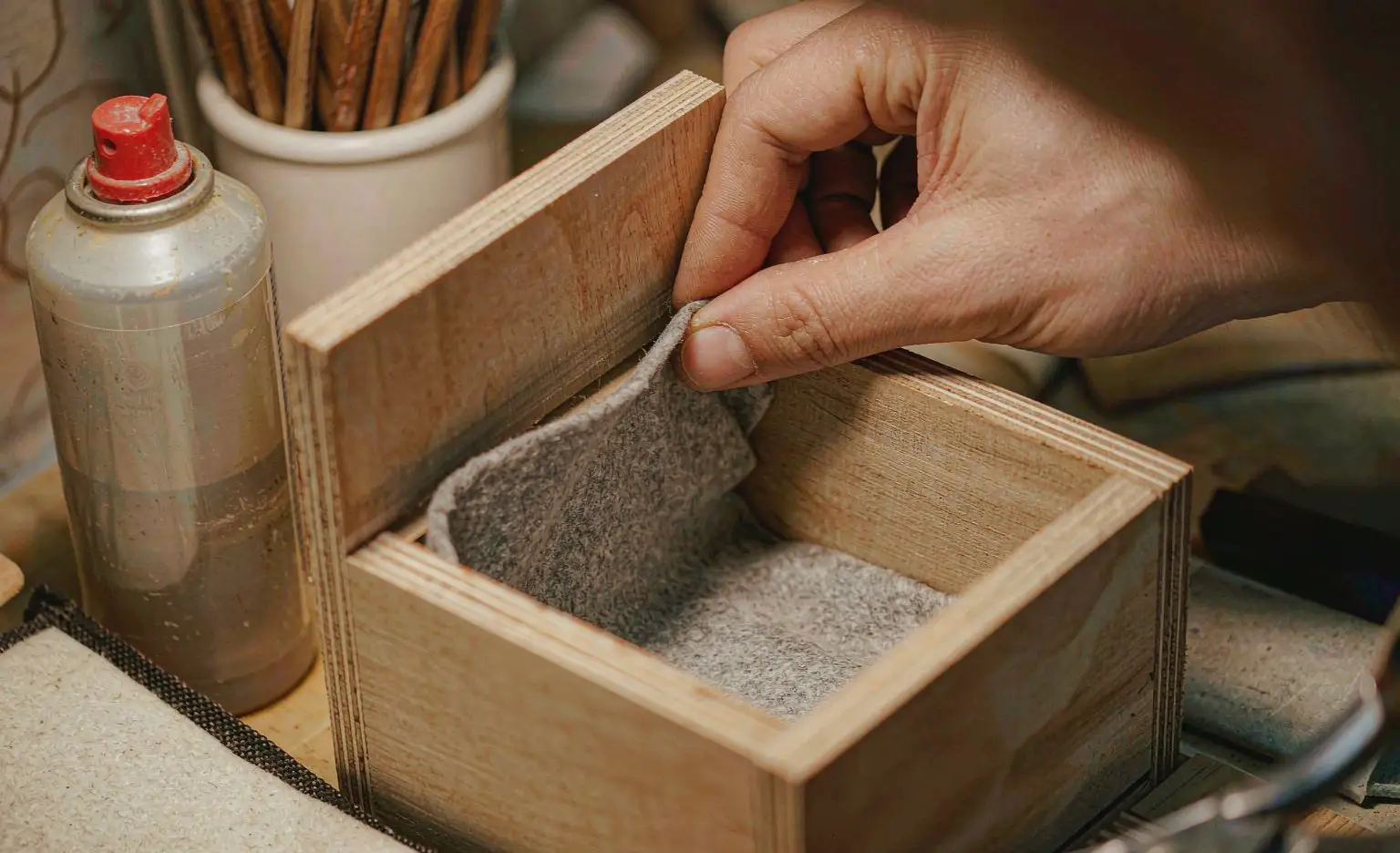
Three rules on the body. First, the inner face matters more than the outside: the outside is painted or veneered, the inside is bare timber, and moisture moves through the inside. Second, the base and the four corners are the usual leaks – the base is one panel and the corners are joints, so press the spray into the corner seams. Third, dry with the lid open, never closed: closing a wet box seals the moisture in and leaves it worse than untreated.
Judge the amount by an evenly wetted surface. The maximum use level is capped at 15ppm active substance, so a thicker coat buys nothing; on thin-walled boxes it only stretches drying. Bring the moisture below 25% before the lining goes in, which is where the one-year protection figure applies.
4. Lining and inner space: D anti-mould paper, 0.1-0.2g per sheet
The lining and the space inside are handled in the vapour phase. iHeir-D gas phase antimicrobial and mold inhibitor is a yellow liquid with 70%±5 solids and particles below 5 microns, used to make antimicrobial paper and coatings; in a box it is used as anti-mould paper, which releases vapour that reaches the cloth face and the corners a spray cannot. The normal figure is 0.1-0.2g of iHeir-D per sheet or per sachet, with the exact amount set by box volume and storage conditions.
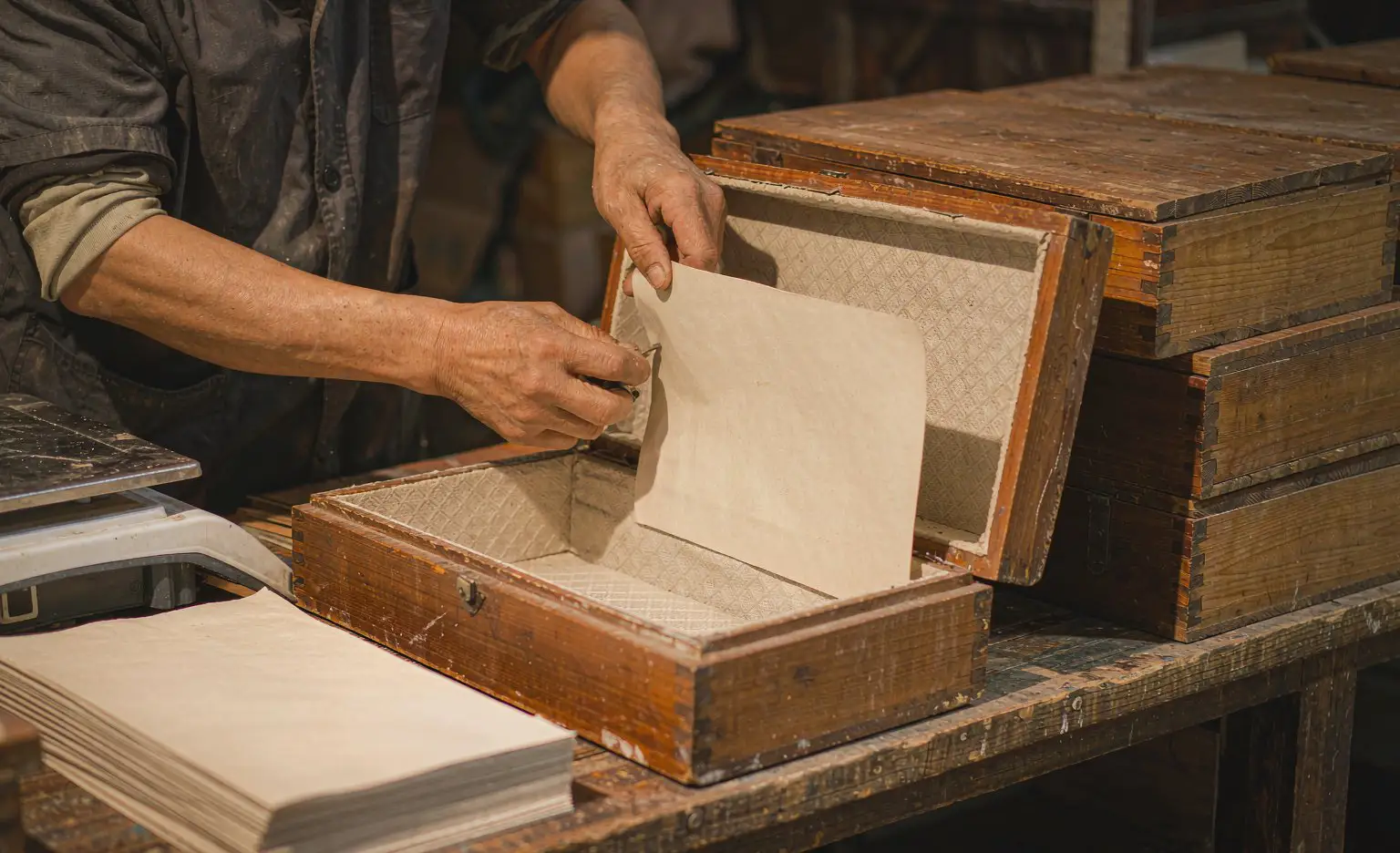
Three points on placement. Position: the paper goes on the lining side, not pressed onto the product and not left to rub against it for months. Quantity: one or two sheets for a normal storage box, the upper end for a large box, thick lining or a sea-freight order. Timing: in before the lid closes, not after the goods are packed, or the paper ends up under the product where the vapour never reaches the cloth.
D ships 25kg to the drum, sealed, dry and dark, with a one-year shelf life; once the drum is open it should be used promptly and the finished paper closed up, because it takes up moisture and loses effect. That is the point most often missed on the floor: a drum left open for half a shift has already absorbed water.
5. Closing, stacking and export: metal catches and a sealed volume
One check before the lid goes down: the metal catch. The D data sheet notes that under damp conditions it can corrode poor-quality metal catches, and that compatibility should be tested at three times the normal amount – put paper at triple dose and a catch in a sealed container at storage humidity for a few days and see whether the plating discolours. Cheap electroplated catches are the risk; stainless or coated catches are normally fine. The test is quick, and skipping it turns into a customer complaint.
Stacking and export: lids up, gaps between stacks, pallets off the floor, store dry; before a container is loaded, open a few boxes and smell them, and send back any with a stuffy smell, then add absorbent material inside the container. A box is a sealed volume, so once moisture is trapped inside the mould grows quietly over the 20-40 days at sea and is only found on opening.
6. Questions: paper alone, and spraying the lining
Can the paper do the job without spraying the body? It can hold for a while and it will not hold for long. Vapour paper protects the space, not the timber; if the body moisture is high, water keeps moving out of the wood and the paper is loaded up within weeks. The order is body first, dried, then paper for the space.
Can the lining cloth be sprayed with M8? Not advisable. M8 is made for bamboo and wood, and cloth and foam take up liquid differently – it leaves marks, dries slowly and can stiffen or wrinkle the cloth, and a wet lining lifts from the body. Vapour paper is the right tool on that side, which is what treating the two parts separately means.
What about a box that has already spotted? Locate the mould first. Lining only, body clean: replace the lining, re-spray the body and dry it, and the box can ship. Inner walls spotted as well: sand back to bare timber, re-spray and dry to a stable moisture. Mould into the fibre with the colour gone: not repairable. Samples and a TDS are available for both products, and the paper can be made to your box size.
Closing: check the lining first, and if the spots are there, deal with the space inside; spray the inner walls and base with iHeir-M8 at 1:20 and dry with the lid open to below 25% moisture; put anti-mould paper made with iHeir-D against the lining at 0.1-0.2g per sheet, one or two sheets before closing; and run the triple-dose compatibility test on the metal catch, with absorbent material in the export container.


