




 View Count:31
 Date:2026-10-26
How does cable mould get into a coil that left the line clean, and where should the powder go? A drum that sits through the wet season comes back with pale patches on the inner sheath and a sour smell when an end is stripped, and the buyer rejects the lot. The sheath compound takes iHeir-JS117 at 0.5%-1.0% of compound weight in cold mixing, with the die head held below 190C. This article covers the mixing stage, the insulation layer and the finished drum store.
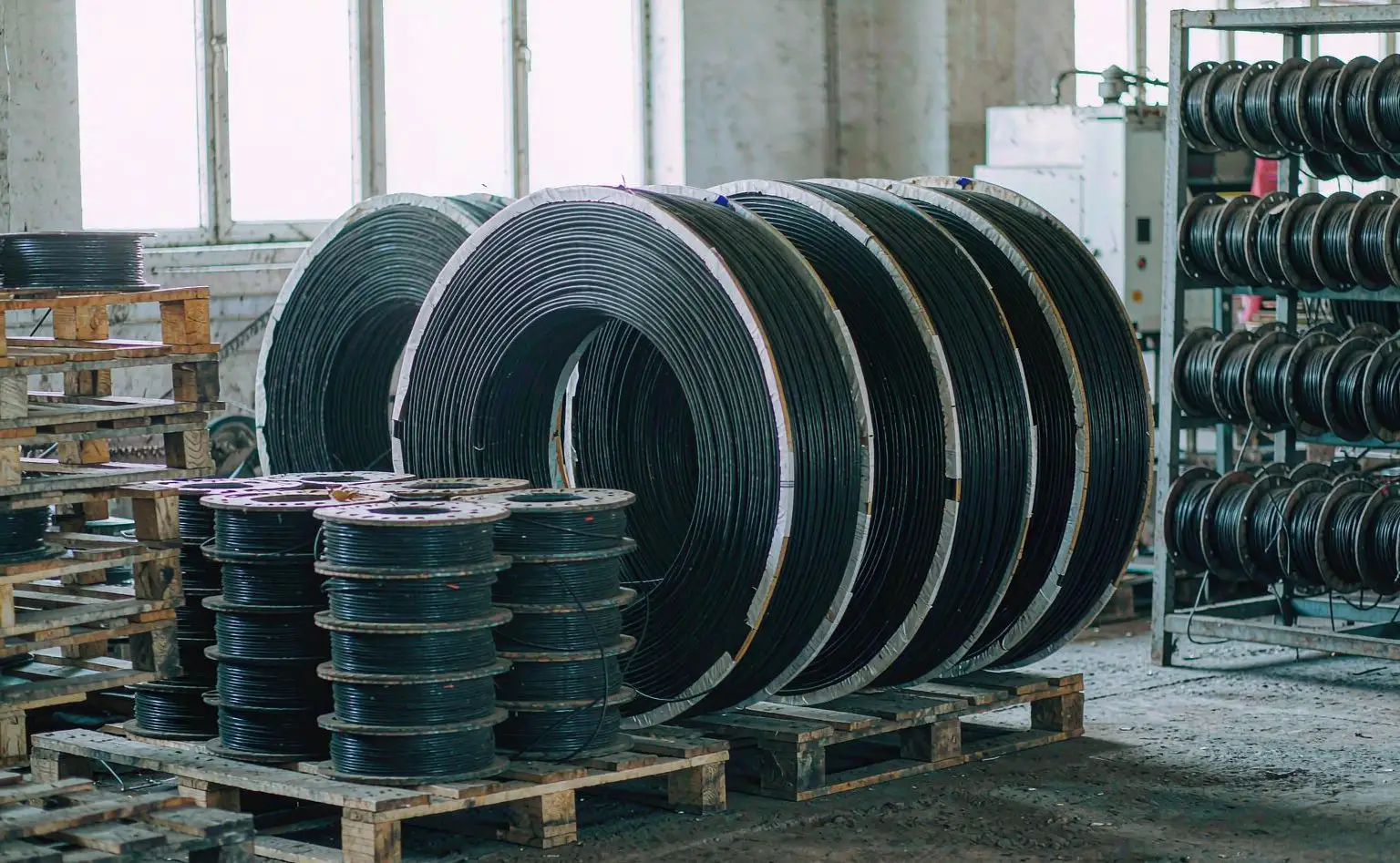
1. Cable mould starts on the inner face of the sheath
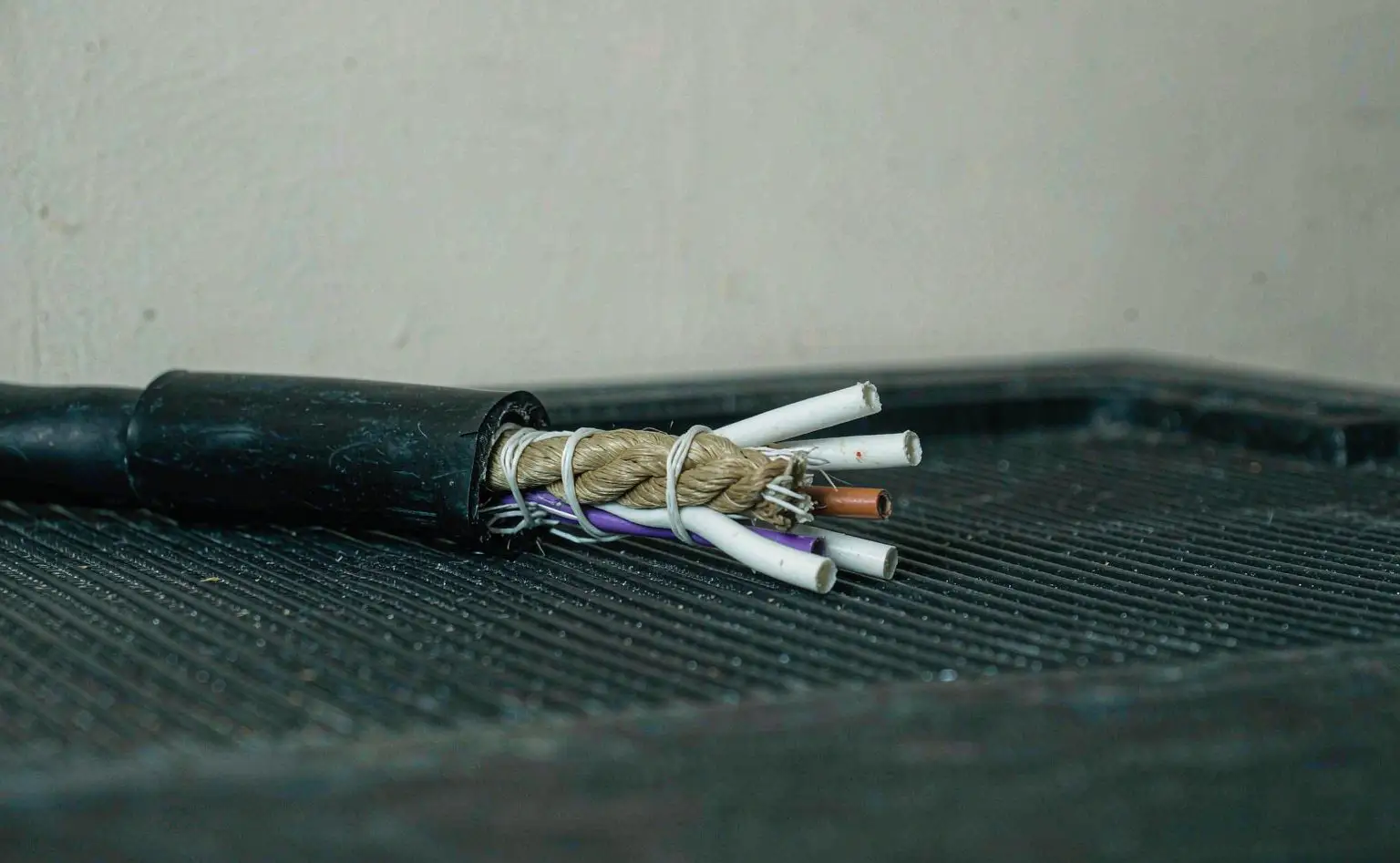
A cable is layered: conductor, insulation, filler and screen, then a sheath. Mould does not grow on copper and does not grow in cross-linked polyethylene; it grows on the PVC sheath, mostly from the inside. The outside is pressed dense by the die and comes out smooth, while the inside sits against filler rope and wrapping tape, where there is cotton, paper, moisture and an invisible film of plasticiser.
Soft PVC takes 30-50 phr of plasticiser for flexibility. In damp heat the plasticiser migrates to the surface as a tacky film, and that film is ready-made carbon for a fungus; add the water the filler rope has taken up and the inner face becomes a culture plate. The signs are a sour note when an end is stripped, white or pale green spots inside, and powder that comes off on a finger.
The second location is the gap between sheath and insulation. Filler rope and wrapped non-woven tape take up water at the lay-up stage, and once the sheath closes that water has nowhere to go. One pinhole lets more in, mould spreads along the inside, and from outside nothing shows. Protection therefore belongs in the compound, not in something wiped on afterwards.
2. Sheath and insulation are separate questions
The table sets out sheath, insulation, filler materials and the finished store. The sheath is a soft PVC dry blend that takes powder directly; the insulation may be rigid PVC or a cross-linked compound and is added differently; the fillers are solved by drying rather than by an additive.
| Location | Material and stage | Product and level | Addition point | Basis |
|---|---|---|---|---|
| Outer sheath | Soft PVC extrusion | iHeir-JS117 0.5%-1.0% | Cold mixing after hot mix | On sheath compound weight |
| Insulation | Rigid PVC or XLPE | PVC direct; XLPE via masterbatch | Mixing or masterbatch let-down | On that layer’s compound |
| Filler rope, wrapping tape | Cotton, non-woven | No additive: dry and control humidity | Before lay-up | By moisture content |
| Finished drum store | Whole drums | Store humidity plus container desiccant | On receipt and at loading | By store volume and container size |
Two boundaries. First, cross-linked compounds do not take powder directly: the peroxide system is sensitive to contamination and poor dispersion, so a direct addition can leave specks in the curing tube. Second, the basis is the sheath compound, not the finished cable and certainly not the copper.
3. Sheath mixing: powder in cold mixing, die head below 190C
The sheath uses iHeir-JS117 plastic anti-mould powder at 0.5%-1.0% of finished product weight. Active content is above 97%, melting range 100-120C, moisture below 0.2%, specific gravity 1.21, bulk density 380 kg/m3, mean particle size 110 microns; insoluble in water, resists leaching, contains no arsenic, acute oral LD50 (chicken) 4480 mg/kg.
The addition point is after the hot mix, in the cold mixer. A PVC dry blend runs up to 110-120C hot and comes down to 40-50C before discharge; the powder goes in cold and five to eight minutes of tumbling disperses it. Not in the hot mixer: that temperature sits inside the melting range, so the powder melts early and sticks to the bowl wall, the batch runs short, and what is left on the wall carries into the next batch.
Extrusion is the second gate. Soft PVC zones run 150-190C with the die head at 175-190C. The powder melts at 100-120C and spreads evenly in that window, but do not hold above 190C: higher than that the active part breaks down and the dosage is still in the compound while the effect is not. The die head sits around 185C.
Three mistakes. Moisture: the powder arrives below 0.2%, but an open bag in a humid shop takes up water in two days and extrusion shows bubbles and pitting. Regrind: start-up scrap goes back at up to 20%, so the powder has to be topped up in proportion. Thin walls: a 0.8-1.2 mm sheath has more surface per kilogram, so the same addition gives less persistence and export orders run at the top of the range.
4. Insulation, fillers and the lay-up stage
Rigid PVC insulation is the same family as the sheath and takes the same product directly at 0.5%-1.0% of that layer’s compound. Cross-linked polyethylene cures through a peroxide system, and a direct addition can leave poorly dispersed particles that show up in hot-set and partial discharge; the route is a masterbatch let-down in a same-family carrier, diluted to a final 0.5%-1.0%, with 200 metres of sample cable through peel and hot-set first.
Filler rope and wrapped non-woven tape take no additive. Both are cheap and absorb water fast, so control is at goods-in: cotton rope under 8% moisture, anything above goes to the dryer; dry at 60-70C for two to four hours before lay-up and use the batch the same shift. Between lay-up and sheathing, run core preheating at 60-70C with extraction on, so vapour has an exit; after the trough, blow the sheath dry before winding, since a drum wound wet is a drum delivered with water inside.
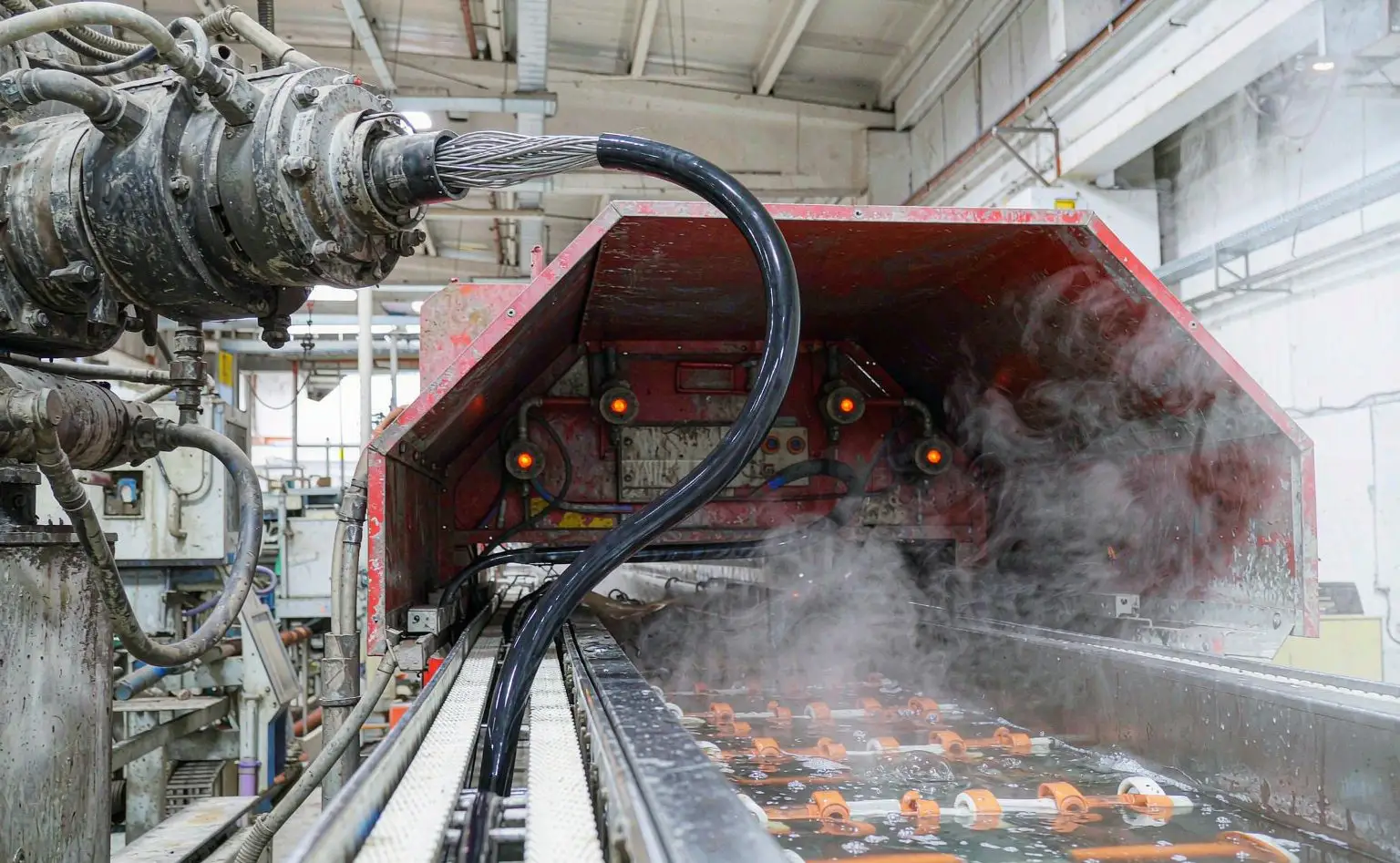
5. Finished drum store and container loading
In the store, stand drums on dunnage at least 10 cm off the floor with a 50 cm aisle to the wall, because the bottom coils show first. Hold humidity below 60% and run the dehumidifier through the wet season rather than opening the doors, since outside air is wetter. Keep first in, first out with an inbound date tag on every drum.
Export adds three more: desiccant sized to the box, 8-10 strips in a 20 ft and 10-12 in a 40 ft, hung at the door end and from the ceiling and never crushed under a drum; an air path between cargo and wall and gaps between drums; and two cable ends stripped and smelled before closing, because a sour note means the lot goes back. How that condensation forms is in container rain and sea freight condensation, and the count in how much desiccant goes into a container.
Verify with three sets, not a shelf test. Sheath compound to ISO 846 or ASTM G21 for a growth grade, with samples scraped from the inner face. The finished cable through the GB/T 2951 series for mechanical properties and damp-heat ageing, confirming tensile strength and elongation still meet the standard. Export orders then run a full-drum simulation at 40C and 90% RH for thirty days, opened to look at the inner sheath and the cable ends.
6. Questions we get: electricals, pitting, XLPE
Does 1% powder affect insulation resistance and withstand voltage? JS117 is a blended powder that does not dissolve or migrate, and at 1% or below the effect on PVC sheath volume resistivity and power-frequency withstand is small, but it has to be proven on the same formulation: zero, 0.5% and 1.0% together through insulation resistance, withstand voltage and heat ageing. Data from another grade does not transfer.
Pitting and bubbles on the extrudate: powder or compound? Check water first, testing the powder against the 0.2% limit and checking regrind and filler rope at the same time.
Can cross-linked cable take the powder directly? Not recommended. The curing system is sensitive to contamination, and undispersed particles show up in hot-set and partial discharge. Use a masterbatch in a same-family carrier, trial first, then scale.
Four points: sheath compound at 0.5%-1.0% of compound weight with iHeir-JS117, added in cold mixing, die head near 185C and never held above 190C; cross-linked insulation through a masterbatch after a trial; filler rope and tape checked for moisture and dried before lay-up; drums on dunnage, store below 60% RH, and two ends stripped and smelled before the container is sealed.


