




 View Count:29
 Date:2026-10-26
Which comes first with hardware tool mould, the overmoulded handle or the carton? A batch of pliers that spends a month in store through the wet season comes back with tacky grips and mould patches on the inside of the carton, and the steel is the only part still clean. The grip compound takes iHeir-JS117 at 0.5%-1.0% of compound weight, and every carton gets iHeir-D anti-mould paper. This article covers the grip, the blade and the packing stage.
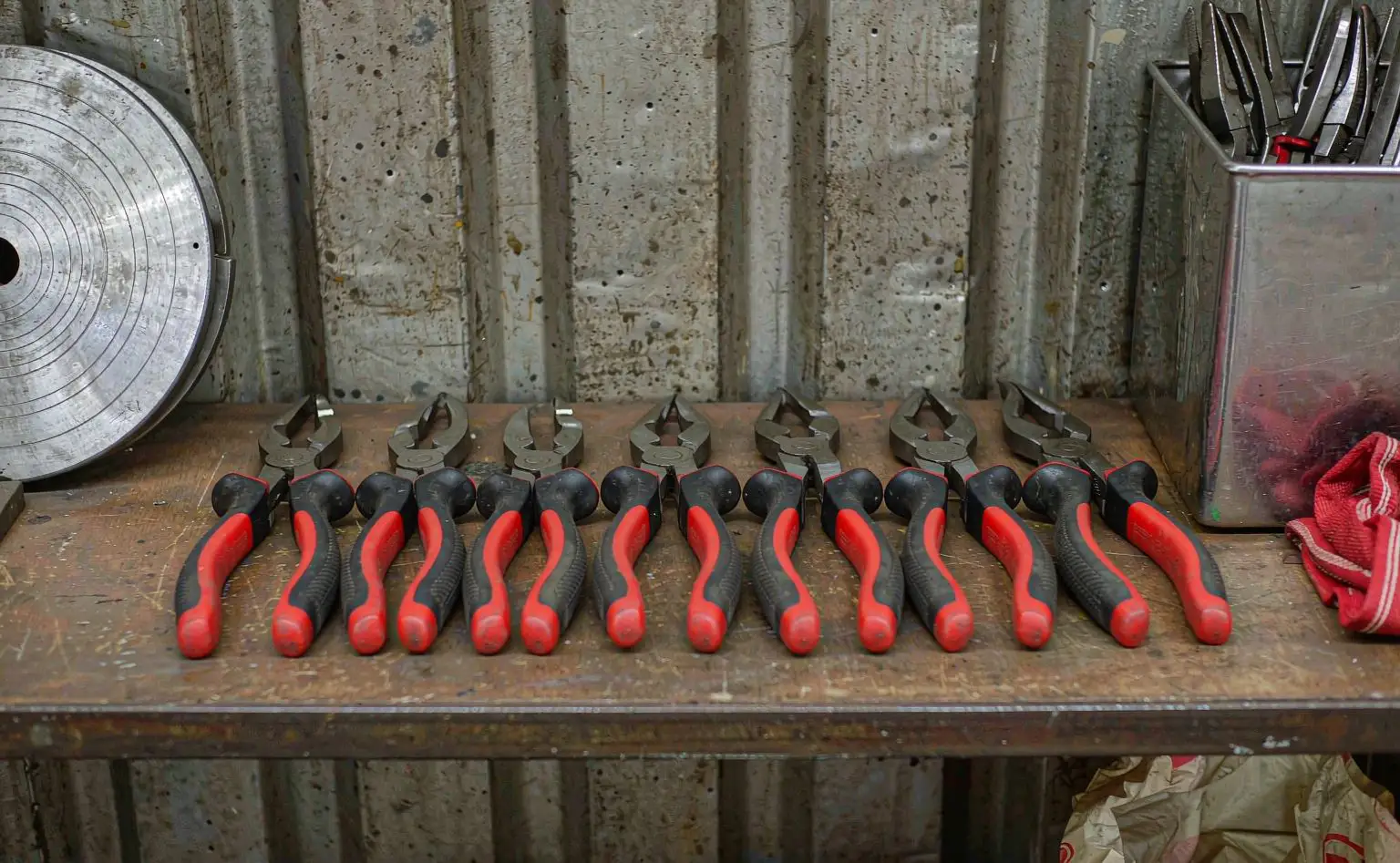
1. Hardware tool mould is not on the steel
A tool is a steel working part plus a handle, usually a two-shot overmould, packed on a card or into a carton. Steel does not grow mould; the three places that do are the overmoulded grip, the card and carton, and the liner inside the box.
Grips are TPR or TPE with a textured or matte surface for grip. Sweat, release agent and condensation under the film collect in the texture, mould starts at the bottom of the pattern, and where the compound holds oily plasticiser the surface goes tacky and feeds it further. The signs are a chalky feel and patches that will not wipe off near the jaw.
The second is the carton. A five-ply export carton normally holds 8%-12% moisture and often arrives above 14% in the wet season; once the paper takes up water the box becomes a closed micro-climate, mould starts on the inner wall and moves to the grips. The third is the blade: its real problem is rust rather than mould, but the two arrive together, because the same high humidity in the box causes both, so the packing stage controls them together.
2. Grip and packing are separate jobs
The table sets out grip, blade, carton liner and finished store. The grip takes a plastics antimicrobial, the blade takes oil and humidity control, and the carton takes vapour-phase paper: three lines, each covering one segment, and none replacing another.
| Location | Material and stage | Product and level | Addition point | Basis |
|---|---|---|---|---|
| Overmoulded grip | TPR/TPE second shot | iHeir-JS117 0.5%-1.0% | Compounding or mixing | On grip compound weight |
| Blade, working part | Carbon or stainless steel | Anti-rust oil and humidity control, no antimicrobial | After assembly, before boxing | By oiled surface area |
| Carton, card | Corrugated, white card | iHeir-D 0.1-0.2 g per sheet | Laid in at boxing | By box count and sheets |
| Finished store, export | Whole cartons | Store humidity plus container desiccant | On receipt and at loading | By store volume and container size |
Two boundaries. First, the grip is dosed on its own compound, not on the finished tool: an 8 inch plier weighs about 300 g with only 40-60 g of grip, so dosing on total weight over-adds three times over. Second, anti-mould paper is not a desiccant: it releases vapour that inhibits growth and does nothing about water uptake, so desiccant and store humidity control are counted separately.
3. Grip compound: antimicrobial in at compounding
The grip uses iHeir-JS117 plastic anti-mould powder at 0.5%-1.0% of grip compound weight. Active content above 97%, melting range 100-120C, moisture below 0.2%, specific gravity 1.21, bulk density 380 kg/m3, mean particle size 110 microns; insoluble, resists leaching, no arsenic, acute oral LD50 (chicken) 4480 mg/kg.
The addition point is compounding or high-speed mixing. TPR and TPE run cooler than rigid plastics, with melt temperatures of 190-210C at injection, and the powder melts at 100-120C and disperses through the melt. If bought-in compound pellets are used, add at the mixing stage with the antioxidant and the colour, tumble five to eight minutes and pelletise. Not by spraying afterwards: the layer sits on the texture, wears off in two handling cycles, and the solvent whitens the soft compound.
Three mistakes. Grip only, packing ignored: the grip resists and the carton still shows patches, which is a rejection on its own. Colour and antimicrobial competing for dispersion: dark compounds use a lot of colour, and dosing both together gives agglomerates, so pre-blend the antimicrobial with a little carrier first. Regrind not topped up: sprue returns run to 30% on two-shot moulding, and the antimicrobial has to be added back in proportion or the grip layer is diluted.
4. Blade, carton and the boxing stage
The blade takes no antimicrobial, only rust control and humidity control: a thin anti-rust oil film after assembly, even rather than pooled at the blade root, and a wipe before boxing, because sweat and cutting fluid residue are where rust starts. Carbon steel held more than thirty days in the wet season needs a desiccant sachet per box as well, not paper alone.
The carton stage uses iHeir-D vapour-phase anti-mould paper, each sheet carrying 0.1-0.2 g of active ingredient in a printed coating that releases at room temperature. A small box gets one top and one bottom; a medium box one in the base, one in the middle and one at the top; large boxes take one more per 20 cm of height. Lay the paper facing the goods rather than flat against the wall where the flutes absorb it, and leave a 2-3 cm gap so the vapour can spread.
Two smaller points at boxing. Check carton moisture at goods-in and send anything above 14% back to the dryer or to another batch, because water in the board is the main source of mould inside the box. Do not seal the film tight: if the carton is bagged in PE, leave two vents, since a sealed bag keeps the water in and the box arrives white after a sea voyage.
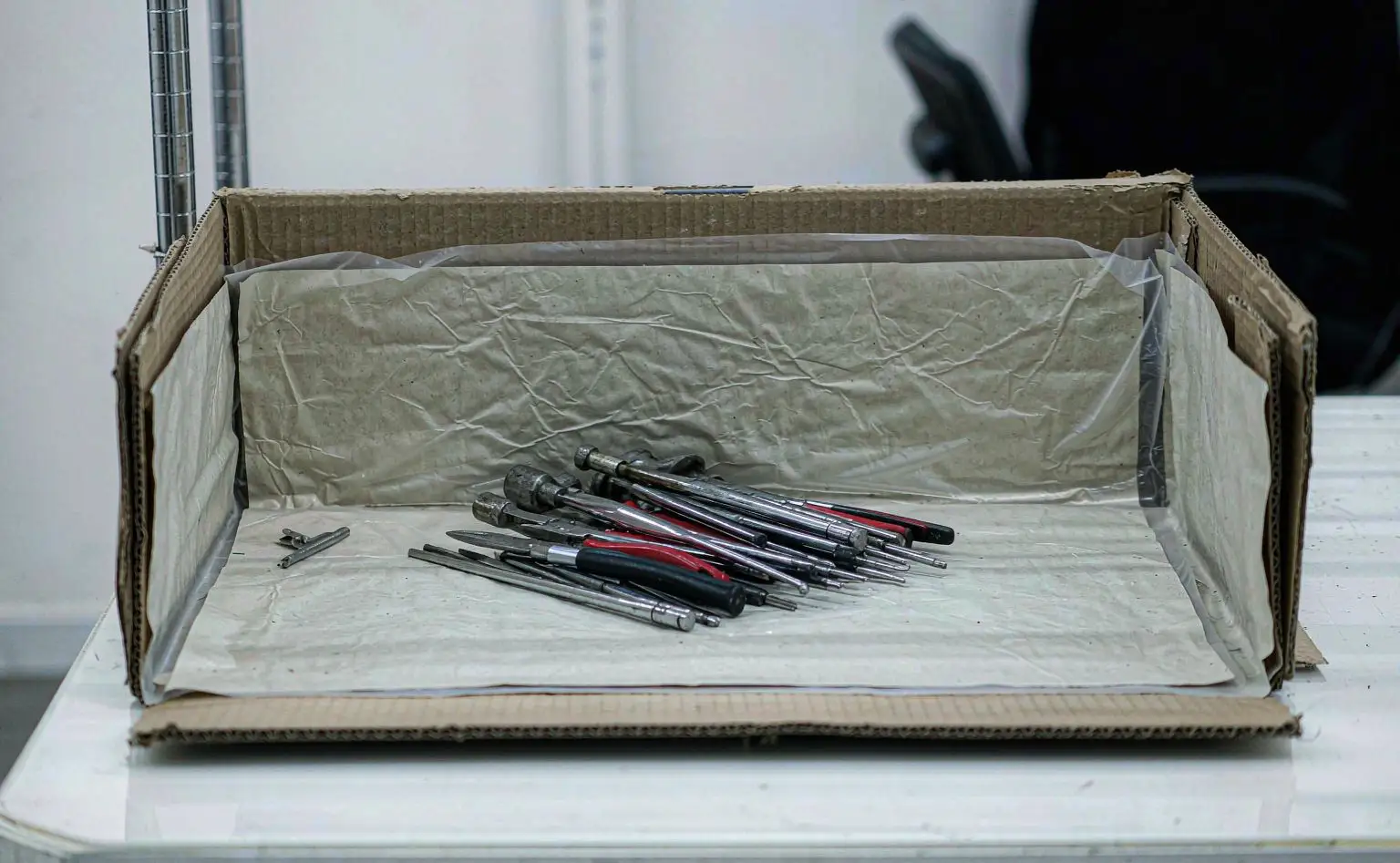
5. Finished store and container loading
In the store, pallets 10 cm off the floor and 30 cm from the wall, humidity below 60% with the dehumidifier running through the wet season, and every batch tagged with its inbound date so anything over 45 days ships first. Stack no more than five high: a crushed bottom carton closes against the goods and passes mould along.
Export adds three more: desiccant sized to the box, 8-10 strips in a 20 ft and 10-12 in a 40 ft; an air path between cargo and wall and gaps between cartons; and two boxes opened and smelled before loading, with a musty note sending the batch back for inspection. The sizing basis is in how much desiccant goes into a container.
Verification runs in three parts. Grip compound to ISO 846 or ASTM G21 with samples taken from the textured face. The finished tool through salt spray and adhesion tests to confirm the overmould neither lifts nor whitens with the antimicrobial in. A whole-box simulation at 40C and 90% RH for thirty days, opened to look at the grips and the inner carton wall.
6. Questions we get: feel, sheet count, white marks on steel
Does 1% change the feel or the colour of the grip? Below 1% the effect on Shore hardness is small; what sets feel is the compound hardness and the overmould thickness. Light and translucent grips need a non-yellowing inorganic grade or a colour check, while dark parts are less sensitive. Verify with two sets from one compound, with and without, measuring hardness, rebound and colour difference, then twenty grips each through pull-off and flexing.
How many sheets of paper does a box need? Count by box volume and type rather than by weight: one top and one bottom for a small box, three for a medium, one more per 20 cm of height for a large. Desiccant in the box does not reduce the sheet count, because the two do different jobs, and export boxes take one more sheet than domestic.
Does steel grow mould? No. White marks on steel are usually rust or cutting fluid residue. Wipe it: rust does not come off and smells of metal, mould wipes off with a sour note. Decide from that whether the fix is rust control or packing.
Four points: grip compound at 0.5%-1.0% of compound weight with iHeir-JS117, added at compounding, topped up for regrind; a thin anti-rust film on the blade, wiped clean, with desiccant for storage beyond thirty days; iHeir-D paper laid by box type facing the goods with a gap, and carton moisture checked at goods-in; store below 60% RH and open two boxes before the container is sealed.


