




 View Count:28
 Date:2026-10-16
Where should baby stroller mould work start? The cover goes through textile finishing, the plastic connectors take a masterbatch, and the metal frame only needs rust protection — mixed into one process, one of the three always gets missed. Covers take iHeir-BJ textile mildew inhibitor at 2%-3% o.w.f. on dry fabric weight, the plastic parts take iHeir-JS117 plastic anti-mildew powder at 0.5%-1% of finished weight. This article covers each part, the doses and the storage rules.
1. Why a stroller has to be treated material by material
A stroller assembles several materials into one unit: the cover, the canopy and the seat pad are textiles, the connectors, wheel housings and footrests are plastics, and the frame, rivets and handle are metal. The three take different processing routes, and protection enters at a different operation in each. Fabric is protected in finishing, where the fibre holds the agent; plastic is protected through a masterbatch mixed into the compound and fixed with the part; metal does not grow mould at all — its problem is rust, which belongs to pre-treatment and coating.
The places where spots appear confirm the split. After a long spell in a warehouse or a container, the first spots show on the folds of the cover, the underside of the canopy and the seam where the seat pad meets the frame: textile, or a damp pocket trapped between two materials, while the frame shows rust rather than mould. Treated as one job, one product’s dose gets carried across all three materials.
2. The cover, the plastic parts and the frame compared
The table lines up the material, the process, the figure and the points to watch for each part, as a first draft of the process card.
| Part | Material | Process | Figure | Points to watch |
|---|---|---|---|---|
| Cover, canopy, seat pad | Polyester or blended fabric | Padding, through the textile finishing bath | iHeir-BJ at 2%-3% o.w.f. on dry fabric weight | Bath 21-50℃ and pH 4.5-8.5; cationic, never with an anionic auxiliary in the same bath |
| Connectors, wheel housings, footrests | PP, ABS, POM | Masterbatch with the resin at the mixing stage, then moulded | iHeir-JS117 at 0.5%-1% of finished weight | Active content above 97%; mix thoroughly before moulding, never spray the finished part |
| Frame, rivets, handle | Aluminium or steel tube | Rust protection and coating only, no anti-mould agent | Coating adhesion and salt spray sampled to standard | Degrease and derust before coating; an anti-mould agent does nothing for metal |
| Assembly and finished-goods store | Complete unit | Humidity control and batched stacking | Relative humidity below 60% | Keep covers and metal parts apart, recheck before packing |
The first two rows are two separate dosing lines, the third is rust protection and coating, and the fourth is the storage discipline that backs everything up. Miss any one and the problem only appears after the customer opens the carton.
3. Covers and seat pads: padding with BJ at 2%-3% on dry fabric weight
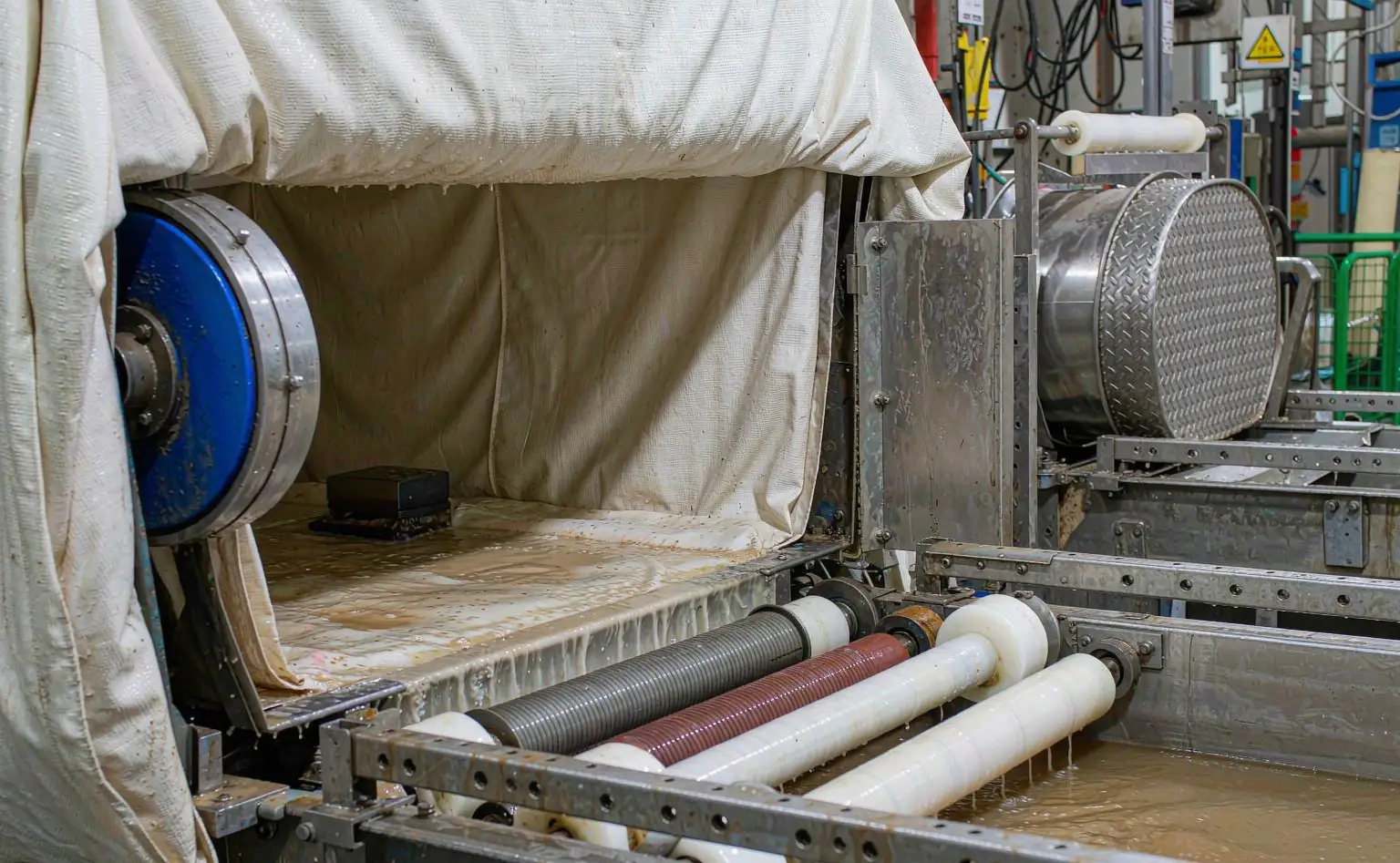
The fabric stage uses iHeir-BJ textile mildew inhibitor at 2%-3% o.w.f., counted on dry fabric weight, not on the weight of the bath. Active content is ≥8.0%, the bath runs at 21℃ to 50℃ and pH 4.5 to 8.5, and the recommended method is padding with a pick-up of 70%: 3 kg of the product treats 100 kg of fabric.
How it is diluted matters more here than anywhere else. The agent works by being adsorbed onto the fibre, so tipping a whole drum into the bath at once creates a local spike, adsorption becomes uneven, and one roll comes out with colour differences or a harsh hand. The right sequence is to pre-mix with 9 to 13 times its volume of water, then add it to the bath in portions so the cloth runs evenly and the squeeze rolls press evenly. A 2% dose covers more than a year of protection; longer-hold batches go to 3%, which reaches two to three years.
Check the ionic nature of everything else in the bath. BJ is cationic and cannot share a bath with an anionic auxiliary; where two stages are needed, run BJ first, dry, then apply the anionic auxiliary. Verify the bath partners before mixing, and add 0.1% of a cationic wetting agent where necessary to avoid uneven adsorption or a stiff hand.
4. Plastic connectors and wheel housings: JS117 at 0.5%-1% of finished weight
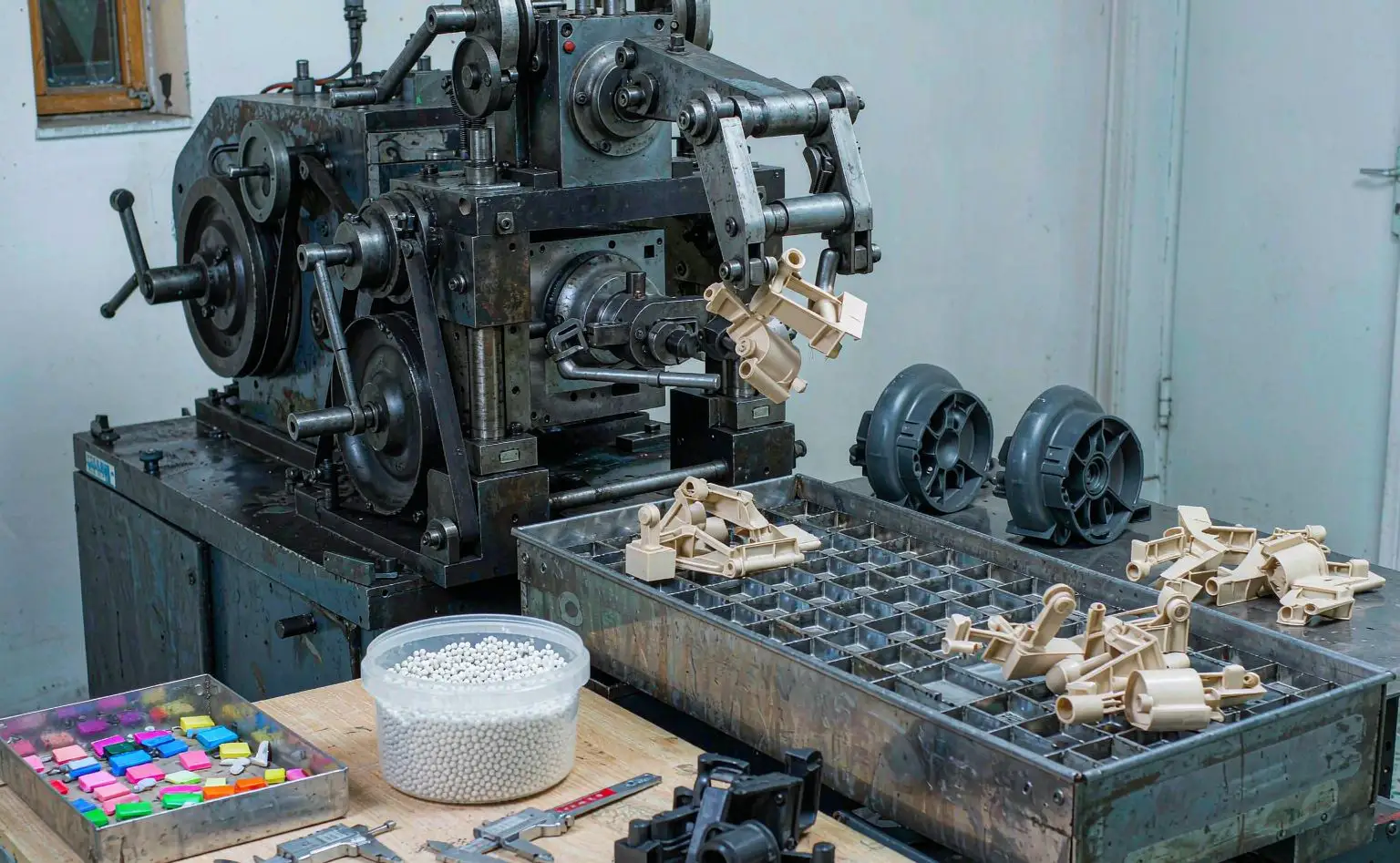
The plastic stage uses iHeir-JS117 plastic anti-mildew powder at 0.5%-1%, counted on the weight of the finished part. Active content is above 97% and bulk density 380 kg/m³, and it works with polyethylene, polypropylene, polyester, TPE and rubber. The powder is blended with the resin at the mixing stage and then moulded as usual, with no extra equipment.
The argument for an internal additive is even distribution. It travels with the melt into every corner of the part, so the inner walls of a connector and the recesses of a wheel housing are protected even though no spray could reach them; applied after moulding, on the other hand, a coating sits on the surface, rubs off during assembly and washes away in rain.
Two workshop points. First, mixing: the density difference between powder and resin causes segregation, and a short mixing time leaves one part of a batch protected and another not. Second, melt temperature: keep to the base resin’s own window rather than raising it for other reasons, because the additive system needs no extra heat. Granules or dry blending both work. Storage and export handling for plastic parts follow the practice set out for plastic products anti-mould and antibacterial solutions.
5. The metal frame: rust protection and coating, not an anti-mould job
Frames, rivets and handles are aluminium or steel. Metal does not grow mould; what it faces is rust. So no anti-mould agent goes into this stage, and the money belongs in coating pre-treatment and the coating itself: clean the oil, rust and oxide off the surface first so that adhesion holds, choose the coating system on its own terms, and sample adhesion and salt-spray resistance to the relevant standard.
The warning is not to merge the two jobs. Some shops, hoping to solve everything at once, add an anti-mould agent to the paint or the coating bath, which upsets the coating parameters, lowers adhesion and still does nothing about rust. The target on the metal line is rust, not mould, and writing that on the process card keeps the two apart.
The only mould-related action on metal is at assembly and storage: where the frame and the cover touch, damp collects, so do not leave covers pressed against the coating for long, and do not seal a unit in film so tightly that the moisture inside cannot escape.

6. Questions: one process for three materials, and can a final spray replace the stages
Can one product and one process cover all three materials? No. Fabric works by adsorption, plastic by masterbatch, metal by coating; the entry points sit in different operations and the bases differ — dry fabric weight for one, finished weight for another, and nothing for the third. Merged, all three usually end up underdone.
Can a spray on the finished stroller replace the earlier stages? It cannot. A spray sits on the outside and misses the folds of the cover, the inner walls of the plastic parts and every face where two materials meet; a finished unit also carries metal parts and electrical components that should not be run through a bath. Do the work upstream, and keep the finished stage to humidity control and packing.
Four points carry the work. Covers, canopies and seat pads take iHeir-BJ textile mildew inhibitor at 2%-3% o.w.f. on dry fabric weight, bath at 21-50℃ and pH 4.5-8.5, pre-mixed and added in portions. Plastic connectors and wheel housings take iHeir-JS117 plastic anti-mildew powder at 0.5%-1% of finished weight, mixed in at the compounding stage. The metal frame gets rust protection and coating only. The finished-goods store holds relative humidity below 60% and keeps covered units away from bare metal. Samples and TDS are available for both products.


