




 View Count:31
 Date:2026-10-17
Treadmill mould: how do you prevent it on the running belt, the handrail and the motor cover? The belt is a fabric core, the handrail is PVC over-moulding and the motor cover is a plastic part, so one recipe across all three leaves one of them unprotected and the batch reaches a humid export market spotted. The belt takes iHeir-BJ textile mildew inhibitor by impregnation at 2%-3% o.w.f., while the PVC handrail and the motor cover take iHeir-JS117 plastic anti-mildew powder at 0.5%-1%. This article covers the dosing stage, the figures and the shop humidity rules for all three.
1. Treadmill mould: belt fabric, handrail over-moulding and plastic covers are three separate places
A treadmill looks like a metal frame with a plastic shell, and what actually moulds is three things. The belt is a fabric core with a surface coating, and the gaps between the fibres take up moisture as soon as shop humidity rises; the belt is also pressed and warmed against the rollers, making it the most closed-in run on the whole machine. The handrail is wrapped in PVC, and if that over-moulding gets no internal additive, hand sweat and gym humidity leave marks on the surface first. Motor covers, end caps and similar plastic parts do not mould by themselves, but the gaps between them, plus release residue from moulding, are where the problem starts in storage and on the sea freight.
What all three share is that the material carries no protection; what differs is the material. On fabric, the additive has to adsorb onto the fibres and survive washing and abrasion. PVC and polyolefins are thermoplastic systems, so the additive has to survive the moulding temperature and disperse evenly. The dosing stage, the basis for the figure and the temperature window are all different, and the belt is counted on fabric weight while the plastic parts are counted on part weight.
2. The three places and their dosing compared
The table lines up the material, the dosing stage, the figure and the points to watch for each place, as a first draft of the process card.
| Part | Material | Dosing stage | Figure | Points to watch |
|---|---|---|---|---|
| Running belt | Fabric core, polyester or nylon base cloth | Impregnation with nip, bath at 21℃-50℃ | iHeir-BJ at 2%-3% o.w.f. | pH 4.5-8.5, ideally 6; pre-mix with 9-13 times its weight of water and add in portions; never run with anionic auxiliaries |
| Handrail over-moulding | PVC over-moulding | Blended with the resin at the mixing stage, then extruded or moulded | iHeir-JS117 at 0.5%-1% of finished weight | Active content above 97%; insoluble in water and hard to wash out; mix well before forming |
| Motor cover and end caps | Polyolefin or PVC parts | Same stage, same product, counted on part weight | iHeir-JS117 at 0.5%-1% of finished weight | Thin parts and short cycles; weigh per batch and check the figure batch by batch |
| Assembly and store | Complete machine | Confirm belt and plastic parts are dry before assembly | Shop humidity below 60% relative humidity; keep finished goods off wall and floor | A damp belt fitted to the deck seals water between the rollers |
The first three rows are three separate lines, and the fourth covers assembly and storage. Miss any one and the problem only shows after the customer has used the machine for a while.
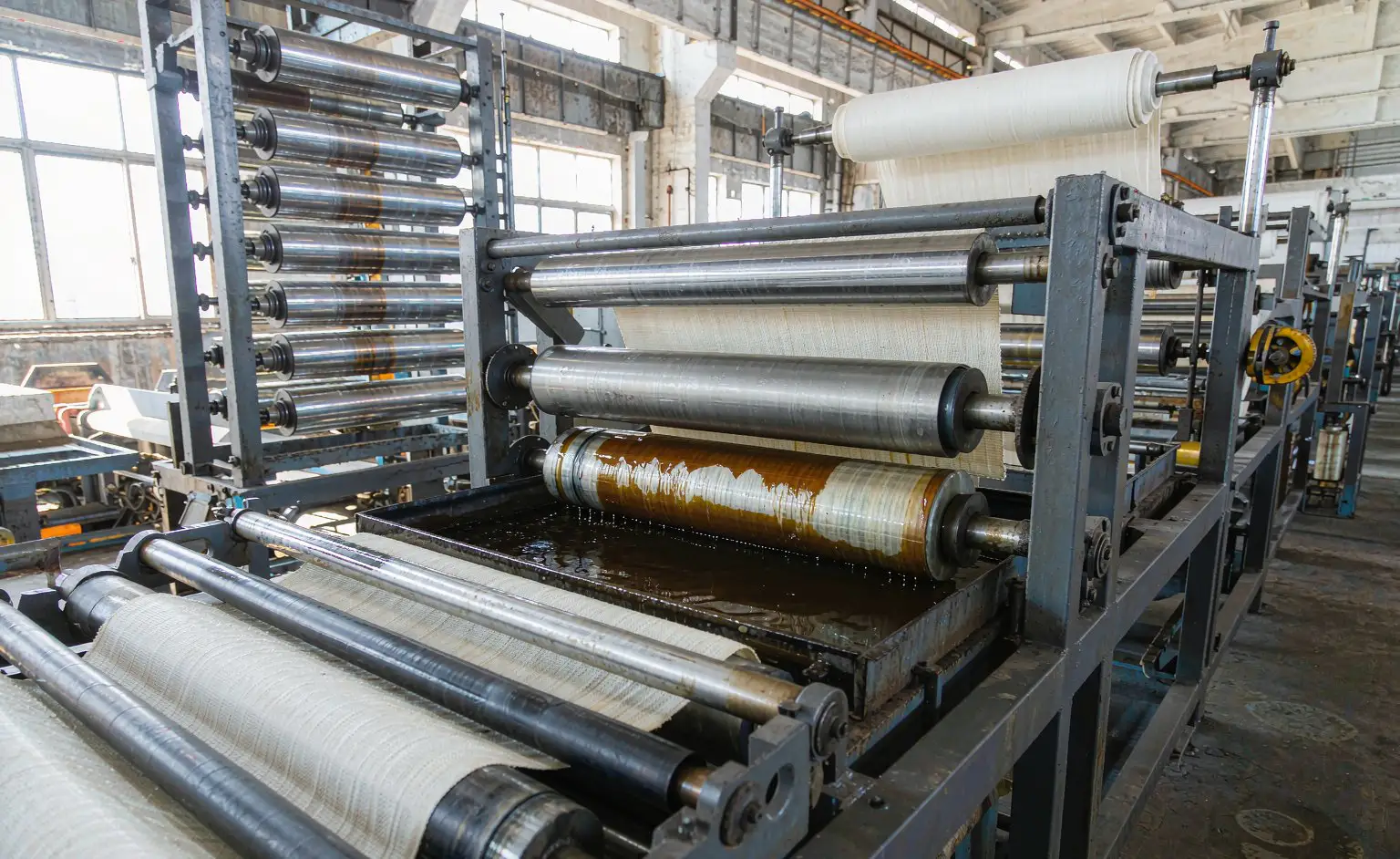
3. The belt: fabric core takes BJ by impregnation at 2%-3% o.w.f.
The belt uses iHeir-BJ textile mildew inhibitor at 2%-3% o.w.f. (on weight of fabric). It is a clear to pale yellow liquid that dissolves in water, with an active content of at least 8.0%, a bath temperature range of 21℃-50℃ and a working pH of 4.5-8.5, ideally 6. A 2% dose roughly covers a year or more of protection and 3% covers two to three years, so a belt, which stays pressed and damp for long periods, is worth dosing at the top of the range.
Three details go wrong most often. First, pre-mix the agent with 9-13 times its weight of water and add it to the bath in portions, because tipping it in at once gives uneven adsorption. Second, use soft water, since calcium and magnesium in hard water react with the agent and eat into the dose. Third, never run it in the same bath as an anionic auxiliary, because the two cancel each other out. Hold the wet pick-up at about 70% and check the nip pressure every shift. BJ covers anti-mould, antibacterial and anti-mite — insect control is a separate product line.
4. Handrail and motor cover: over-moulding and plastic parts take JS117 at 0.5%-1%
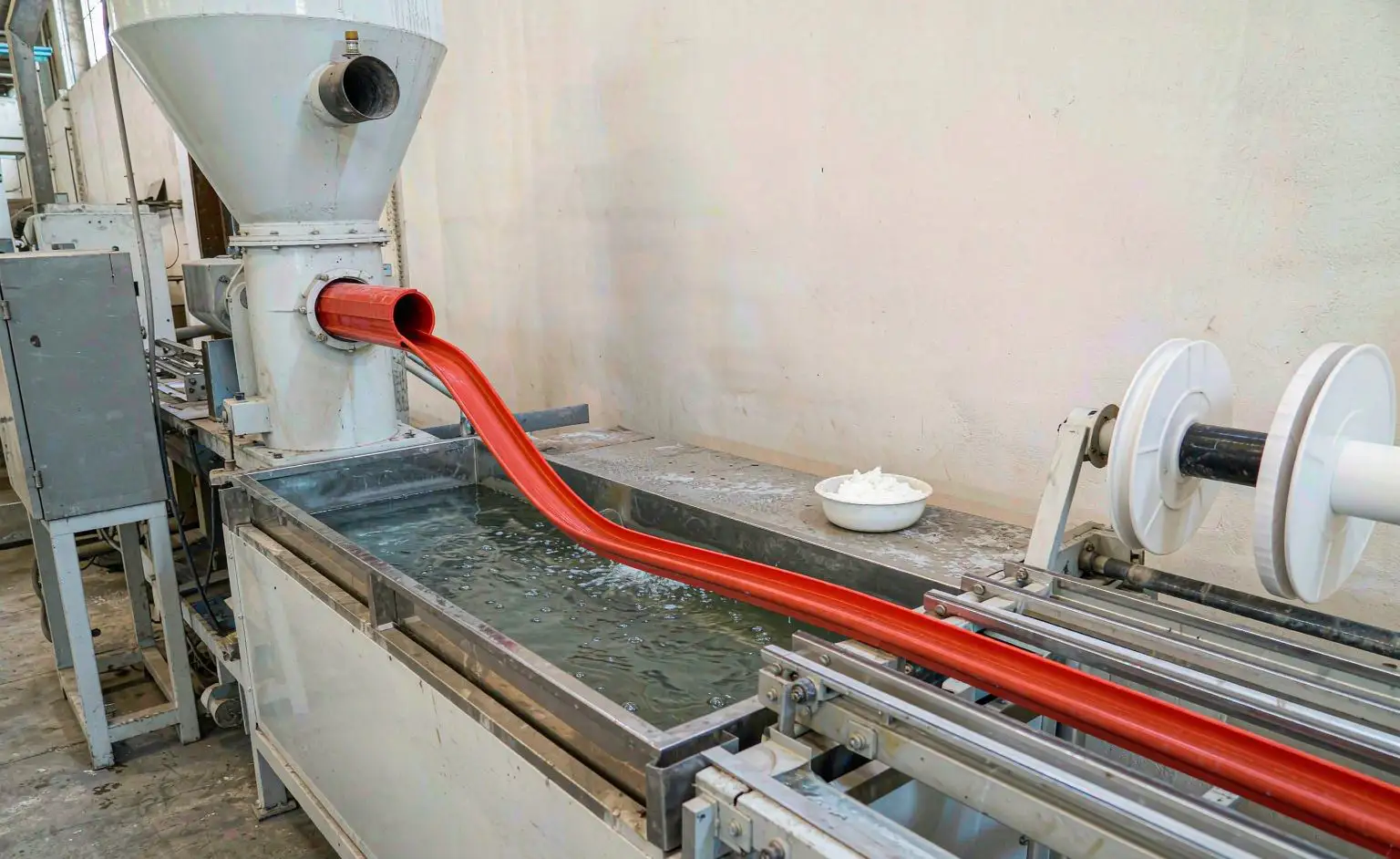
The handrail over-moulding and the motor cover use iHeir-JS117 plastic anti-mildew powder at 0.5%-1%, counted on the weight of the finished product rather than the resin. It is a white to pale yellow powder with an active content above 97%, a specific gravity of 1.21, a bulk density of 380 kg/m³ and a mean particle size of 110 microns (D50), and it suits PVC, PU, silicone rubber and polyolefin systems. It does not dissolve in water, so there is no leaching problem and it resists washing and sweat better than a water-soluble additive.
Dose it at the mixing stage: blend the powder with the resin and the other additives, then extrude or mould. The powder dusts easily, so fit dust extraction at the feed point and have operators wear the mask and gloves set out in the safety data. On the figure, 0.5% suits a normal cycle and 1% suits long export shelf life; thin parts with short cycles in particular should be weighed per batch and logged, not estimated at the machine. The acute oral LD50 is 4480 mg/kg in chicken, a low-toxicity grade.
5. Process order and temperature: fabric finishing and plastics run separately
The two lines run in a different order. The belt is finished as fabric first and then coated and embossed, so the additive goes in at the impregnation stage and the later coating temperature has to sit inside what the fabric can take, because too much heat lets the adsorbed agent migrate. The handrail and plastic parts are dosed at the mixing stage and then formed, so the additive disperses in the melt and the forming temperature follows the normal process for each grade, while long hot dwell times should be avoided.
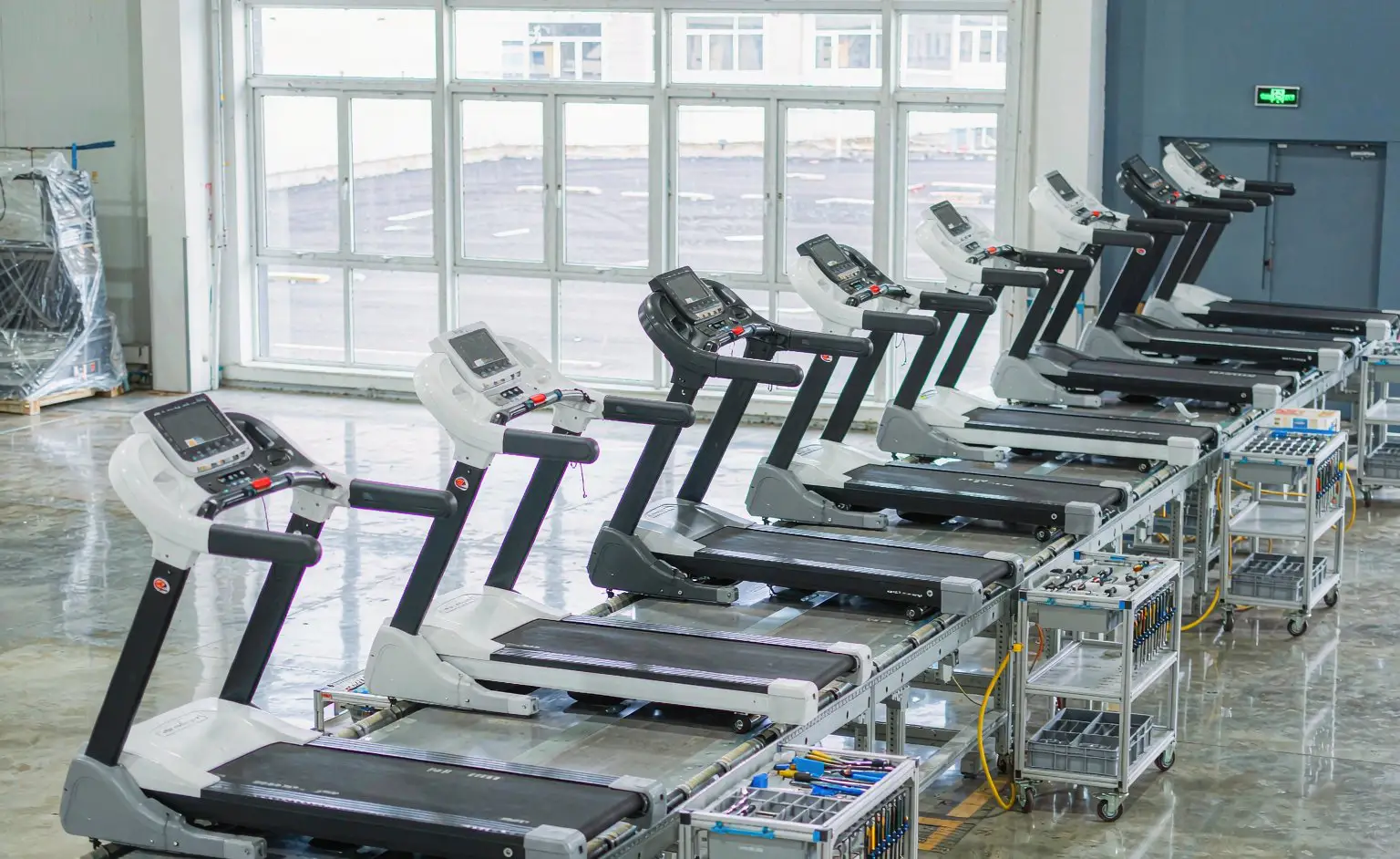
The two lines meet at assembly. Before assembly, confirm that the belt is dry and the plastic parts have cooled and set — fit a damp belt to the deck and the space between the rollers becomes a closed, warm, wet pocket, wasting everything done upstream; fit plastic parts before they cool and the sealed shell condenses inside. Hold this area below 60% relative humidity and store finished machines off wall and floor.
6. Questions: can one product cover all three, and can the belt be sprayed instead
Can all three places use one additive, to save stocking two? Not advisable. Fabric relies on impregnation and adsorption onto the fibres, while plastic parts rely on internal dosing that survives the forming temperature, so the mechanism and the basis for the figure are different. Forcing one product onto both leaves the fabric with an additive that washes off and the plastic parts with half the dose lost to heat. Using the right product for each class saves money rather than costing it.
Can the belt be sprayed on the surface instead of impregnated? No. A spray sits on the surface, and a belt is pressed against the rollers and wiped repeatedly, so that layer goes first. Impregnation puts the protection between the fibres, so there is still protection however far the surface wears. Samples and TDS are available for both products, and a trial against your grades settles the figures.
Four points carry the work. The belt takes iHeir-BJ at 2%-3% o.w.f. by impregnation, bath at 21℃-50℃ and pH 4.5-8.5, pre-mixed and never run with anionic auxiliaries. The handrail and the plastic covers take iHeir-JS117 at 0.5%-1% of finished weight at the mixing stage. Shop humidity stays below 60% and parts are dry and cool before assembly. Finished machines are stored off wall and floor, first in first out.


