




 View Count:35
 Date:2026-10-24
Where does energy storage power mould come from on a unit that sits boxed for months, and which part takes which additive? A unit that leaves the line clean and reaches the customer with a cloudy film on the shell and tacky seals is a complaint, not a defect claim anyone can argue. The shell resin takes iHeir-JS117 at 0.5%-1.0% of finished weight, the silicone overmoulds on sockets and handle take iHeir-GGTK at 1%-2%. This article covers dispersion, the overmoulding stage and the finished-goods store.
1. Unit mould starts on the shell and on the over-moulded seals
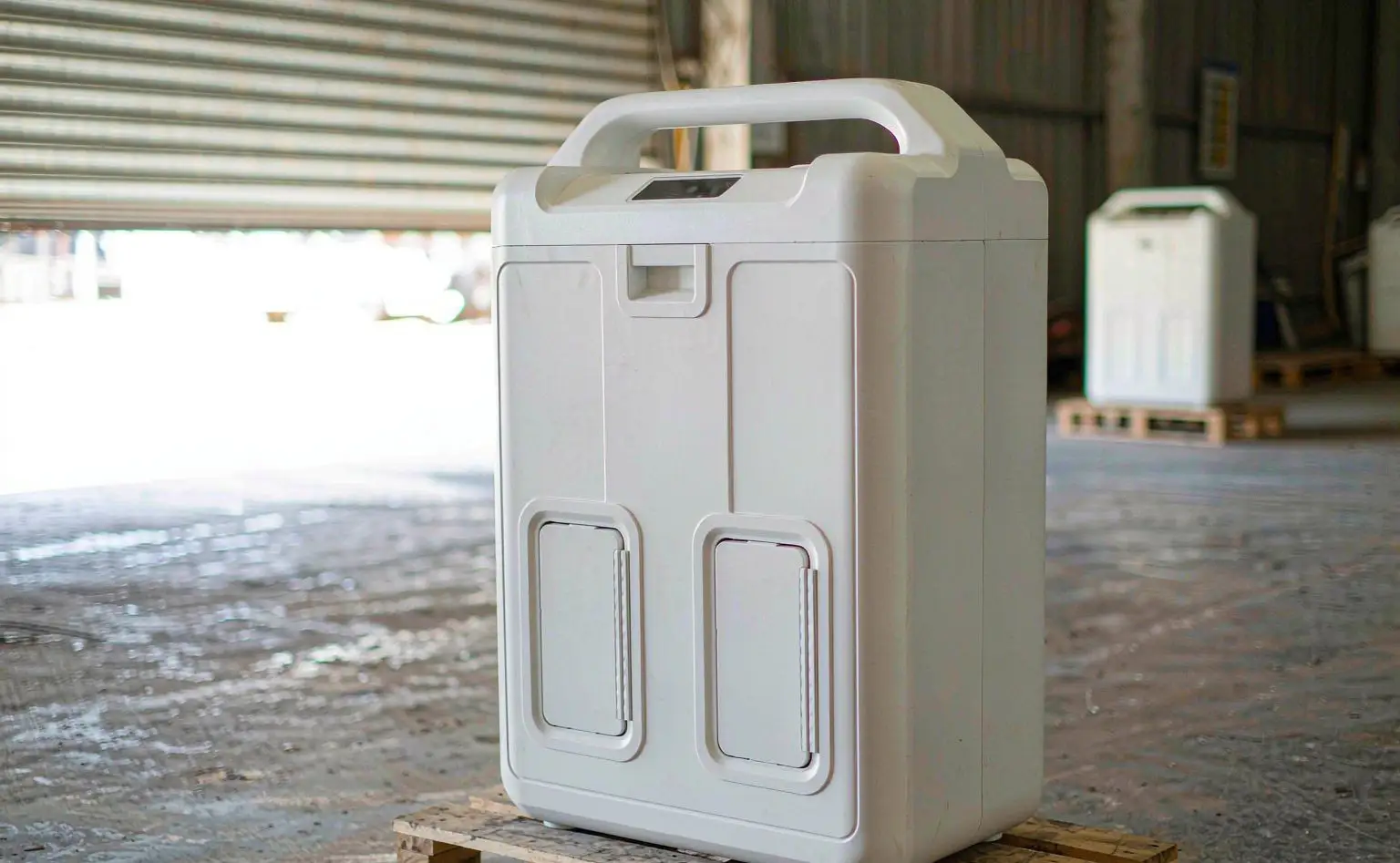
An energy storage unit is a box with cells in it: a plastic shell and base, a front panel with a display and output sockets, and a soft overmould over the sockets. Its problem is not rain, it is confinement. The unit goes into a colour box, a carton, a pallet, and then sits in a warehouse for three months: nothing ventilates, and moisture from the carton and the foam collects on the shell.
The first is the shell. It is a large moulding with many ribs, and the texture on its surface holds dust; dust takes up moisture and, with release agent residue underneath, spots start at rib roots and around boss circles and spread as pale patches. The second is the socket overmould: the soft layer over the outputs and the handle is silicone or TPE, worked by hands, rain and repeated plugging, and once the surface is tacky mould grows along it, with the bond line between soft and hard compound holding water in a corner.
The third is the foam inside. Foam cushions the cells, open-cell foam absorbs water, and in a humid shop it is a wet sponge; once the unit is closed that water has nowhere to go, so mould starts inside and the customer finds it weeks later. All three share one condition: water is sealed in, so the treatment is split by material.
2. Shell and overmould: two locations
The table sets out material, product, level and addition point for each; one is a rigid resin and one a soft compound, so they run on two lines with different bases and temperatures.
| Location | Material and stage | Product and level | Addition point | Basis |
|---|---|---|---|---|
| Shell, base, brackets | PC/ABS or PP moulding | iHeir-JS117 0.5%-1.0% | Blending or masterbatch | On finished product weight |
| Socket overmould | Silicone overmoulding | iHeir-GGTK 1%-2% | Mixing or compounding | On overmould compound weight |
| Handle overmould | Silicone or TPE | GGTK for silicone, JS117 for TPE | Per material, separately | On that part’s compound |
| Foam and sponge inside | Cushioning parts | Dry before assembly plus shop humidity control | Assembly | Not an additive basis |
| Finished store and export | Finished unit | Desiccant and carton humidity control | Boxing and loading | On carton volume and container |
Two boundaries. Read the material, not the part name: the same handle runs on GGTK in silicone and JS117 in TPE, and deciding from the drawing is the commonest mistake. And the basis is each compound’s own weight, shell on finished weight, overmould on overmould weight, never one multiplication on the whole unit.
3. Shell: masterbatch into the resin, dispersion first
The shell takes iHeir-JS117 plastic anti-mildew powder at 0.5%-1.0% on the final product weight. Active content is above 97%, melting range 100-120C, moisture below 0.2%, specific gravity 1.21, bulk density 380kg/m3 and mean particle size 110 microns; it is insoluble in water, does not leach, resists wash-out, contains no arsenic, and oral LD50 in chickens is 4480mg/kg.
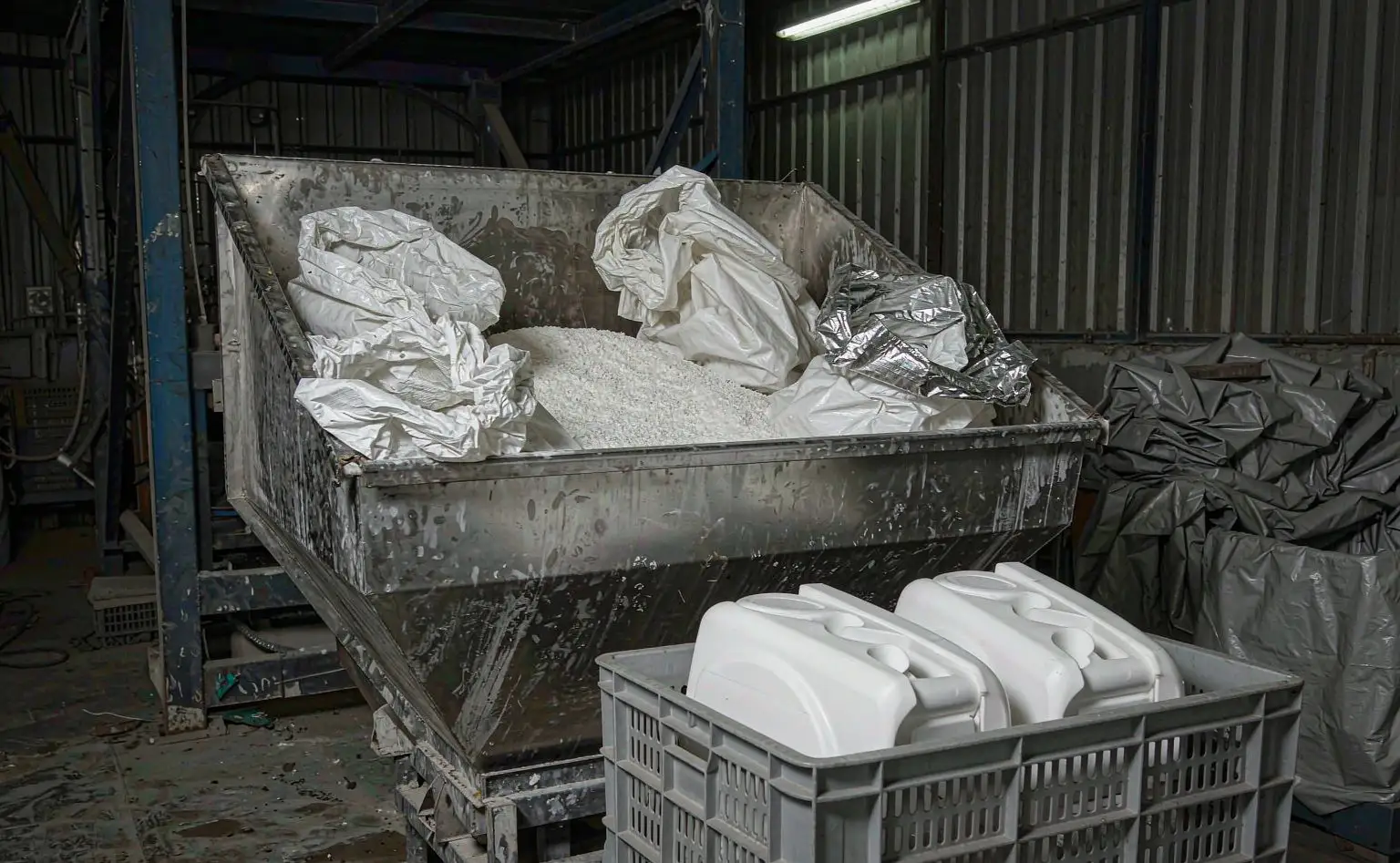
In production this stage stands or falls on dispersion, not on the level. Three practices: go through a masterbatch, building a 10%-20% concentrate then letting it down to 0.5%-1.0% at the machine, which gives the best batch consistency; if powder goes in directly it must pass the high-speed mixer, tumbled with pellets for three to five minutes, because dusting it into the hopper achieves nothing; and top up for regrind, since after three passes the agent is diluted and has to be replaced in proportion. The check is a content sample at three positions, not the colour of the part.
Hold the 100-120C window. A large shell needs flow and barrels get pushed up; pushed up, the agent decomposes, the part yellows and then embrittles, and a shell that must pass drop and flame tests shows that immediately. The material boundary matters too: JS117 is specified for PVC, PU, polyolefins, polyester, TPE and rubber, so a PP bracket is inside the list and a PC/ABS shell is not. A plant running PC/ABS should trial at 0.5%-1.0% before deciding; the wider routing is in plastic products anti-mould solutions.
4. Socket and handle overmoulds: iHeir-GGTK at 1%-2%
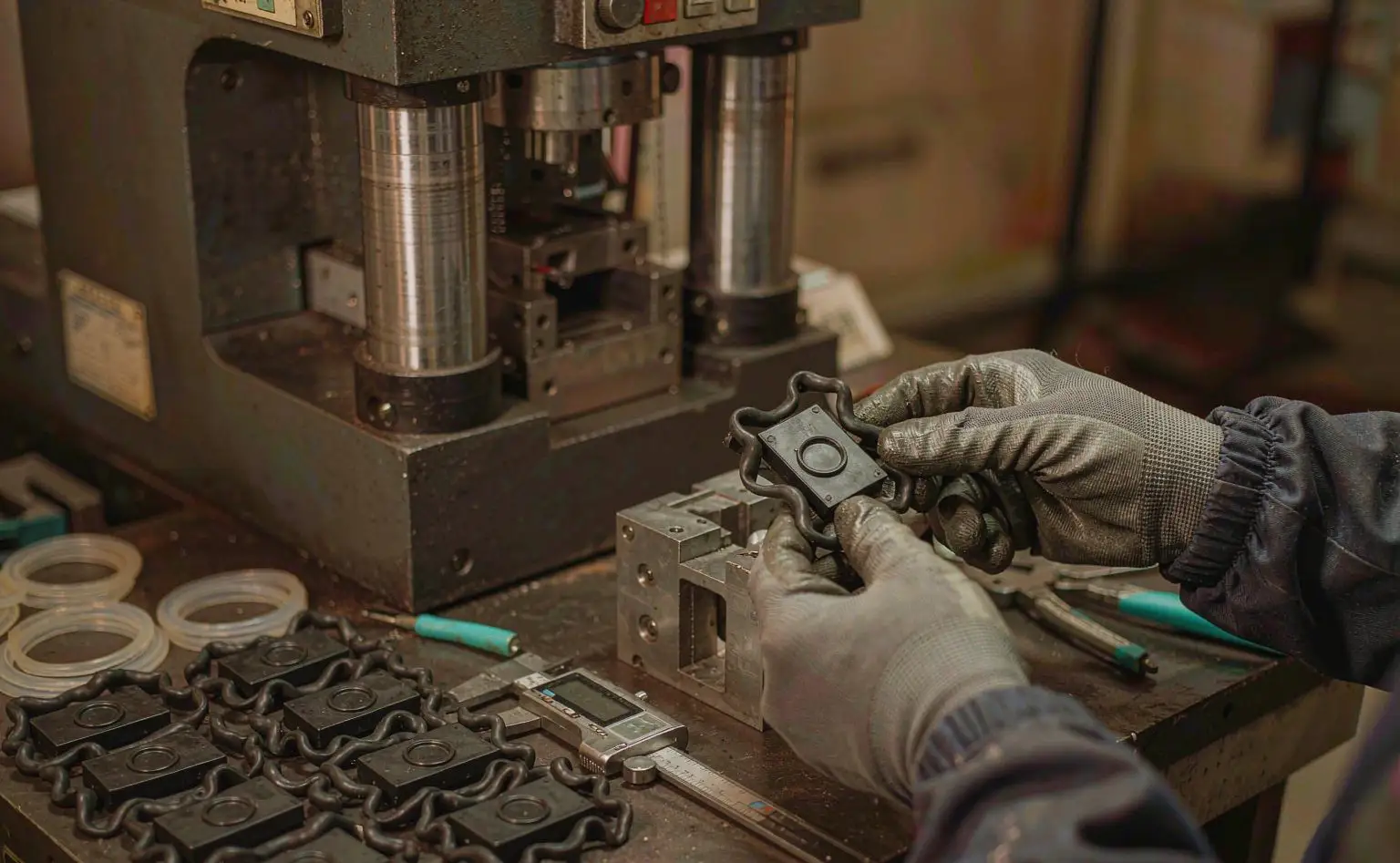
The overmould on the outputs and the handle is silicone, so it takes iHeir-GGTK silicone antimicrobial agent at 1%-2%, added directly and stirred to uniformity, at a service temperature not above 200C. Active content is at least 20%, specific gravity 1.05-1.15, packing 25kg drums, oral LD50 above 5000mg/kg. It addresses what a soft part does under hand sweat and rain: it turns tacky, discolours and develops a smell.
Add at mixing or compounding. Overmould silicone goes through the rolls with curing agent and pigment, and GGTK added there disperses most evenly; added to an already mixed batch it can only be given a few thin passes, and the parts come out hard in one section and soft in the next, so plugging feel varies. Keep the 200C ceiling: pushing cure temperature for cycle time decomposes the agent and yellows a compound that then does not match a white shell.
The process side handles the bond. Dry the rigid part before overmoulding: moisture sealed at the interface blisters on heating and a burst blister is a doorway for mould. No release agent on the bond face, since residue stops the compound adhering and a wide gap holds water. And do not box parts straight off the tool. The silicone-plastic boundary is covered in silicone antimicrobial selection.
5. Foam inside, assembly and the finished-goods store
The inside takes no additive, it takes control: check incoming foam for moisture and dry or reject any batch that has taken up water, hold shop humidity down with a dehumidifier through the wet season, and blow the inside of the shell dry before the foam goes in.
The finished store and export close three more. Boxing: desiccant in before the bag is closed, sized to the carton and at the upper level for sea freight, and the bag is not vacuumed because vacuum pulls moisture into the shell texture. Stacking: no shrink film tight around cartons, dunnage underneath and a gap to the wall. Loading: absorbent material in the container, an air path between cargo and wall, and two cartons opened before loading to check for a musty note. The container side is in container moisture and mould in shipping.
6. Questions we get: does the additive affect flame rating or feel
Does JS117 in the shell still pass the flame test? Flame performance is a formulation question, and 0.5%-1.0% of a powder has limited effect on most flame-retardant PC/ABS and PP systems, but it must be proven on the same formulation: three sets at zero, 0.5% and 1.0% through vertical burn and glow-wire together before release. Results from another grade do not carry over.
Does GGTK harden the handle? The effect on hardness at 1%-2% is limited; what sets the feel is the Shore hardness of the compound and the overmould thickness. Verify with two sets from the same compound, with and without the agent, measuring hardness and rebound, then ten handles each through pull-off and flexing.
How is the effect verified? Plastics go to ISO 846 or ASTM G21 for a growth grade, with samples cut at rib roots and around bosses rather than a flat face; silicone overmoulds also run to ISO 22196. Then a whole-carton simulation in damp heat for thirty days, opened to look at the shell and the overmould.
Four points: JS117 at 0.5%-1.0% of finished weight in the shell at 100-120C; GGTK at 1%-2% on overmould compound weight, below 200C; dry rigid parts and no release agent on the bond face; and control foam moisture, boxing desiccant and container humidity.


