




 View Count:2
 Date:2026-10-23
Where does collapsible bucket mould start, and where does the treatment go? The answer sits in the fold lines: every fold holds water and dirt, so spots appear as a line along each fold, and the rigid rim comes second. The TPE and the rigid parts take iHeir-JS117 at 0.5%-1.0% of product weight, the silicone seal takes iHeir-GGTK at 1%-2%. This article covers both addition points and the temperatures.
1. Collapsible bucket mould starts in the fold lines
The bucket is a soft body with a hard rim. The body is TPE or soft PVC formed into an accordion, while the rim, base and handle are PP or ABS, joined by two-shot overmoulding or an insert. The fold line is the thinnest wall in the product: folded, the outside is in tension and the inside in compression, and after a few hundred cycles fine cracks open on the fold surface. Water and dirt that get into those cracks cannot be wiped out, and mould starts there.
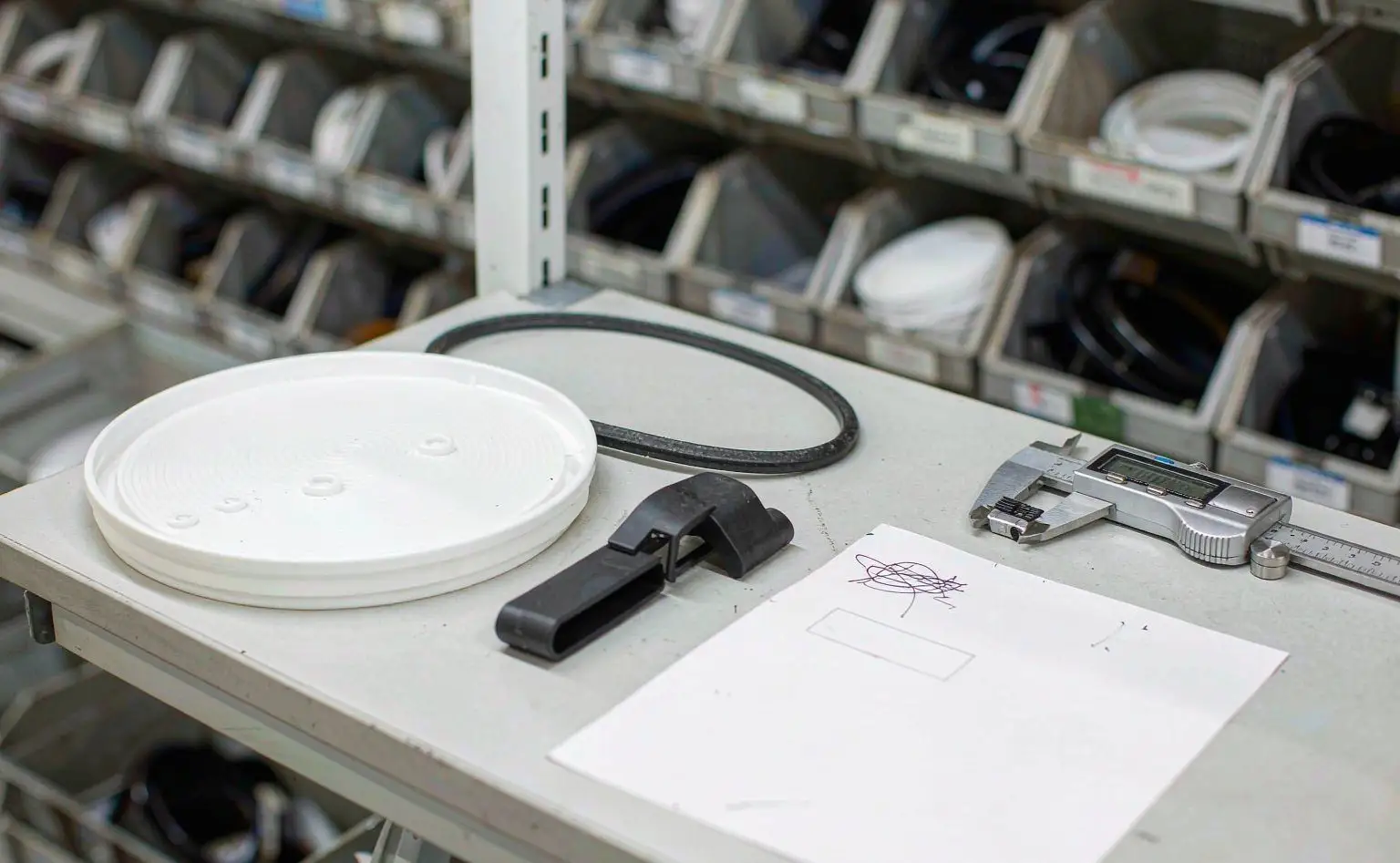
The second place is the rigid rim, which takes the highest load in the whole bucket. If the moulded surface finish is poor, or the part is scratched in transit, water stands on it and spots develop. The third is the lid seal: a silicone ring sits against water for its whole life, the groove behind it holds water, and mould makes the ring tacky, discoloured and eventually unable to seal, at which point the bucket leaks.
All three share one condition: water stays in the gap. That is why a collapsible bucket cannot be protected by a surface treatment. A coating washes off after a few fills and the mould in the folds carries on. Articles of this type are protected from inside the material, not from the surface.
2. Soft compound, rigid parts and silicone: three locations
The table sets out the material, agent, addition point and basis for each. The first two use the same agent and the same basis, the finished product weight. The third is a silicone part, a different system, so it takes a different product.
| Location | Material and stage | Agent and level | Addition point | Basis |
|---|---|---|---|---|
| TPE body and folds | Soft compound moulding | iHeir-JS117 0.5%-1.0% | Blended with resin before moulding | On finished product weight |
| Rim, base, handle | PP / ABS moulding | Same JS117 at the same band | Blending or masterbatch | On finished product weight |
| Lid seal | Silicone compression moulding | iHeir-GGTK 1%-2% | Mixing or compounding stage | On silicone weight |
| Packing and export | Finished bucket | Desiccant and humidity control | Bagging and loading | On carton volume and container |
Two boundaries. JS117 and GGTK are not interchangeable: one is a mould powder for plastics and elastomers, the other an antimicrobial for silicone systems, and the wrong one fails to disperse and shows up as hard specks. The basis is the finished product weight, not the weight of one part, so a two-shot part is costed on the whole bucket.
3. TPE folds and rigid body: iHeir-JS117 at 0.5%-1.0%
iHeir-JS117 plastic anti-mildew powder is recommended at 0.5%-1.0% on the final product weight. Active content is above 97%, melting range 100-120C, moisture below 0.2%, it is insoluble in water with no water-soluble leaching, it resists wash-out and contains no arsenic; it suits PVC, PU, polyolefins, polyester, TPE and rubber. Oral LD50 in chickens is 4480mg/kg. A bucket is in contact with water throughout its life, and resistance to wash-out is the main reason this grade is chosen: the agent does not migrate into the water, so the protection stays in the fold.
The addition point is the blending stage. JS117 is a powder, so it is tumbled with TPE or PP pellets in a high-speed mixer before the machine, or built into a masterbatch and let down. Sprinkling powder into the hopper does not work, because the feed section cannot mix it and the parts come out protected in patches. Mixing time follows the equipment; the check is to sample three positions in the batch and confirm the content is inside tolerance.
Temperature is critical for this grade. With a melting range of 100-120C, the barrel is set to that window and not pushed up for flow: too hot and the agent decomposes, the part turns yellow and the fold goes brittle.
Levels follow the format. A small bucket under 5 litres has thin walls and few folds, so 0.5%-0.7%; a 10-15 litre bucket runs 0.7%-0.9%; a 20 litre and above bucket, with more folds and more folding cycles, runs 0.9%-1.0%.
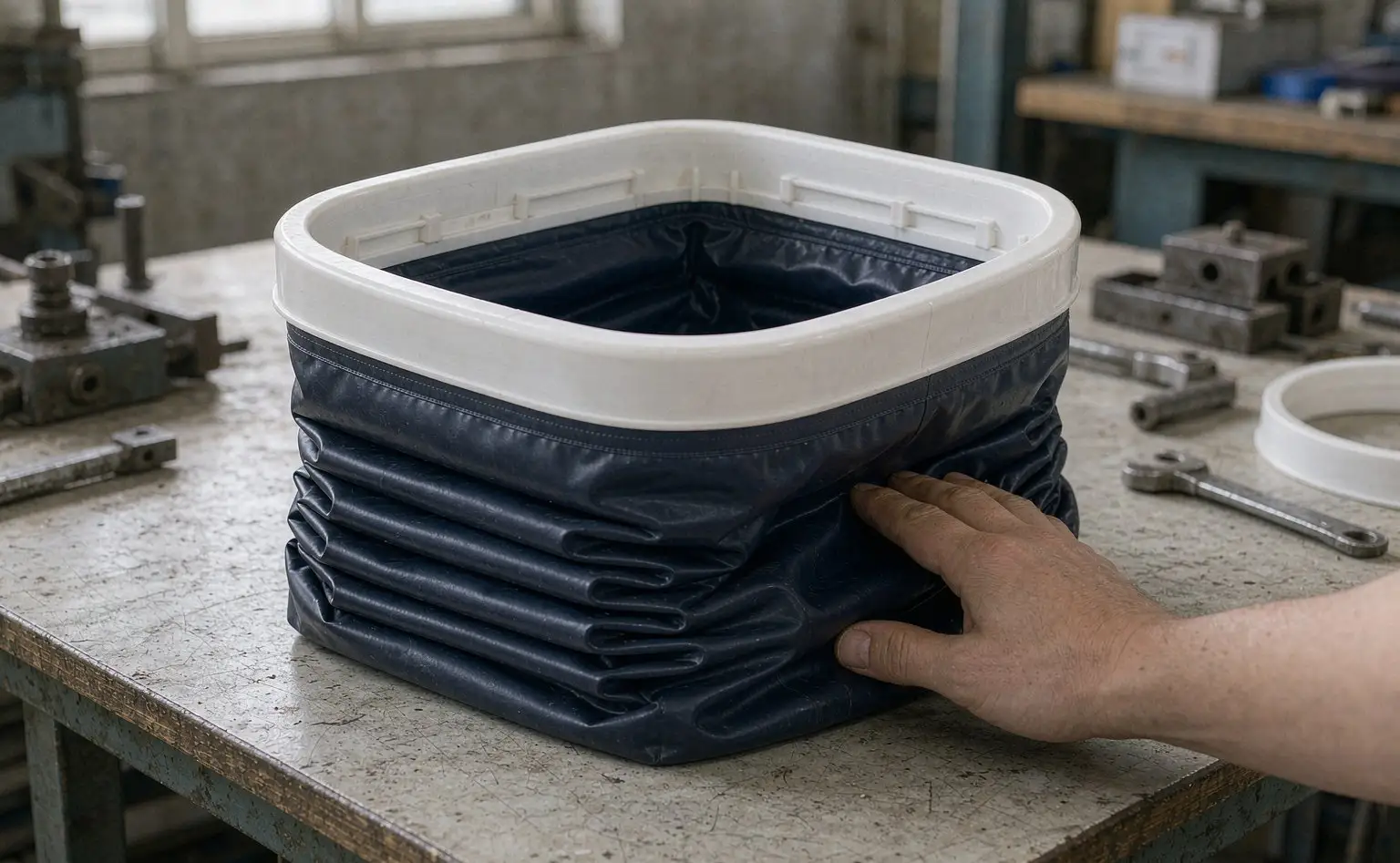
4. Silicone seals and handles: iHeir-GGTK at 1%-2%
The lid seal, and the silicone overmould on some handles, belong to the silicone system, where a plastic mould powder does not apply. These take iHeir-GGTK silicone antimicrobial agent at 1%-2% added directly and stirred to uniformity, with a service temperature not above 200C. Active content is at least 20%, packing is 25kg drums, and oral LD50 is above 5000mg/kg. It addresses the way silicone parts actually fail in water: degradation, discolouration and a musty smell.
The addition point is mixing or compounding, where the curing agent and fillers go in. GGTK added at that stage and passed through the rolls disperses most evenly; added to an already mixed batch, it can only be worked in with a few thin passes on the mill, which is less uniform. Keep the 200C ceiling: set the curing temperature by the silicone grade, not by the wish to shorten the cycle.
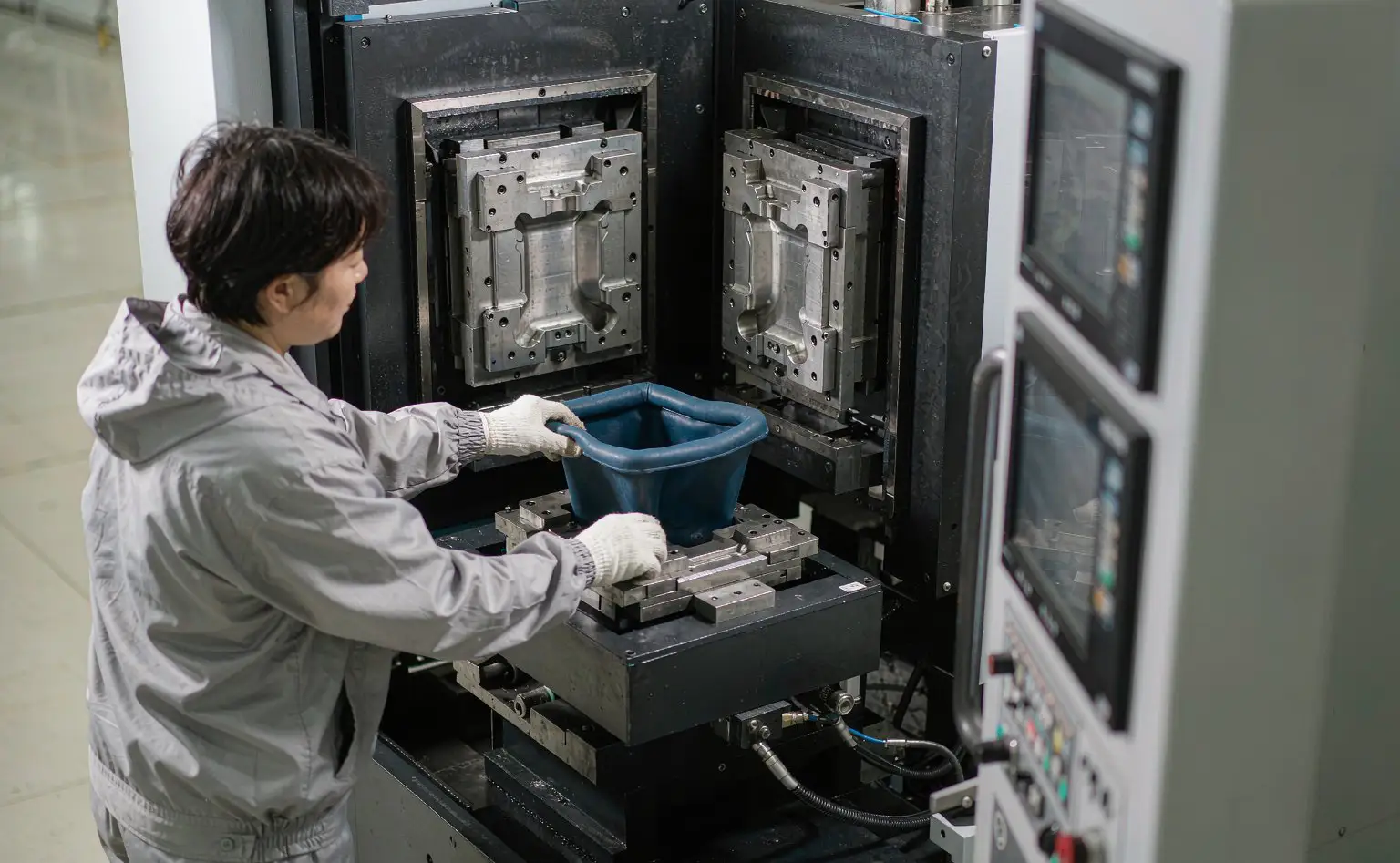
5. Overmoulding and assembly: fold life is a process question
The agent looks after mould; fold life is process. Match the two melt temperatures: a TPE overmoulded onto a rigid insert bonds poorly if the insert is too cold, and skins over too early if it is too hot. Dry the insert before overmoulding, because moisture sealed at the interface blisters at the root of the fold. Do not collapse the bucket straight after demoulding, since folding a warm body sets a hard crease. And top up for regrind, which dilutes after three passes.
Assembly and packing close three points. Wipe the seal dry before it goes into its groove. After the leak test, open the bucket and let it dry before bagging, because bagging it collapsed leaves water in the folds. For export, ship it part-opened with desiccant in the carton; the storage side is covered in rubber anti-mould practice.
6. Questions we get: does the powder affect the fold or the seal
At 1%, does JS117 harden the TPE and crack the folds? At 0.5%-1.0% with proper blending the effect on hardness is limited; what actually cracks a fold is wall design, corner radius and barrel temperature. Prove it with a folding fatigue test: the same compound with and without the agent, the same stroke, ten thousand cycles, then look for whitening and cracks at the fold.
Can the body and the seal both use JS117? Not if the seal is silicone, where the system does not match and the powder will not disperse. If the seal is TPE, yes, and the two locations collapse into one product at a lower cost. Confirm the real material of the seal before deciding, rather than working from the drawing.
How is the effect verified? Mould resistance goes to ISO 846 or ASTM G21 for a growth grade, with the sample cut from a fold rather than a flat wall; antimicrobial performance goes to ISO 22196. On the floor: fill the bucket, collapse it, leave it seven days, then check the folds for spots. Both products have samples and TDS for a trial on your own material.
The four points to take away: iHeir-JS117 at 0.5%-1.0% of finished product weight in the TPE body and the rigid parts, the upper band for large multi-fold buckets, barrel held at 100-120C; iHeir-GGTK at 1%-2% for silicone seals, added at compounding, below 200C; dry the rigid insert before overmoulding and do not collapse a warm bucket; top up for regrind and dry the bucket open before bagging.


