




 View Count:2
 Date:2026-10-23
How is trekking pole mould split? The foam grip and the shaft coating are two materials on two stages. A container that sits through one wet season comes out with grips full of sweat, a sour smell on opening, and the lot downgraded. The foam takes iHeir-FP at 0.5%-1.5% of foam weight; the shaft paint takes iHeir-YQ at 1%-1.5%. This article gives both addition points and the level bands.
1. Mould starts in the foam grip, the coating is the second place
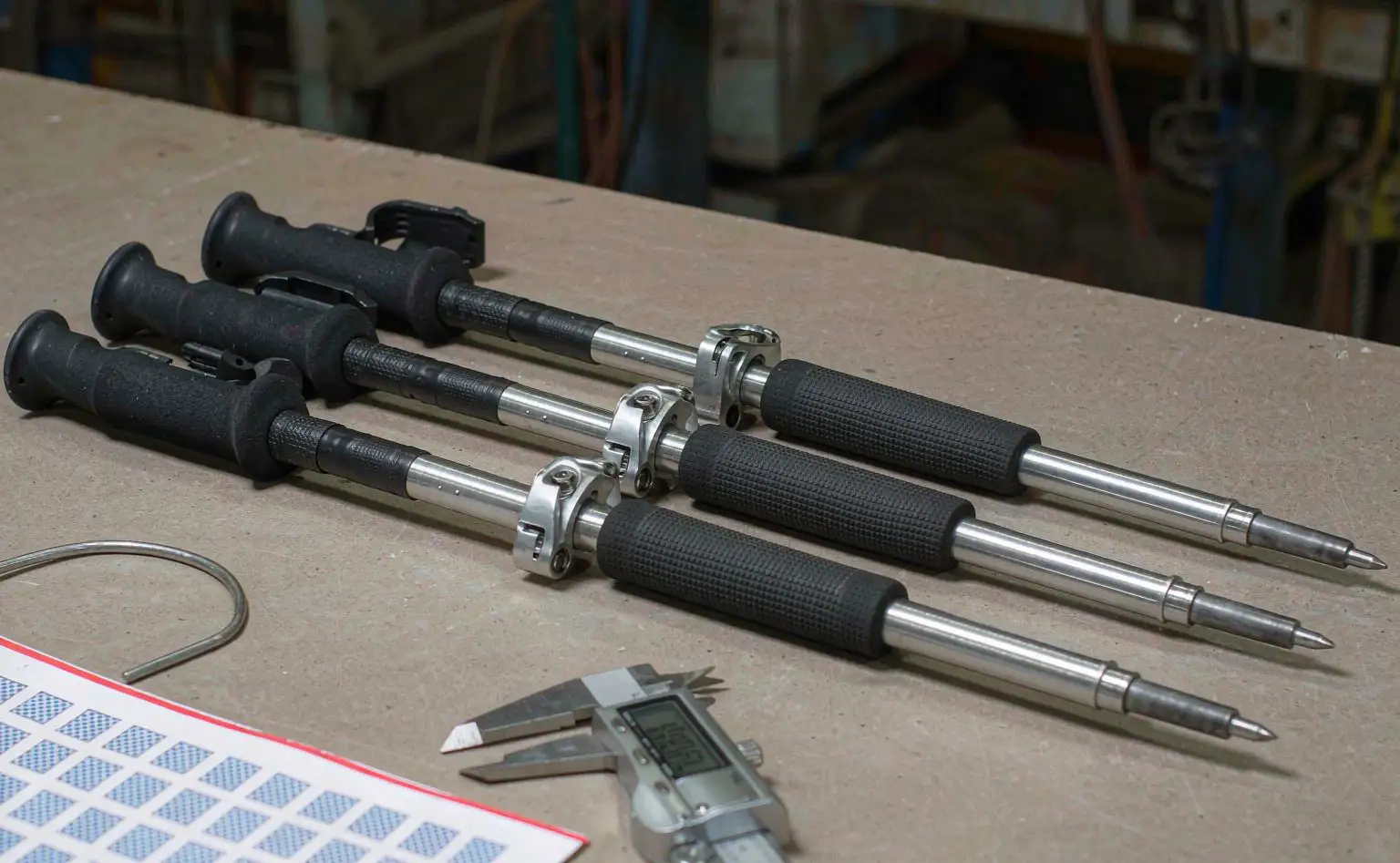
The grip is the only part of the pole that takes up water. EVA foam has a high open-cell content, so sweat from the hand, rain during use and humidity in the store all travel into the cells and stay there; once the temperature suits, mould starts, the foam goes tacky, bleeds colour and holds a smell that cannot be wiped or washed out. The grip has to be replaced, and the labour on a replacement is close to building a new one. This is one of the most common rework jobs on trekking poles.
The second place is the shaft coating. An aluminium or carbon shaft carries an anodised layer or a stoved paint film; the film holds no water of its own, but spraying, stoving and handling leave micropores, and in a damp store water vapour travels through them to sit between film and substrate, so spots start where the film is thinnest. The trouble is that spots and corrosion arrive together: once the spots lift the film, the metal underneath oxidises and the customer sees a spread of dark marks.
2. Foam and coating: two locations, two agents
The table sets out the material, the agent, the addition point and the basis for each. They do different jobs: FP looks after the foam itself, its mould and its smell, while YQ looks after the paint in the can and the film on the shaft, and neither replaces the other.
| Location | Material and stage | Agent and level | Addition point | Basis |
|---|---|---|---|---|
| Foam grip | EVA foam moulding | iHeir-FP 0.5%-1.5% | Compounding stage | On total foam weight |
| Shaft coating | Stoved paint or spray | iHeir-YQ 1%-1.5% | Paint make-up, stirred in | On total paint weight |
| Collars and tips | Plastic and rubber parts | Controlled at assembly | Assembly and bagging | On the assembly batch |
| Packing and export | Cards and poly bags | Desiccant and humidity control | Bagging and loading | On bag volume and container |
Two boundaries. The foam level is calculated on the foam compound, not on the finished grip, which also carries the core tube and adhesive. The coating level is on total paint weight, which for a two-component system means the mixed pot.
3. EVA foam grip: 0.5%-1.5% of foam weight at compounding
iHeir-FP foam antimicrobial agent is recommended at 0.5%-1.5% on total foam weight. It is stable from pH 1 to 11, stable to light and heat, miscible with water in any proportion and reaches an antimicrobial rate of up to 99.99%; oral LD50 in mice is above 5000mg/kg with a 0% sensitisation rate in guinea pigs, so it sits in the practically non-toxic band. It comes in 25kg packs and should be stored sealed in a cool, dry place.
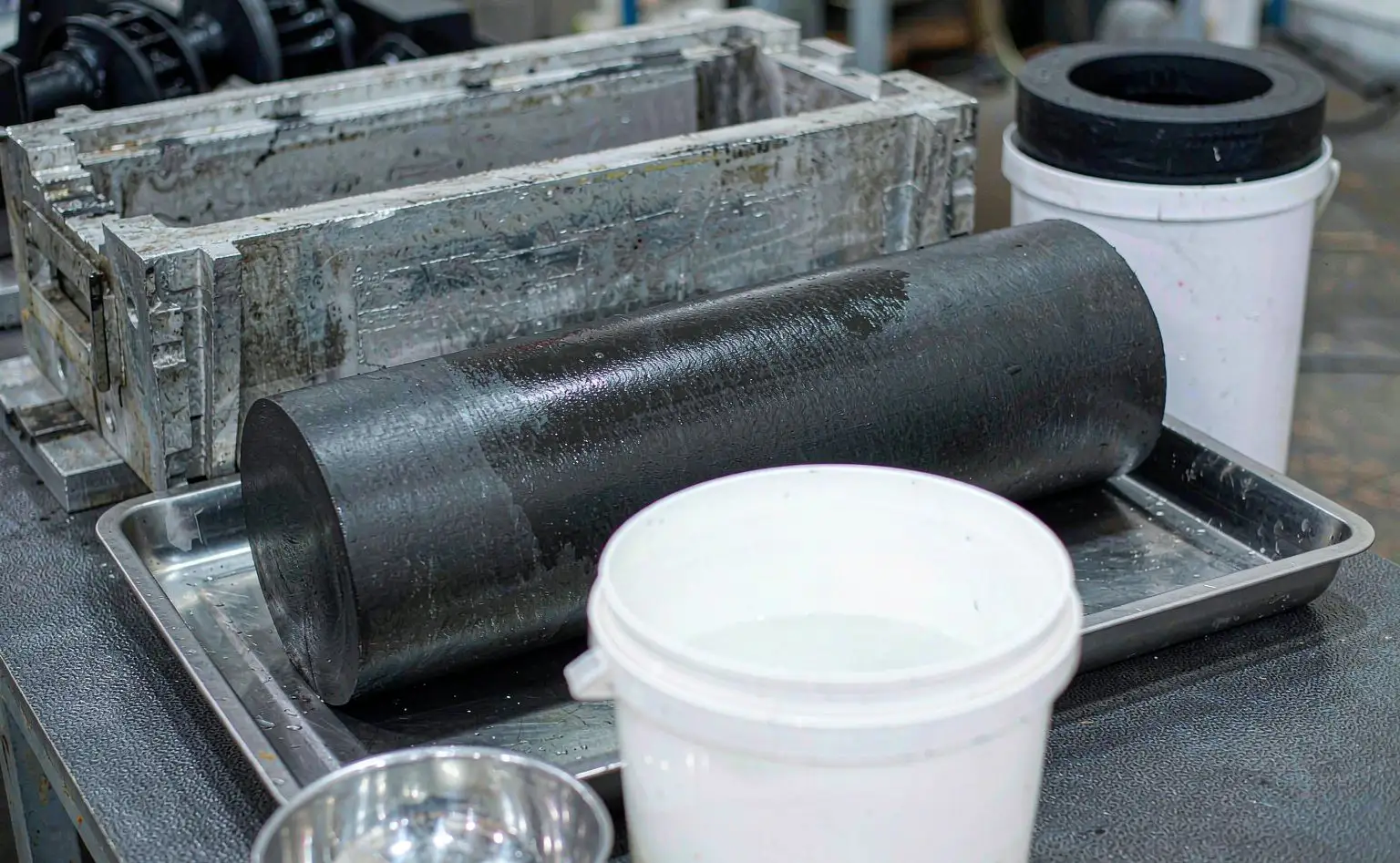
The addition point is the compounding stage, not the moulding stage. EVA foam is compounded first and then press-moulded or injection-foamed, so the agent goes in with the EVA pellets, filler and blowing agent into the internal mixer or the two-roll mill and is dispersed by mechanical shear. Added just before foaming, the blowing agent is already decomposing, the system has begun to expand and the agent never disperses, which leaves patches in the same grip.
Levels follow grip construction. A solid foam grip with a thick section and a large sweat uptake runs 1.0%-1.5%; a thin-wall grip with a hollow core or a skin runs 0.8%-1.0%; a lightweight model with only a thin foam wrap needs 0.5%-0.8%. The deciding factors are section thickness and the market: orders for hot, humid regions and year-round wet use go to the top of the band, dry-climate and indoor fitness use to the bottom.
4. Shaft coating: iHeir-YQ at 1%-1.5%, mould and corrosion in one pass
The shaft takes iHeir-YQ paint mould and bacteria inhibitor at 1%-1.5%, stirred thoroughly into the paint. Active content is 79.5%, pH 4-7, specific gravity 1.02±2%, viscosity 3cps at 25C, and it dissolves in most organic solvents. It works in the can as well as in the film, protecting the paint itself from mould and souring while protecting the film surface from spots. Oral LD50 in rats is 3700mg/kg, a low-toxicity classification.
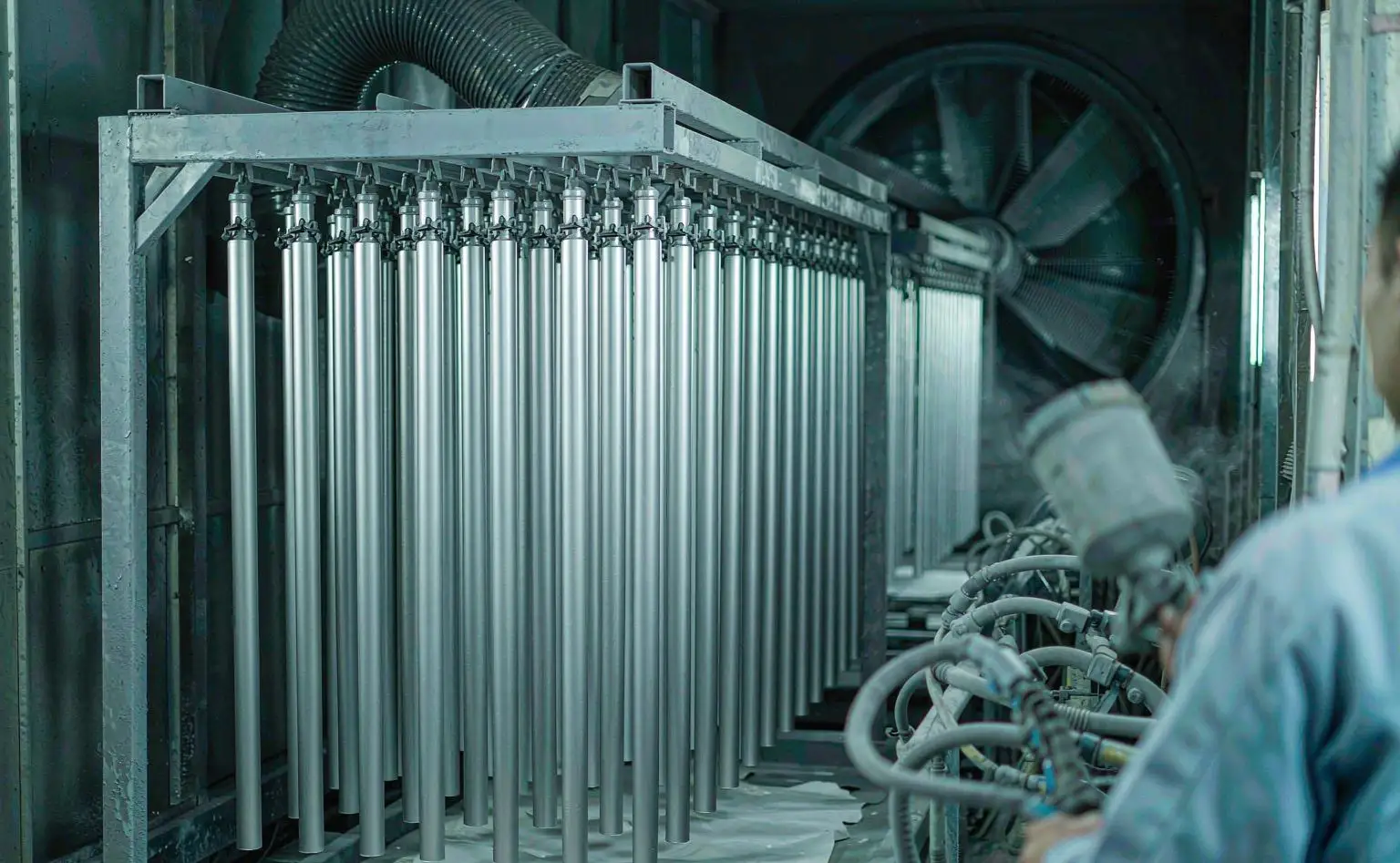
The addition point is paint make-up. For a two-component system, mix base and hardener first, then add YQ to the mixed pot and stir to uniformity; do not put it into the hardener container and do not top up in the line just before the gun. Mixed paint has to be used within its pot life, because paint left standing changes its flow even when it has not soured.
Levels split in two. Standard black stoved paint runs 1.0%-1.2%; pale, matt and thin films run 1.2%-1.5%, because a thin film carries more micropores and less agent per unit area. The logic is the same as in choosing a paint anti-mould agent: the thinner the film, the more the level has to lean on the upper end to close the pores.
5. Assembly, packing and export: get the water out of the bag
With the materials right, three rules at assembly. First, no water-based lubricant when fitting the grip; use a dedicated assembly lubricant or a heat shrink, because a water-based lubricant left between foam and shaft is a water reservoir built into the product. Second, dry before bagging: leave assembled poles in a stable area long enough before they go into the bag, or the moisture is sealed in. Third, desiccant in the bag, sized to the bag volume and increased where several poles share one bag.
Packing and loading carry the export risk. Colour boxes and cards must be dry, because damp card passes water straight to the grip; stacks in the warehouse should be off the floor and away from the wall; the container takes absorbent material with a ventilation path between the cargo and the container wall. Before loading, open two cartons, squeeze a grip and smell it, and send any batch with a sour note back to dry. The packing side of outdoor goods is covered in choosing anti-mould protection for outdoor products.
6. Questions we get: does the agent change the feel or the adhesion
Does FP make the foam harder? At 0.5%-1.5% the effect on softness and resilience is limited; what sets the feel is the expansion ratio, the VA content and the skin treatment. Confirm with a paired trial on the same compound, measuring Shore hardness and rebound.
Does YQ cost adhesion in the paint? The active is an oil-soluble system and at 1%-1.5% stirred into the mixed paint it is compatible with the resin. The test is direct: spray panels from the same batch with and without the agent, run cross-hatch and impact adhesion, then repeat after damp heat. Pass the data, then scale up.
Can we treat only one of the two? Shaft only, and the grip still takes sweat and grows mould, which the customer feels with one squeeze. Grip only, and the spots in the film micropores remain with corrosion behind them. Both, plus assembly and packing discipline, is what closes the path.
The four points to take away: iHeir-FP at 0.5%-1.5% of foam weight at compounding, the upper band for thick solid grips; iHeir-YQ at 1%-1.5% of paint weight at make-up, the upper band for thin or matt films; no water-based lubricant at assembly and a drying step before bagging; desiccant in the bag, pallets off the floor and humidity controlled in the container.


