




 View Count:15
 Date:2026-09-14
Mold complaints on rubber parts cluster in three scenes: outdoor EPDM gaskets sprouting black specks through a humid coastal rainy season, hoses and rubber sheets blooming after forty days inside a shipping container, and reclaimed-rubber goods — floor mats, speed humps, fender facings — spotting after their first rain. Quality departments often file these under “aging,” but aging is oxidative chain scission that turns rubber brittle, while mold is microbial growth that shows up as spots and odor. Different mechanisms, different fixes. This article lays out the formulation and process playbook: matching chemistry to polymer type, dosage rules, mixing order, cure behavior, and the testing buyers ask for.
Mold and Blooming Are Two Faces of One Problem
The rubber backbone itself is not fungal food. The nutrition migrates out of the compound. Rubber formulas carry plenty of low-molecular-weight components: plasticizers and process oils (esters and aromatic oils are excellent carbon sources), curatives and their residues (amine byproducts from nitrogen-bearing accelerators), anti-degradant waxes (the bloom layer you see on old parts), and stearic-acid activators tied up in fillers. Heat, humidity and UV keep pushing these components to the surface, where they form a film fungi consume readily. A heavily bloomed gasket molds several times faster than a clean one. So step one of rubber anti-mold is not buying an agent — it is auditing the formula: can process-oil loading come down, is the wax carbon distribution sensible, are accelerators overdosed?
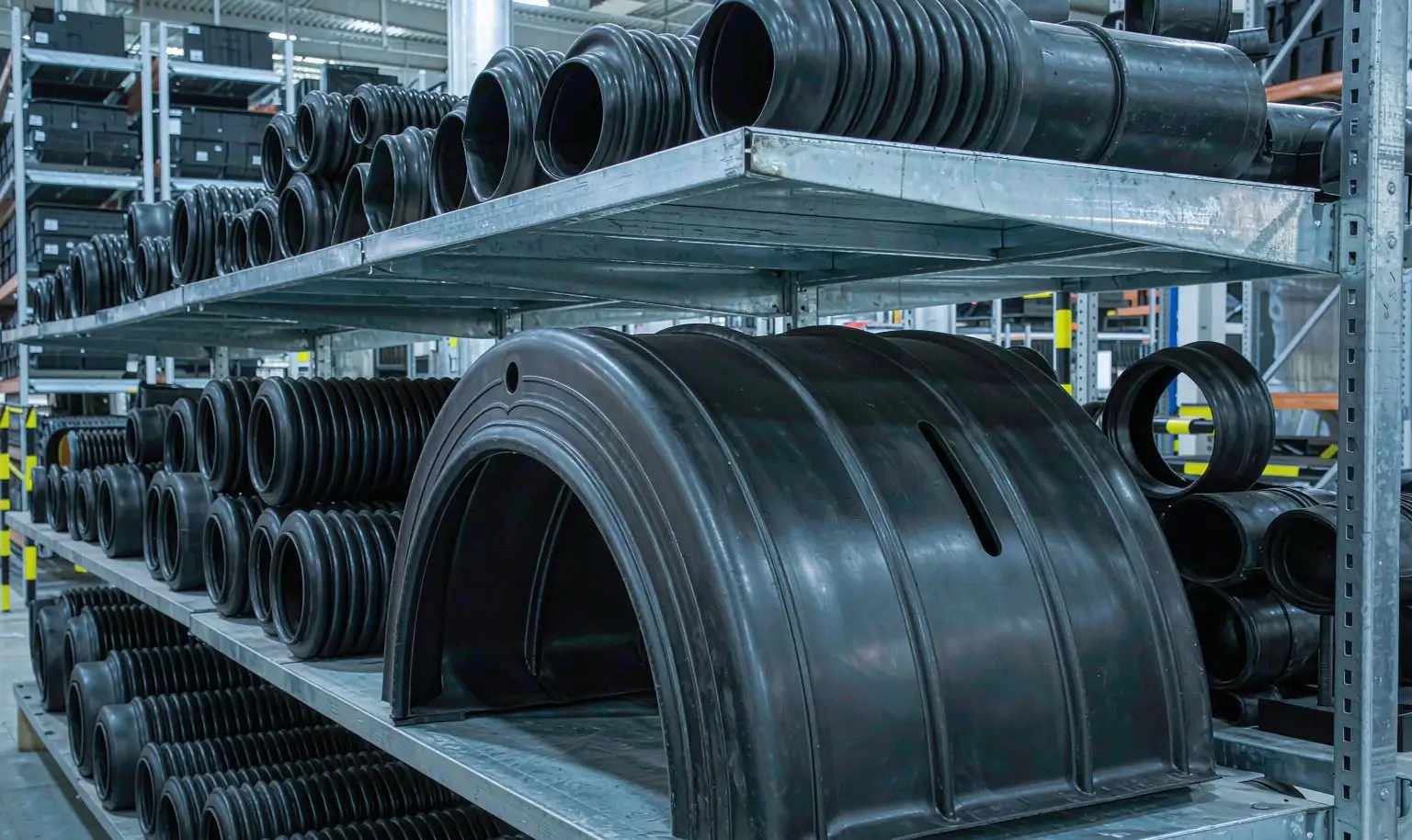
Watch-list products: outdoor seals exposed to condensation, hoses and rollers buried or soaked, high-reclaimed-ratio mats, and molded export sundries that cross the ocean. Our rubber anti-mold guide ranks risk by product family if you want the longer version.
EPDM, NBR, SBR, CR: Matching Chemistry to Polymer
The polymer sets the cure system and processing temperature, and with them the window your additive must survive. EPDM: peroxide or sulfur cure at 160-180°C, high Mooney viscosity, slow powder uptake — prefer inorganic-carrier grades dosed as a masterbatch, and for outdoor seals pick zinc chemistry that also weathers well under UV. NBR: the workhorse for oil-resistant hoses and seals, rich in ester plasticizers and therefore nutrient-dense — it is the worst offender, so dose at the top of the range and combine anti-mold with antibacterial protection. SBR/BR: tires and sheet goods, usually blended with reclaimed rubber — scale the dosage with the blend ratio. CR (polychloroprene): its chlorine content gives some intrinsic resistance, so focus on long-lasting antibacterial performance rather than mold protection.
Grade selection: the silver-zinc iHeir-IPI001 inorganic compound antimicrobial survives cure temperatures above 250°C and suits seals and export orders; the lighter iHeir-PSZ104 fits pale sheet and roller compounds; mold-heavy mat and fender products can pair it with a powder anti-mold agent.
Reclaimed Rubber: Higher Dosage and Real Dispersion
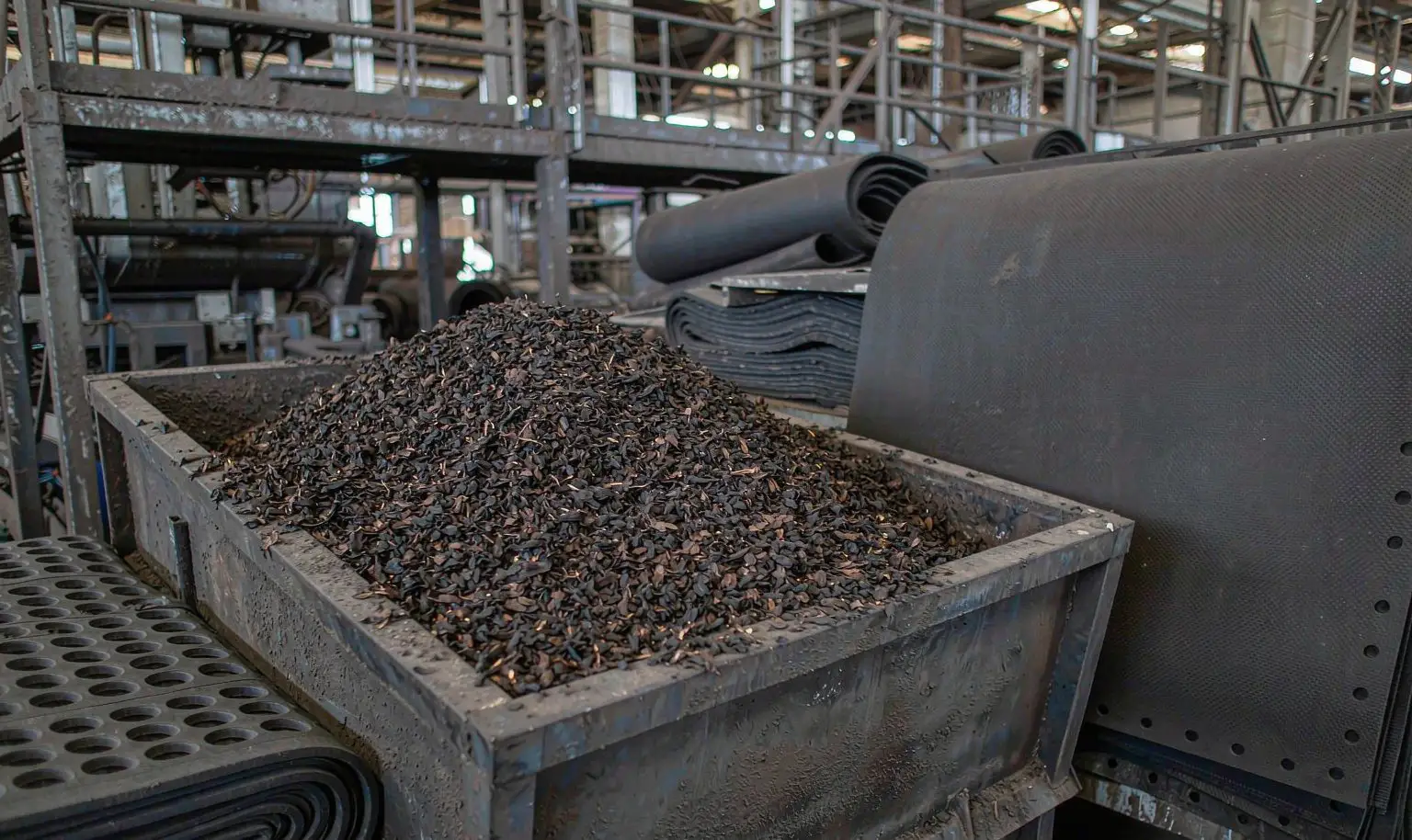
Reclaimed rubber needs the most attention: Mooney viscosity swings, high ash and impurities, and a load of untraceable low-molecular extractables already inside. Three moves decide the outcome. Raise the dosage: every 20% increase in reclaimed ratio warrants roughly 0.2-0.3 percentage points more active, and all-reclaimed mats run at the top of the window. Pre-disperse: raw powder dumped into a banbury with high-Mooney stock disperses poorly, near-guaranteed — a masterbatch (or pre-dispersed granules at ~50% active) changes dispersion completely, because mold colonies colonize the “blank spots” in poorly dispersed batches. Compensate the cure: reclaimed stock cures slowly, so order matters — masticate the reclaimed rubber for two minutes, blend the antimicrobial masterbatch, then add sulfur and accelerators so the active does not linger through extended high-heat mixing.
Mixing Order and Dispersion Quality
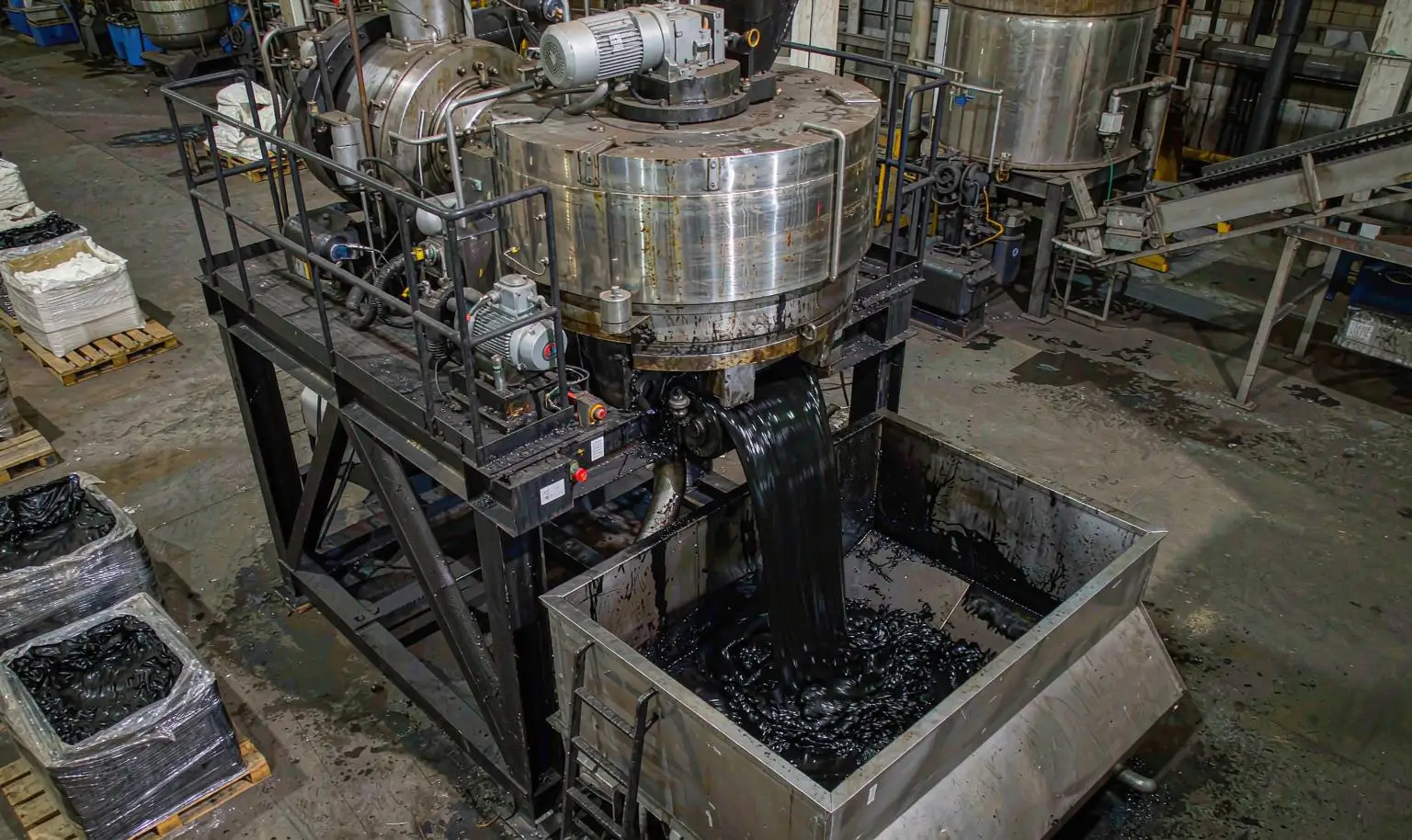
Recommended banbury sequence: masticate the gum, add small chemicals (activators, anti-degradants), then reinforcing fillers (carbon black or silica), then process oil, then the antimicrobial/anti-mold masterbatch, with sulfur and accelerators added last — typically on the mill. Placing the masterbatch after the oil but before the cure package keeps it out of the harshest shear while still mixing thoroughly with the fillers. Get the order wrong and two things happen: poor dispersion at best, or part of the active being adsorbed onto carbon black — in our checks that can cut measured antibacterial reduction by around twenty percent. Watch two signals at the mill: regular colored specks on the sheet mean the masterbatch has not incorporated — go back and tighten passes; bright tear edges mean the curatives are poorly spread. Dump at 120-140°C to avoid scorch; inorganic carriers are fully stable through that band.
Post-Cure Durability and Outdoor Weathering
Cure windows of 150-180°C for 10-45 minutes leave inorganic actives untouched, unlike some organic chemistries that degrade through over-cure. Durability has two layers. Wash-and-rain resistance: surface sprays wash off after a few storms, while compounded additives release slowly as the part wears — outdoor products must go the compounding route. Thermal cycling: an outdoor gasket swings sixty degrees between winter and summer, and blooming additives migrate outward with every cycle while bonded inorganic systems stay put. When writing promises to buyers, prefer “compounded long-lasting protection” over “surface treatment” — the former carries test data; the latter invites disputes. We make the same argument for plastics in our PP/PE masterbatch guide.
Testing and Claim Handling + FAQ
Two standards cover mold: ASTM G21 (28 days, rating 0-1 to pass, recognized in the US and EU) and GB/T 2423 for domestic filings. Antibacterial work uses ISO 22196 with ≥99% reduction as the common buyer bar. Declare polymer type, cure system and reclaimed ratio with samples — reports are not transferable across recipes. For export complaints, work three steps: sample back for re-rating; pull the container data-logger record, because many “fine in the factory” claims are container condensation — those need anti-mold packaging plus desiccants like the CH-10 pack, not just reformulation; then split the response by root cause — process fixes for formula issues, packaging upgrades for transit issues. The humidity-control logic is the same one we use for footwear in the Dongguan shoe-materials container plan.
FAQ
Q1: Do we need both anti-mold and antibacterial agents?
A: Follow the complaint profile. Mold complaints dominate — lead with anti-mold plus a modest antibacterial dose. Premium seals and Western export orders go straight to a dual silver-zinc grade and finish the conversation in one step.
Q2: Will it slow down the cure?
A: Inorganic grades at recommended rates barely move the curve; above 2% or with poor dispersion you may see slight delay — confirm with a rheometer trace before scaling.
Q3: Is this relevant for tires?
A: Long storage in humid warehouses blooms sidewalls and hurts secondary-brand repeat sales, but OEMs rarely mandate it yet — follow customer requirements and fix warehouse humidity first.
Q4: How much for rubber floor mats?
A: High-reclaimed mats run the full 1.5-2% with masterbatch dispersion only. Loose-powder batches we retested consistently rated two levels worse on mold growth.
Three takeaways: audit exudatable low-molecular components before dosing anything; polymer type and reclaimed ratio set the dosage tier; mixing order decides whether dispersion succeeds. Run the playbook and rubber mold complaints drop from quarterly routine to annual exception. For trials by polymer type or help re-rating a claim sample, contact us.