




 View Count:38
 Date:2026-11-03
Can mould in an energy storage battery pack be prevented, and why does it appear before anything is even energised? Once the cabinet condenses, holders, insulators and harness sleeves spot first, and reworking a whole cabinet holds up the handover or the shipment. Blend iHeir-JS117 into the cell-holder compound at 0.5%-1.0% of compound weight, and hang T-1000 desiccant rods before the panels close, 8-10 to a 20ft container. This article covers where each stage sits, the moulding window and the sea-freight figures.
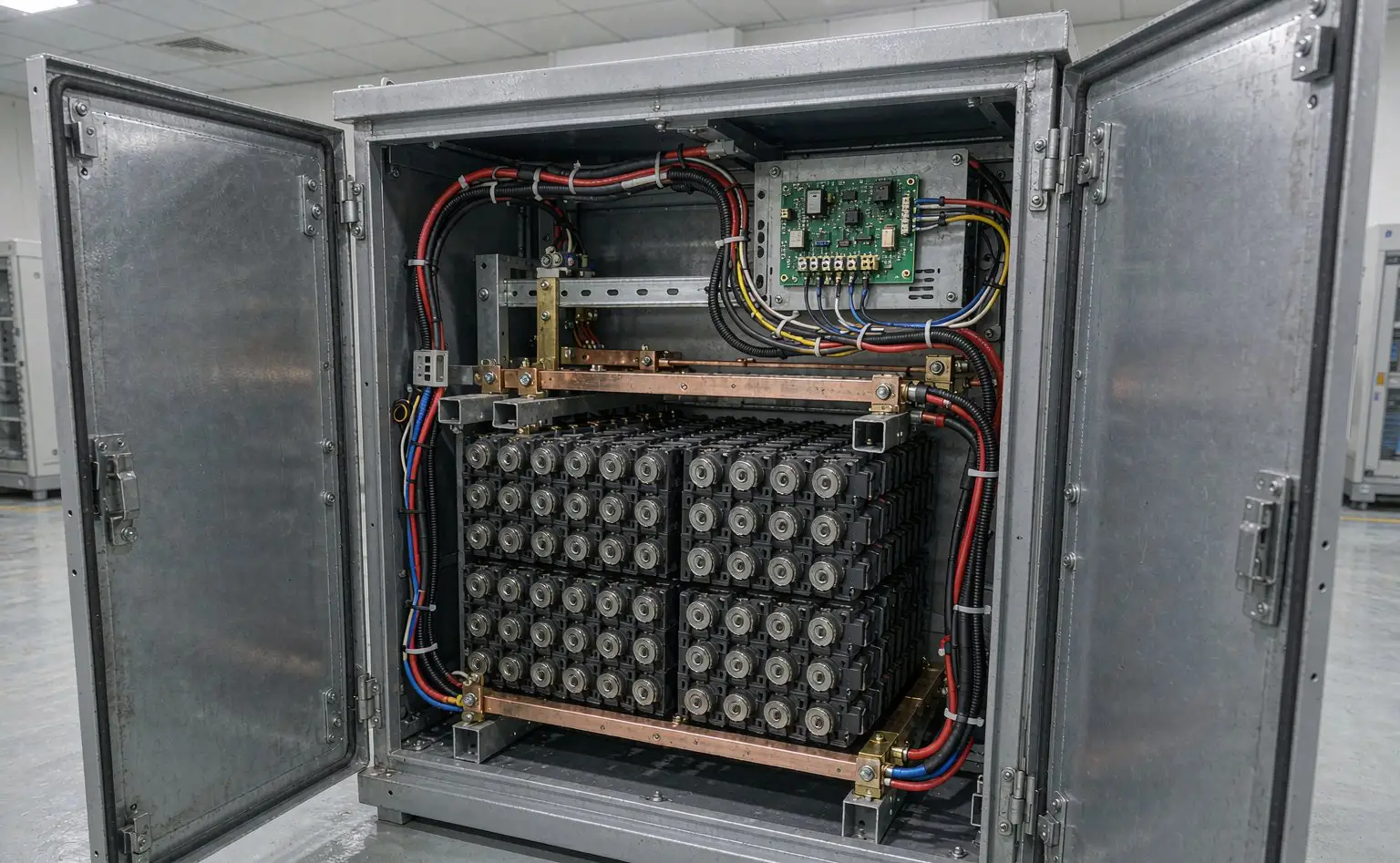
1. Mould starts on holders and insulators, and in cabinet condensation
The material spread inside a storage cabinet is wide: sheet-metal body, cells, plastic holders and end plates, busbars, harness sleeves, gasket strip and BMS boards. Sheet metal and busbars do not mould. The plastic parts, the harness sleeves and the condensation inside the cabinet do.
Plastic fails where dust and water sit. Holders, end plates and insulating separators are moulded parts carrying release agent and oil, and assembly adds hand sweat and wash residue; a sealed cabinet ventilates poorly, so the water cannot leave and mould starts in the ribs and clip slots.
The cabinet fails on condensation. The better the ingress protection, the less water vapour gets out. The interior warms by day and cools at night, moisture condenses on the sheet metal and runs down onto holders and harness. Sea freight swings wider than any workshop, and a container opened at the destination often shows beads on the wall and spots already on the holders.
Packing fails on paper and wood. Pallets, cartons and leaflets take moisture while packing and lift the humidity inside the cabinet. That end is covered in container moisture and mould in shipping.
2. Powder in the plastic, rods in the cabinet
The table lines up the holders, the cabinet interior, the packing and the metal parts. Plastic is dosed on compound weight and the cabinet is dosed in rod count; the two are not convertible.
| Part | Material | Product and level | Stage | Control point |
|---|---|---|---|---|
| Cell holders, end plates, separators | Polyolefin, flame-retardant PC/ABS | iHeir-JS117 0.5%-1.0% of compound | Compounding stage | Mixed through, flame rating re-tested |
| Cabinet interior | Sealed sheet-metal cavity | T-1000 8-10 per 20ft container | Before panels close | Fixed to the top rail, clear of harness |
| Harness sleeves, gaskets | PVC, rubber | Chosen per part, not covered here | Before assembly | Dry parts, no oil film |
| Pallets, cartons | Timber, corrugated | Dry pallets, humidity control | Packing | Timber below 20% moisture |
One boundary. A desiccant rod absorbs water vapour from the air and does nothing for mould already carried in the compound; powder in the compound does not stop condensation running down a cabinet wall. Run both stages or the unprotected one fails first.
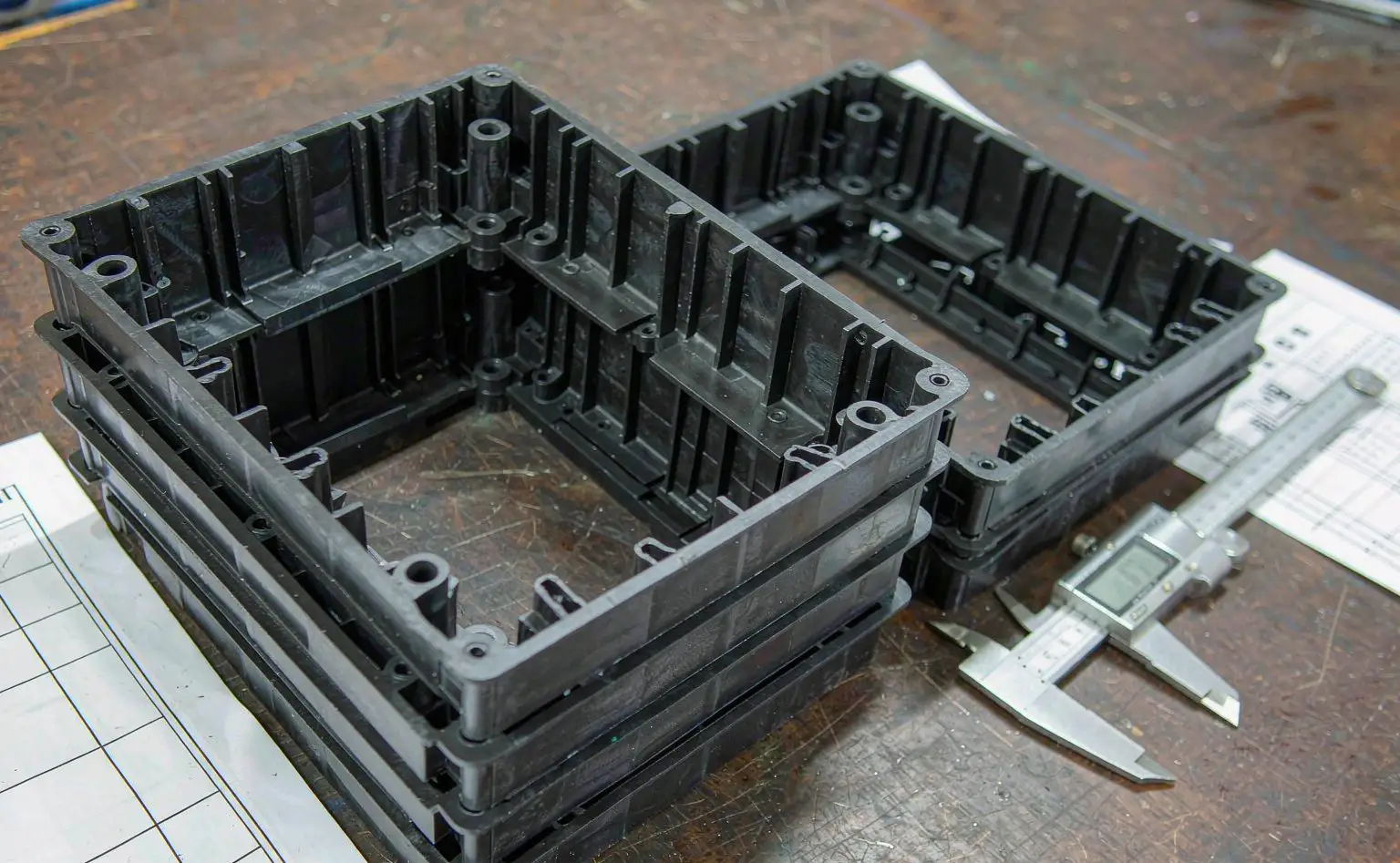
3. Cell holders: powder at the compounding stage, no pushing the barrel temperature
Holders, end plates and separators take iHeir-JS117 plastic anti-mould powder at 0.5%-1.0% of finished part weight. It is a nitrogen heterocycle phenol-alcohol compound with more than 97% active matter, specific gravity 1.21 g/ml, bulk density 380 kg/m³, 110μm mean particle size, insoluble in water and in aliphatic compounds, and leaching-resistant.
Where to add it. Blend it thoroughly with the compound and mould as usual. Most holders are made from bought compound, so the cleanest route is blending at the supplier’s pelletising stage; plants compounding in house mix it with resin, pigment and flame retardant in a high-speed mixer, pelletise, then mould. Scooping powder into the hopper is not advisable: at 110μm the particles need shear, and a short residence time leaves pale streaks, most visible on thin-wall separators.
Polymer and flame retardancy travel together. JS117 covers PVC, PU, silicone resin, polyolefins and polyester systems, so a polyolefin holder can go in at 0.5%-1.0% directly. A flame-retardant PC/ABS holder deserves a small trial for compatibility and shade, plus a re-test of flame rating and glow-wire on the same retardant system before the run. Above thirty percent regrind, go to 1.0% and keep that regrind clean.
Moulding window. The powder itself is heat stable, but the base polymer is not, so run the process card rather than raising barrel temperature to disperse it. Let parts cool to room temperature in a dry area before bagging; bagging a warm holder traps the moisture inside the bag.
4. Cabinet: rods go in before the panels close, sized to volume and voyage
The interior stage uses T-1000 desiccant rods, built on cross-linked sodium polyacrylate, not a chloride salt. Absorption reaches more than 100% of the rod’s own weight at 25℃ and 80% RH, the gel holds water under pressure without weeping, and the rod carries no chloride and sits at neutral pH, so busbars and sheet metal are not at risk.
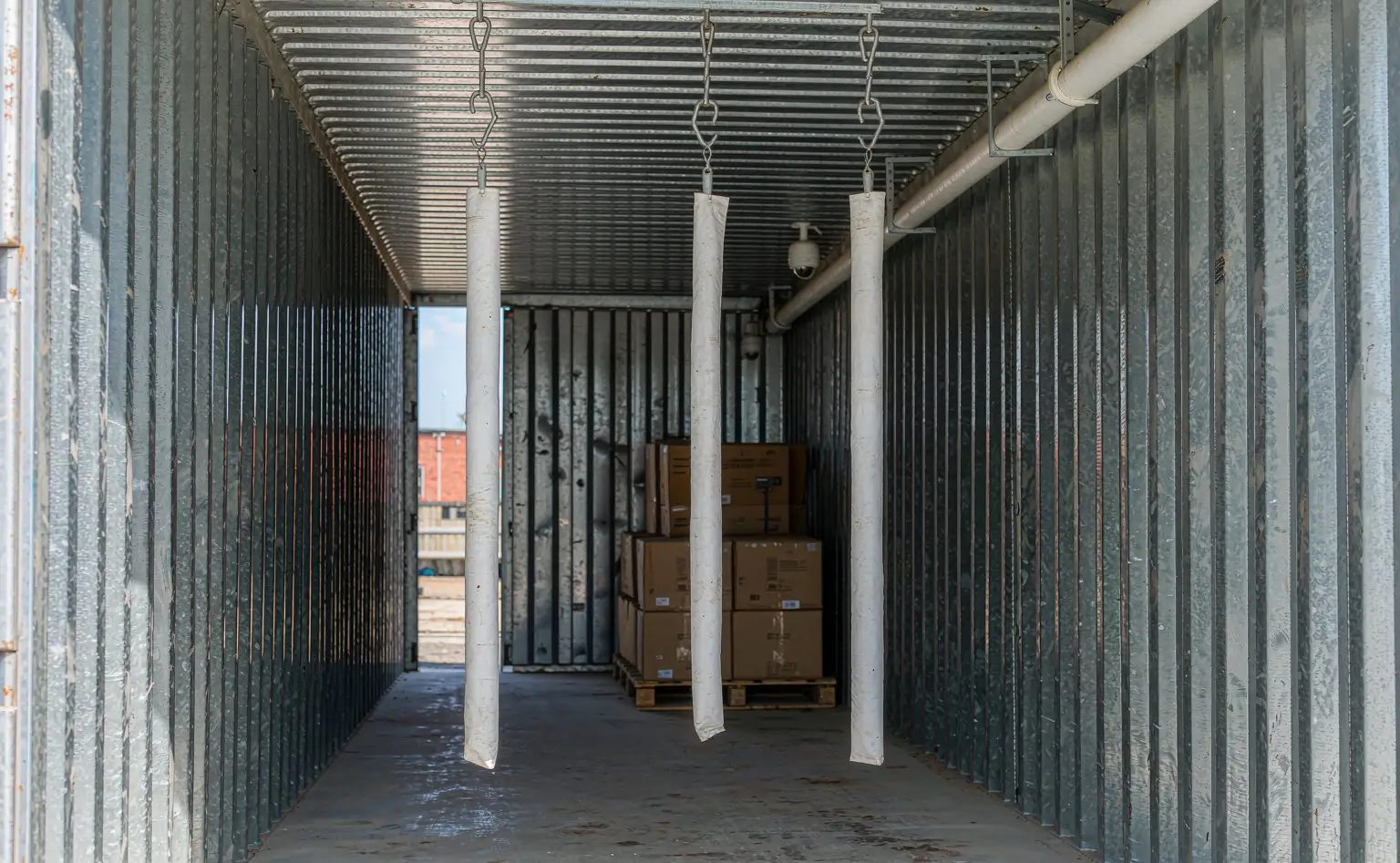
How many. Size the count to cabinet volume and voyage: 8-10 rods for a 20ft container and 10-12 for a 40ft. The supplier’s own table puts the 7200g rod at roughly 8-12 per container. Longer voyages and wider temperature swings take the upper figure, and so do cabinets packed with pallets and cartons at higher moisture content.
Where they hang. Fix the rods to the top rail or the upper side wall before the panels close, on hangers that survive transport vibration and stay clear of harness and BMS boards, with a gap to the sheet metal so the absorbent face meets air. Gasket, cable entries and pressure relief all have to be right at the same time; a poor seal defeats any number of rods.
Work the count out at design stage. Interior volume, the weight of timber and paper inside, the route and the time spent at port decide the number, and by the time the cabinet is being closed it is too late to add. The arithmetic behind it is in how much desiccant a container needs.
5. Finished-goods store, packing and sea freight
Risk in the store is the day-night swing: the interior warms, cools overnight, and moisture condenses on the sheet metal. Hold the store below 60% RH, keep cabinets off the outer wall, and put pallets 10cm off the floor and 10cm off the wall.
At packing, check pallet moisture and dry anything above 20% before use, keep cartons and leaflets out of damp bays, and leave an air path in the container with cartons off the wall. At sea the risk is container rain, and the interior swing is wider than any warehouse; see preventing container rain.
Release at three levels: holders to ASTM G21 or ISO 846, sampling one flat face and one clip slot; the cabinet interior for 72 hours at 40℃/90% RH, opening to look for condensation on the sheet metal; complete cabinets through vibration and thermal cycling before opening to check holders, sleeves and walls. Put all three on one shipping inspection sheet.
6. Questions on seals, rods and flame rating
Q: With the cabinet properly sealed, are rods still needed?
Yes. A seal keeps outside vapour out but leaves the water carried by timber, paper and assembly inside, and the better the seal the less that water can leave.
Q: With powder in the holders, can the rods be dropped?
No. The powder covers the plastic itself; condensation dripping onto busbars and harness is a separate problem, and whichever stage is missing is where the failure shows.
Q: Does the powder affect the flame rating?
It can, depending on the retardant system and the level. Trial at 0.5%-1.0% and re-test flame rating and glow-wire before a run; where certification applies, re-submit the changed formulation under the certification route.
Four points to take away: blend iHeir-JS117 into the cell holders, end plates and separators at 0.5%-1.0% of compound weight, straight in for polyolefins and by trial for flame-retardant PC/ABS with the flame rating re-tested; hang iHeir T-1000 rods before the panels close at 8-10 per 20ft and 10-12 per 40ft cabinet, fixed to the top rail and clear of harness; keep pallet moisture below 20%, the store below 60% RH and an air path in the container; control sea freight with the container-rain route. A 1kg powder sample and two rods go out for a trial first, with MOQ and lead time on the iHeir-JS117 product page.


