




 View Count:39
 Date:2026-11-03
Why does mould on a robot vacuum split into three fronts, and why does wiping the shell not end it? Mould grows on the ABS shell surface, in the pile fibre of the roller brush and side brushes, and in the cartons. A batch held two months in a finished-goods store comes back for rework. Dose iHeir-IPI001 into the shell compound at 0.8%-1.0% of part weight, and finish brush fibre with iHeir-BJ at 2%-3% o.w.f. This article covers where each stage sits, the bath conditions and the packing.
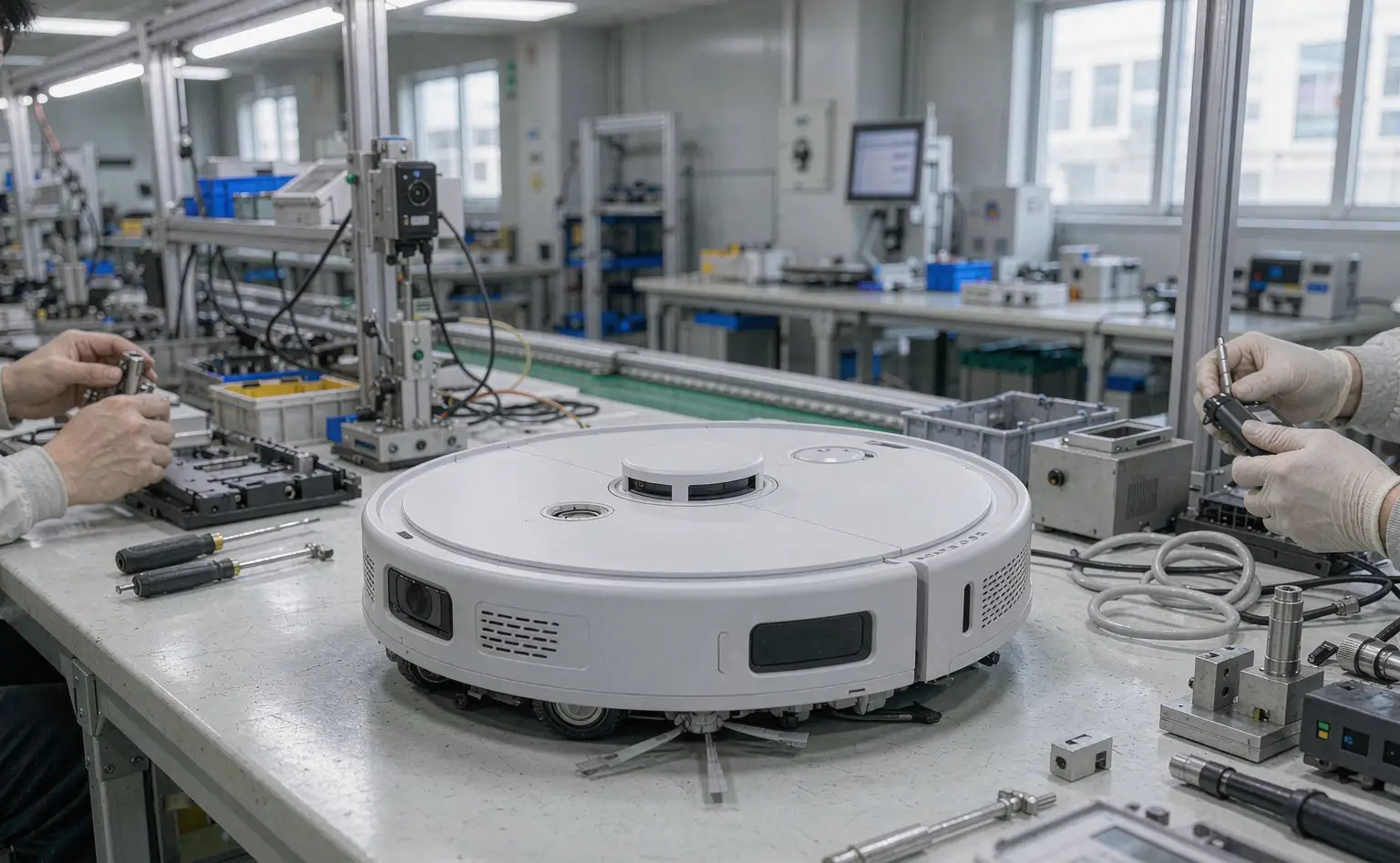
1. Mould starts on the shell, in the pile and in the cartons
Open a robot vacuum and the material list is longer than it looks: ABS shell and top panel, PC window, TPU bumper, roller brush and side brush pile, rubber drive-wheel tread, colour box. ABS, PC and rubber absorb nothing. What fails is the shell surface, the pile fibre and the paper.
The shell fails at the surface. Moulded parts reach the assembly line carrying release agent and oil, and the parting lines, button recesses, charging contacts and soft bumper edge all collect dust and water. Painted parts are worse: the lacquer carries no antimicrobial, so mould grows in the layer between the film and the substrate. Wipe the outside and it returns within a week.
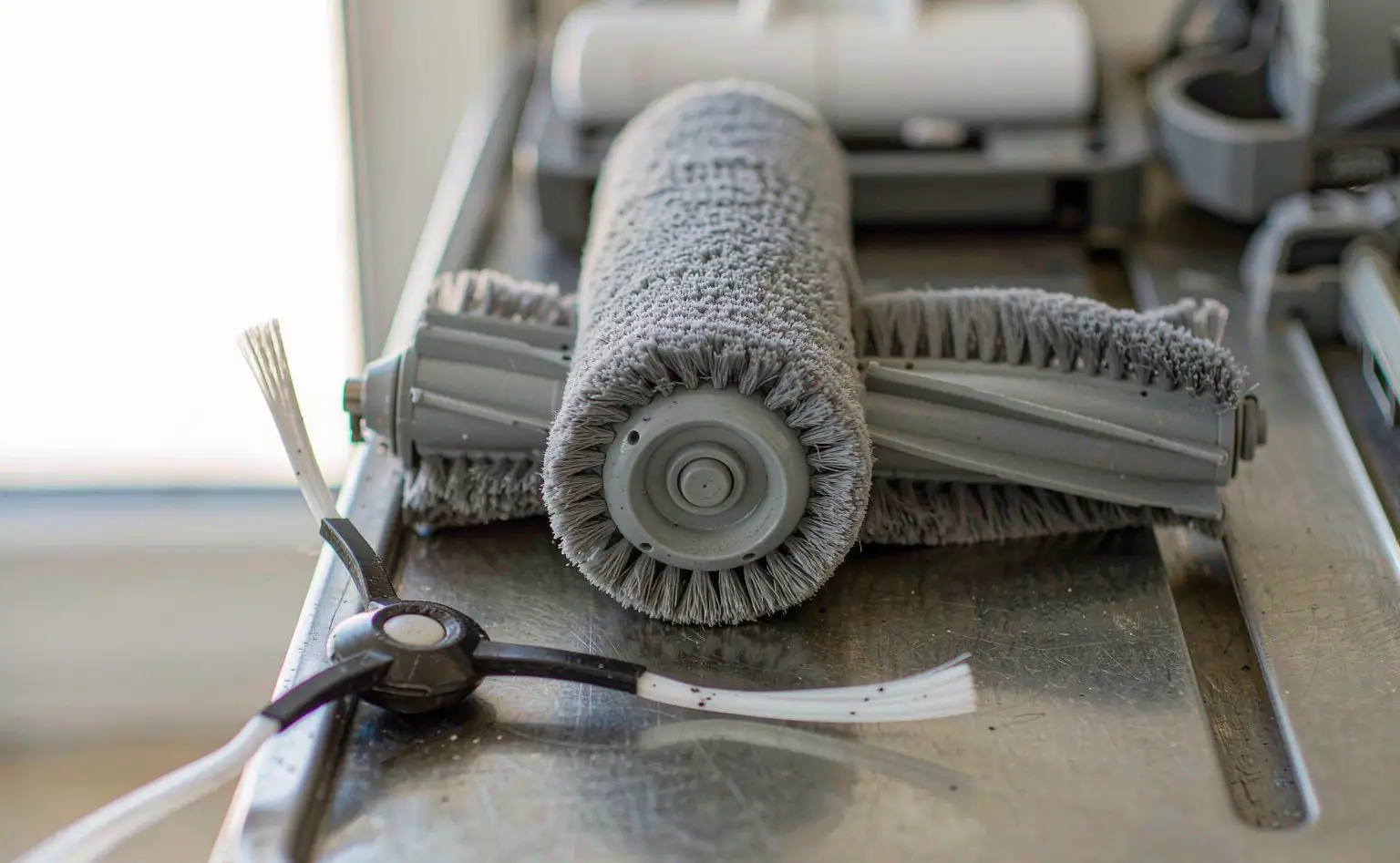
The pile fails at the fibre. Roller brush pile, side brush filaments and the nonwoven outside the dust box are all fibre, quick to take water and slow to dry. Left open before assembly, three days in a wet season is enough for grey-white spots at the pile root, and those do not wipe off; the part is replaced.
Paper fails on uptake. Colour boxes, paper trays and leaflets take moisture while packing, most visibly on a full container. That stage is covered in small appliance export anti-mould.
2. The shell takes the antimicrobial, the pile takes the finish
The table lines up the shell, the pile, the cartons and the remaining parts. Plastics are dosed on compound weight, textiles on dry fabric weight as o.w.f., and the two are not convertible; nor does shell compound stand in for the textile stage.
| Part | Material | Product and level | Stage | Control point |
|---|---|---|---|---|
| Shell, top panel | ABS, PC | iHeir-IPI001 0.8%-1.0% of compound | Premix before moulding | Mixed through, no lumps or shade drift |
| Roller and side brush pile | Polyester, nylon pile | iHeir-BJ 2%-3% o.w.f. | Same-bath finishing | Soft water, pH 4.5-8.5 |
| Colour box, tray, leaflet | Board, corrugated | Paper per box, humidity control | Boxing, cartoning | Store below 60% RH |
| Wheel tread, bumper | Rubber, TPU | Outside this article: per-part protection | Before assembly | Dry parts, no oil film |
One boundary. Antimicrobial in the shell compound does nothing for the pile: it stays locked in the plastic matrix and never migrates onto fabric. Nor does a finished pile reach condensation inside a shell parting line. Run both stages and the machine stops rotting from one end first.
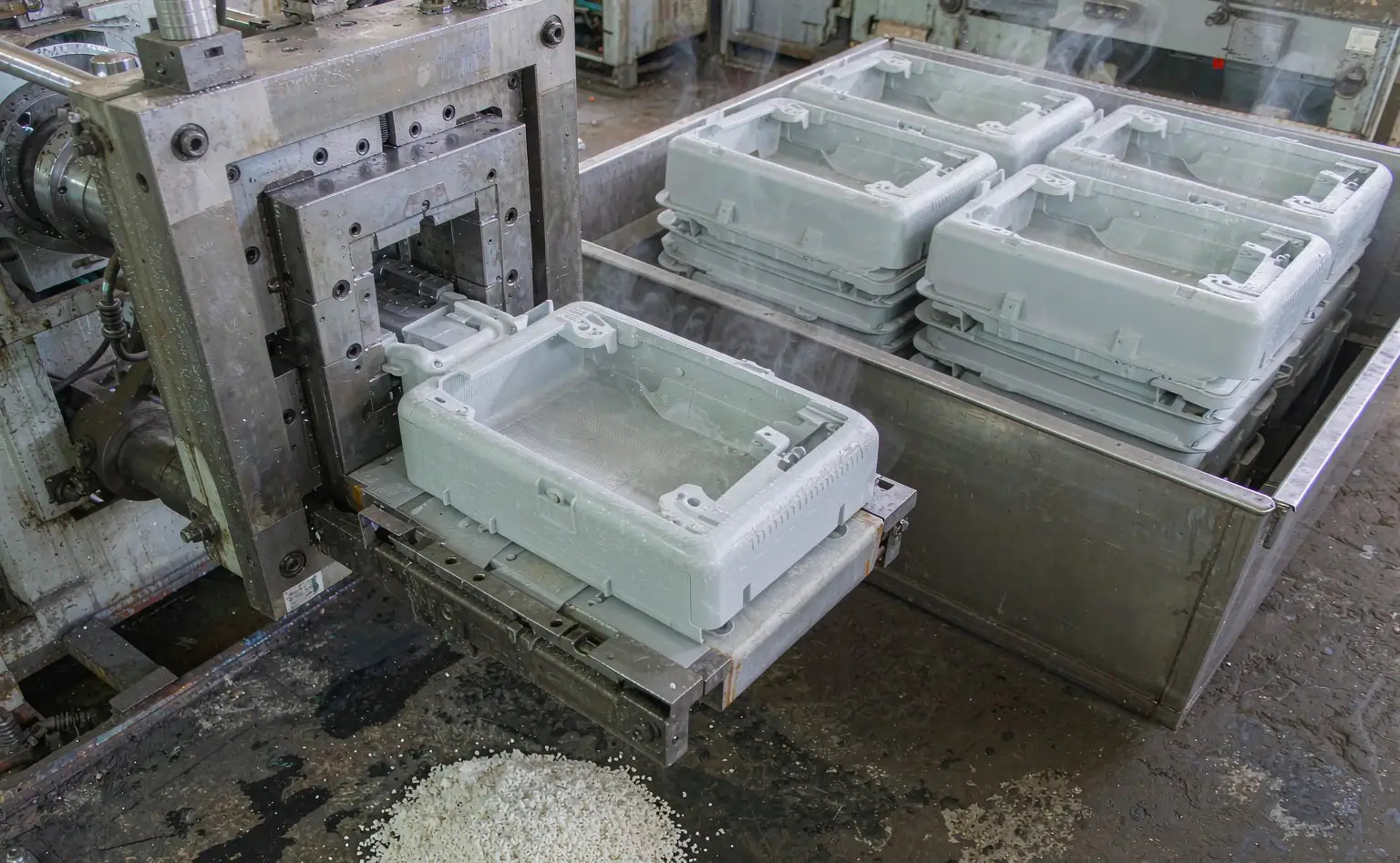
3. ABS shell: the antimicrobial goes into the resin, before the paint
Shell, top panel and button seat take iHeir-IPI001 inorganic zinc-ion antimicrobial at 0.8%-1.0% of finished part weight. It is a broad-spectrum antimicrobial built on an inorganic zinc-ion complex, with active matter (zinc ion plus carrier) at 99% or more, whiteness above 90, D90 under 3μm, heat resistance above 380℃ and bulk density 1.8-2.4 g/cm³, packed 10kg to a bag.
Where to add it. Blend it thoroughly with the compound and mould as usual. Plants that do their own compounding mix it with ABS pellets and pigment in a high-speed mixer and feed the machine; those buying compound have it blended at the pelletising stage. Scooping powder into the hopper is not advisable: at 3μm the particles need shear, and the short residence time leaves haze on a high-gloss face, most visible on dark shells.
Painted parts need the order fixed first. The antimicrobial goes into the substrate and never into the lacquer, so settle the compound before discussing paint: wash, degrease and dry the shell before primer so the film keys properly. Paint first and the only remedy is stripping the batch. The general selection route is in masterbatch or powder for moulded parts.
Three points. First, heat: IPI001 is stable above 380℃, well past the ABS barrel window, so run the base recipe rather than pushing temperature to disperse it. Second, pale and high-gloss parts need their own shade and haze trial. Third, above thirty percent regrind, go to 1.0% and keep that regrind clean, since oil carried back cancels the effect.
4. Roller brush and side brushes: same-bath finishing at 2%-3% o.w.f.
Roller brush pile, side brush filaments and the nonwoven outside the dust box take iHeir-BJ textile mildew inhibitor by pad-dry application in the finishing bath at 2%-3% o.w.f. on dry fabric weight. At 2% protection runs beyond a year; at 3% it reaches two to three years. Brush assemblies are consumables replaced inside two years, so 2%-3% covers the service life.
Bath conditions. Bath temperature 21℃-50℃, ideally under 48℃; pH 4.5-8.5, ideally about 6; soft water only, since hard water precipitates the active matter early. Premix BJ with 9-13 times its volume of water and add it to the bath in portions; a single pour leaves concentrated patches on the fabric. Hold wet pickup at 70%, and measure it on heavy pile before fixing the recipe.
Put the incompatibility on the process card. BJ is cationic and runs with cationic or non-ionic softeners, but anionic auxiliaries must never share the bath; the two precipitate and the finish is lost. Plants chasing hand feel sometimes add an anionic softener to the same tank and throw the whole stage away. Two steps instead: BJ first, dry, then the anionic softener. The difference between antimicrobial and anti-mould work is set out in antimicrobial agents for appliance parts.
5. Assembly, cartoning and export
Risk at assembly sits in exposed work in progress: moulded shells wait in totes for paint, cut brush strips wait at the bench, and shop humidity does the rest. Move shells to the next stage within the shift, lid the totes, bag cut pile, dehumidify the bench and hold the shop below 60% RH.
At cartoning, bag each unit, keep the colour box liner dry, and put cartons on pallets 10cm off the floor and 10cm off the wall. For sea freight, container condensation does more damage than shop humidity, so leave an air path and keep cartons off the wall; see preventing container rain.
Release at three levels: shell parts to ISO 22196 or ASTM G21, sampling one flat face and one parting-line area; pile parts to GB/T 24346-2009 for mould and GB/T 20944.3 for antibacterial rating; complete units for 30 days at 30℃/85% RH, opening to check parting lines, pile roots and box walls. Put all three on one shipping inspection sheet.
6. Questions on pile, paint and dose
Q: With antimicrobial in the shell, can the pile skip finishing?
No. The antimicrobial stays in the matrix and never migrates, and pile takes water fastest, so it spots first; a finished pile does not protect condensation in a parting line either.
Q: Can a painted part be topped up through the lacquer?
The IPI001 in this article is for plastic and rubber substrates and goes into the resin. Settle the compound first and paint second; whether a coating system needs its own antimicrobial is a separate decision, and powder tipped into lacquer is not the answer.
Q: 2% or 3% on the pile?
Follow the replacement cycle and the destination. Brushes changed inside two years are fine at 2%, which gives more than a year; long warranty terms or hot, humid destinations justify 3%, which reaches two to three years.
Four points to take away: blend iHeir-IPI001 into the ABS shell compound at 0.8%-1.0% of part weight, trialling pale and high-gloss parts for shade; finish roller and side brush pile with iHeir-BJ at 2%-3% o.w.f. in the bath at 21℃-50℃, pH 4.5-8.5, soft water, 70% wet pickup, never with an anionic auxiliary in the tank; move shells within the shift, bag cut pile and hold the shop below 60% RH; leave an air path in the container. A 1kg sample of each goes out for a trial first, with MOQ and lead time on the iHeir-IPI001 product page.


