




 View Count:3
 Date:2026-11-11
Where should FRP mould control start? Most plants treat it as surface dirt and wipe the part before dispatch, and the buyer still finds a film of grey-white speckle on arrival. The routine is iHeir-IPL inorganic plastic antimicrobial at 0.8%-1.0% of resin weight in the resin and filler mix, plus one iHeir-D vapour sheet at 0.1-0.2 g of active between demoulded parts and inside the crate. This article covers dosing, filler moisture and stacking.
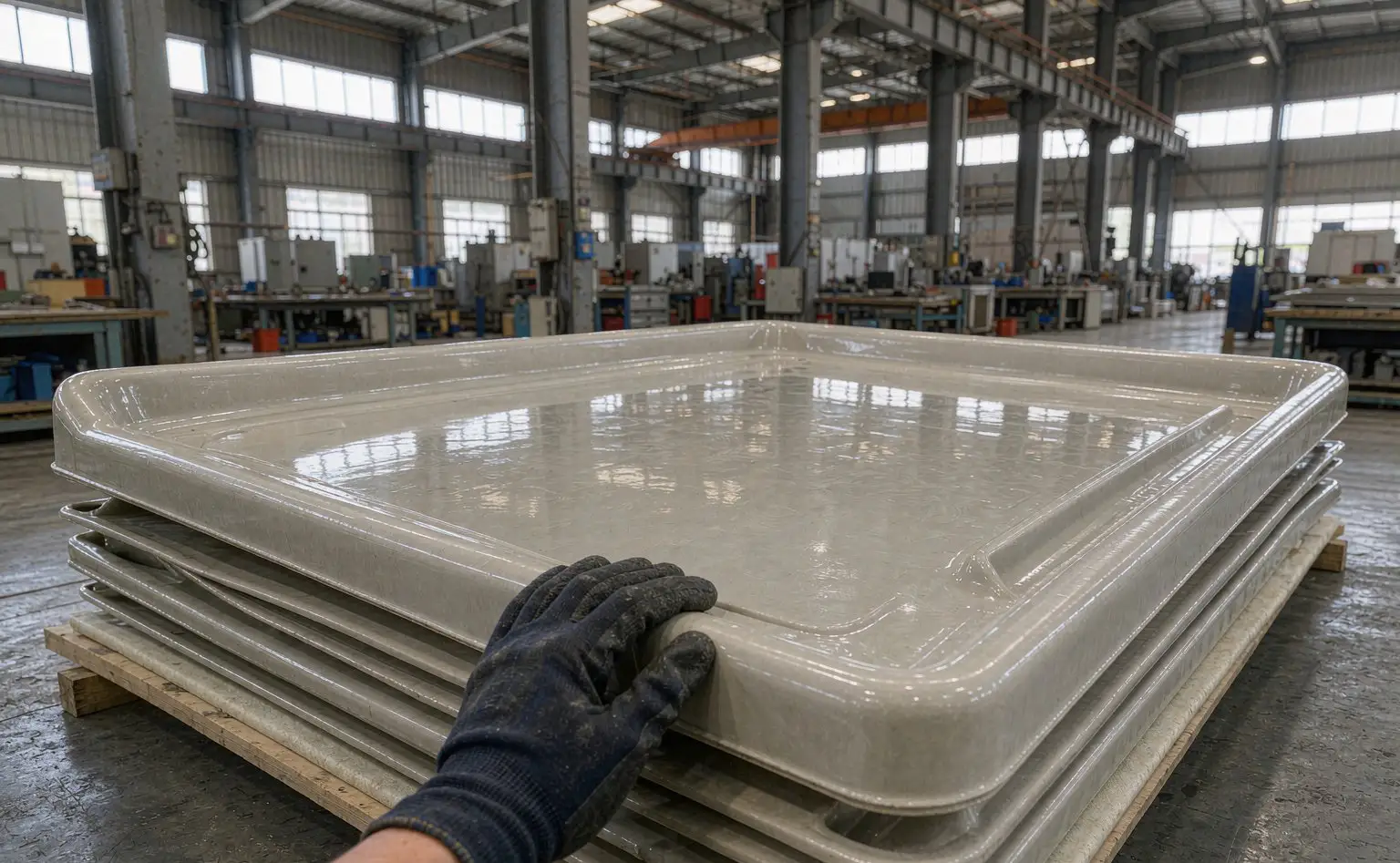
1. Mould sits on the resin surface, in the filler and on the faces in contact
Take a laminate apart: gelcoat, resin matrix, glass (chopped strand mat, woven roving, direct roving), filler (calcium carbonate, talc, alumina trihydrate), release agent residue. Glass is inorganic and does not mould by itself; what fails is the resin surface, the filler and the thin layer of air between two stacked parts.
The surface goes first. A demoulded part carries release agent, hand sweat, sanding dust and paper fluff, all of which is organic food. Under-cured parts also bloom a tacky film that amounts to a prepared bed for micro-organisms. In a humid season, pin-point white spots appear after three days on a pallet.
Filler can carry contamination. Inorganic fillers are usually not the problem, but plants that cut cost with wood flour or starch-based filler are dosing organic food straight into the resin.
The contact face is the stuffiest. Parts stacked before full cure trap a thin, still layer of air between two flat faces, together with residual styrene and moisture, and mould grows on that face, which is often the cosmetic or assembly face the customer sees.
2. Resin system and stacking are counted on two different bases
The table lines up the resin matrix, the gelcoat, the filler and the stacking. Resin and gelcoat are counted as a percentage of resin weight, vapour paper in sheets, and one does not convert into the other.
| Part | Material | Product and level | Stage | Control point |
|---|---|---|---|---|
| Resin matrix | Unsaturated polyester, vinyl ester | iHeir-IPL 0.8%-1.0% | Resin and filler mix | Of resin weight, high shear |
| Gelcoat | Gelcoat resin | iHeir-IPL with the same lot | Gelcoat make-up | Colour plaque on light parts |
| Filler | Calcium carbonate, talc | Dry material only | Before make-up | Moisture, no organic filler |
| Demoulded parts | Finished laminate | iHeir-D 1 sheet per layer, 0.1-0.2 g | Stacking, boxing | Fully cured, sheet between faces |
One boundary. iHeir-IPL deals with what grows on and in the resin, and keeps working after the part leaves the plant; the vapour sheet deals with the air between parts and inside the crate, and is finished when the crate is opened. Skip the resin and paper will not hold back what the filler already carries.
3. Dosing the resin with iHeir-IPL at 0.8%-1.0%
The level is 0.8%-1.0% of resin weight. Indoor and dark parts take the low end; outdoor parts, white and light parts, and orders with an antimicrobial test take the high end. iHeir-IPL is a white powder with whiteness above 90 and a mean particle size of 1-2 µm, so a light laminate does not visibly shift in colour.
Where it goes. Into the resin and filler mix, dispersed at high shear for 10-20 minutes before vacuum or before the charge goes to the tool. Hand lay-up, compression moulding and pultrusion all put it in the same place. Do not top up the resin later: by then the viscosity is up and the powder will not disperse.
Process headroom. iHeir-IPL withstands 300-320C, while the exotherm peak of an unsaturated polyester system is typically 120-180C and press temperatures sit near 150C, so there is no decomposition risk. Its specific gravity is 3.0, heavier than the resin, so keep the mixing drum agitated or recirculate before drawing.
Trial three things. Colour and haze, worst on white and beige parts, checked against a plaque; mechanical properties, tensile to GB/T 1447 and flexural to GB/T 1449, looking for any drop in strength or modulus; and cure, watching gel time and exotherm peak for a delay. If one of the three fails, reduce the level and cover the difference at the stacking and packing stages.
It cannot replace cure. A tacky part is a prepared bed whatever is inside the resin. Pull under-cured batches out and deal with them instead of hiding the problem under paper.
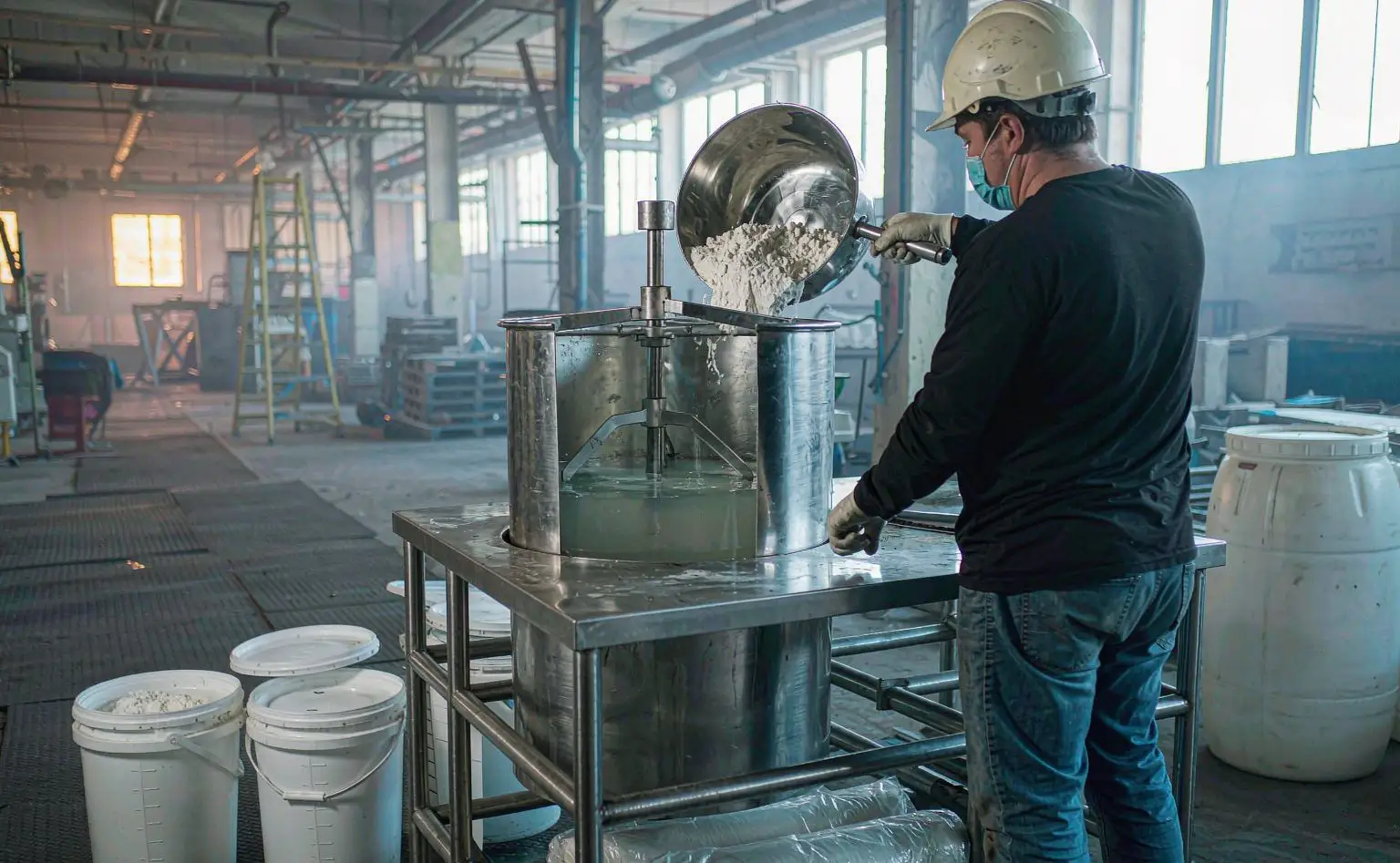
4. Filler and glass moisture cause more failures than the additive
This stage uses no product and it is the one a composites shop overlooks most often.
Keep the filler dry. Calcium carbonate and talc cake when damp, and mixing them into resin carries water in. The cured part then has micro-voids, water moves in and out through them, and the surface moulds.
Let the glass come up to temperature. Roving and mat brought in from a cold store or from outdoors in winter condense water on the surface. Leave rolls in the shop for 24 hours before unrolling instead of charging them straight away; wet glass wets out badly and the interface fails first.
Shop conditions. Hold the mixing and lay-up area at 45%-65% RH and 18-30C, and run dehumidifiers through the humid season. Wipe condensation off tools and mandrels, and let the release agent flash off before the gelcoat goes on.
5. One sheet between parts before boxing, so two faces never sit tight
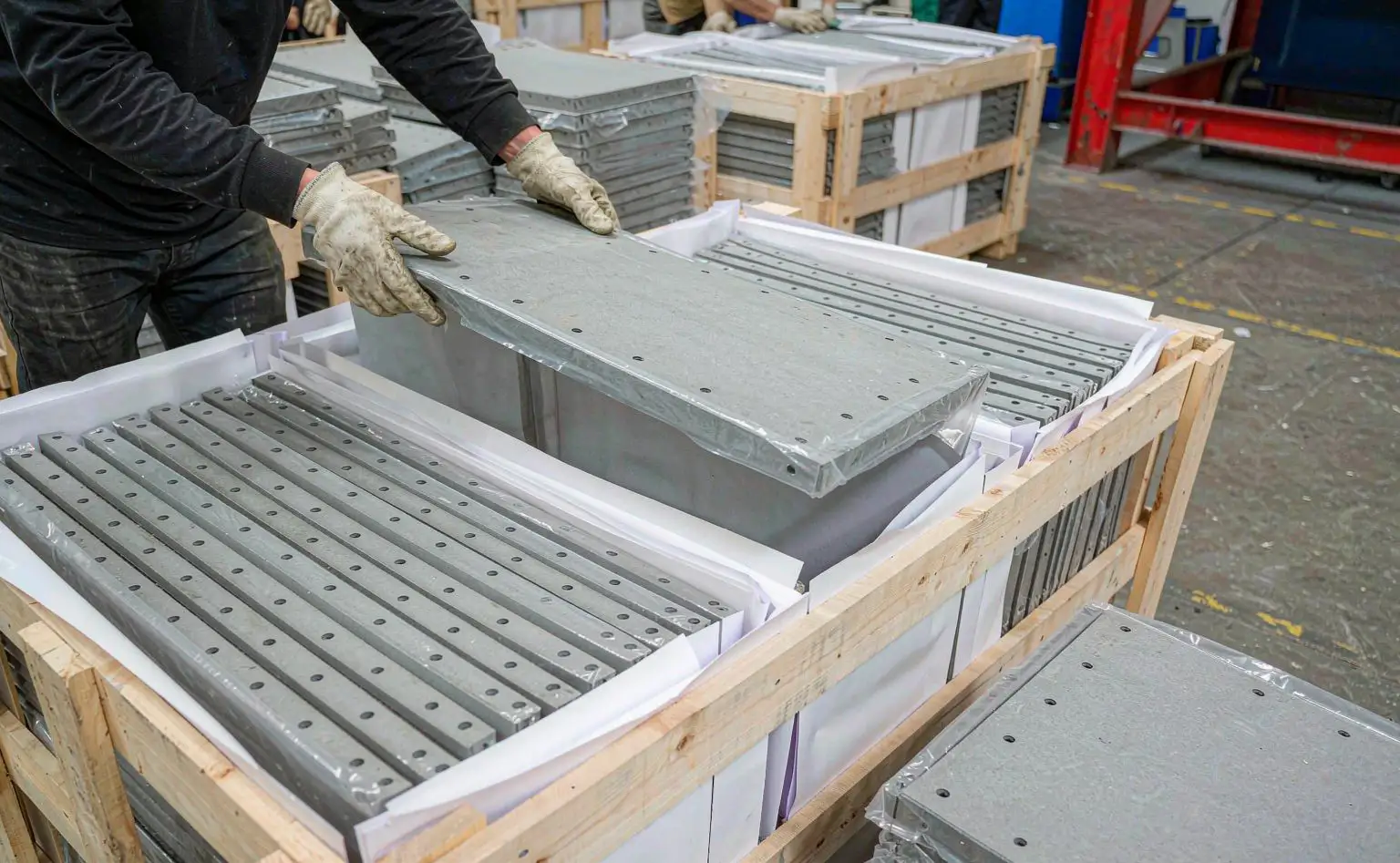
Stacking and boxing use iHeir-D vapour sheet at 0.1-0.2 g of active, laid between parts or against the crate wall, never wrapped onto a cosmetic face.
Confirm cure first. Stack only when the part has come down close to shop temperature and the surface is not tacky. Paper will not save an under-cured stack, and the agent can migrate into the uncured skin.
Run the compatibility test. Seal a sheet at three times the normal level with a finished part in a bag, add a little water, keep paper between sheet and part, and leave it closed for a few days. Check the gelcoat for darkening, white parts for shade transfer and the surface for oil marks. iHeir-D has 70%±5 solids and can attack poor-quality metal under damp conditions, so parts with encapsulated inserts must be trialled.
Warehouse. Keep finished goods below 60% RH, store flat panels on pallets 10 cm off the floor, and walk the stock before the humid season.
Export. Line containers with barrier film and hang desiccant sticks, and check every pallet for damp corners.
6. Questions on gelcoat, colour and rework
Q: With iHeir-IPL in the resin, is a gelcoat still needed?
They do different jobs. The gelcoat handles appearance and weathering, the antimicrobial handles what grows on the surface. On a gelcoated part, dose both the gelcoat and the resin, each on its own resin weight, and never on the combined total.
Q: Can dark parts use it too?
Yes, but check the shade first. iHeir-IPL is a white powder and dark parts hide any shift; white and light parts are the sensitive ones, and dark parts are fine at the low end.
Q: 0.8% or 1.0%, does it matter much?
It is a 25% difference in active content, and on outdoor parts and orders with an antimicrobial test that is the difference between passing and failing. Fix it by service environment and write it on the batch sheet rather than leaving it to the shift.
Q: A part has already gone mouldy. Can it be wiped and shipped?
Surface growth wipes off, but the hyphae are usually already in the surface micro-voids, the spots return within a week and the cosmetic face gets scratched. Downgrade the batch.
Four points: dose iHeir-IPL at 0.8%-1.0% of resin weight in the resin and filler mix, disperse at high shear before vacuum, keep the drum agitated against settling, and trial shade, tensile and flexural strength and gel time; dose the gelcoat on its own resin weight and check a colour plaque on white parts; use dry filler with no wood flour or starch, and let glass come up to shop temperature for 24 hours before unrolling; stack only fully cured parts with one iHeir-D sheet at 0.1-0.2 g of active between layers, after a three-times compatibility test; keep the warehouse below 60% RH and line and dry containers for export. Antimicrobial performance can go to ISO 22196 or GB/T 31402, a kilo of sample goes out first, and MOQ is on the iHeir-IPL product page.


