




 View Count:47
 Date:2026-10-05
Should stationery mould be handled the same way on paper and on plastic parts? It should not, because the two lines run on different products and the loadings are worked out separately. Paper products such as notebooks, cards and folder board take iHeir-D gas-phase antimicrobial and anti-mould agent at 0.1-0.2 g a sheet, placed in the stack and at packing. Pen barrels, boxes and PP folders take iHeir-ECO plastic antimicrobial agent at 0.3%-0.5% on PE/PP resin as masterbatch. This article covers where each line sits and how the figures are set.
1. Stationery mould splits into two lines: paper and plastic
A set of stationery is usually two materials in one box. Notebooks, cards and folder board are paper: they take up moisture quickly and they present a lot of pressed faces. Pen barrels, boxes and PP folders are plastic: the material carries no nutrient a mould can live on, so the growth sits on the dust and oil the surface collects. Treat the two as one job and both the product choice and the loading will be wrong.
The paper line fails at the pressed faces. Once cards and board are stacked, the face-to-face contact is tight and there is almost no airflow between the sheets, so a damp warehouse spots the two sheets in contact first; those spots are hard to rub off, and a marked sheet ends up downgraded. The plastic line fails at injection: if the antimicrobial is not built into the resin and only wiped on the finished surface, rubbing and washing take it off before long.
So the two lines cannot share a method. Paper relies on a gas-phase material at the stack and at packing, letting the active fill the pressed gaps. Plastic relies on a masterbatch dosed before injection, so the protection travels with the part.
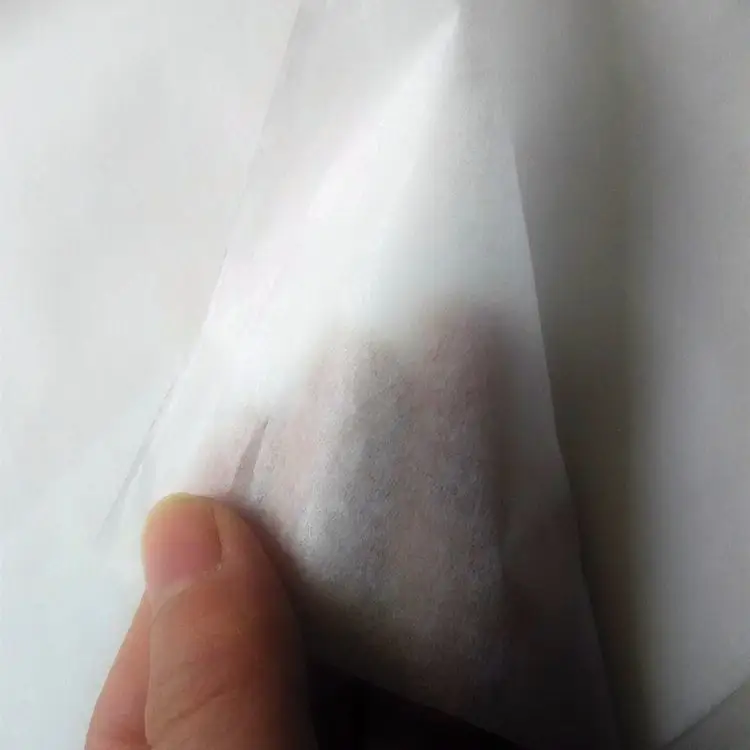
2. The two lines at a glance: the paper stage and the plastic stage
The table lines up the material, the stage, what is treated, the product, the figures and the points to watch. It is written to serve as the first draft of a process card.
| Material | Stage | Treated item | Product | Figures | Points to watch |
|---|---|---|---|---|---|
| Notebooks, cards, folder board | Laminating, stacking and packing | Pressed faces and the pack | iHeir-D gas-phase antimicrobial and anti-mould agent | 0.1-0.2 g a sheet of anti-mould paper or sachet | Works by volatilisation, so the pack has to be closed; bring the paper moisture down before packing |
| Pen barrels and boxes (PP, ABS) | Injection moulding | Moulding resin | iHeir-ECO plastic antimicrobial agent | 0.3%-0.5% on PE/PP | Make a masterbatch first; heat stable to 240 degrees, avoid above 320 |
| PP folders and plastic organisers | Injection or extrusion | Part resin | iHeir-ECO plastic antimicrobial agent | 0.3%-0.5% on total resin | High-regrind batches belong at the top of the range; the figure is on resin, not finished weight |
| Parts already spotted | Surface remedy | Surface spots | Control only (select separately) | By area and batch | Clean before packing; a remedy is not prevention, so it never replaces the line stage |
| Packing | Liner and closing | Paper and plastic | Anti-mould liner plus a desiccant in the carton | Do both jobs together | One job alone does nothing; the liner has to reach the pressed faces |
| Finished-goods store | Stacking | Finished cartons | Humidity control only | Keep the store below 60% relative humidity | Off the floor, away from the wall, air gaps between stacks, first in first out |
Six rows, one conclusion: the paper line lands in the pressed gaps and the pack, and the plastic line lands in the resin before injection.
3. The paper line: placing the gas-phase sheet after the laminating stage
Paper products pass through a laminating or gluing stage, and that stage decides how much moisture the board carries; the anti-mould job then goes to a gas-phase material at the back end. iHeir-D gas-phase antimicrobial and anti-mould agent is coated onto anti-mould paper and sachets, generally at 0.1-0.2 g of active a sheet, and placed in the stack and at packing. It works by volatilisation, carrying the active into the pressed gaps and the dead corners of the carton, which is exactly where a liquid wipe cannot reach.
Three things have to be fixed. First, the pack has to be closed: the gas-phase material holds its concentration in an enclosed space, and an open stack is a wasted sheet. Second, bring the moisture of high-moisture batches down first, because water on the sheet dilutes the vapour and makes the paper itself easier to spot. Third, the number of points follows the volume of the carton and the number of layers, not one sheet to a box; the tighter and deeper the stack, the more the liner has to sit against the pressed faces. For the packaging choice, see how to choose anti-mould packaging paper.
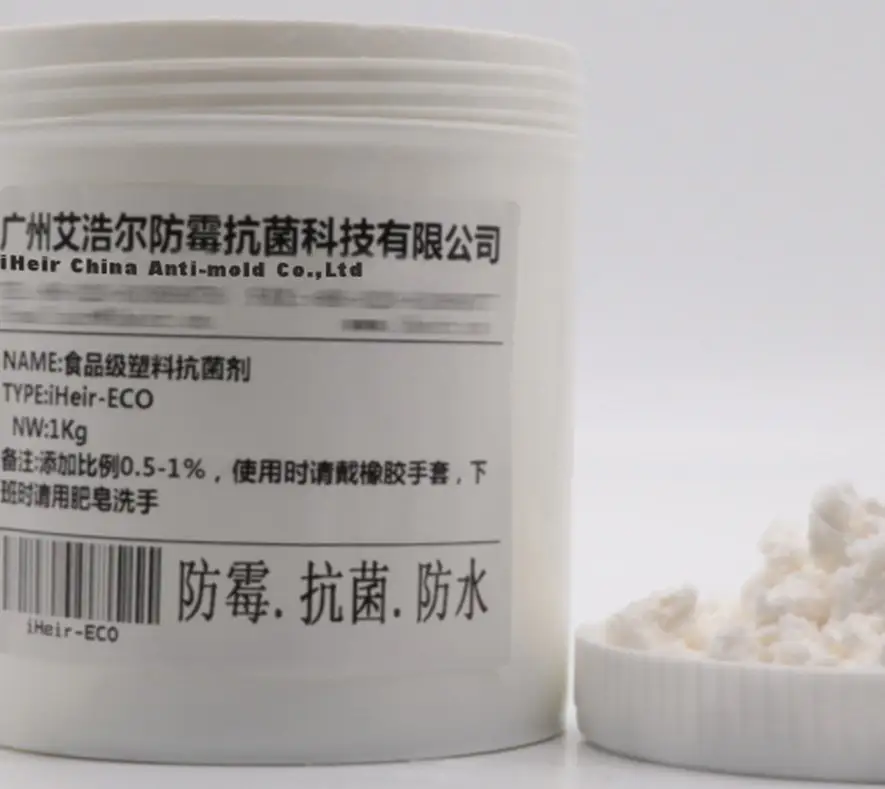
4. The plastic line: getting the masterbatch into barrels and parts
The plastic line gets one chance, before injection or extrusion, to mix the antimicrobial into the resin. On general polyolefin, dose iHeir-ECO plastic antimicrobial agent at 0.3%-0.5% on PE/PP resin, made up as a masterbatch in a matching carrier first. It is heat stable to 240 degrees with a melting point of 56-58 degrees, so keep the barrel below the limit and avoid running above 320 degrees.
Two points catch people out: the figure and the dispersion. The figure is on total resin weight, so a change in the regrind ratio means recalculating, and high-regrind batches belong at the top of the range because regrind brings in the organic residue and moisture that feed mould. Dispersion decides whether protection exists locally at all: powder fed straight in can agglomerate, and an agglomerate is a blank spot. Masterbatch first, dosed at the equivalent loading, is the steady route. For that choice, see masterbatch or powder for plastic antimicrobials.
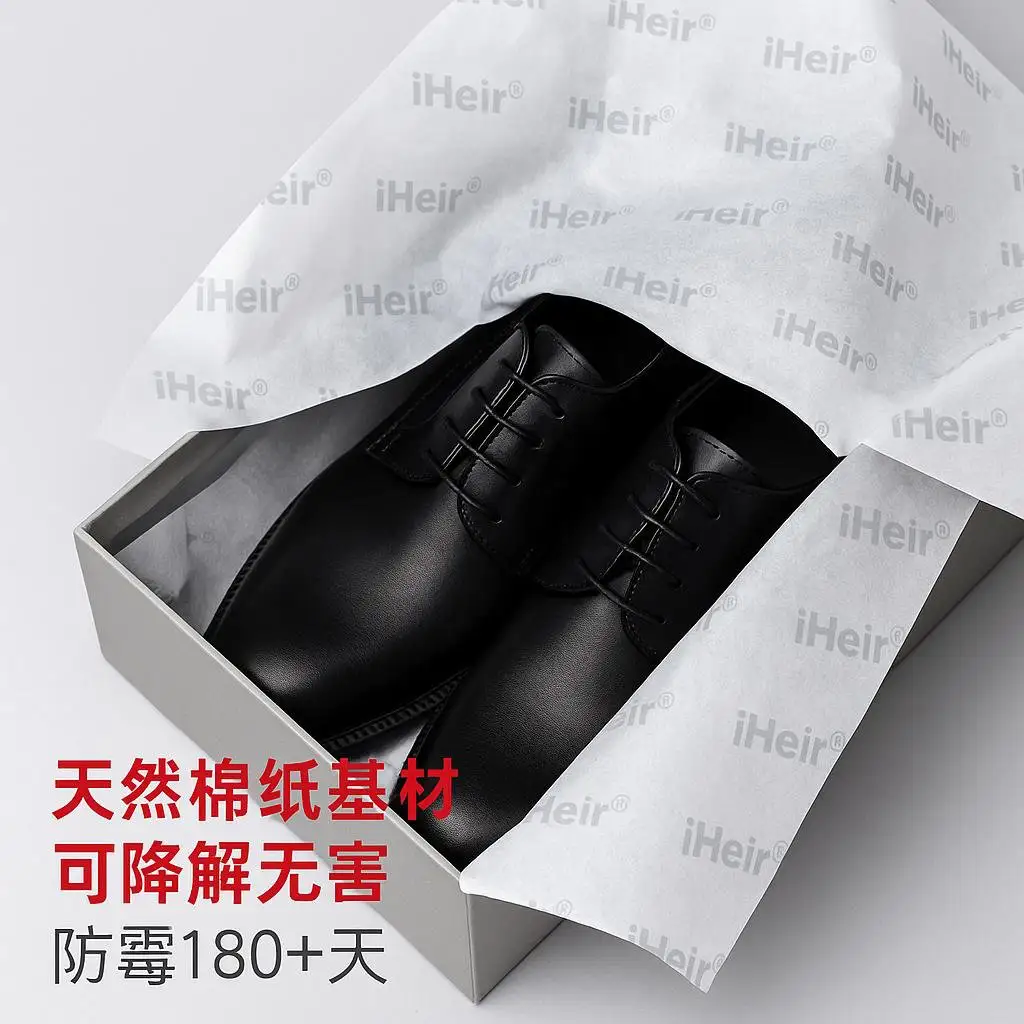
5. Packing and the store: both jobs together
Once the two lines are right, packing is the last gate. The iHeir-D sheet has to sit against the pressed faces, paper products and plastic parts are stacked in separate zones, and a desiccant goes into the carton. A liner without a carton desiccant leaves the humidity inside too high, and a desiccant without a liner still leaves the pressed gaps damp. The two are one set; splitting them breaks both.
The finished-goods store doses nothing and relies on the environment to hold what the earlier stages built. Keep the store below 60% relative humidity, load cartons off the floor and clear of the wall, leave air gaps between stacks, run first in first out, and never stage a pending batch against an outside wall. A full container needs humidity control sized to the box type and the voyage. On acceptance: a fresh sample passing does not mean the stacked goods will, so hold one sample per batch at 28 degrees and 85% humidity for 7 days.
6. Questions that come up
Can paper take the antimicrobial masterbatch too? No. Masterbatch is for plastic parts; paper is a fibre structure, so there is nothing to disperse it into. The paper line runs on gas-phase paper that covers the pressed faces by volatilisation, which is a completely different route.
Can a dip solve the paper line in one step? A dip addresses the wet end and the moisture of the board, and the anti-mould job still belongs to the gas-phase material at the back end. The pressed faces never meet a liquid, so a dip cannot reach them.
Is a plastic barrel dosed on resin weight or finished weight? On total resin weight, regrind included. High-regrind batches belong at the top of the range, because the organic residue and moisture they bring in feed mould and there is no reason to leave the margin thin.
The work sits in two lines: paper takes iHeir-D gas-phase anti-mould paper at 0.1-0.2 g a sheet, placed in the stack and at packing; plastic takes iHeir-ECO masterbatch at 0.3%-0.5% on PE/PP resin before injection, with packing doing both jobs. Samples and TDS sheets are available, and we are glad to run a trial on your own line.


