




 View Count:56
 Date:2026-10-07
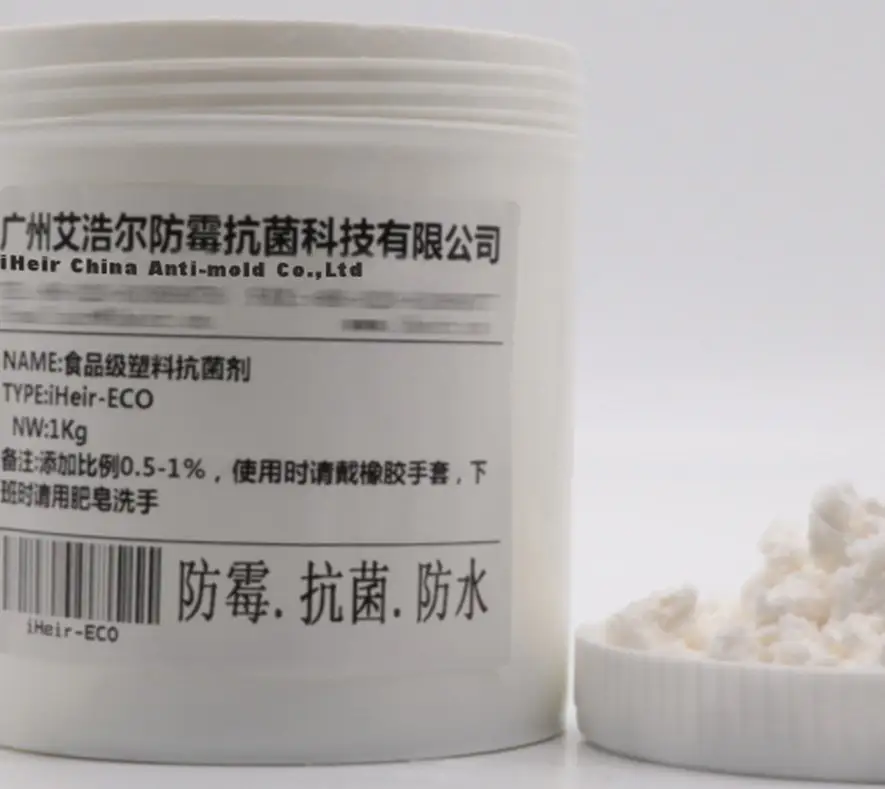
How should Christmas tree mould and bacteria be dosed? A tree is built from three materials, the PVC branches, the moulded ornaments and the packaging, and the mould starts on the branch surface and in the damp trapped inside the carton, so a single spray on the finished tree does not cover it. The PVC branches take iHeir-ECO plastic antimicrobial agent at 0.5%-1.0% on resin weight at the extrusion or injection stage; the moulded ornaments take 0.8%-1.0% of iHeir-IPL inorganic plastic antimicrobial agent; and the store is held on humidity control with gas-phase sheets. This article covers the three dosing points and the figures.
1. Where the mould comes from: branches, ornaments and the store are three stages
A tree looks like one piece, but it is three material systems. The PVC branches are extruded plastic parts that do not absorb water themselves, yet they sit in store for a long time and are stacked tight, so dust, hand sweat and release aids settle on the surface. Ornaments and hooks are PP or PS mouldings, thin-walled and small, and they go damp once they are bagged. The outer carton and the liner are paper, which takes up moisture fastest. Let moisture reach all three and the mould starts at the branch tips and on the ornament surfaces.
The three stages also sit at different times. The branches are set at extrusion or injection, so the antimicrobial has to go in with the material; the ornaments are moulded in the same plant, so the ratio can be fixed alongside; and the store is the longest stretch of all, since a tree ships only in season and sits in store for 8-10 months, which is where humidity control is tested. Treat the three as one stage and either the branches are under-dosed or the store is left waiting.
Order matters too: the branches and the ornaments are each treated before assembly, and a spray applied after the tree is assembled, bagged and boxed reaches the exposed surface only, leaving the inner branches and the back of the ornaments untouched.
2. The three dosing points at a glance: branches, ornaments and the store
The table lines up the part, the stage, what is treated, the product, the figures and the points to watch, so it can serve as the first draft of a process card.
| Part | Stage | Treated item | Product | Figures | Points to watch |
|---|---|---|---|---|---|
| PVC branches and trunk | Extrusion / injection | PVC resin | iHeir-ECO plastic antimicrobial agent | 0.5%-1.0% on resin weight | In with the antimicrobial masterbatch or a premix; thermal stability 240 degrees, clear of 320 degrees |
| Ornaments and hooks (PP/PS) | Injection | Resin | iHeir-IPL inorganic plastic antimicrobial agent | 0.8%-1.0% on resin weight | Inorganic silver type, whiteness above 90, so pale and translucent parts do not yellow |
| Pale and translucent parts | Injection | Pale-part resin | Grade selection (inorganic and heat) | Read the agent’s heat ceiling | Above the agent’s ceiling, change the grade; set the ceiling before the line starts |
| Carton and paper liner | Packing | Paper | Control only (not one of the two lines) | By the anti-mould packaging-paper figure | Paper takes up moisture fastest; prefer anti-mould packaging paper or a liner layer |
| Finished store and container | Stacking / full container | Air in the stack and the box | Humidity control only | Below 60% relative humidity | Tight stacks, poor air movement; sheets by stack, and dry the goods before loading |
Five rows, one conclusion: the branches are figured on PVC resin weight and the ornaments on injection resin weight, the two bands differ, and the carton and the store take no agent at all, so each figure stands on its own.
3. PVC branches: ECO in the masterbatch at 0.5%-1.0%
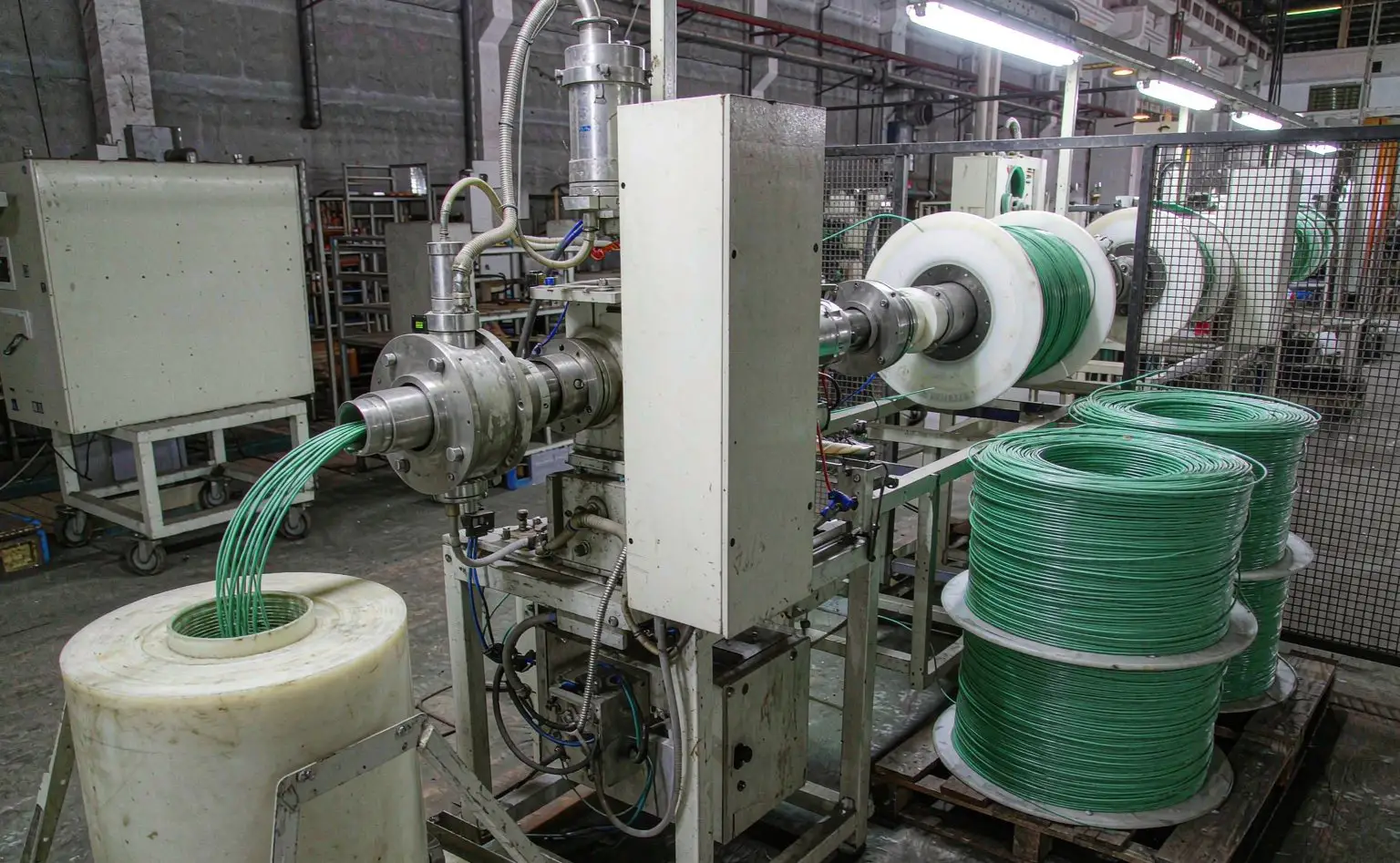
The branch line is completed at extrusion or injection. Add iHeir-ECO plastic antimicrobial agent at 0.5%-1.0% on PVC resin weight, made up first as a masterbatch in a matching carrier or premixed with the pellets before the hopper. The additive bonds with the material and is distributed through the whole part rather than sitting on the surface, so assembly, bending and wiping will not rub it off. Thermal stability reaches 240 degrees, and the process temperature should stay clear of 320 degrees.
Three details. First, the figure is on total resin weight, regrind included, so any change in the regrind ratio means recalculating, and high-regrind batches belong at the top of the range. Second, a branch is thin and light-walled and can only be dispersed through a masterbatch or a premix; powder fed straight in agglomerates. Third, a dark green branch is not very colour-sensitive, but pale parts running in the same batch should be separated and handled on the line below. See how to choose an antimicrobial for engineering plastics and transparent parts for the grade.
4. Ornaments and fittings: IPL inorganic at 0.8%-1.0%
Ornaments, hooks and bases are injection mouldings, and they take iHeir-IPL inorganic plastic antimicrobial agent at 0.8%-1.0% on resin weight. It is an inorganic silver type with whiteness above 90 and a particle size of 1-2 microns, more heat-tolerant than a conventional organic grade, so pale and translucent parts are unlikely to yellow, which suits the bright-faced ornaments that are sensitive to appearance.
Three details. First, ornaments are small and thin-walled, so like the branches they can only be dispersed through a masterbatch or a premix; powder fed straight in will agglomerate. Second, the inorganic type is friendly to colour but demands even dispersion, so check a small sample before a full batch. Third, when the part goes through plating or painting, fix the order first: the antimicrobial sits in the substrate while the finish affects appearance only, so the two never substitute for each other.
5. Finished store and container loading: the place no agent is dosed
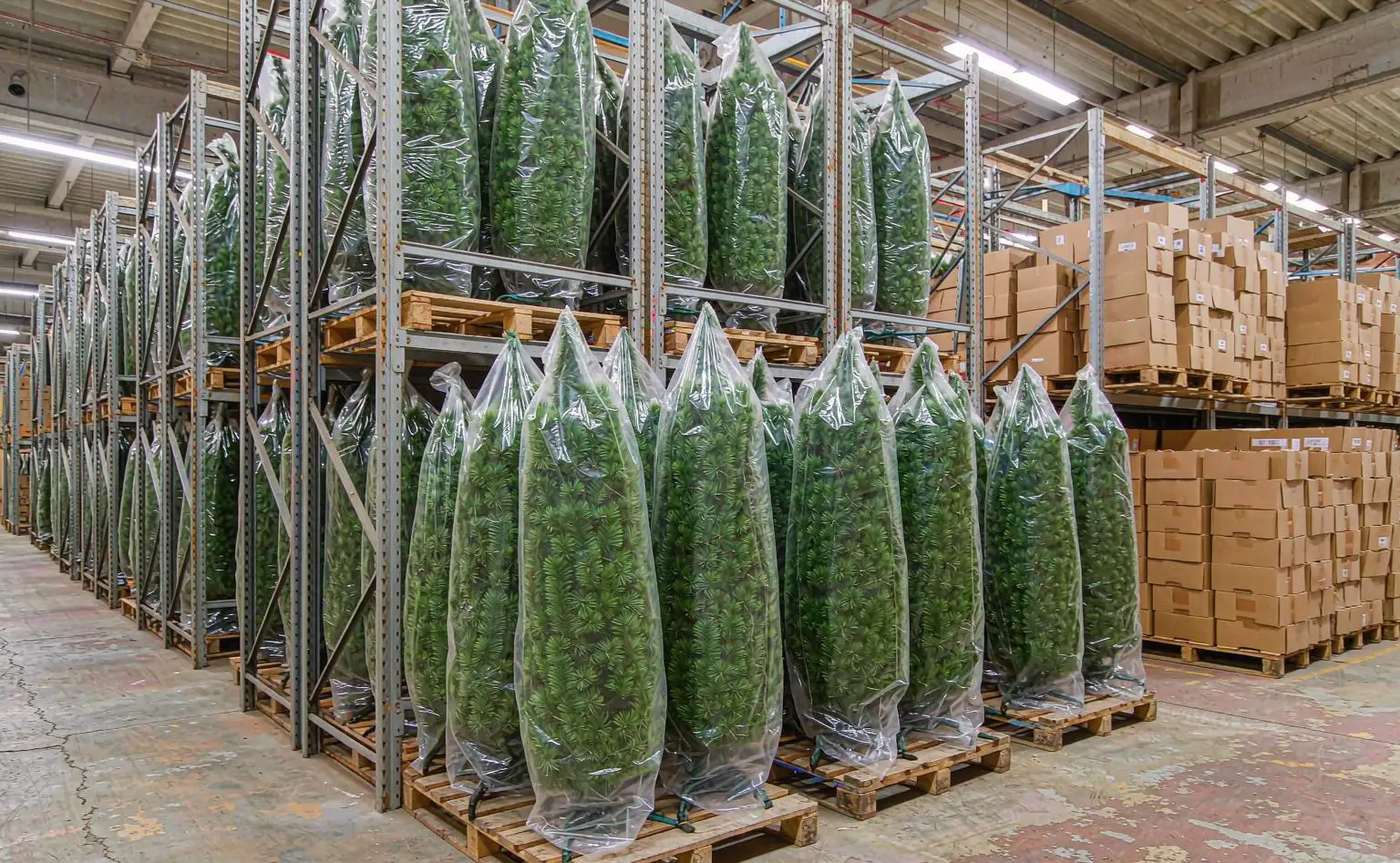
The store matters just as much. Bagged trees are stacked tight with poor air movement, so ventilation will not carry moisture out of the core of a stack; place gas-phase sheets by stack, keep them apart from the goods with liner paper, and hold the store below 60% relative humidity. For batches held 8-10 months, bring the moisture of the goods down before loading, because condensation inside the container is the ignition point.
Loading can also use desiccants by container type. A sea voyage is long and the day-night temperature swing is wide, so condensation in a box is harder to control than in a warehouse, and container desiccant sticks stabilise the humidity inside. See container moisture and mould in shipping for the full practice.
6. Questions that come up: one figure or two, spraying after assembly
Can the branches and the ornaments share one figure? No. The branches are figured at 0.5%-1.0% on PVC resin weight and the ornaments at 0.8%-1.0% on injection resin weight; the denominator is the same but the dosage band differs, so copying the number either wastes material or falls short.
Can a spray over the assembled tree make up for it? It reaches the exposed surface only, leaving the inner branches and the back of the ornaments untouched, and rubbing and wiping take the surface layer off, so the protection has to go in with the material at extrusion and injection.
Can extra loading make up for a long spell in store? No. Damp in storage is an environment problem, not a concentration problem, and extra loading only raises cost. Hold the store on humidity control, place sheets by stack, and dry the goods before loading.
Three dosing points carry the work: the PVC branches go in with the masterbatch at extrusion or injection (iHeir-ECO at 0.5%-1.0% on PVC resin, thermal stability 240 degrees, clear of 320 degrees), the ornaments and fittings go in with the material at injection (iHeir-IPL inorganic at 0.8%-1.0%, whiteness above 90, particle size 1-2 microns), and the store and container preserve both by humidity control, gas-phase sheets and desiccants. Test the long-term growth by a method such as ASTM G21 and hold a complete sample per batch, since testing the branches alone or the ornaments alone does not count. Samples and TDS sheets are available for a trial on your own line.


