




 View Count:3
 Date:2026-11-11
Can umbrella mould be prevented? The canopy looks clean and the spots still come out of the fold lines and the sleeve, and a carton opens at destination as a sheet of grey patches. The routine is iHeir-BJ textile mildew inhibitor at 2%-3% o.w.f. on dry fabric weight in the dye bath, ribs dried before sleeving, and one iHeir-D vapour sheet in each sleeve at 0.1-0.2 g of active. This article covers the bath, the drying and the packing.
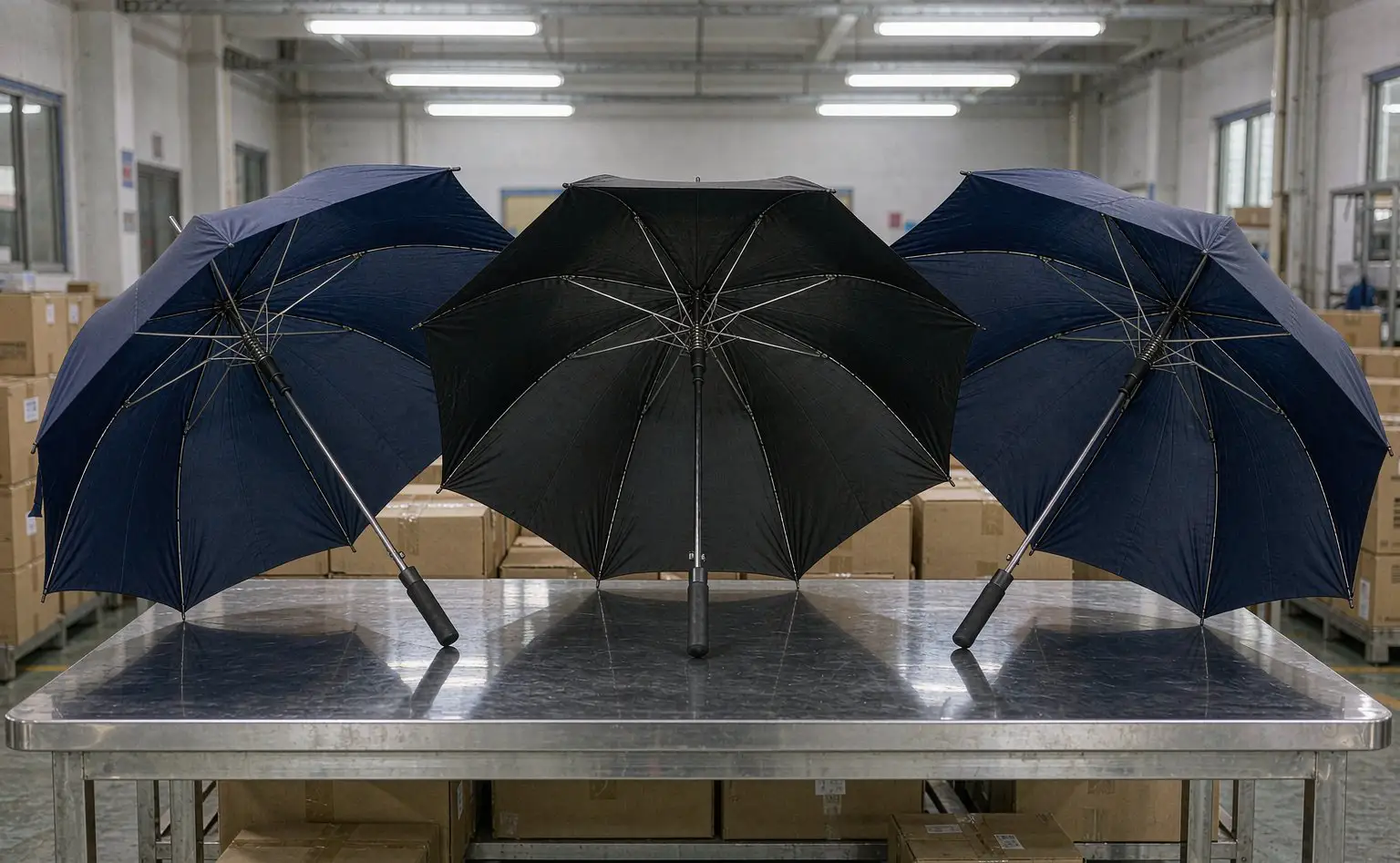
1. Mould grows in the folds, at the rib joints and inside the sleeve
Take an umbrella apart: coated canopy fabric, ribs in steel or aluminium with plating or paint, shaft, handle, sleeve. What moulds is the canopy and the sleeve fabric; the metal parts rust rather than mould.
The fold line is where water sits. A closed umbrella folds along the ribs into a dozen creases, and the trough of each crease dries last. Water carried in on closing collects there, and the first spots run along the creases where nobody sees them until the umbrella is opened.
Joints hold water. The rivets joining ribs to the shaft, the tips and the ferrule connections are all gaps that take water in and do not let it out. The canopy sits against those points, so the damp patch starts where they touch.
The sleeve is a sealed bag. Polyester or canvas, and a wet canopy goes straight in, which seals the water into a bag. Container interiors condense water through the day-night swing, the bag holds it for months, and opening it releases the smell.
2. Canopy, ribs and sleeve are counted on two different bases
The table lines up the canopy, the ribs, the sleeve and the carton. Fabric is counted as o.w.f. on dry weight, vapour paper in sheets; the two are not convertible.
| Part | Material | Product and level | Stage | Control point |
|---|---|---|---|---|
| Canopy fabric | Coated polyester, canvas | iHeir-BJ 2%-3% o.w.f. | Dye bath | Bath 21-50C, pH 4.5-8.5 |
| Ribs and shaft | Steel, aluminium | Dried, assembled dry | Before assembly | Blow out the joints |
| Sleeve | Polyester, canvas | Dry umbrella only | Closing and sleeving | Canopy moisture under control |
| Sleeve and carton | Fabric bag, carton | iHeir-D 1 sheet 0.1-0.2 g | Packing | Seal the sleeve mouth |
One boundary. iHeir-BJ sits inside the yarn and keeps working after the umbrella leaves the plant; drying deals with the water carried in at assembly; the vapour sheet covers the volume inside the sleeve and carton and finishes with the voyage. Skip the canopy and no amount of paper will hold back what is already in the fabric.
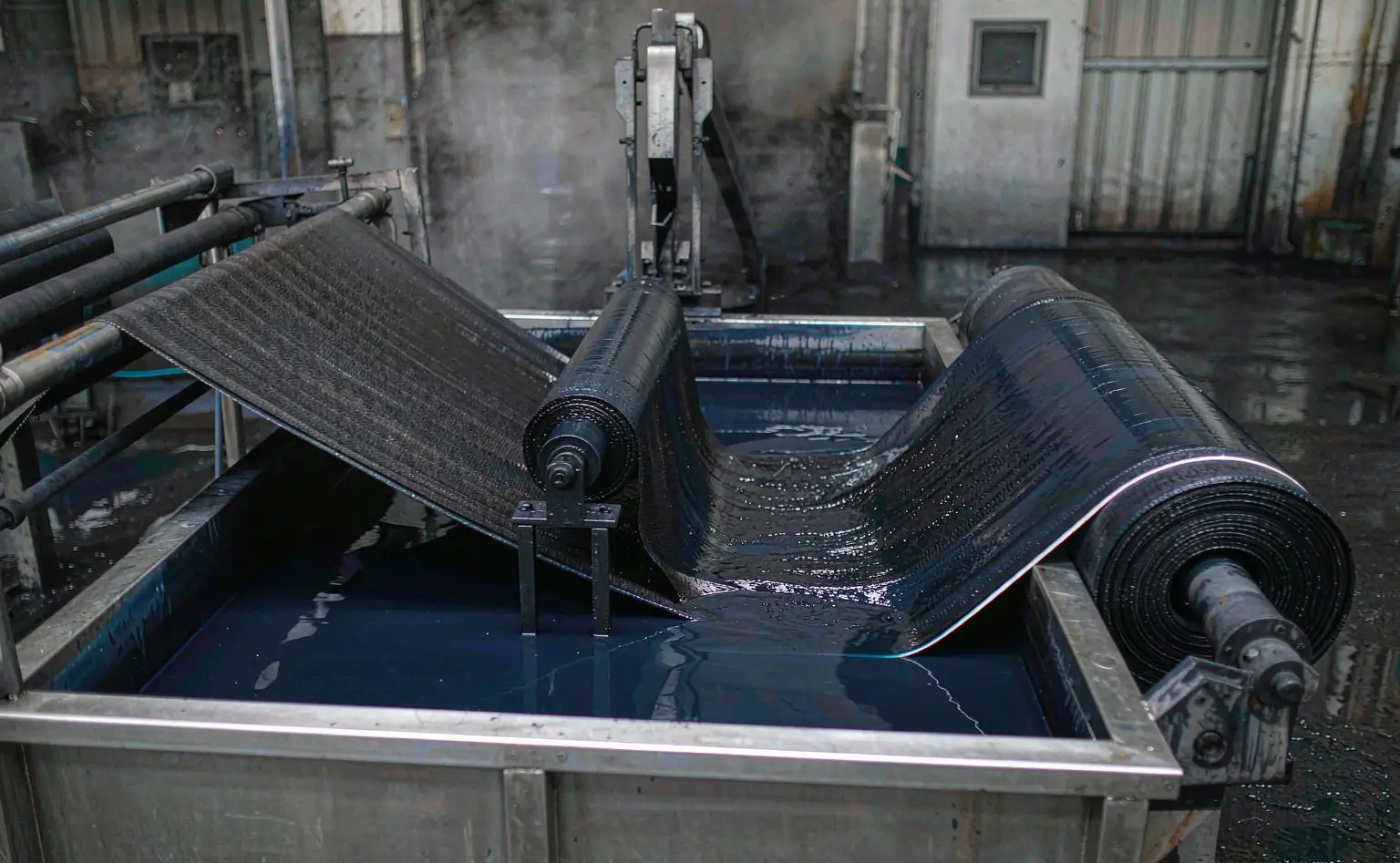
3. How much goes into the canopy bath: 2%-3% o.w.f., before coating
The level is 2%-3% of dry fabric weight. Domestic orders and pale canopies take the low end; export, dark dense coated cloth and buyers who test for mould take the high end. Three kilos of inhibitor treats a hundred kilos of fabric at 70% pick-up, and that is the figure to plan a batch on.
Why it has to be before coating. Canopies are usually given a PU or PA coating and then a water repellent. Once that film forms the agent cannot reach the yarn, a spray sits on the surface, wipes off, and one wash removes the rest. Run in the dyeing or stentering stage, the agent goes in with the fibre and stays inside whatever is coated on top.
How to charge it. Pre-mix with 9-13 times its weight in water and add in portions. A whole drum at once leaves high local concentration in the bath, which shows as shade variation on dark cloth and yellowing on pale cloth.
Bath conditions. 21-50C and pH 4.5-8.5. Bring the make-up water to pH 4-6, add 0.1% cationic hydrophilic agent (70 g in 67 kg of water), then the inhibitor; wetting and take-up both even out.
Keep anionic auxiliaries out. iHeir-BJ is cationic, and an anionic softener or anionic repellent will complex it into a scum that marks the cloth and leaves oil-like patches on the canopy. Schedule softening and repellency as separate passes or move to non-ionic products. The repellency side of the same fabric is covered in canopy repellency and anti-mould in one order.
4. Drying the ribs: sleeving a wet umbrella seals the water in
This stage has no product, only sequence, and it is the step plants skip most often.
How dry is dry. Run the ribs through 50-60C forced air before assembly and let them come down to shop temperature before fitting. After the canopy is joined to the frame, the whole umbrella goes through the drying tunnel again; it is dry when the fabric feels slightly rough and the creases no longer feel cool.
Blow out the joints. Rivets, tips and ferrules cannot be reached with a cloth, so use compressed air. Assemble straight after blowing, and do not leave the frames open on a rack overnight.
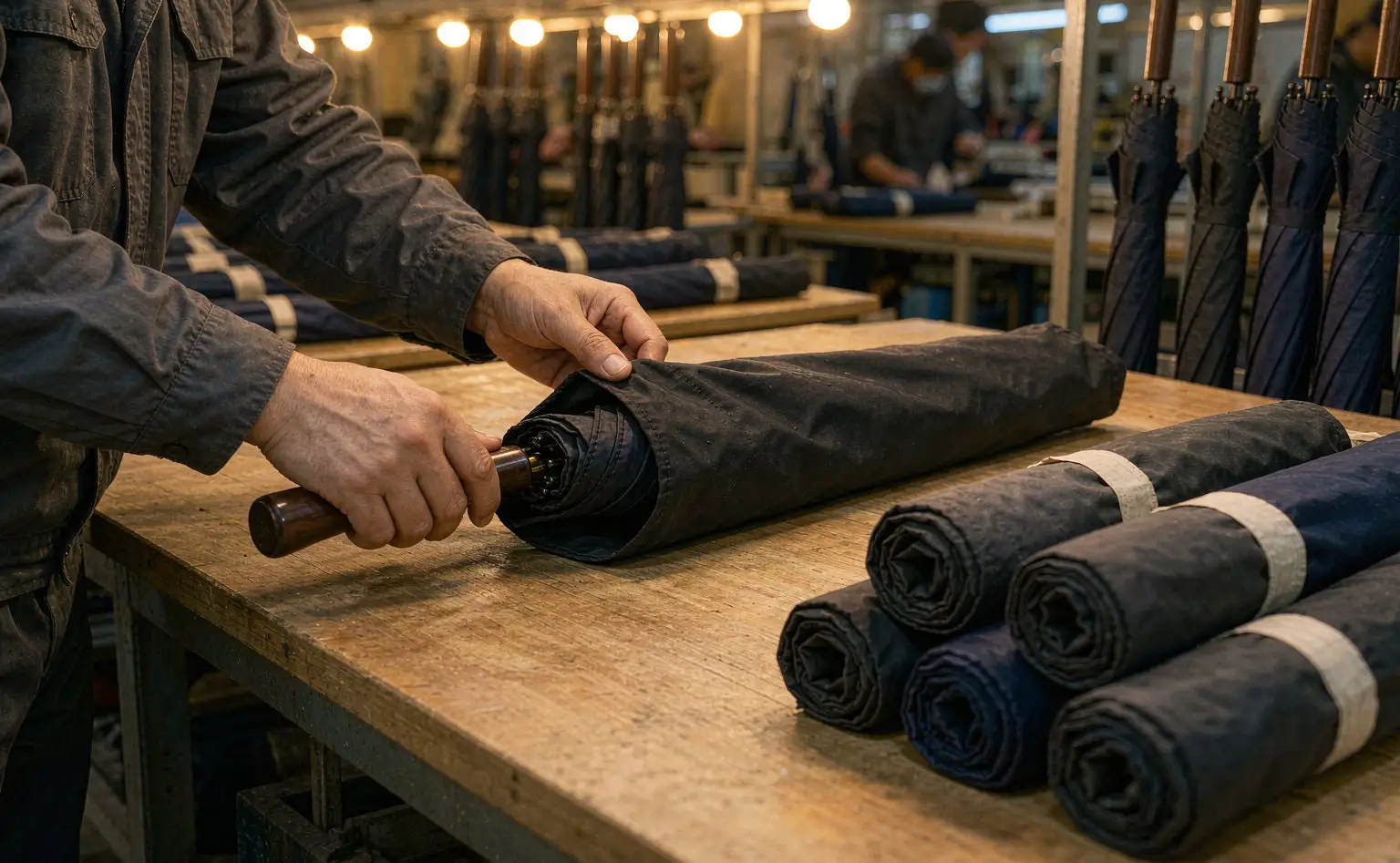
The sleeving gate. Inspectors close umbrellas with damp hands and a canopy carrying mist, and pushing that into a sleeve is an invitation. Put dry cloths at the sleeving bench and wipe each one as it closes.
Shop humidity. Hold assembly and sleeving at 45%-60% RH, run dehumidifiers in the humid season, and keep finished stock off the floor and away from outer walls.
5. One vapour sheet in the sleeve, plus the carton and the container
At sleeving, put one iHeir-D vapour sheet inside the sleeve at 0.1-0.2 g of active, set at the bottom or against the inner wall, never wrapped around the canopy. Close the sleeve mouth and seal the carton, or the concentration will not hold.
Run the compatibility test first. Seal a sheet at three times the normal level with a finished umbrella in a bag, add a little water, keep paper between sheet and product, and leave it closed for a few days. Check the ribs for darkening, the coating for tackiness and the sleeve print for bleeding. iHeir-D has 70%±5 solids and can attack poor-quality metal under damp conditions, so thinly plated ribs must be trialled.
Warehouse. Keep finished goods below 60% RH, pallets 10 cm off the floor and 10 cm off the wall, and walk the stock before the humid season, opening sleeves to check the inner wall.
Export. Line containers with barrier film and hang desiccant sticks, and check every carton for soft corners before loading. Grading is set out in trolley case shell and lining, which uses the same sleeve-and-sheet logic.
6. Questions on bath order, levels and rusty ribs
Q: The canopy is already water-repellent. Can the inhibitor go in afterwards?
Reverse the order instead: anti-mould in the dye bath first, coating and repellency after. Fabric that is already coated will not take the agent, so cover the gap at the sleeve and packing stages rather than spraying the surface.
Q: 2% or 3%, a factor of one and a half?
Follow the fabric and the market. Thin plain cloth for domestic orders takes 2%; dense coated cloth, export and buyers with a mould test take 3%. Both are on dry fabric weight.
Q: Will the buyer smell the sheet when the sleeve is opened?
At 0.1-0.2 g of active there is no noticeable smell on opening. Overdosing is what smells, so count sheets rather than adding by eye.
Q: The ribs already show rust. Can they be saved?
Rust does not come off, only the rib gets replaced. A rusty frame with a mouldy canopy is scrap as a unit; rust transfers to the inside of the canopy and the customer sees it the first time the umbrella opens.
Four points: run the canopy at 2%-3% o.w.f. with iHeir-BJ in the dye or stenter bath at 21-50C and pH 4.5-8.5, pre-mixed in 9-13 times water with 0.1% cationic hydrophilic agent, and no anionic auxiliaries in the same bath; dry the ribs at 50-60C before assembly, blow out the joints, and run the joined umbrella through the tunnel again so the creases are no longer cool before sleeving; put one iHeir-D sheet at 0.1-0.2 g of active in each sleeve after a three-times compatibility test; keep the warehouse below 60% RH on pallets off the floor and line and dry containers for export. A kilo of inhibitor and a pack of sheets go out for a trial, with MOQ on the iHeir-BJ product page.


