




 View Count:45
 Date:2026-10-08
Can sleeping bag mould really be prevented? A sleeping bag is a bag of synthetic filling wadding joined to a shell fabric, and the wadding is loose, holds damp and dries with great difficulty, so it is the main source of mould and a single pass on the shell never reaches the core. The wadding takes iHeir-BJ textile mildew inhibitor at 2%-3% o.w.f. at the opening or spray stage, and the shell fabric and its nonwoven layer take iHeir-PG composite nonwoven fabric antimicrobial agent padded at 20-40 g/L. This article covers the two dosing points, the figures and the compressed storage.
1. Where the mould comes from: wadding, shell and compression are three stages
A sleeping bag looks like one quilt, but it is three materials. The filling is a synthetic wadding, loose and full of voids between fibres, so it takes up damp quickly and releases it slowly; once it has picked up moisture, a pass through the dryer will not drive the water out of the core, which makes it the hardest part to handle. The shell is usually a coated polyester or nylon fabric, sometimes backed with a nonwoven layer, dense on the face and raised on the back, and it is the second risk point. Then comes compression storage, where the finished bag is vacuumed, packed small and stacked, leaving no air movement inside the bag.
The three stages pick up damp at different times. The wadding absorbs the humidity of the plant as it is opened and laid; the shell collects damp at coating and finishing; and the compressed store is the longest stretch, with a sea voyage adding day-night swing inside the container.
On the line, the process opens the wadding, lays it into a web, quilts it to the shell, binds the edges and compresses the finished bag. Both treatments have to be done before quilting: the wadding at the opening or spray stage, the shell in the finishing stage after coating. Treat it after the bag is vacuumed and the water is already sealed in the core.
2. The two dosing points at a glance: wadding and shell
The table lines up the part, the stage, what is treated, the product, the figures and the points to watch, so it can serve as the first draft of a process card.
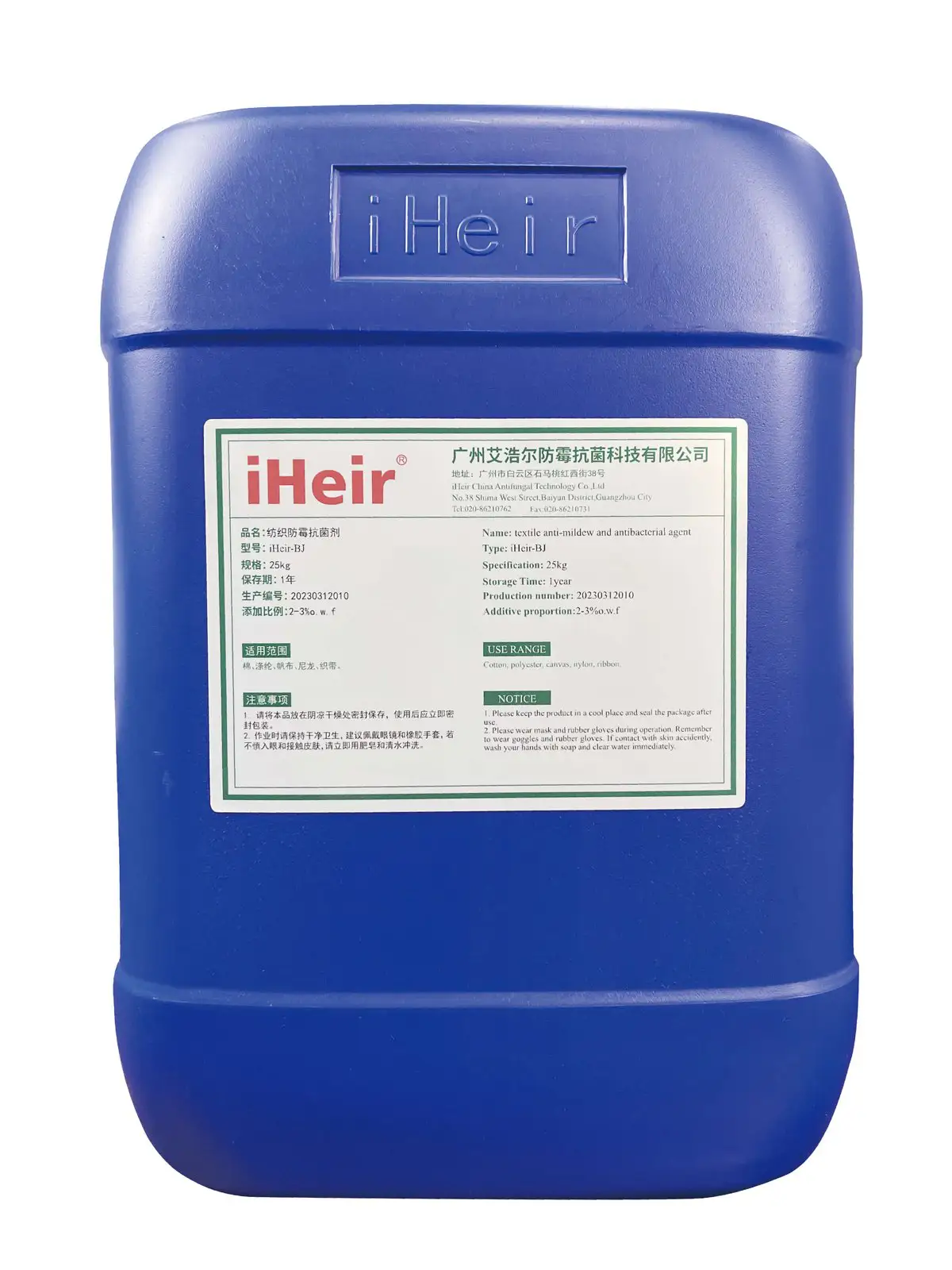
| Part | Stage | Treated item | Product | Figures | Points to watch |
|---|---|---|---|---|---|
| Synthetic filling wadding | Opening / spray | Dry fibre weight | iHeir-BJ textile mildew inhibitor | 2%-3% o.w.f. | Bath 21-50 degrees, pH 4.5-8.5; cationic, never with an anionic aid |
| Shell fabric, nonwoven layer | Padding | Fabric and layer | iHeir-PG composite nonwoven fabric antimicrobial agent | 20-40 g/L | pH 6-8, wet pick-up 70%, drying up to 170 degrees, no heat setting needed |
| Quilting and binding | Sewing | Thread and tape | Same bath as the shell | On the shell figure | Use treated thread, so the seams do not become a leak point |
| Compressed store | Bagging / storage | Air in the bag | Humidity control only | Below 60% relative humidity | Sealed and still; sheets by stack, and dry the goods before packing |
| Export container | Sea freight | Air in the container | Humidity control only | Desiccants by container type | Condensation forms on the roof; harder to control than a warehouse |
Five rows, one conclusion: the wadding is figured on dry fibre weight and the shell on bath concentration, so the two denominators cannot be converted one from the other, and quilting, compression and the container take no agent at all.
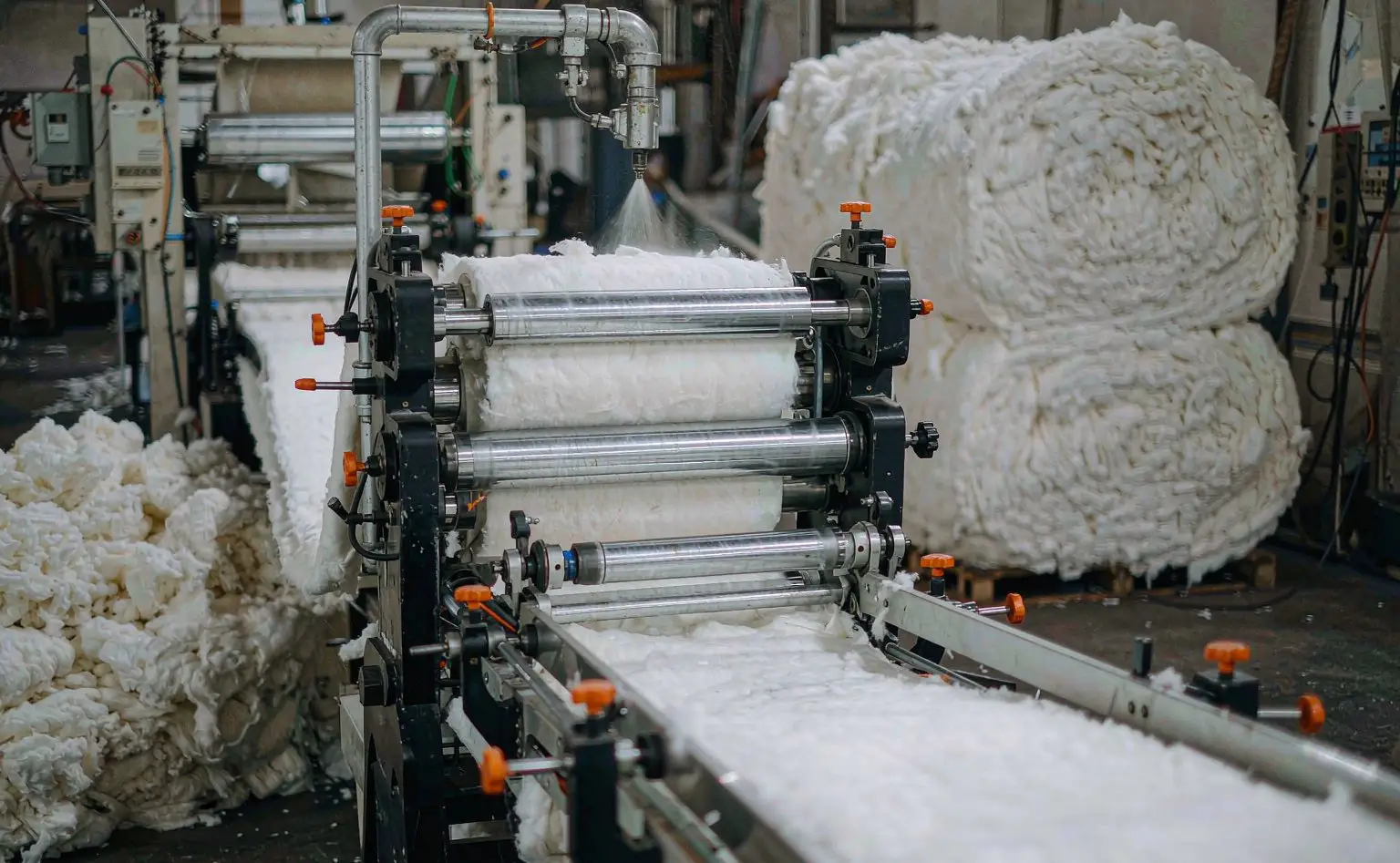
3. The filling wadding: BJ at the opening or spray stage, 2%-3% o.w.f.
The wadding line is completed at the opening or spray stage. Add iHeir-BJ textile mildew inhibitor at 2%-3% o.w.f. on dry fibre weight, with the bath at 21-50 degrees and the pH between 4.5 and 8.5, ideally near 6. Premix it with 9-13 times its volume of water and add it in portions to avoid a local spike; hold the wet pick-up at 70% and add 0.1% of a hydrophilic agent to improve the hand. After normal drying the anti-mould layer is fixed on the fibre, and 2% broadly supports a year or more of protection while 3% reaches two to three years.
Three details. First, loose wadding has a large surface area, so control the wet pick-up: too much liquor drags out the drying and leaves damp in the core. Second, BJ is cationic, so it must never share a bath with an anionic aid; if the wadding also needs softening or antistatic finishing, check the ionic nature of those aids before fixing the bath order. Third, use soft water, since calcium and magnesium in hard water weaken its fixation on the fibre.
4. Shell and nonwoven layer: PG padded at 20-40 g/L
The shell line is completed in the finishing stage after coating. Pad iHeir-PG composite nonwoven fabric antimicrobial agent at 20-40 g/L, with the bath pH at 6-8, the wet pick-up at 70% and drying up to 170 degrees. It needs no heat setting, so an ordinary dryer line is enough, and it should be shaken before use; it can run in the same bath as a water-repellent finish, so the repellency a sleeping bag shell usually needs does not call for a separate pass. Run the nonwoven layer through the same bath rather than missing the backing.
Three details. First, the padding concentration is on bath volume, so when topping up the bath calculate from the actual liquor carried, not from fabric weight, since the denominators differ. Second, keep the drying temperature below 170 degrees, because overheating breaks the antimicrobial layer down and cuts its effect. Third, watch for shade shift on pale and multi-colour shells and run a small sample first. See three-proof and mould prevention on outdoor textiles and what to do about mouldy tent canvas for the wider practice.
5. Compression storage and the export container: no agent is dosed
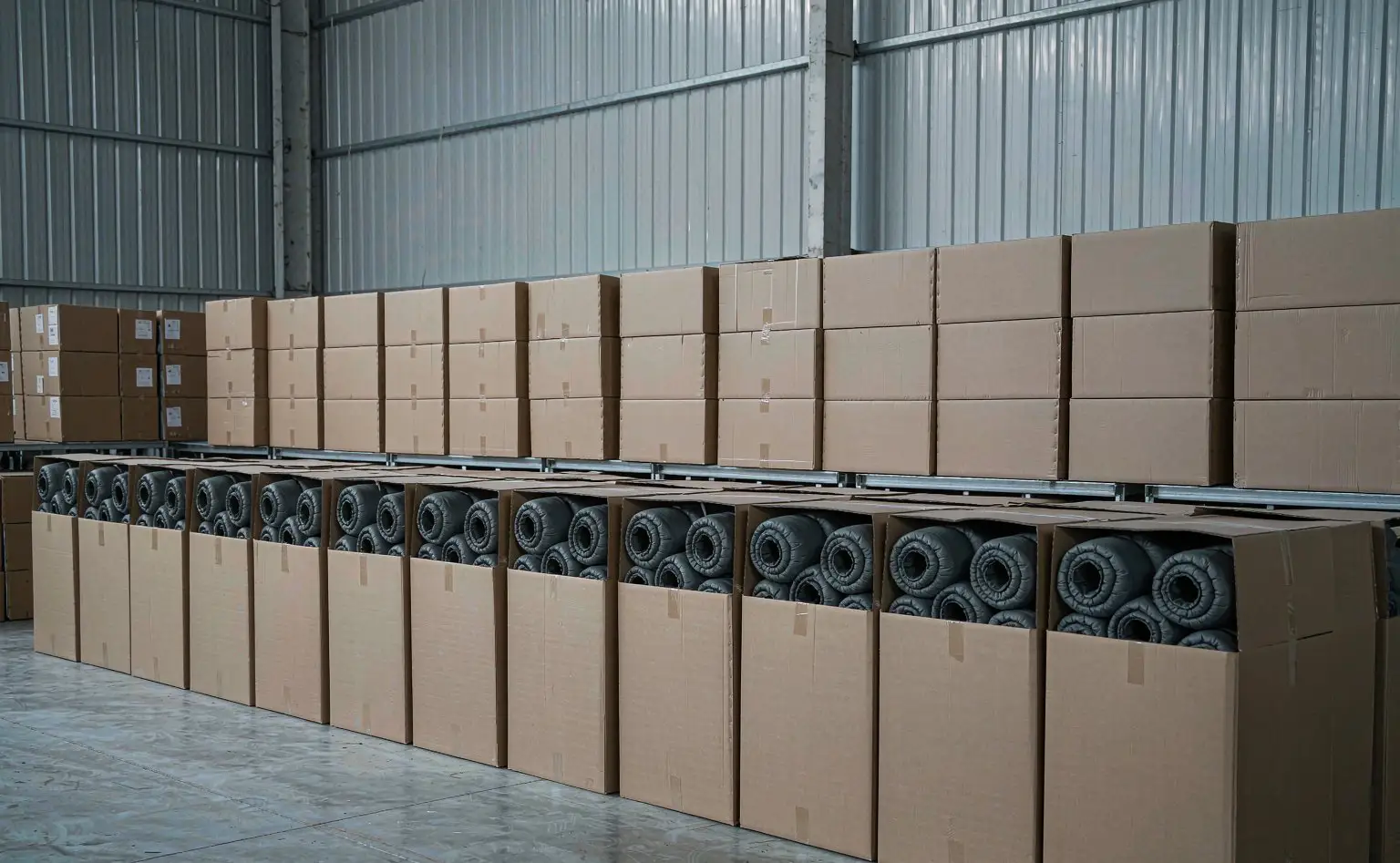
Compression storage matters just as much. Once the finished bag is vacuumed and packed small there is no air movement inside, so place gas-phase sheets by stack, keep them apart from the goods with liner paper, and hold the store below 60% relative humidity. For batches held a long time, dry the goods before packing, because condensation after the container is sealed starts the damp cycle.
The container can also use desiccants by container type. A sea voyage is long and the day-night swing is wide, condensation forms on the roof and is harder to control than in a warehouse, and container desiccant sticks stabilise the humidity inside. Test the long-term growth by ASTM G21 and hold a complete sample per batch, since testing the wadding alone or the shell alone does not count.
6. Questions that come up: one figure for both, or a pass after compression
Can the wadding and the shell share one figure? No. The wadding is figured at 2%-3% o.w.f. on dry fibre weight and the shell at 20-40 g/L on bath volume; one is on material weight and the other on liquor, so copying a number either wastes material or falls short.
Can a pass after the bag is vacuumed make up for it? No. Once the core is compressed and the shell is tight against it, the liquor never reaches the fibre.
Can extra loading on the wadding cover a long spell in store? No. Damp in storage is an environment problem, not a concentration problem, and extra loading only raises cost. Hold the store below 60% relative humidity, place sheets by stack, and dry the goods before packing.
Two dosing points carry the work: the wadding is treated in the bath at the opening or spray stage (iHeir-BJ at 2%-3% o.w.f., bath 21-50 degrees, pH 4.5-8.5, cationic and never with an anionic aid), and the shell and its nonwoven layer are padded in the finishing stage (iHeir-PG at 20-40 g/L, pH 6-8, wet pick-up 70%, drying up to 170 degrees), while compression storage and the export container preserve both by humidity control, gas-phase sheets and desiccants. Samples and TDS sheets are available for a trial on your own line.


