




 View Count:21
 Date:2026-10-27
Can rain boot mould be prevented by treating the rubber alone? A batch held in store for a month came back with mould on the knitted lining inside the shaft while the rubber outside was still clean; every pair had to be scrapped. The compound takes iHeir-JS117 at 0.5%-1.0% of compound weight, and the lining is dipped with iHeir-BJ at 2%-3% o.w.f. This article covers mixing, lining finishing and packing, with the addition points, weight bases and verification steps.
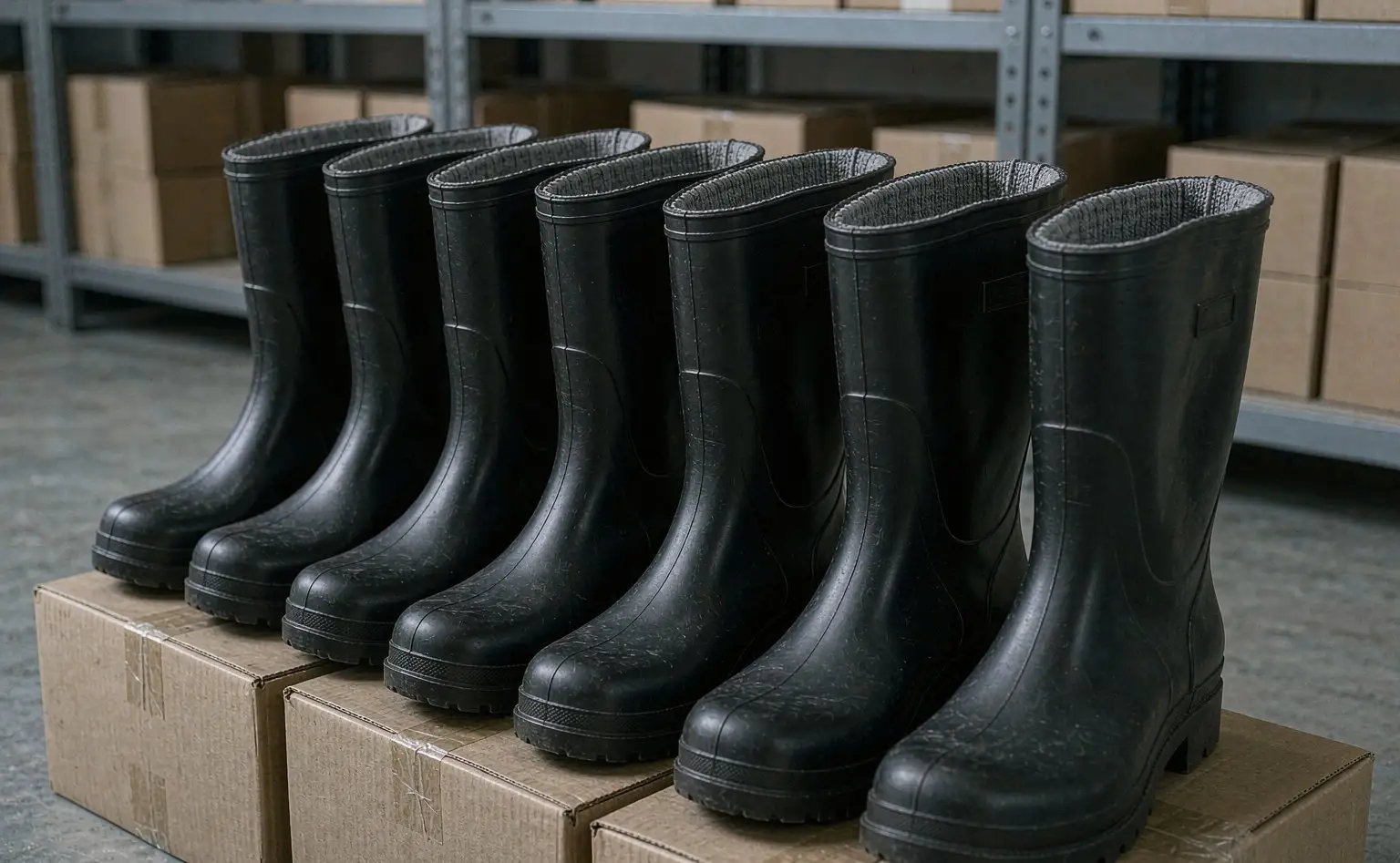
1. Nine out of ten rain boot failures start inside the shaft
A boot is a two-layer structure: a rubber or PVC shell outside and a knitted lining bonded inside. Mould appears in the lining first, because fabric is porous and holds water between the fibres — sweat from wearing and humidity in the shop both stay in that layer, and the non-breathing shell seals the lining into a small damp chamber.
The second location is the shaft opening and tongue seam, where adhesive and fabric overlap: the adhesive takes up water, the fabric stores it, and the stitch holes give it a path. The third is the bond line between sole and upper, where the adhesive still carries water before vulcanising and that water is sealed into the sandwich — the failure appears as a ring of spots.
So a boot has to be treated in both places: the powder in the compound covers the rubber and the bond adhesive, and the textile finish on the lining covers the fabric. Compound only, and the shaft still grows mould; lining only, and the bond line and sole sandwich are left open.
2. Compound and lining are separate questions
The table sets out compound, lining, bond line and packing. The compound takes a powder, the lining takes a textile finish, and the two use completely different weight bases.
| Location | Material and stage | Product and level | Addition point | Basis |
|---|---|---|---|---|
| Upper compound, sole | Rubber mixing and vulcanising | iHeir-JS117 0.5%-1.0% | Mixing stage with the filler | Total compound weight |
| Lining fabric | Knitted fabric, dip finishing | iHeir-BJ 2%-3% o.w.f. | Dip bath | Fabric weight (o.w.f.) |
| Bond line, shaft seam | Adhesive and stitching | Carried in with the compound | Before pressing | Counted in the compound |
| Packing and export | Tissue, carton, container | Desiccant plus store humidity control | Packing and loading | Carton volume and container type |
Two boundaries. First, the two additives are not interchangeable arithmetic: the compound is a weight percentage, the lining is o.w.f. on fabric weight, and one ratio cannot be used for both. Second, the adhesive is not dosed separately: the quantity is small and spread thin, so it is carried in with the compound; adding it to the adhesive pot separately only gives poor mixing.
3. Mixing: the powder goes in with the filler
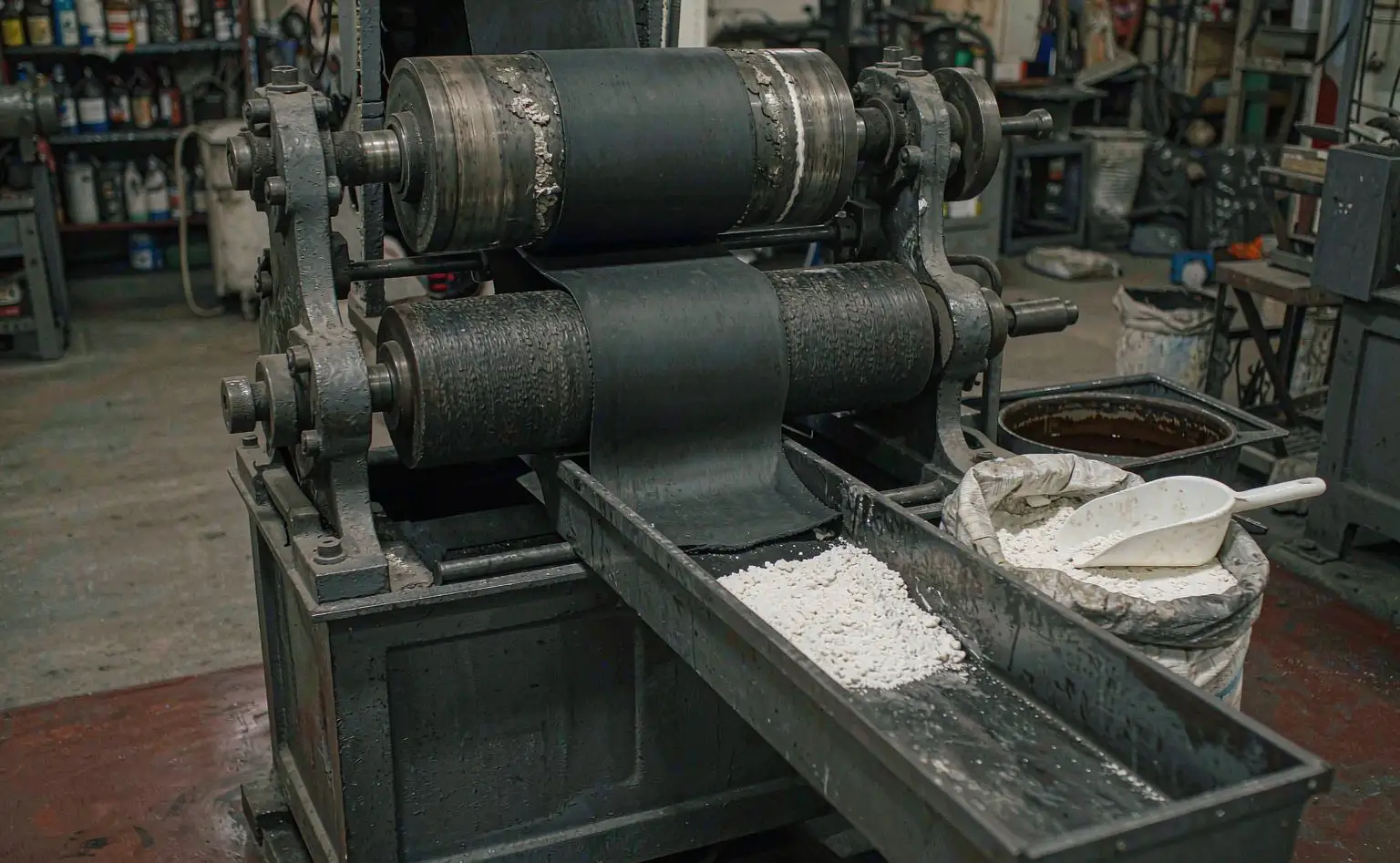
The compound uses iHeir-JS117 at 0.5%-1.0% of total compound weight. Active content is above 97%, mean particle size 110μm (D50), melting range 100-120℃, heat resistance 280℃; it does not dissolve in water and is non-leaching. Rubber is on its application list, with shoe soles and uppers named specifically.
The addition point is the filler stage of the internal mixer, going in with the silica and calcium carbonate so the mixer shear disperses it. Do not leave it to the end of the two-roll mill: by then the compound has formed and the powder stays on the surface. Vulcanising runs at 150-160℃, far below the 280℃ limit, so the active content survives the cure.
Three common mistakes. First, calculating on raw rubber: a compound also contains filler, softener and curing agents, and using raw rubber weight under-doses the batch badly. Second, feeding damp, caked powder: JS117 is specified below 0.2% moisture, and a bag left open takes up water and cakes so it will not disperse — dry it below 60℃ and sieve it first. Third, not topping up the reworked compound: reworked stock fed back has to be topped up in proportion or the content is diluted.
4. Lining: mind the cationic charge
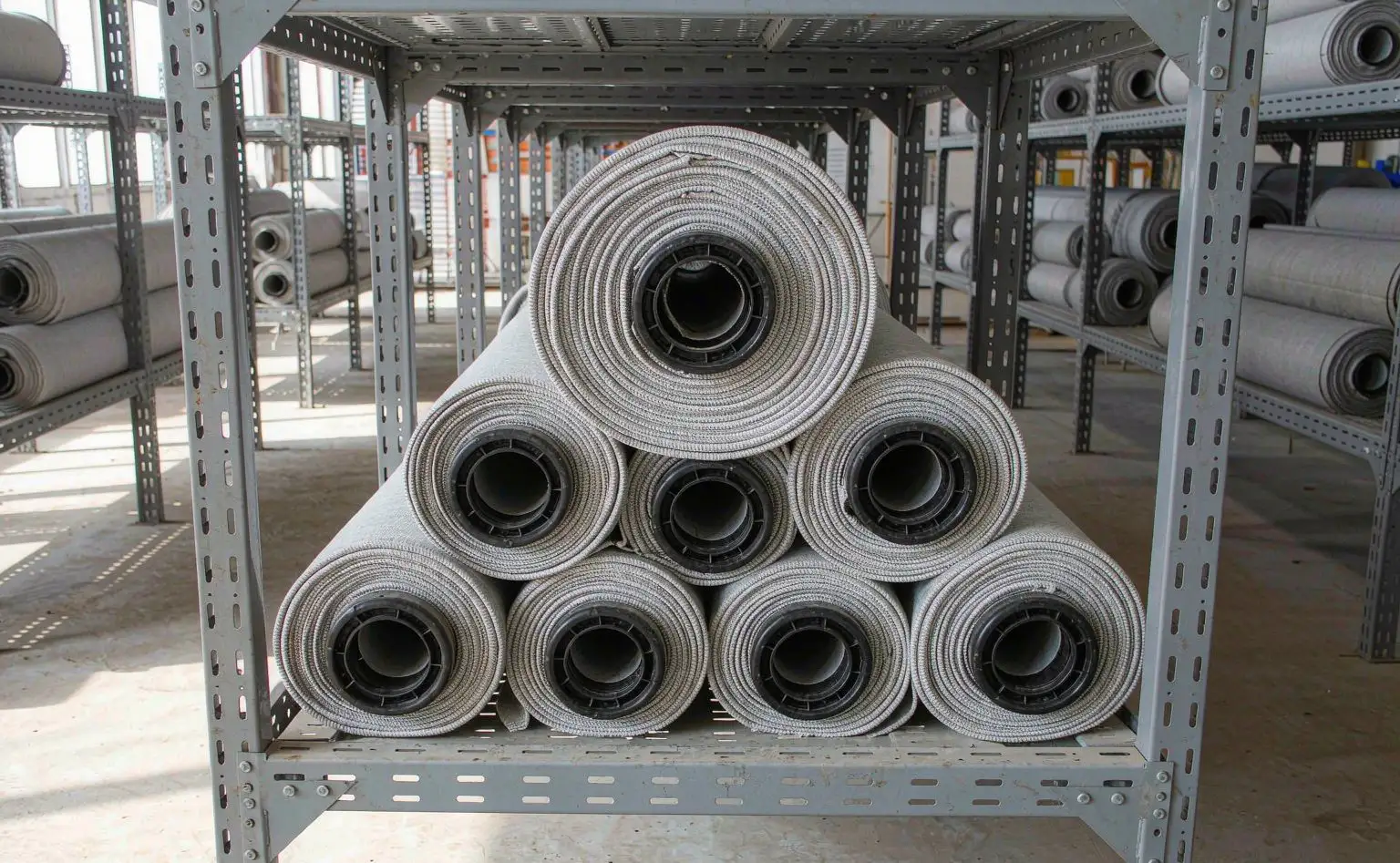
The lining uses iHeir-BJ at 2%-3% o.w.f. on fabric weight, bath temperature 21-50℃, bath pH 4.5-8.5. Premix BJ with 9-13 times its volume of water, add 0.1% wetting agent, then make up the bath. Pouring the concentrate straight into the bath gives local over-concentration and marks on the fabric.
The one that catches most plants: BJ is cationic and must not share a bath with anionic auxiliaries. Many finishing shops also run softeners and penetrants; if those are anionic the two flocculate, scum forms in the bath, the fabric cannot pick up the agent, and the protection is effectively zero. Schedule cationic and anionic auxiliaries on separate runs, or run a small compatibility sample first.
After dipping, pad and dry as usual and bring the moisture below 8% before lasting. BJ is non-leaching and bonds to the fibre surface, so it does not wash out and is not consumed by killing organisms; before the line starts, a drop of bromophenol blue solution shows within two minutes whether the finish is present, which is far quicker than sending a sample out.
5. Lasting, packing and export
The lasting shop is about getting the water out before the carton. After vulcanising the boots stand to cool and a film of condensate collects inside the shaft; blow the shaft dry and insert a tissue former before packing. A boot whose lining is above 8% moisture does not go into the carton — better to hold it for another shift. Keep the shop below 60% RH and add dehumidifiers in the wet season.
Desiccant goes in the carton, sized to the carton volume, in a non-woven bag rather than against the upper. Leave an air path in the container: no carton against the wall or ceiling, because the day-night swing over a sea leg condenses water on the ceiling and the cartons at the wall are the first to come back damp. The mechanism is the same as in our note on condensation in sea freight containers.
Verify at three levels. Compound: a mould growth test to GB/T 2423.16 or the customer protocol, taking samples from upper and sole. Lining: bromophenol blue to confirm the finish is there, then a mould resistance grade to GB/T 24346. Finished pair: 30 days in a damp heat chamber at 30℃/85% RH, then open the carton and inspect the shaft and bond line.
6. Questions on bloom, hand feel and boots that already have mould
Q: We added 1% powder and a white bloom appeared on the upper. What now? First decide whether it is the powder or the softener and curing agents in the formula. JS117 does not dissolve in water and does not leach, so properly dispersed it does not travel to the surface; a continuous bloom is usually softener migration or sulphur bloom, so check the formula and the cure curve before cutting the powder.
Q: Does the dipped lining feel stiffer? BJ is a bonding type at 2%-3% o.w.f. and has little effect on hand feel in a normal process. A stiff lining usually means the drying temperature is too high or too little wetting agent was added; check the drying curve first.
Q: Can a pair that already has mould be saved? Spots inside the shaft can be cleaned, dried and given a fresh surface treatment. Where the filaments have gone into the fabric and left permanent staining, the pair is a downgrade. Any rescued batch needs a fresh anti-mould finish, or the mould is back within a month.
Four points to take away: compound at 0.5%-1.0% iHeir-JS117 on total weight, fed with the filler in the mixer; lining at 2%-3% o.w.f. iHeir-BJ, bath 21-50℃, pH 4.5-8.5, premixed with 9-13 times water; keep the cationic agent on a separate run from anionic auxiliaries; blow the shaft dry, insert the former, add desiccant and leave an air path in the container.


