




 View Count:22
 Date:2026-10-27
Should wiring harness mould be tackled in the sheath compound or in the connector? A shipment sat in a container for three weeks, white patches came up on the sheath, mould spots formed inside the terminal cavities, and the vehicle plant rejected the lot; every harness had to be stripped and reworked. The sheath compound takes iHeir-JS117 at 0.5%-1.0% of compound weight and the connector resin takes iHeir-PSZ104 at 0.5%-1.0%. This article sets out the addition points, the weight basis and the verification steps for extrusion, moulding and packing.
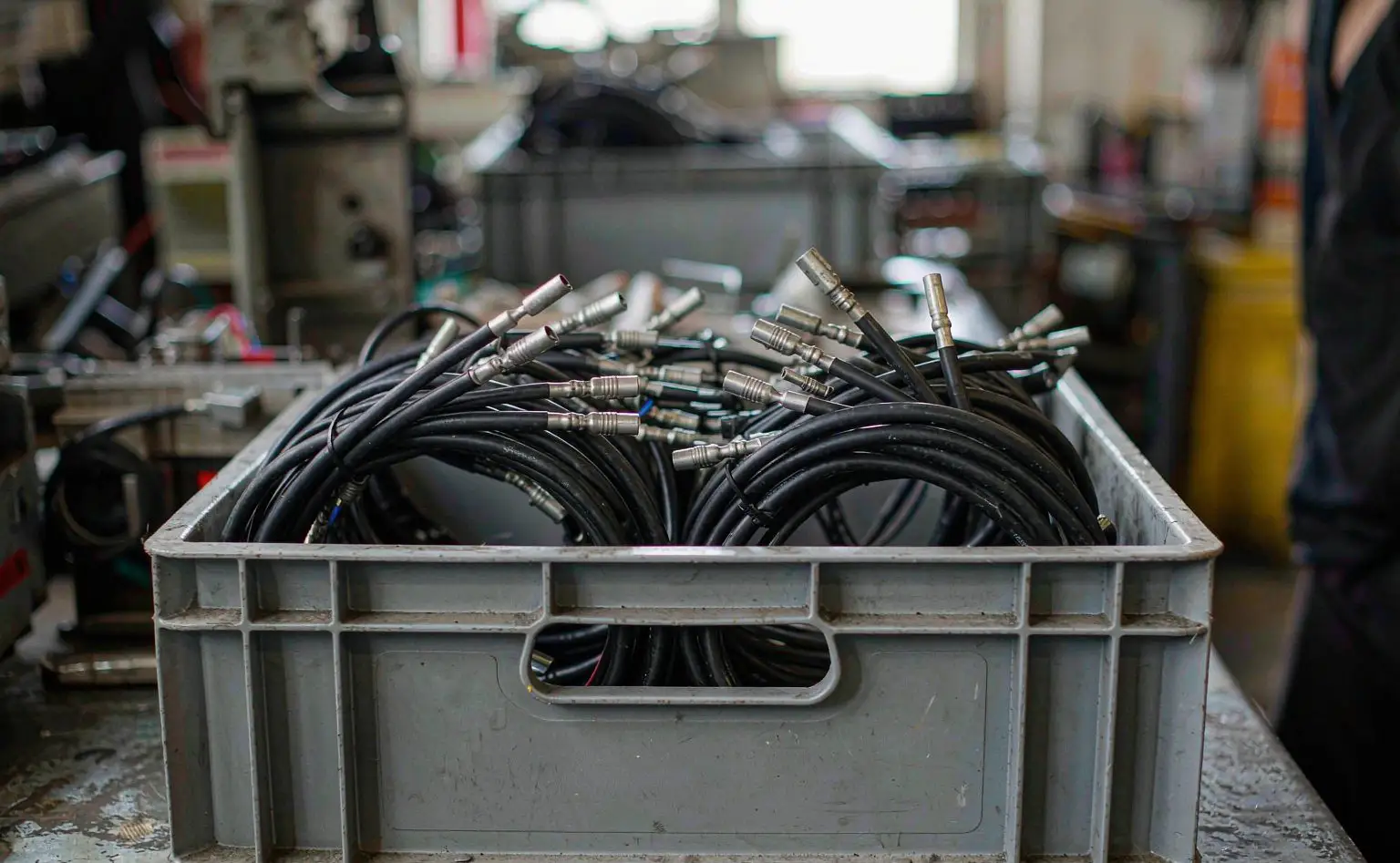
1. Mould starts on the sheath surface and inside the terminal cavity
Sheath is extruded soft PVC, and the compound carries a large plasticiser load. The plasticiser migrates to the surface over time; the film it leaves picks up dust and holds moisture from the air, so a spore landing on it germinates. Mould on a sheath is therefore usually mould on the migrated plasticiser layer, not PVC going mouldy.
The second location is the terminal cavity and the seal cavity. Connectors are mostly PA66 mouldings, the terminal cavity is semi-enclosed, and the space left after crimping holds the moisture that came in at assembly. Through the thermal cycles of a vehicle that moisture condenses on the terminal wall: the copper goes green and mould spots appear on the cavity wall. The third location is the gap between the corrugated tube and the tape wrap, a static air layer that keeps whatever water gets in.
All three come down to one thing: water gets in and cannot get out. The sheath and the connector are two materials on two processes, so they have to be treated separately; one additive meant to cover both ends up covering neither properly.
2. Sheath and connector are separate questions
The table sets out sheath, connector, terminals and the finished pack. Plastics take the powder or the inorganic grade, copper takes no additive and relies on crimping and sealing, and the finished pack relies on desiccant and humidity control.
| Location | Material and stage | Product and level | Addition point | Basis |
|---|---|---|---|---|
| Sheath | Soft PVC, extrusion | iHeir-JS117 0.5%-1.0% | Mixing stage | Total sheath compound weight, plasticiser and filler included |
| Connector housing, terminal seat | PA66, injection moulding | iHeir-PSZ104 0.5%-1.0% | Masterbatch or mixing stage | Weight of that part’s compound |
| Terminals, busbars | Copper alloy, stamped | No additive | — | Crimping and sealing only |
| Assembly and export pack | Coiling, bagging, container | Desiccant plus store humidity control | Packing and loading | Carton volume and container type |
Two boundaries. First, copper takes no additive at all: any coating raises contact resistance, so terminals are a question of crimp quality and seal integrity. Second, the basis is compound weight, not assembly weight: the sheath is calculated on sheath compound, the connector on connector compound, and neither metal parts nor tape take part in the calculation.
3. Sheath extrusion: the powder goes in at mixing
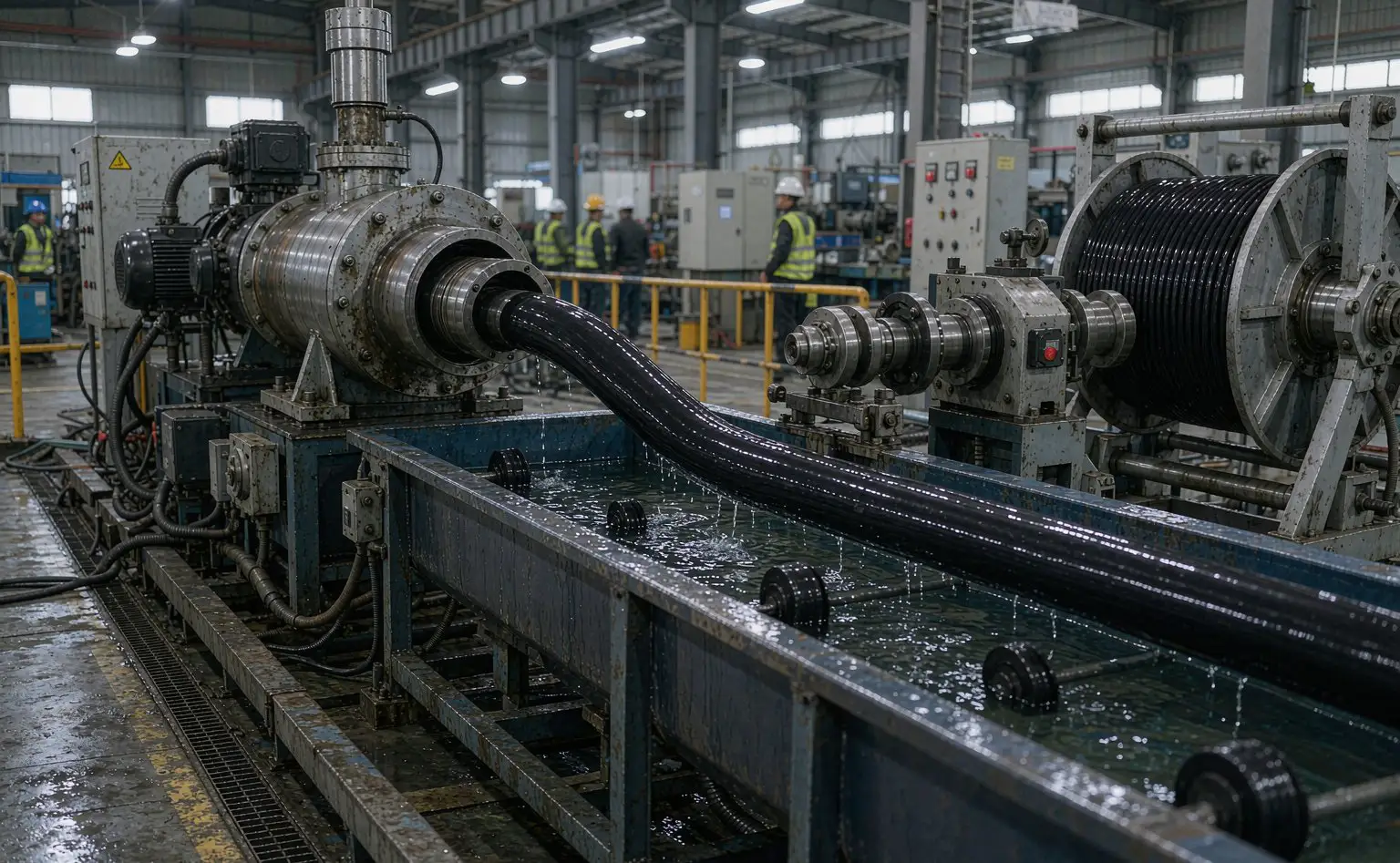
The sheath uses iHeir-JS117 powder at 0.5%-1.0% of final product weight. It is a nitrogen-heterocycle phenol-alcohol compound with an active content above 97%, a mean particle size of 110μm (D50), a bulk density of 380 kg/m³ and a melting range of 100-120℃; it withstands 280℃, does not dissolve in water and is non-leaching, so the sheath surface will not bloom because of the additive itself.
The addition point is the high-speed mixer. Soft PVC sheath runs with barrel temperatures around 160-180℃; the powder melts and disperses from 100-120℃ and is stable below 280℃, so it sits inside the processing window. At 110μm it is not a fine powder, and tipping it straight into the hopper tends to leave agglomerates: premix it with the PVC compound for 3-5 minutes in a high-speed mixer, or go the masterbatch route, which suits several extruders running the same grade.
Three common mistakes. First, calculating on resin alone: plasticiser and calcium carbonate filler make up a large share of a sheath compound, and using resin weight under-doses the batch. Second, mistaking surface bloom for additive migration: JS117 does not dissolve in water and does not leach, so a white bloom is usually plasticiser or filler coming out — check the formula before blaming the additive. Third, not topping up regrind: extrusion regrind is typically fed back at 20%-30%, and the powder has to be added in proportion or the effective content is diluted.
4. Connectors: the inorganic grade goes in as masterbatch
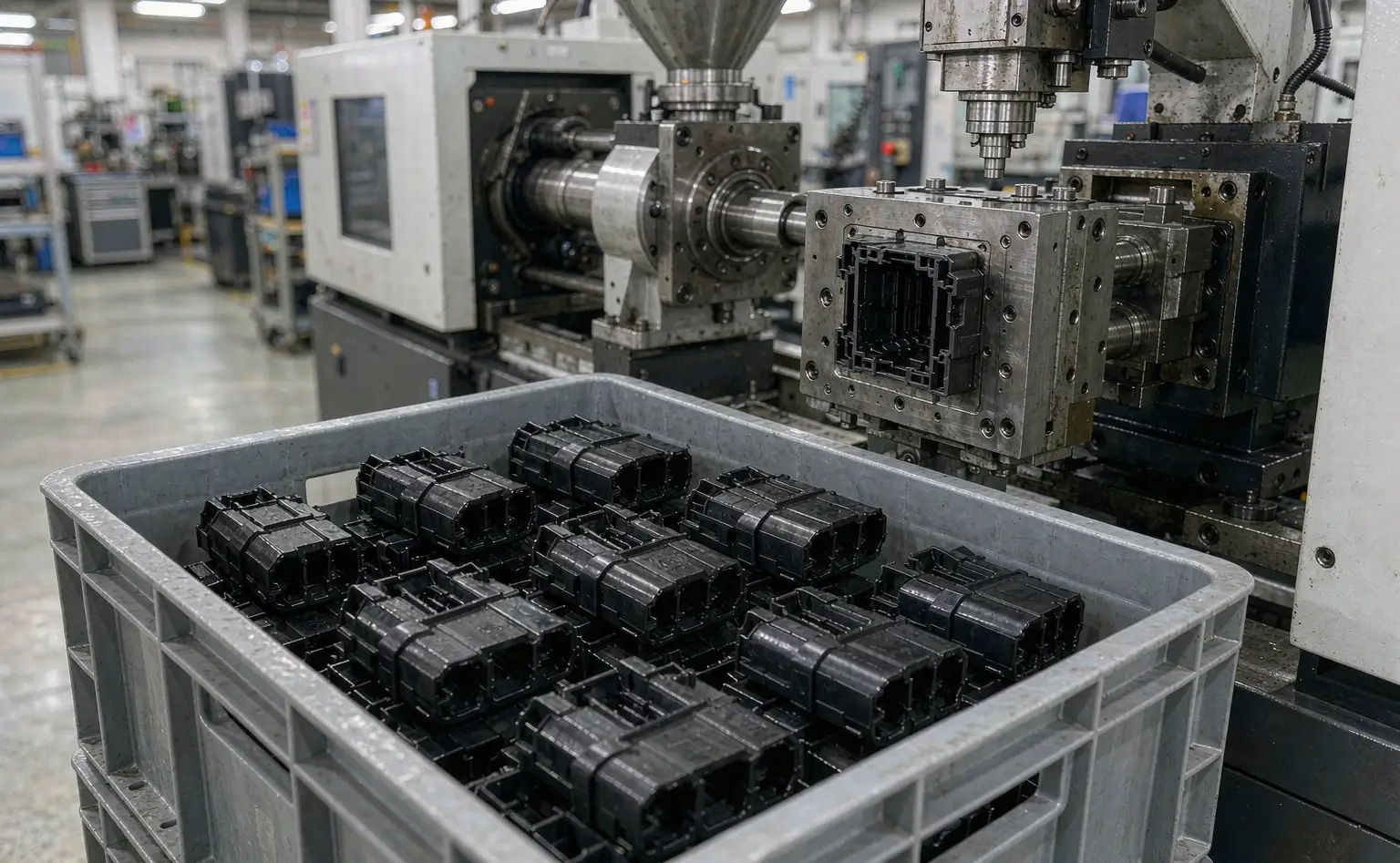
The connector switches to iHeir-PSZ104 inorganic antimicrobial at 0.5%-1.0%. It is a silver-ion inorganic grade with a whiteness above 90, a particle size of 1-2μm and a specific surface of 10-15 m²/g; it withstands 300℃ and can take processing at 300-320℃, and it is available as an antimicrobial masterbatch or a dispersion.
Why not an organic anti-mould powder in the connector? Because PA66 melts at 260-290℃. An organic grade breaks down and discolours at that temperature, and a connector is a visible part — one yellow batch is scrap. The inorganic carrier survives the temperature, which makes this a hard constraint on selection rather than a preference. Feed it as an antimicrobial masterbatch: work the let-down ratio back from the masterbatch’s stated content to a final 0.5%-1.0%, and do not treat “1% masterbatch” as “1% antimicrobial”.
Three details. First, dispersion: at 1-2μm with a high specific surface, the carrier has to be compatible with PA66 or it will pile up near the gate. Second, colour: a grade with whiteness above 90 is effectively invisible in black parts, while natural and light connectors need a colour plaque comparison. Third, housing and terminal seat together: they are the same compound, and treating one and not the other leaves the mould a way in.
5. Assembly, packing and export
The assembly shop is about keeping water out before crimping. Hold the shop below 60% RH, run the compressed air used for blowing out terminal cavities through a dryer, coil the harness and bag it with the bag folded twice before tying — not a perforated bag. Heat-shrink both ends of the corrugated tube; that is where water sits longest.
For export there are two things. First, desiccant in the carton, sized to the carton volume and container type, in a non-woven bag and never pressed against the terminals. Second, leave an air path in the container: no carton against the container wall or ceiling, because the day-night swing over a thirty-day sea leg condenses water on the ceiling and it runs down the wall, and the cartons touching that wall fail first. The mechanism is set out in our note on container condensation in sea freight.
Verify at three levels. Material: ISO 22196 for antimicrobial rate, plaques cut from the connector housing. Sheath: a mould growth test to the customer’s protocol, commonly ISO 846, on strips cut from the sheath. Assembly: a full-carton damp heat cycle, 48 hours at 40℃/90% RH, then open the carton and inspect the terminal cavities. Material data alone is regularly overturned by condensation at the assembly stage.
6. Questions on colour, bloom and regrind
Q: We added 1% powder and white spots appeared on the sheath. What now? Separate two cases. Spots that are discrete and wipe off are usually agglomerates — check premix time and masterbatch dispersion. A continuous bloom that comes back after wiping is plasticiser or filler migration and has nothing to do with the powder. Neither case is solved by adding more.
Q: Will the inorganic grade change the connector colour? A silver grade with whiteness above 90 is effectively invisible in black and dark parts; natural, light and transparent parts need a colour plaque comparison. Keep masterbatch out of the light as well, and use an opened bag within the shift.
Q: Does regrind dilute the protection? Yes. Regrind has already seen one heat history and part of the active content has been consumed, so top up in proportion when feeding 20%-30% back, and repeat the mould growth test if the regrind share goes above 30%.
Four points to take away: sheath at 0.5%-1.0% iHeir-JS117 on total compound weight, premixed or via masterbatch; connector at 0.5%-1.0% iHeir-PSZ104 on part weight, via antimicrobial masterbatch with a colour plaque check; no additive on copper, crimping and sealing instead, with dried air for blowing; assembly shop below 60% RH, desiccant in the carton, an air path in the container.


