




 View Count:21
 Date:2026-10-27
How do you handle leather glove mould — the leather first or the lining? A shipment sat in the store for two months and a ring of spots came up on the lining inside the glove, while the leather itself only showed green spots on the flesh side; the whole batch went to downgrade. The leather takes iHeir-PF at 0.05%-0.2% on hide weight and the lining takes iHeir-BJ at 2%-3% o.w.f. This article covers the fatliquoring stage, the lining bath and the drying and packing that follow.
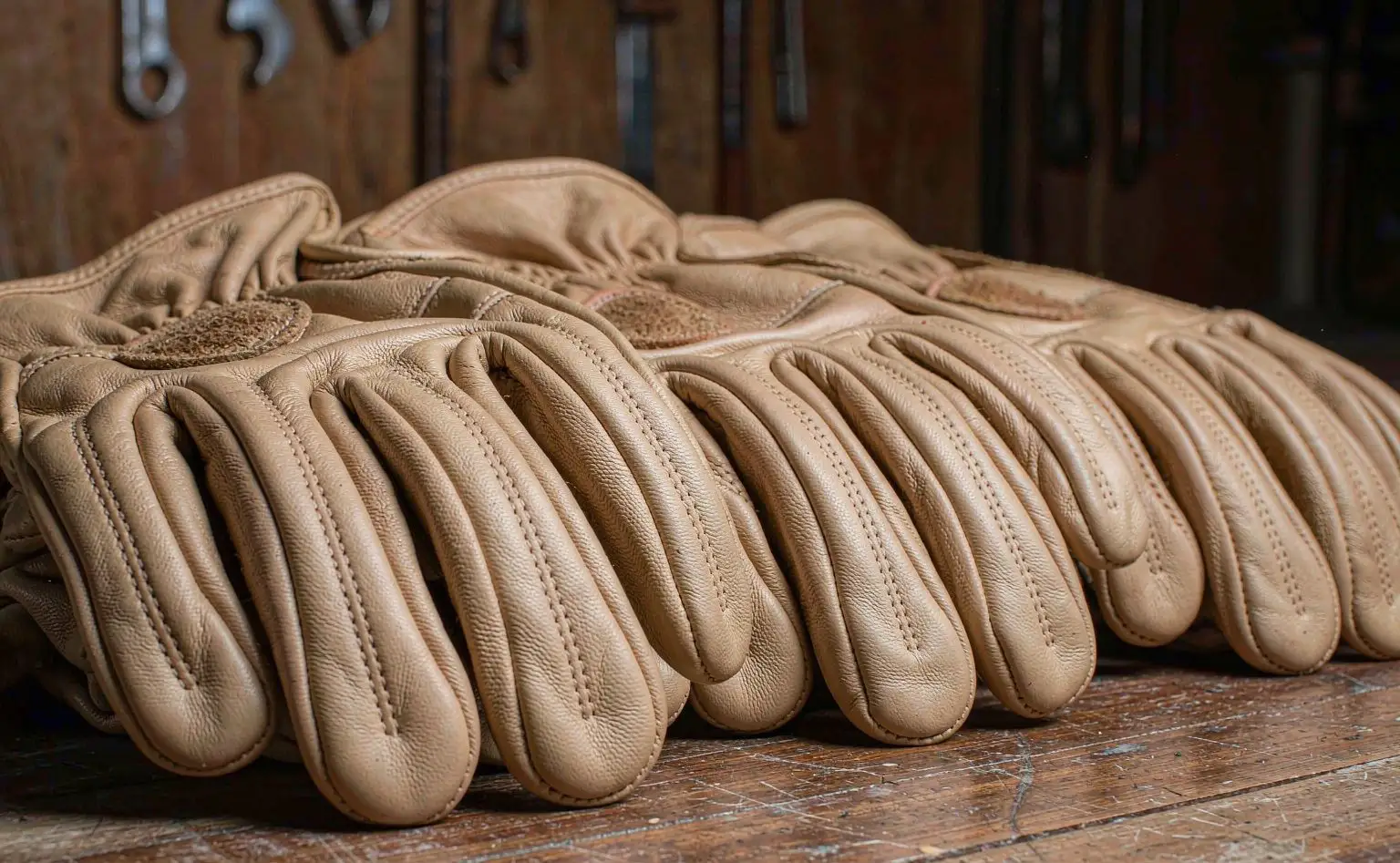
1. Mould starts on the flesh side, in the stitch holes and in the lining
Gloves are mostly chrome-tanned leather. Wet blue comes off the tannage holding a lot of water, and in acid conditions it is the easiest thing in the tannery to spoil. Once the glove is made, the flesh side — the face that is not finished — remains the way in: the fibres there are open and the surface area is large, and the finish only covers the grain side.
The second location is the stitch holes. Every needle punches through grain and flesh, the fibres in the hole are cut ends and take up water fastest, and a glove flexes all day so those holes open and close. The third is the fabric lining: it sits against the hand, sweat and sebum stay in it, and the glove shaft is a semi-closed space where that moisture has nowhere to go.
So a glove needs one treatment on the leather and one on the lining: the anti-mould agent goes in with the fatliquor, and the lining gets a textile finish in the bath. Leather only, and the sweat in the lining still spoils; lining only, and the flesh side and stitch holes are left open.
2. Leather and lining are separate questions
The table sets out leather, lining, stitching and packing. The products, the units and the addition points differ, and none of them can be substituted for another.
| Location | Material and stage | Product and level | Addition point | Basis |
|---|---|---|---|---|
| Leather, grain and flesh | Chrome-tanned, fatliquoring | iHeir-PF 0.05%-0.2% | Fatliquor drum | Hide weight, bath pH at or below 8 |
| Fabric lining | Knitted fabric, dip finishing | iHeir-BJ 2%-3% o.w.f. | Dip bath | Fabric weight (o.w.f.) |
| Thread and stitch holes | Closing | Carried in with the leather | — | Not calculated separately |
| Packing and export | Bagging, carton, container | Desiccant plus store humidity control | Packing and loading | Carton volume and container type |
Two boundaries. First, the PF basis is hide weight, not bath weight and not finished glove weight; calculating on the finished glove under-doses badly. Second, the thread is not treated separately: it is a small quantity enclosed in the leather, and it picks up protection from the leather run — oiling the thread on its own only contaminates the leather face.
3. Fatliquoring: dose on hide weight and hold pH below 8
The leather run uses iHeir-PF at 0.05%-0.2% on hide weight. It is an emulsifiable liquid with 30% active TCMTB, a density of 1.06-1.10 g/cm³ and a pH of 3-8 as a 1% solution; it contains no phenols and no harmful solvents, and is packed in 25kg and 200kg drums.
The addition point is the fatliquoring stage. That is where the hide opens up and takes up oil, so PF goes into the drum with the fatliquor and travels with the oil into the flesh layer; a top-up at finishing is possible but the finish only covers the grain, leaving the flesh side untouched. Hold the bath at or below pH 8 — this is a hard limit, because a higher pH breaks down the active content and the addition is wasted.
Three common mistakes. First, calculating on finished weight: a glove is a fraction of the hide, so the basis is the weight that went into the drum. Second, sharing the drum with a strongly alkaline auxiliary: it pushes the bath past the pH limit, so schedule PF in the acid-side run. Third, treating wet blue only: the wet blue run and the fatliquor run are not duplicates — the second covers what the washes in between took out.
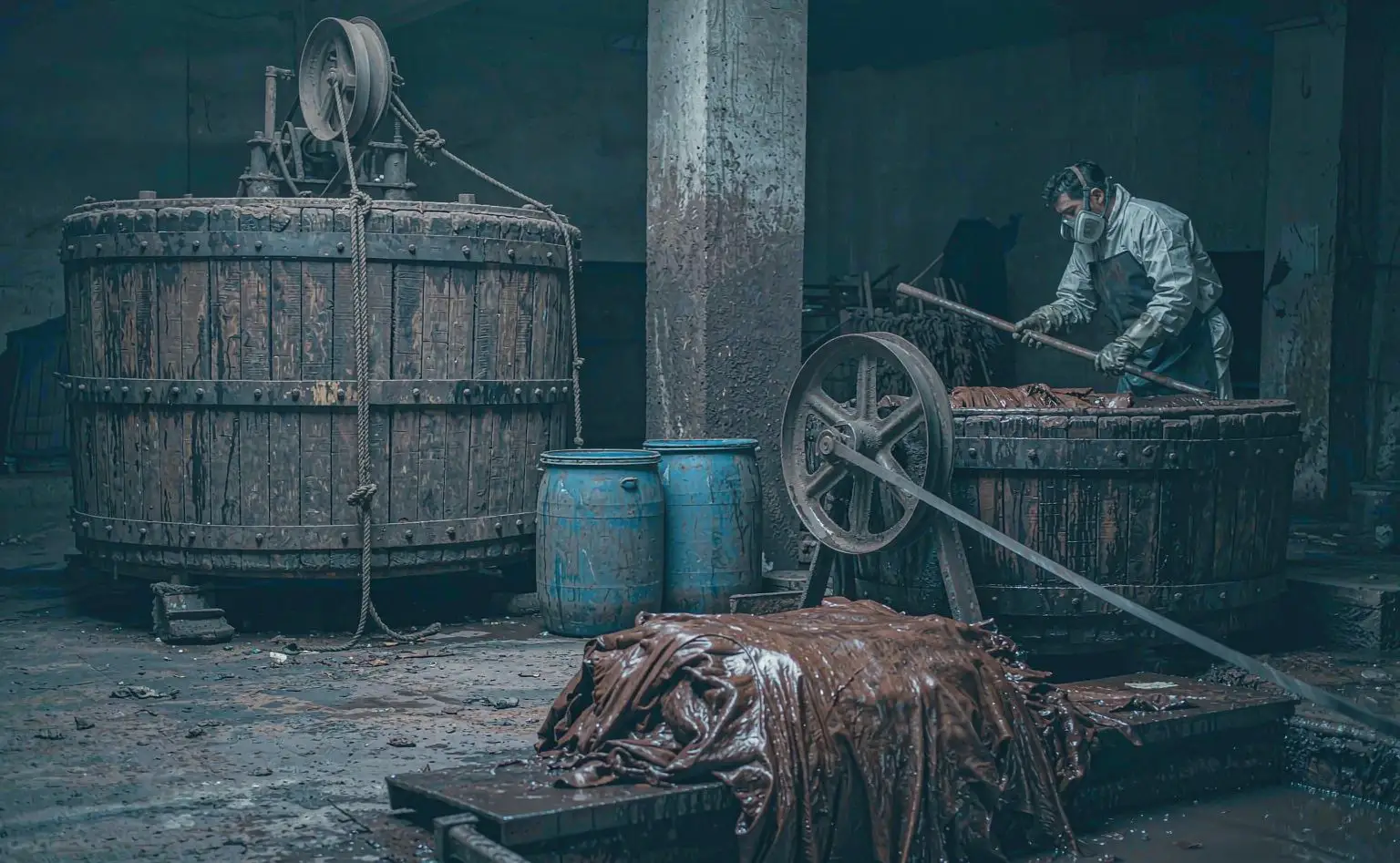
4. The lining shares a bath
The lining uses iHeir-BJ at 2%-3% o.w.f. on fabric weight, bath 21-50℃, pH 4.5-8.5. Premix with 9-13 times its volume of water, add 0.1% wetting agent and make up the bath; pouring concentrate straight in gives local over-concentration and marks on the cloth.
The point that catches plants is cationic compatibility. BJ is cationic and must not share a bath with an anionic auxiliary — the two flocculate, scum forms and the fabric cannot pick up the agent. If the softener normally used on glove lining is anionic, run the two on separate lots or switch to a non-ionic softener. After dipping, pad and dry to below 8% moisture before closing.
Two details at closing. First, dry leather and lining separately, then join: both sides dry means nothing is trapped in the sandwich, while sewing a lining into damp leather seals the water in. Second, blow out the shaft after turning: turning the glove puts the lining inside, the air in the shaft does not move, and condensate forms while it stands — blow it through with dry compressed air before packing.
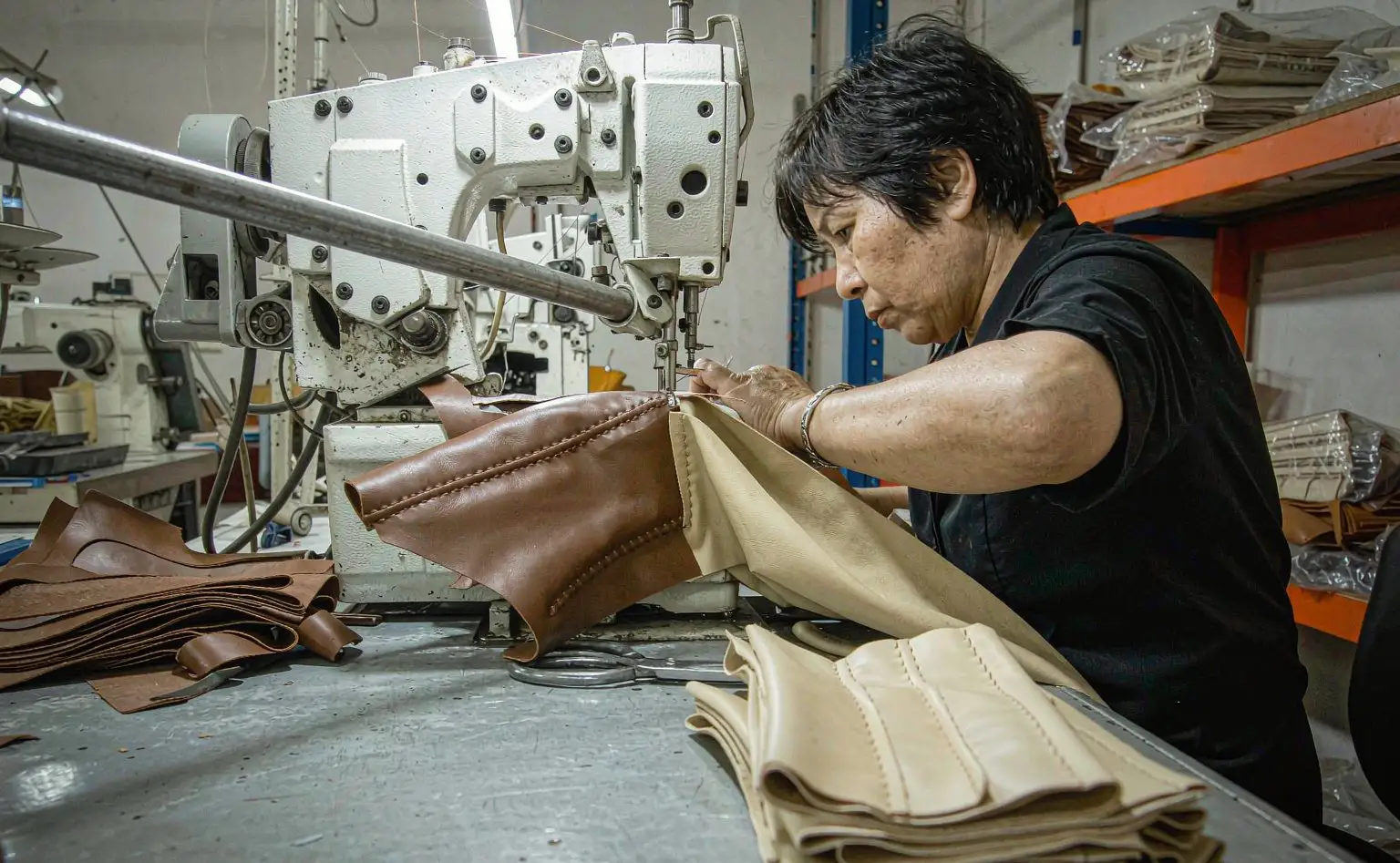
5. Drying, closing and packing
Drying decides the outcome. Take the leather off the drum at 12%-14% moisture and hang it to 8%-10% naturally; do not force-dry at high temperature, because the surface dries first and the water inside is sealed in, which is exactly the condition mould needs. Keep the shop below 60% RH with dehumidifiers in the wet season, hang the hides clear of the wall and leave aisles between racks.
Packing has two rules. First, bag each glove in a breathable paper or perforated film bag and put the pair in a carton; a fully sealed film bag looks clean but locks the moisture in. Second, desiccant in the carton, sized to the carton, in a non-woven bag and never pressed against the leather face. Leave an air path in the container — the mechanism is the same as in our note on condensation in sea freight.
Verify at three levels. Leather: a mould resistance test to QB/T 4198 or the customer protocol, samples cut from the flesh side. Lining: a mould resistance grade to GB/T 24346, or a bromophenol blue drop test to show the finish is present. Finished pair: 30 days at 30℃/85% RH in a damp heat chamber, then inspect the lining and the stitch holes.
6. Questions on colour, hand feel and wet blue in store
Q: Will PF darken the leather? PF is a yellow-brown emulsifiable liquid, and at 0.05%-0.2% it is invisible on dark colours; on natural and light leathers run a sample comparison, and check what the fatliquor itself contributes before blaming the anti-mould agent.
Q: The gloves feel stiffer. Is the anti-mould agent overdosed? Check the fatliquor first. Within 0.05%-0.2% PF has little effect on hand feel, and stiffness usually means too little fat or too much drying; treating it as a fatliquor problem works better than cutting the PF.
Q: The wet blue is already mouldy in the store. Now what? Brush off the spots, re-tan or give the surface a treatment, then run PF again; where the filaments have gone into the fibre and left permanent staining, that area is cut away. Wet blue in store needs humidity control and regular restacking — do not wait for the mould.
Four points to take away: leather at 0.05%-0.2% iHeir-PF on hide weight, into the drum with the fatliquor, bath pH at or below 8; lining at 2%-3% o.w.f. iHeir-BJ, premixed with 9-13 times water, cationic and never with an anionic auxiliary; dry leather and lining to below 8% separately before joining and blow out the shaft after turning; bag each glove in a breathable bag, add desiccant to the carton, leave an air path in the container.


