




 View Count:38
 Date:2026-10-13
How is small home appliance mould kept out at all three points, the shell, the inner-liner coating and the seals? Doing the shell alone leaves the coating and the seals to fail, and a batch that reaches the customer comes back as a return. Plastic shells take iHeir-ECO plastic antimicrobial agent at 0.3%-1.0% on part weight, and the metal inner liner is protected in the coating stage with iHeir-TQ coating mould inhibitor at 2%-3% of the system weight. This article covers what each of the three points needs and how the result is checked.
1. Three points on a small appliance: shell, inner liner and seals
A small appliance breaks down into three parts. On the outside is the plastic shell, inside is the metal inner liner with its coating, and where the two meet sit the sealing strips and rings. The materials differ, the routes moisture takes differ, and so the mould work has to be split.
Shells are mostly PP, ABS or PMMA. Moisture is already present in the compound during mixing and plastification, and after moulding the part faces kitchen vapour and repeated washing for years, so whether the antimicrobial additive spreads evenly through the whole part decides how long the protection lasts. The inner liner is metal under a coating. Metal itself does not grow mould; the coating surface and the damaged coating at the edges do, which is why the coating stage carries the liner. Seals come in two families: thermoplastic elastomers such as TPE and TPU can share the shell’s masterbatch route, while silicone rubber seals run on a separate process line and are dosed at the mixing stage. The two families are not interchangeable and their figures cannot be converted into one another.
Once the three points are clear the conclusion is simple. Antimicrobial work on the shell alone leaves the two parts closest to food and most exposed to water uncovered. Export batches then add a second layer of packing and storage humidity control, covered in anti-mould practice for small appliance exports.
2. Dosing points and figures at a glance
The table lines up the point, the material, the recommended product, the figure and the points to watch, so it can serve as the first draft of a process card for the existing tools and material codes.
| Point | Material | Product | Figure | Points to watch |
|---|---|---|---|---|
| Shell parts | PP, ABS, PMMA and similar | iHeir-ECO plastic antimicrobial agent | 0.3%-1.0% on part weight | Added at mixing or plastification; heat stable to 240℃, keep processing below 320℃ |
| Inner-liner coating | Metal substrate plus coating system | iHeir-TQ coating mould inhibitor | 2%-3% of system weight | Added at the grinding or paint-mixing stage; pH 6-7, stir to disperse |
| Seals (TPE, TPU) | Thermoplastic elastomer | iHeir-ECO plastic antimicrobial agent | 0.3%-0.5% on part weight | Same system as the shell; direct blending or pre-made masterbatch |
| Seals (silicone rubber) | Silicone rubber | Separate silicone route, not dosed here | — | Dosed at the mixing stage; never blended with the plastic or coating system |
Four rows carry one message: there are only two dosing points, one in the plastic stage and one in the coating stage, and silicone rubber runs on a third line outside both. Leave one row out and the matching point shows up before or after dispatch.
3. Shell parts: ECO goes in at mixing and plastification
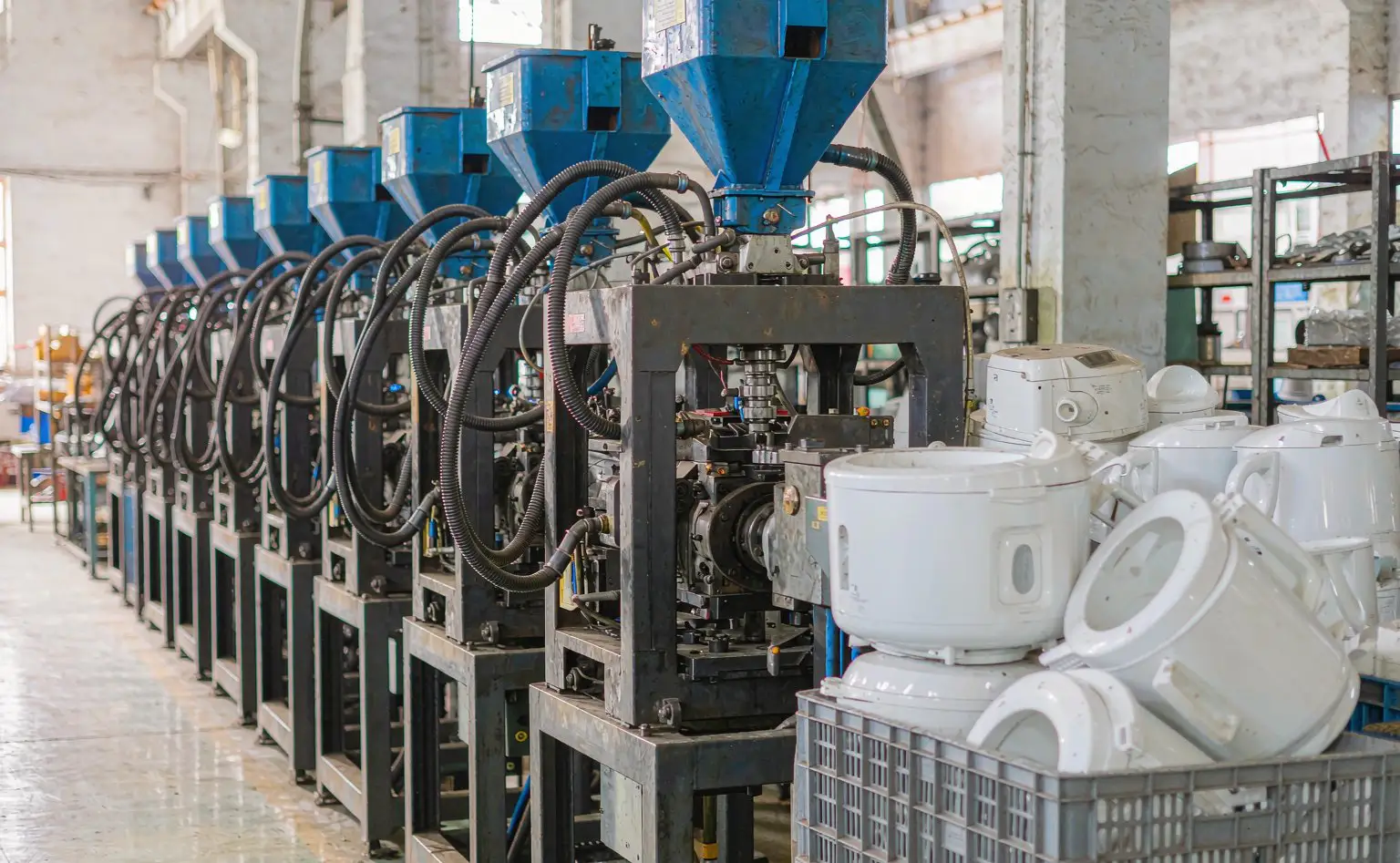
Shells take iHeir-ECO plastic antimicrobial agent at 0.3%-1.0% on total part weight. ECO is built as a plastic masterbatch carrying the antimicrobial, so it can be blended straight with resin pellets or pre-made into masterbatch before the barrel. The figure steps by polymer: polyolefins such as PP and LDPE/HDPE at 0.3%-0.5%, PU together with PMMA and unsaturated polyester at 0.3%-1.0%, TPU at 0.3%-0.5% and PVC at 0.5%-1.0%, while ABS is best sampled before it is fixed.
Two process windows matter. The first is heat: ECO is heat stable to 240℃, with TGA showing 35.2% weight loss at that point, and processing should stay below 320℃ because local overheating or a long residence time takes activity out of the additive first. The second is dispersion, since the masterbatch route depends on the additive being spread evenly through the part; a late feed point or too little mixing leaves local patches that look fine on the outside and are open underneath. Fix both windows before converting the figure onto total part weight.
4. Inner-liner coating: TQ goes in at grinding or paint mixing
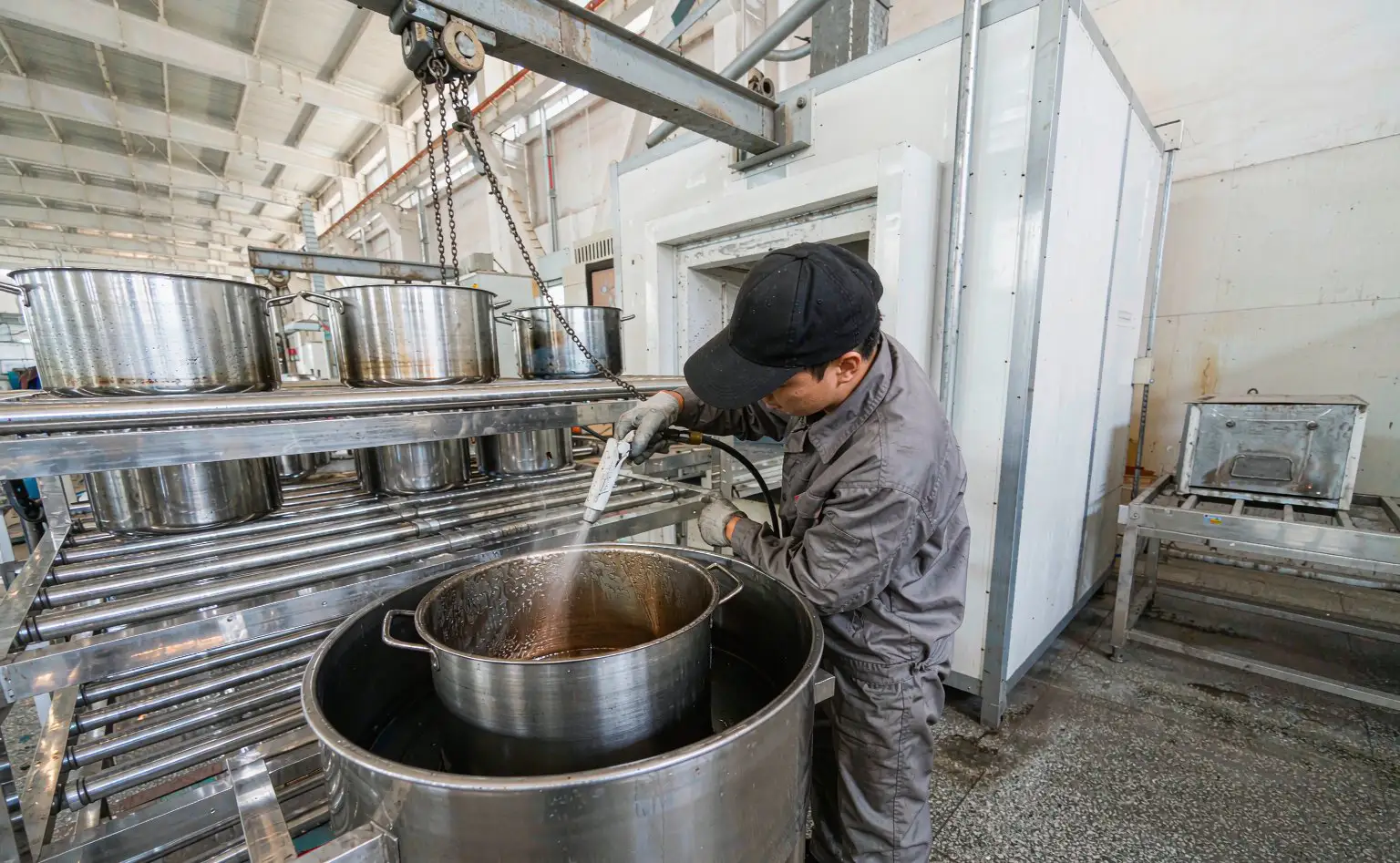
The liner’s protection sits in the coating, dosed with iHeir-TQ coating mould inhibitor at 2%-3% of total system weight. TQ is a clear, colourless liquid with an active concentration of 45%, a viscosity of about 3cps at 25℃ and a pH of 6-7; it mixes with water in any proportion and dissolves in most organic solvents, and it has to be stirred in thoroughly to disperse evenly. The metal substrate needs no mould protection of its own; what needs it is the coating surface and the coating boundary, so the additive only works when it travels with the coating.
Add it at the grinding or paint-mixing stage, before grinding, so the shear does the dispersing. Topping it up at the let-down stage tends to disperse unevenly and can affect appearance. Two handling points follow: do not store or mix it in unlined metal containers, and note the usual pack sizes of 25 and 160 litres.
5. Seals, and how each stage is verified
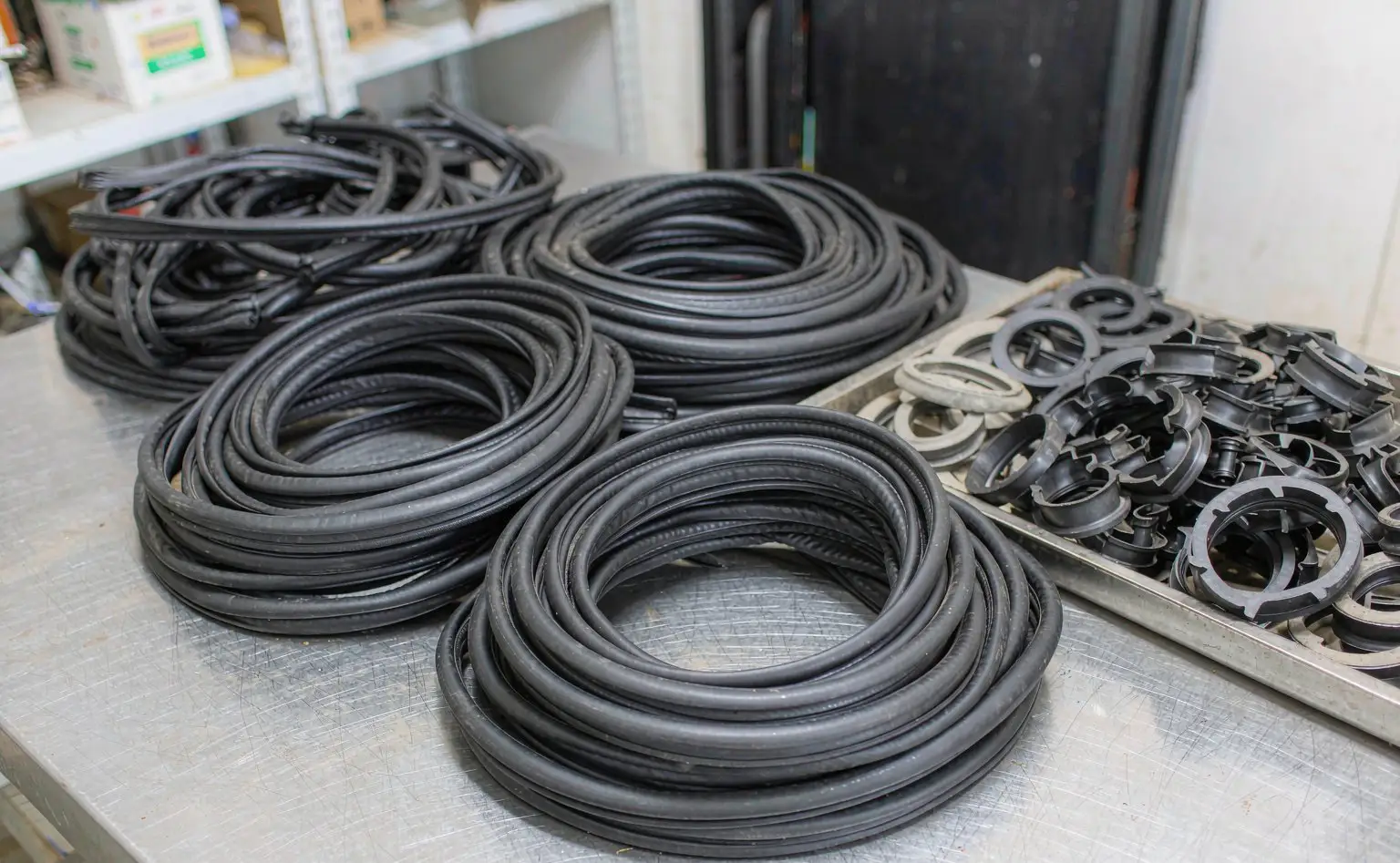
Seals split by material. TPE and TPU sealing strips and rings can share iHeir-ECO plastic antimicrobial agent with the shell at 0.3%-0.5% on part weight, while silicone rubber parts are dosed at the mixing stage on their own system and are never added into the plastic or coating figures. Get this right and the joint between the two parts stops being the first place to spot. One caution: if seals are bought in, the dosing happens outside the plant, so incoming inspection and dry storage carry the risk and the purchase specification should state both the material and the treatment.
Verification is run by material. Plastic parts are sampled against a method in the ISO 22196 or GB/T 31402 family, while coatings go to GB/T 1741 for mould resistance of the film or to ASTM G21 for a mould grade. The two sets can be submitted in one batch but reported separately, because substrate, inoculation and grading all differ. Samples and TDS sheets are available, and the test submission can be arranged and the reports interpreted with you.
6. Questions that come up: shell only, and whether the coating rubs off
Can the shell be treated on its own? No. The shell covers appearance and structure only, while the liner meets food and washing water and the seals sit damp under load. Skip those two and mould starts there, invisibly from the outside. The three points work as one set, and missing one caps the whole appliance.
Does the additive in the liner coating rub off? Not under normal washing. It is added into the coating system at grinding or paint mixing, so it cures with the film and stays in the surface layer rather than being sprayed on afterwards. Where the coating is scratched through, however, that spot loses its protection too, so film integrity and thickness need managing just as much.
Is a higher figure on the shell safer? No. The figure is calculated on total part weight, and going past the recommended range does not improve the long-term result, it hurts processing and appearance first. What makes the appliance safe is getting the shell, the liner and the seals all right, then holding humidity down at assembly and in storage.
Two points carry the work: shells and TPE or TPU seals take iHeir-ECO plastic antimicrobial agent at 0.3%-1.0% on part weight in the plastic stage, polyolefins at 0.3%-0.5%, TPU at 0.3%-0.5% and PVC at 0.5%-1.0%, while the inner liner takes iHeir-TQ coating mould inhibitor at 2%-3% of the coating system at grinding or paint mixing, pH 6-7. Silicone rubber seals follow the separate silicone route. Samples and TDS sheets are available to check the dosing against your part types and material codes.


