




 View Count:31
 Date:2026-10-16
Which layer of a crawling mat should carry the protection? Spots on a delivered roll usually come from the foam and the printed film together, and treating one layer alone does not hold long. iHeir-FP foam antimicrobial agent goes into the foam at 0.5%-1.5% of foam weight, and iHeir-ECO plastic antimicrobial agent goes into the film compound at 0.3%-0.5% of film weight. This article covers where each is dosed, the figures, and the laminating and storage rules.
1. Crawling mat mould: the foam and the film are two separate bills
A mat is normally a core plus a skin. The core is an XPE, EPE or EVA foam sheet, the skin is a printed PE film, and the two are laminated and embossed into one sheet before being cut to length and rolled. Foam is full of closed cells, so its internal surface area is far larger than it looks, and when shop humidity rises the sheet takes up water while it is stacked and wound. The film itself is dense, but the printed face stands open to shop air before lamination, and whatever sits on that surface gives micro-organisms somewhere to start.
The two are not the same problem. Foam is a thick material: the additive has to be inside it to mean anything, and a surface spray stops at the skin. Film is thin: mixed into the compound, the additive distributes evenly, but the processing temperature has to be watched, because blowing and laminating run hotter than foaming and the additive system must survive that window. Different dosing stages, different bases, different temperature windows — pooled into one figure, one of the two layers will always be underdone.
2. The foam layer and the printed film compared
The table lines up the material, the dosing stage, the figure and the points to watch for each layer, as a first draft of the process card.
| Layer | Material | Dosing stage | Figure | Points to watch |
|---|---|---|---|---|
| Foam layer | XPE, EPE or EVA foam | Blended with the foam at the mixing stage, then foamed | iHeir-FP at 0.5%-1.5% of foam weight | Stable from pH 1 to 11; a liquid that disperses at any ratio, so stir before mixing |
| Printed film | PE film | Compounded into a masterbatch, then blown or cast | iHeir-ECO at 0.3%-0.5% of film weight | Heat stable to 240℃, keep processing below 320℃; mix well before forming |
| Laminating and embossing | Two semi-finished webs | Control moisture and residue on the film before laminating | Laminating temperature on each process; relative humidity below 60% | A film laminated while damp seals that water into the middle layer |
| Finished rolls and store | Finished roll | Humidity control, upright stacking, sealed roll ends | Relative humidity below 60% | The core collects moisture first; keep pallets off wall and floor, first in first out |
The first two rows are two separate dosing lines, the third looks after the interface before laminating, and the fourth is the storage discipline behind them. Miss any one and the problem only shows when the customer opens the roll or lays the mat out.
3. Foam layer: FP at 0.5%-1.5% of foam weight
The foam uses iHeir-FP foam antimicrobial agent at 0.5%-1.5%, counted on the weight of the foam compound, not on the finished mat. It is a clear to pale yellow liquid with a specific gravity of 1.045-1.055, disperses in water at any ratio and stays stable from pH 1 to 11, so it suits an acidic EVA system as well as the neutral XPE and EPE systems.
Dose it at the mixing stage: blend the agent with the foam compound, then run the extrusion and foaming, so the additive travels with the melt into the body of the sheet. The higher the expansion ratio and the thicker the sheet, the longer the path the additive has to travel, so allow extra mixing time. Parts that only get a surface spray look clean at the time, but as soon as they are cut or rolled and a fresh cross-section is exposed, the inside is still bare.
Two notes on the figure. The 0.5% end is a floor: thick sheets and long storage cycles justify moving up, while 1.5% is the normal ceiling, beyond which extra cost buys very little. A single plastic surface antimicrobial test is a cheaper way to settle the level than piling on more additive. On safety, acute oral LD50 is above 5000 mg/kg and the skin sensitisation rate is zero.
4. Printed film: ECO at 0.3%-0.5% of film weight
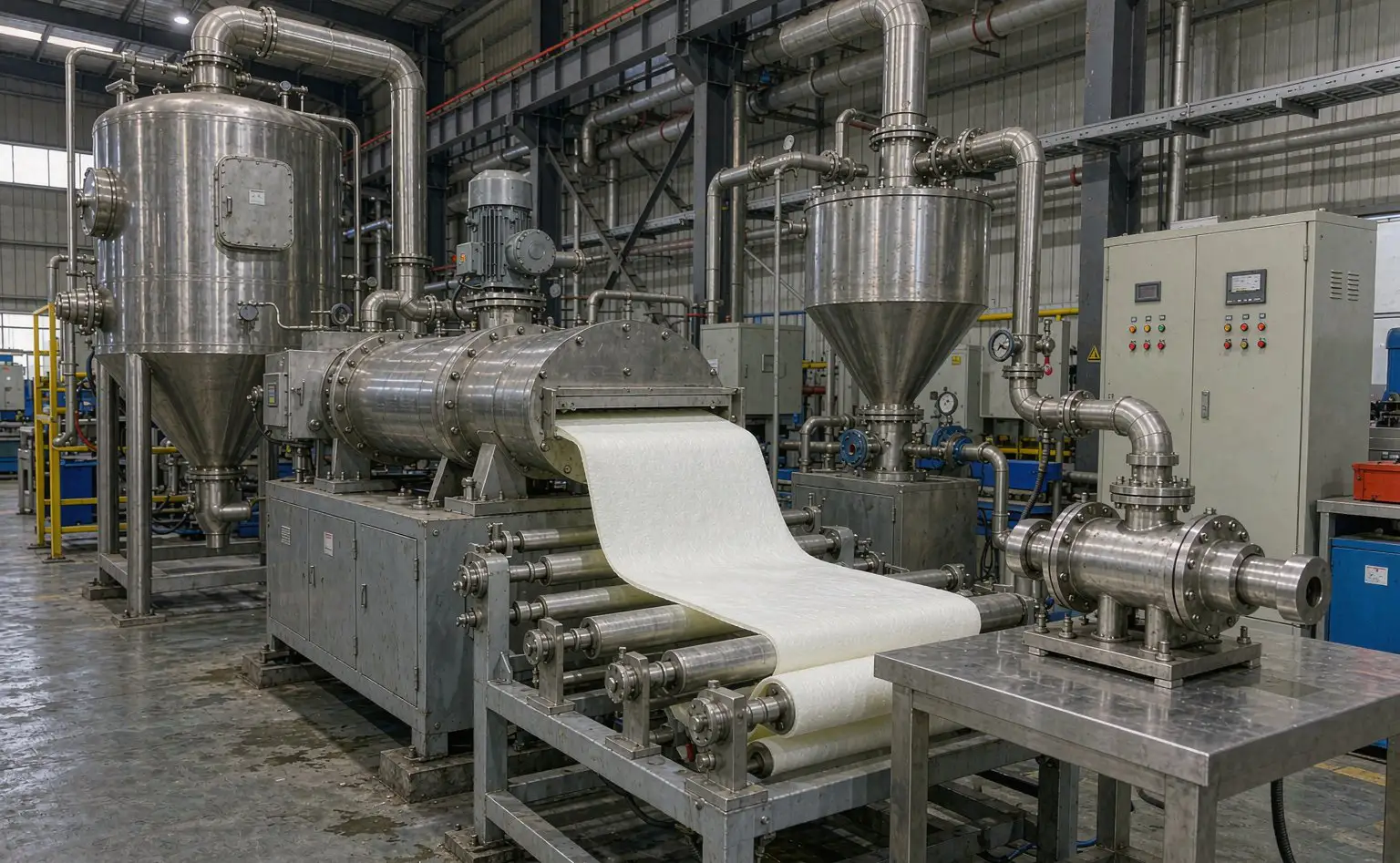
The film uses iHeir-ECO plastic antimicrobial agent at 0.3%-0.5% in a PE system, counted on the weight of the film compound. It is a grey-white powder of 100% purity, added as a masterbatch at the plasticising or mixing stage and compatible with normal blown film and cast film lines. Because the film is thin, an evenly dispersed additive protects the whole web, and it lasts far better than a spray applied to the surface afterwards.
Temperature is the critical point here. ECO is heat stable to 240℃ and processing should stay below 320℃, because overheating volatilises the active and wastes the dose. Check the temperatures on both the blowing and the laminating lines, especially close to the die and the rollers, and step up to a higher temperature grade where necessary.
One more thing: printing ink and the additive do not conflict, but a printed face that has picked up moisture or static dust before lamination is a problem in itself. Seal film rolls by batch as they come off the line, store them below 60% relative humidity, and the interface stays clean. The choice between internal dosing and masterbatch is set out for plastic anti-mould masterbatch or powder.
5. Laminating, embossing and storage: keeping what the two layers picked up
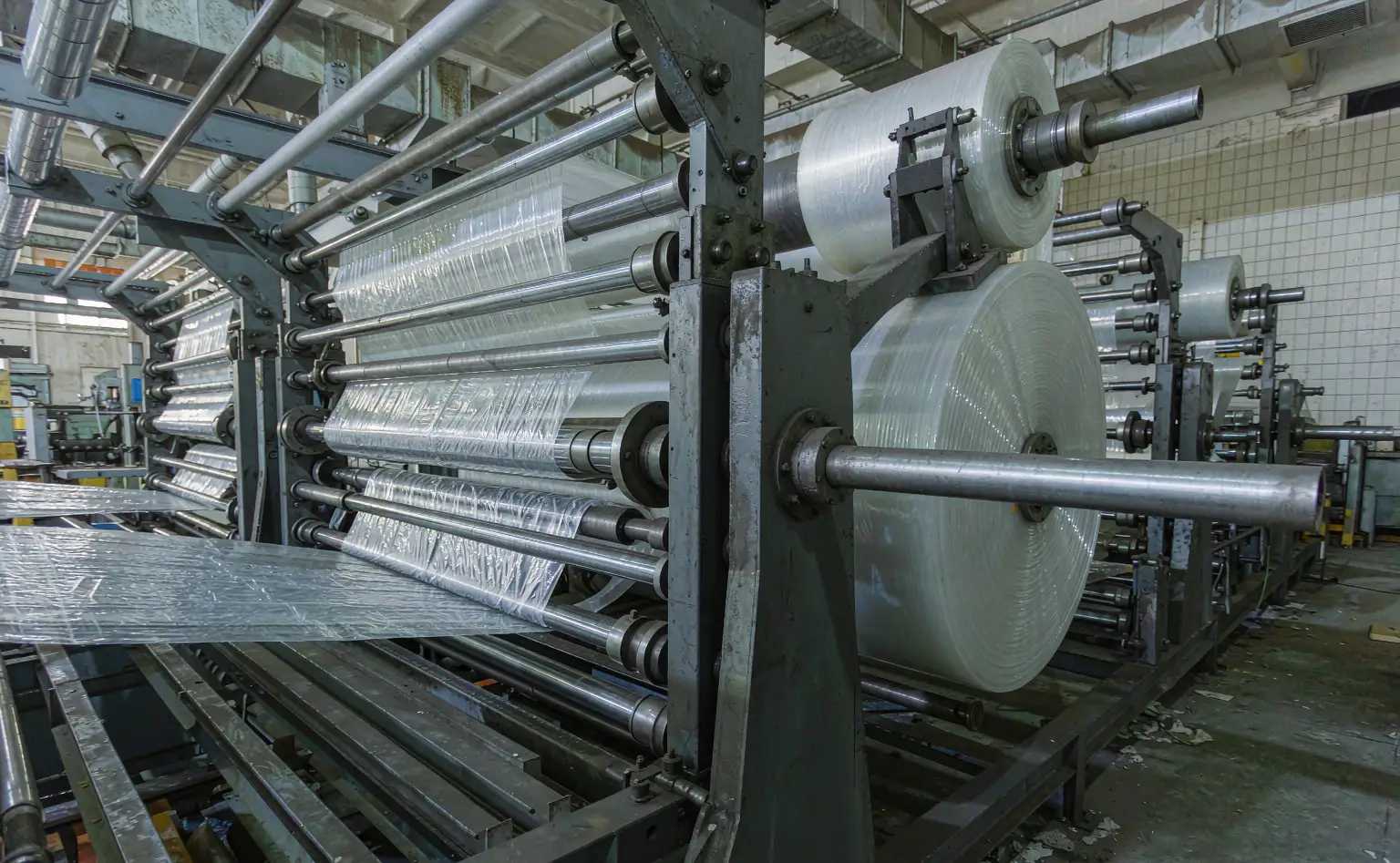
Once both layers are dosed, the later stages can still eat into the result. Check the moisture on the film face and the sheet surface before laminating, because laminating over a damp surface seals that water into the middle; set the embossing temperature inside both layers’ windows, since over-embossing wrinkles the film and can also damage the additive on the film side. Do not stack semi-finished rolls straight off the laminator — let them cool before winding, otherwise the heat trapped inside keeps the core damp and warm.
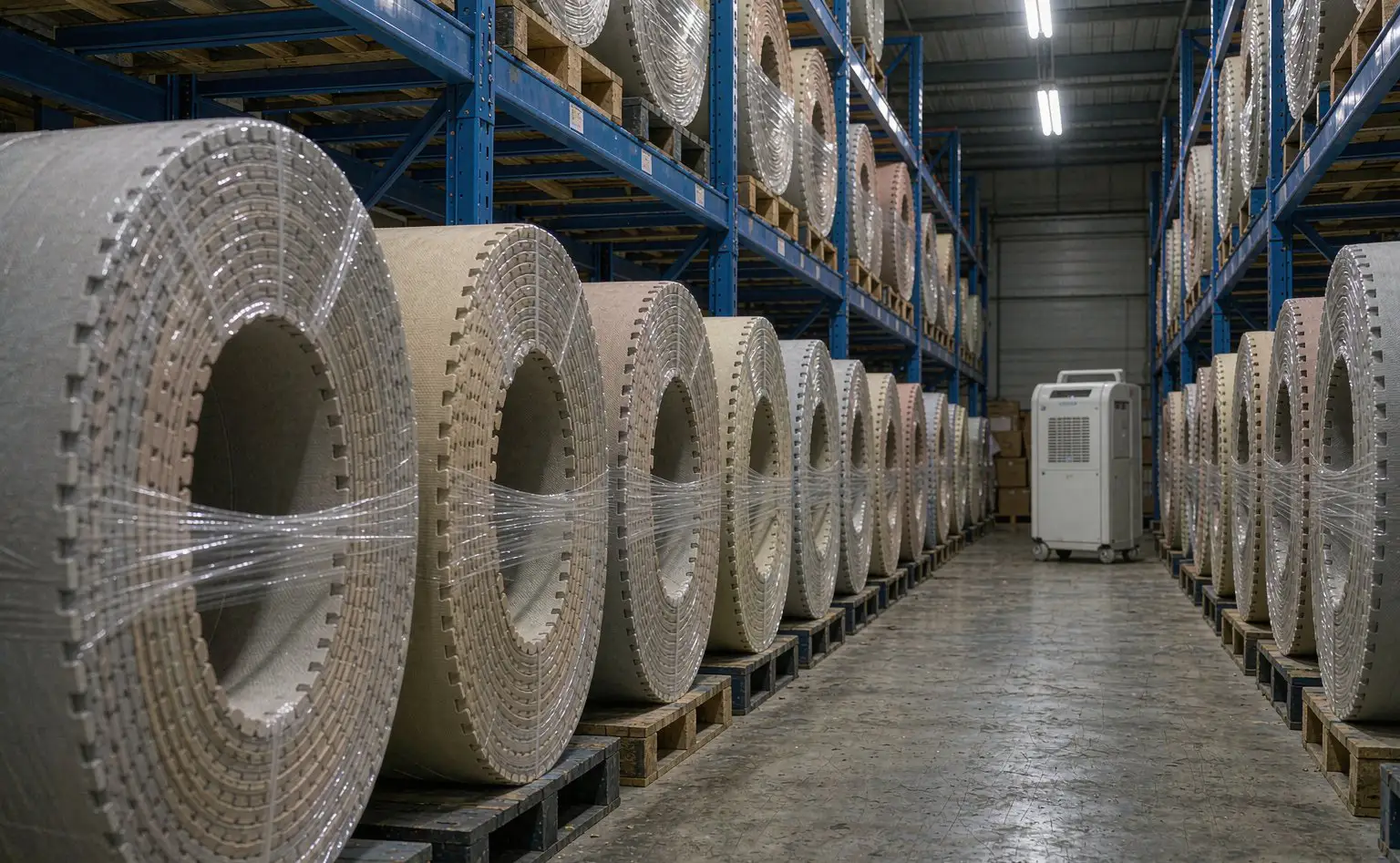
Storage runs on three rules: hold the store below 60% relative humidity; stand the rolls on end on racking with pallets off wall and floor so no roll end sits on the ground; and seal the roll end with stretch film to cut air exchange between the roll and the store. Handling for foam and elastomer systems is set out for foam and elastomer antimicrobial dosing in EVA, EPS and TPU.
6. Questions: is the foam layer enough, and can a surface spray replace internal dosing
Is dosing the foam enough, with the printed film left untreated? Not advisable. The film is the face that meets the outside world when the mat is laid out, and with nothing in it, friction and wiping during rolling and unrolling leave contamination on the surface. Once the two layers are laminated, moisture at the interface cannot escape either, and the film face is usually where it shows first. Both layers together are what keeps water and organisms out.
Can a spray on the finished mat replace internal dosing? No. A spray stops at the skin and misses cut edges, embossed grooves and the core; on a large roll, the inner layers cannot be reached at all. Internal dosing puts the protection into the material, so a freshly cut cross-section is protected too, which a spray cannot do. Samples and TDS are available for both products.
Four points carry the work. The foam takes iHeir-FP foam antimicrobial agent at 0.5%-1.5% of foam weight, blended at the mixing stage before foaming. The printed film takes iHeir-ECO plastic antimicrobial agent at 0.3%-0.5% of film weight as a masterbatch, with processing kept below 320℃. Moisture on the film and the sheet is controlled before laminating below 60% relative humidity. Finished rolls are stood on end, off wall and floor, with the ends sealed.


