




 View Count:20
 Date:2026-10-19
Where does aluminium door and window mould actually start? Not on the profile: the sealing gasket and the nylon thermal break take spots first, and the claim comes after the goods reach a humid market. The gasket carries iHeir-GGTK silicone antimicrobial agent at 1%-2% in the compound, the thermal break carries iHeir-ECO plastic antimicrobial agent at 0.3%-1.0%. This article gives the dosing stage, the temperature window and the storage rules for both.
1. Why the mould on aluminium doors and windows sits at the gasket and the thermal break
The aluminium profile itself is an inorganic material with an anodised film or a powder coat on top, and mould has nothing to feed on there. What does grow is the polymer hardware built into the frame: the sealing gasket, usually silicone or EPDM; the nylon thermal break; the corner injection; the brush strip. All of them are organic, and all of them sit in awkward places – the gasket is pressed into the rebate between frame and sash, the thermal break is sandwiched between the inner and outer profile, and once water gets in it does not dry out.
The window is worse off during transport and storage. Finished units stand on steel racks with only a few foam corners between frames, so the rebate line has almost no airflow; inside a sea container the day-night swing keeps condensing water on the gasket face, and the humidity inside the box stays above 80% for weeks. By the time the unit reaches site, the gasket shows fine black specks, they are wiped off, and a while later the same specks come back out of the joint – which is exactly what the buyer sees at inspection.
So the answer on this line is not to spray the finished window. The additive goes into the gasket compound and into the thermal break material, so both parts are protected through their section. The two lines use different products and different temperature windows.
2. The two places, their materials, stages and figures
The table lines up material, dosing stage, figure and the points to watch for each place, and can serve as the first draft of a process card. Rows three and four are the handovers that usually get missed.
| Part | Material | Dosing stage | Figure | Points to watch |
|---|---|---|---|---|
| Sealing gasket | Silicone or EPDM | Added in the mixing stage, before vulcanisation | iHeir-GGTK at 1%-2% | Add below 200C; cationic, so never in the same bath as an anionic additive; stir thoroughly |
| Thermal break | PA66 with glass fibre, or PP | Added at the compounding or masterbatch stage | iHeir-ECO at 0.3%-1.0% | Heat stable to 240C, avoid above 320C; melting point 56-58C; do not store in steel containers |
| Corner and joint | Two-component injection resin | Added at resin mixing, on resin weight | 1%-2% GGTK on resin weight | Confirm the profile chamber is dry before injection; moisture sealed inside becomes a water source |
| Finished unit and store | Complete window | After the gasket is fitted, before packing | Store below 60% relative humidity | Stand upright, leave ventilation gaps; pallets off wall and floor; desiccant sticks in the container |
The first two rows are two separate dosing lines; the last two are assembly and storage. Skip any one of them and the problem only shows up after the window is on the wall.
3. Sealing gasket: GGTK at 1%-2%, added below 200C
The gasket line uses iHeir-GGTK silicone antimicrobial agent at 1%-2%, added straight into the compound and stirred in thoroughly, at a temperature not above 200C. It is a clear to pale yellow liquid with a slight polyurethane odour, active content not less than 20%, relative density 1.05-1.15, packed 25kg to the drum, stored cool and dry with a one-year shelf life.
The dosing point belongs in the mixing stage, not after vulcanisation. The strip is extruded, so the additive has to be dispersed in the compound and travel through the die with it; only then does the whole cross-section carry protection. A spray pass after forming covers the surface alone, and it is gone the first time the gasket is compressed or rubbed. Take the figure by compound and market: 1% for interior windows on a short cycle, 2% for exterior units and shipments into humid regions.
Two handling points matter. First, GGTK is cationic; if the formulation contains an anionic additive – some release agents, some pigment dispersants – separate the two or replace one, or they cancel each other out. Second, being a liquid it depends on stirring, and short mixing leaves patches with no protection, which is why one batch can test differently at the two ends of a strip.
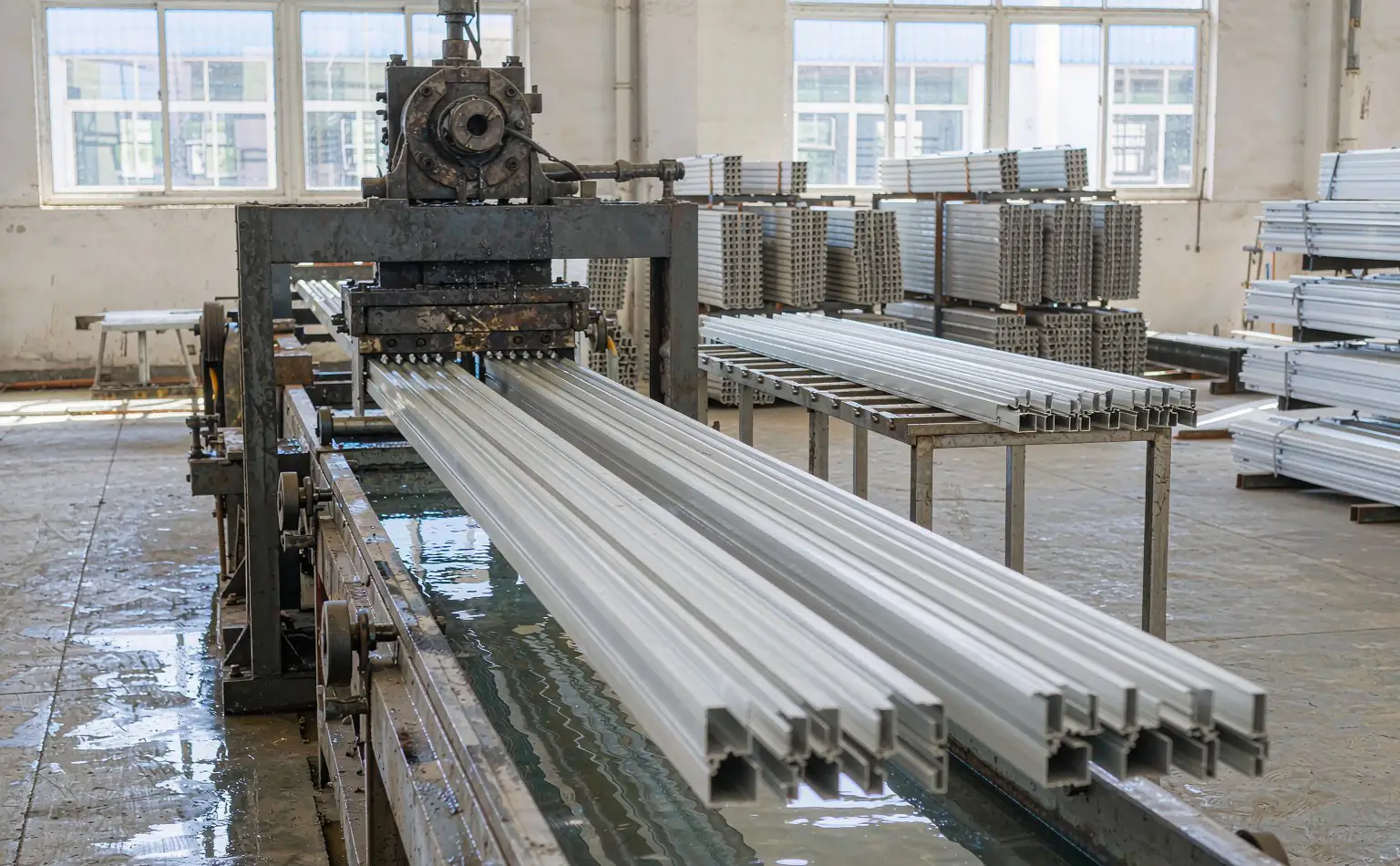
4. Thermal break: ECO at 0.3%-1.0%, once the extrusion temperature is checked
The thermal break uses iHeir-ECO plastic antimicrobial agent at a suggested 0.3%-1.0% on finished weight. It suits polyolefins such as PP and LDPE or HDPE, is heat stable to 240C, and processing should avoid going above 320C; melting point is 56-58C, oral LD50 in rats is above 2000 mg/kg, shelf life is one year, storage is 10-43C, and it must not be kept in steel containers.
There is an account to settle before dosing: a PA66 glass-filled thermal break is usually extruded above 260C, which is already outside the 240C stability window of ECO. Do not force the additive into a 260C barrel. Either have it dispersed at the strip maker’s compounding stage below 240C, or write the antimicrobial requirement into the purchase specification and let the strip maker meet it within their own window. A PP-type strip whose material and temperature are under your own control is the case where dosing on your own extrusion line makes sense.
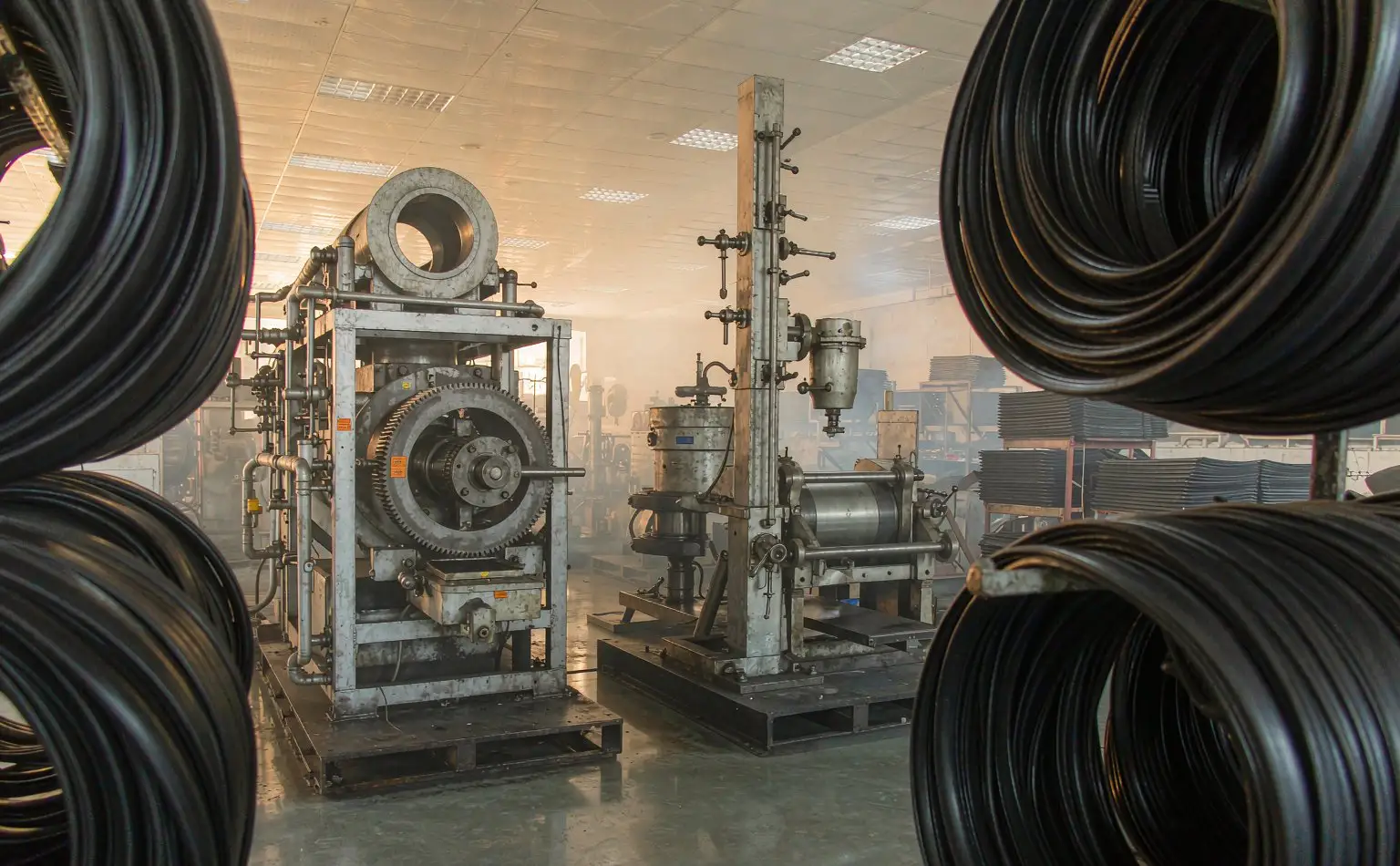
5. Extrusion, corner injection and the finished-goods store
The first handover is extrusion to vulcanisation. The strip is vulcanised after it leaves the die, and an additive added below 200C must not be cooked out at the curing temperature; on a hot line, move the GGTK addition earlier in the mixing sequence so it is evenly dispersed before the compound heats up. The second is corner injection: confirm the profile chamber holds no standing water before resin goes in, because moisture sealed inside will find its way out through the joint no matter how well the gasket was made.
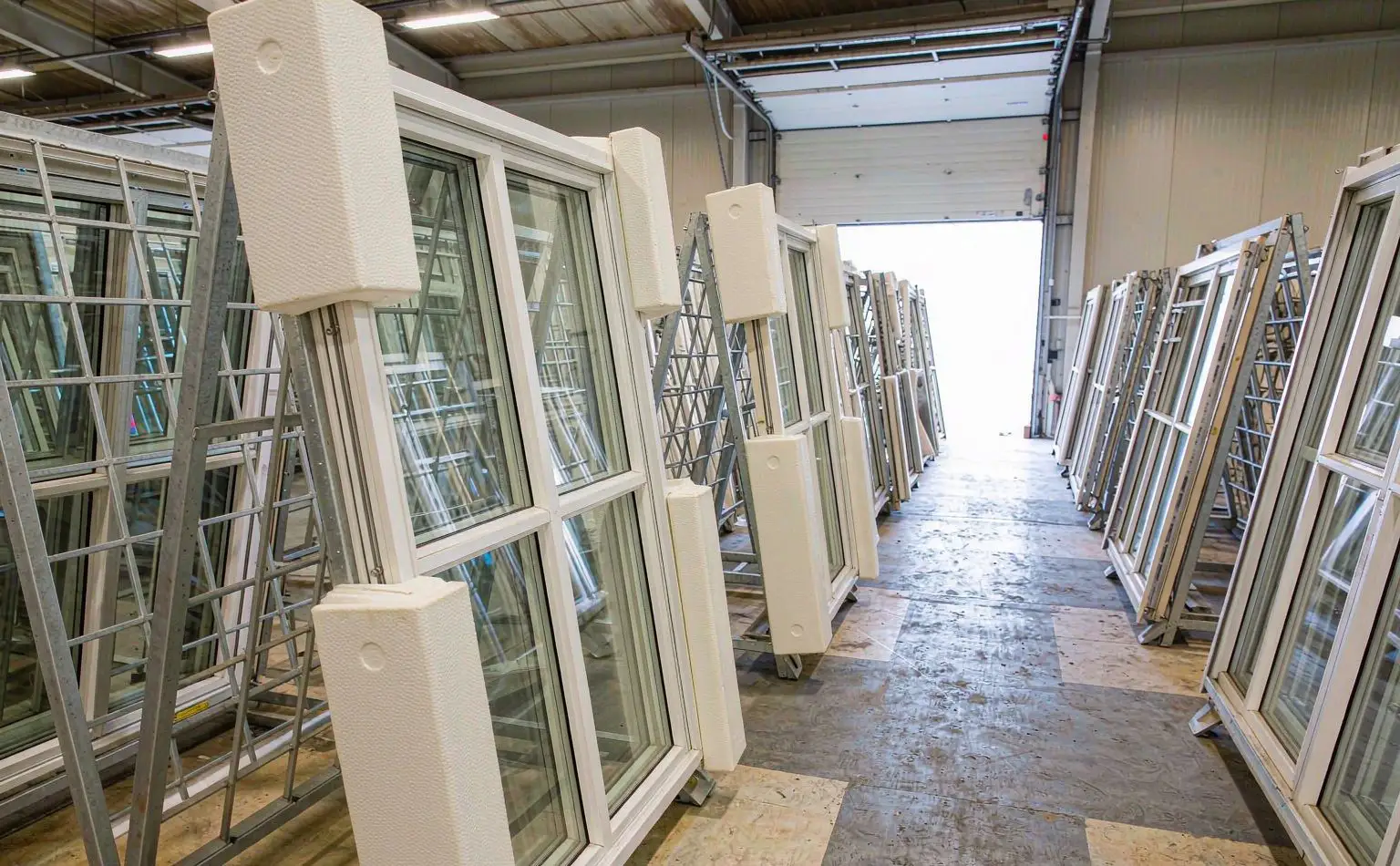
The third is the finished unit and the store. Stand assembled windows on racks with a ventilation gap between frames instead of stacking them tight; hold the store below 60% relative humidity, keep pallets off the wall and the floor, and ship oldest first. For export, add desiccant sticks or anti-mould sheets inside the container and check that no condensation sits on the frames before the doors close. Clearing the rows against the wall before and after the rainy season costs far less than reworking a batch.
6. Questions: does the profile need treating, and is a wipe-down enough
Does the aluminium profile itself need anti-mould treatment? No. Aluminium is inorganic and carries an anodised film or a powder coat, so mould has no nutrient source; putting additive into the billet or the coating raises cost without touching the two parts that actually grow. Spend the budget on the gasket and the thermal break.
Can a wipe with a mould cleaner after assembly serve as prevention? No. Wiping removes what has already grown; the unprotected rebate grows again, and repeated wiping damages the gasket face and speeds up ageing. Do prevention first – GGTK in the mixing stage, ECO at the compounding stage – and treat cleaning and rework as a separate job for units that already show spots. Both products come with samples and a TDS so the figures can be checked against your own compound and strip process.
Four closing figures: iHeir-GGTK at 1%-2% on compound weight in the mixing stage, below 200C, never in the same bath as an anionic additive; iHeir-ECO at 0.3%-1.0% on finished weight, heat stable to 240C and clear of 320C, moved to the compounding stage where the strip runs hotter than that; a dry chamber before corner injection; and finished units standing upright with ventilation gaps, stored below 60% relative humidity with desiccant in the container.


