




 View Count:39
 Date:2026-10-10
Automotive interior part mould, how should the foam part and the PVC skin each be dosed? They are pressed together but belong to two different stages: one goes into the foam compound and one into the skin compounding stage, and if you swap them both parts are left bare. The foam part takes iHeir-FP foam antimicrobial agent at 0.5%-1.5% on total foam weight, and the PVC skin takes iHeir-ECO plastic antimicrobial agent at 0.5%-1.0% on PVC weight. This article covers the two dosing points, the figures and the closed interlayer between them.
1. Where the mould comes from: the foaming stage and the skin covering stage
The foam parts inside an interior are mostly seat cores, armrest cores and sound insulation. They are porous and bulky and hold water better than anything else in the assembly. The PVC or TPO skin sits over the foam and carries the look and the feel. The two parts touch, but the way damp reaches them is completely different, so they cannot be treated as one job.
At the foaming stage the trouble is in the compound: polyols take up water, blowing agents and catalysts leave residue, and regrind powder carries spores. What comes out is an open cell structure, and once water gets inside those cells it is slow to leave, so the core mildews from within. At the skin covering stage the trouble is in the material and in the interlayer: PVC resin and plasticiser pick up damp during compounding, the inner turns of a calendered roll get no air, and after lamination the skin and the foam form a closed interlayer that lets damp in and does not let it out.
The two parts take their additive in different places. The foam part is dosed when the foam compound is prepared and foamed, so the agent rises with the material and is distributed through the whole cell structure. The PVC skin is dosed at compounding, mixed through the resin and plasticiser before calendering. Merge the two into one pass on the finished laminated part and you reach neither the inside of the foam nor the interlayer.
2. The two dosing points at a glance
The table lines up the part, the stage, the product, the figures and the points to watch, so it can serve as the first draft of a process card.
| Part | Stage | Product | Figures | Points to watch |
|---|---|---|---|---|
| Foam part (seat core, armrest core, insulation) | Compound preparation and foaming | iHeir-FP foam antimicrobial agent | 0.5%-1.5% on total foam weight | Works across pH 1-11; recalculate whenever density changes; premix with the polyol |
| PVC or TPO skin | Compounding and calendering | iHeir-ECO plastic antimicrobial agent | 0.5%-1.0% on PVC weight | Mixed through with resin and plasticiser; thermal stability 240 degrees, clear of 320 degrees |
| The interlayer between skin and foam | Laminating | Damp control only | Below 60% relative humidity | Both substrates must be treated; one alone does not stop the interlayer |
| Finished interior store | Storage and packing | Desiccants | By carton type | Bring the moisture content down before the parts are packed |
One conclusion from the four rows: the foam part is figured on total foam weight and the skin on PVC weight, so the two bases differ, and the interlayer and the finished store take no agent at all.
3. Foam parts: FP goes in on total foam weight, and density changes mean recalculating
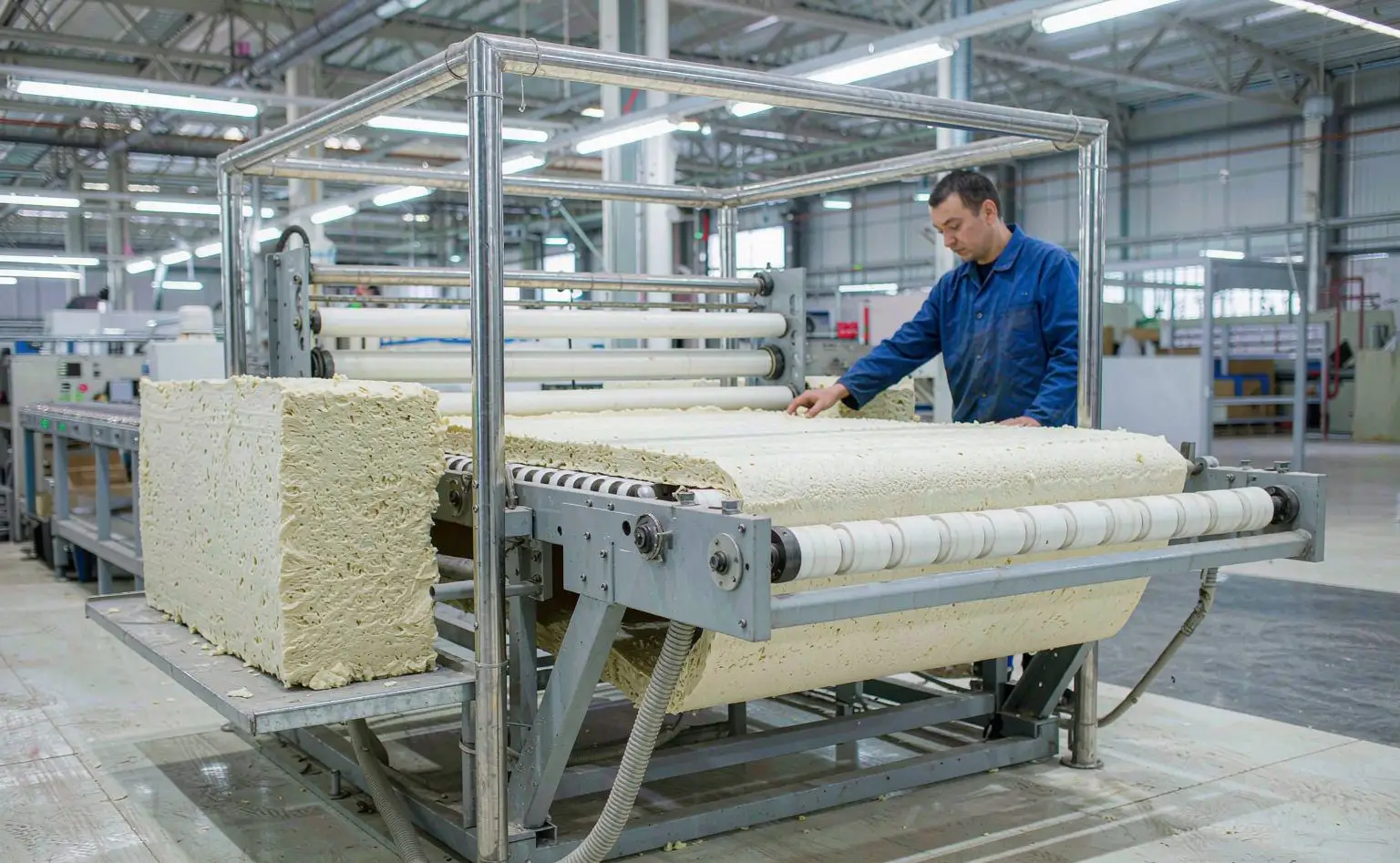
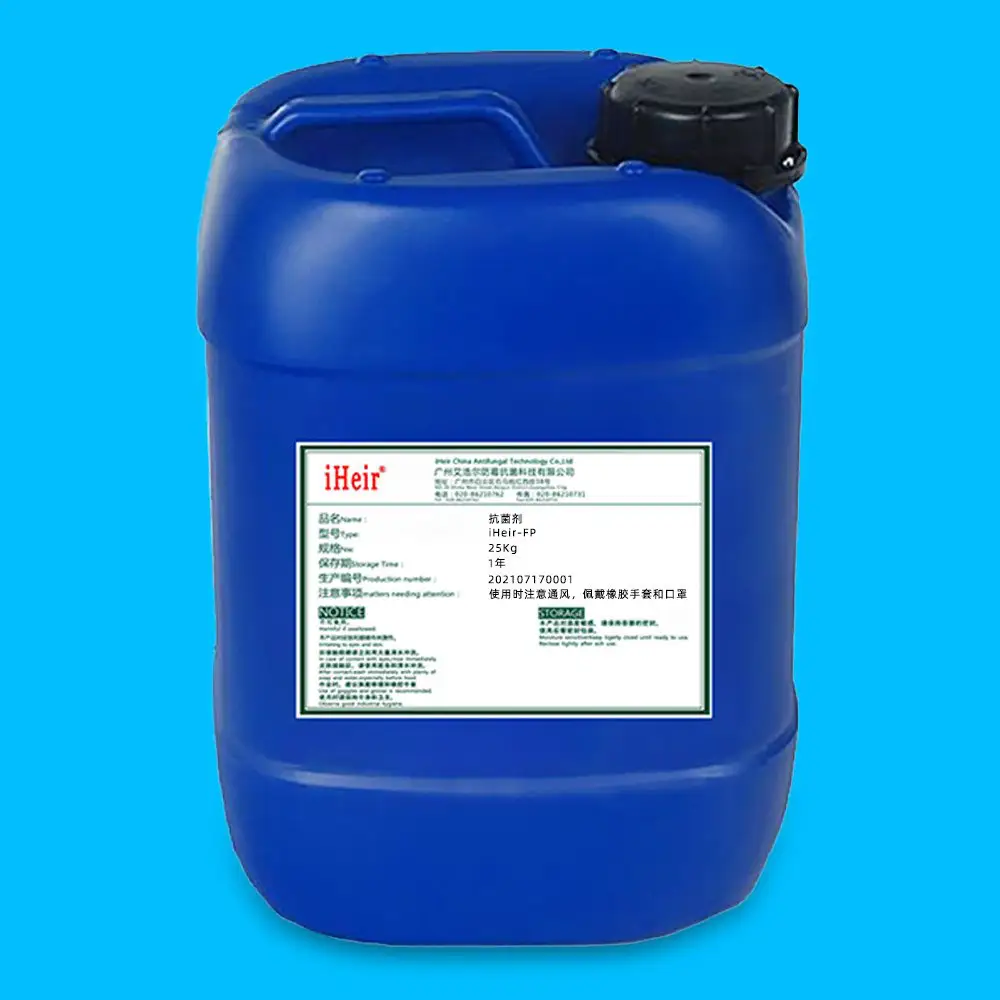
Foam parts are dosed when the foam compound is prepared and foamed. Use iHeir-FP foam antimicrobial agent at 0.5%-1.5% on total foam weight. It works across pH 1-11, so acid and alkaline systems are both covered, and the antibacterial rate reaches 99.99% with a sensitisation rate of 0, which keeps it suitable for seat cores and armrest cores that sit close to the body. FP rises with the material and is spread through the whole cell structure rather than laid on the surface, so cutting, laminating and friction will not rub it off.
Three details. First, the figure is on total foam weight, regrind and fillers included, so any change in foam density means recalculating; carrying the ratio from a previous product across to a new one is the most common mistake. Second, premix FP with the polyol before it goes into the foaming machine, because tipping it straight into the head tends to disperse unevenly and leave soft and hard patches in the block. Third, verify the antibacterial and anti-mould effect by ISO 22196 and ISO 846, and hold a block from the same batch, since testing the skin alone proves nothing.
4. PVC skin: ECO goes in at the compounding stage
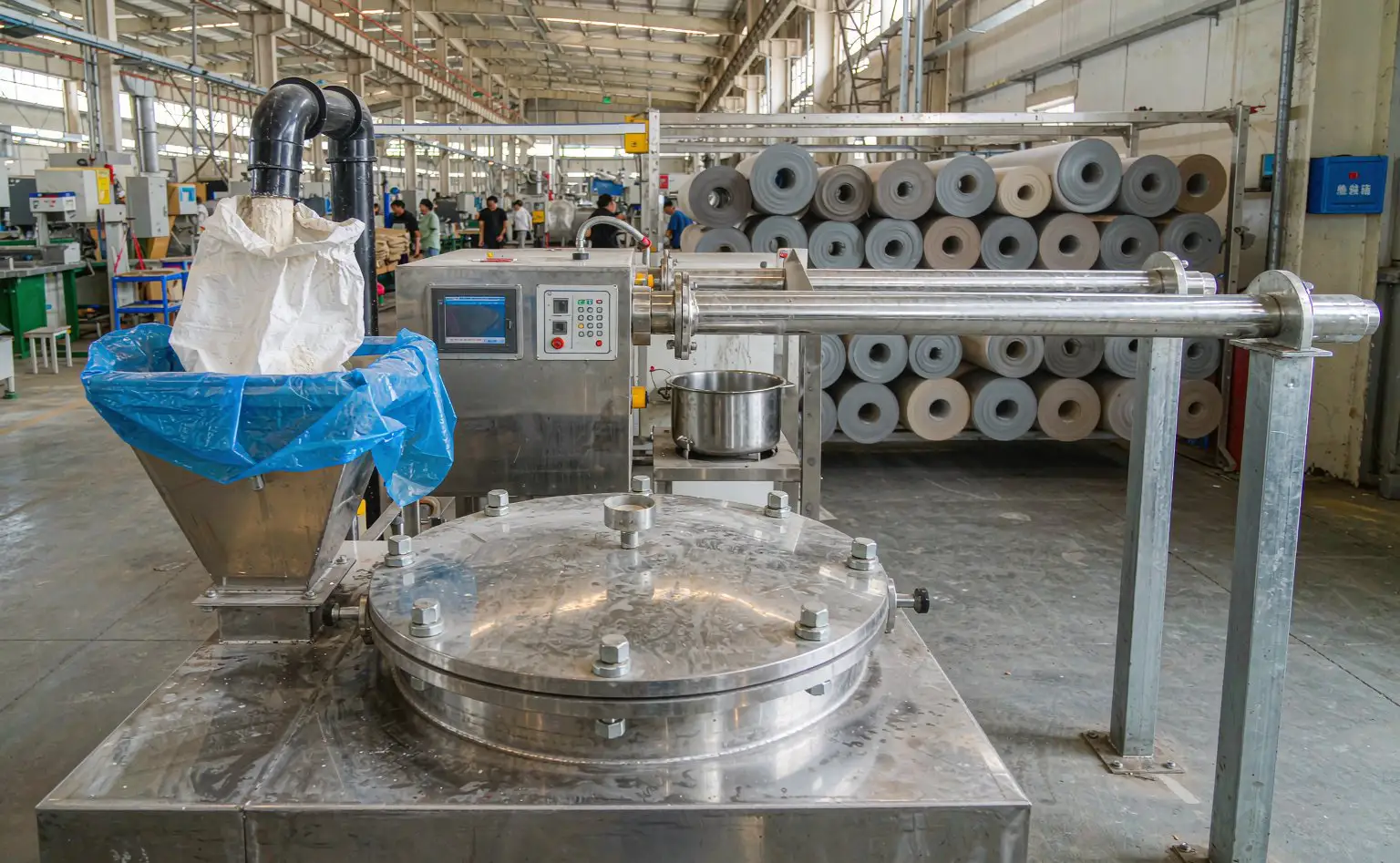
PVC and TPO skins are dosed at compounding. Use iHeir-ECO plastic antimicrobial agent at 0.5%-1.0% on PVC weight, mixed through with the resin, the plasticiser and the stabiliser before calendering or coating. ECO bonds with the resin and is distributed through the whole sheet; thermal stability reaches 240 degrees and the process temperature should stay clear of 320 degrees, so the calendering zones must avoid the decomposition point of the additive.
Three details. First, the skin compound is a different base from the foam compound, so its figure is calculated on skin weight alone; do not carry the 0.5%-1.5% foam band across. Second, watch the shade on pale skins and run a small sample for appearance and feel before a full batch. Third, wrap the skin rolls in moisture barrier film after compounding, because damp taken up by the inner turns is one of the sources of mould in the interlayer after lamination.
5. Holding the closed interlayer: both points, not one
The interlayer between the skin and the foam is closed, and once damp is inside it does not come out. Treat the foam only and the skin side still mildews; treat the skin only and the damp in the core is still there. The two parts must be dosed on their own bases, and the laminating stage should hold relative humidity below 60% so that as little damp as possible gets into the interlayer in the first place.
Measure the moisture content of the laminated part before it goes into store, and add desiccants by carton type for storage and export packing. A sea voyage is long and the day-to-night swing is harder to control than a warehouse, so drying the interior parts before dispatch is the real fix. For batches that have already gone mouldy, the order of rework is set out in mould treatment for car interiors.
6. Questions that come up: can the two swap, or can one pass be added later
Can the foam part and the PVC skin be swapped? No. The foam is dosed in the compound and the skin at compounding, and the two do not swap. Moving a foam grade onto the skin, or the reverse, either fails to disperse or damages appearance and feel.
Can one pass after lamination make up for it? No. Once the part is laminated the interlayer is sealed and a surface treatment cannot get in; the foam has to go in with the compound and the skin at compounding, so a late pass reaches the outer face only.
Does a change in foam density mean recalculating? Yes. The figure is on total foam weight, and when density changes so do the volume and the surface area for the same weight, so carrying the old ratio forward moves the real concentration away from the design value.
Two points carry the dosing: the foam part goes in when the compound is prepared and foamed (iHeir-FP at 0.5%-1.5% on total foam weight, across pH 1-11) and the PVC skin goes in at compounding (iHeir-ECO at 0.5%-1.0% on PVC weight), while the interlayer and the finished store hold both results with damp control and desiccants. Samples and TDS sheets are available for a trial on your line.


