




 View Count:43
 Date:2026-09-07
“How do we make antibacterial & deodorizing socks in the Zhuji cluster?” and “Which antimicrobial agent should we choose for cotton, sports and synthetic socks?” are the two questions we hear most from Zhuji sock factories, brand owners and export traders in 2025. Zhuji is a flagship sock manufacturing cluster in China with annual output above 20 billion pairs, but most of it is still white-label contract production. Anti-odor & anti-mold is a “value-add” step that many plants either skip or do badly with whatever cheap agent they can find. The result: in the rainy season or summer, customers complain “smelly / moldy”, returns pile up, refunds plus lost orders are common. This article is written for Zhuji sock factories, brand owners and export traders: what is the difference between sock odor and sock mold, what is the principle behind anti-odor & anti-mold finishing, which agent to choose for cotton / sports / synthetic socks, how to run padding vs exhaust processes, and which compliance standards are required for export.
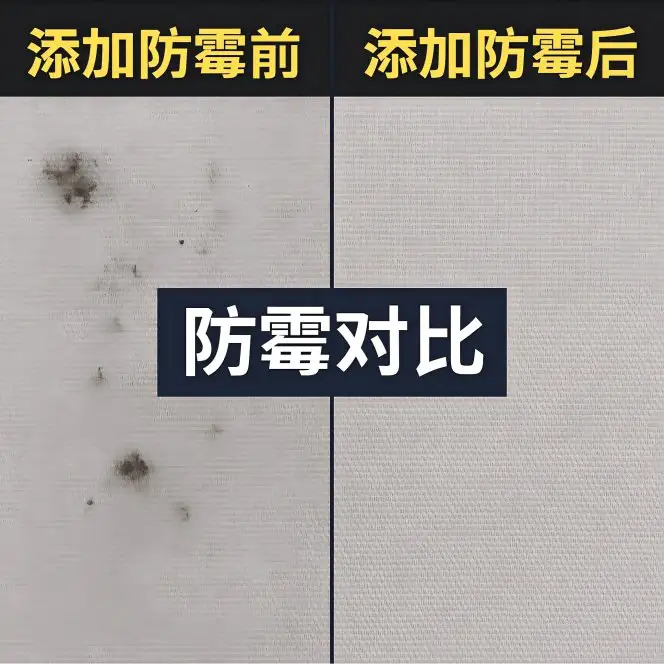
1 Why do socks get smelly and moldy? Sweat + bacteria + moisture
Sock “odor” and sock “mold” are two different things, but they are often mixed up. Sort them out first, and the right solution falls into place:
- Odor comes from bacteria, not from the sock itself: human foot sweat is almost odorless on its own, but it contains water, salts, urea and lipids — a perfect meal for bacteria. After the sock is worn for a while, Staphylococcus aureus, Staphylococcus epidermidis, Micrococcus etc. break down the organics into short-chain fatty acids, ammonia and sulfur compounds — that is the “smell”.
- Mold comes from fungi: if the sock stays damp for a long time (post-workout, rained on, not washed in time), fiber moisture rises above 12% and at 20–35°C fungal spores land and grow, forming grey-green spots, white fuzz or black patches with a musty smell.
- Odor and mold usually appear together: bacteria + fungi + sweat + moisture, all four conditions met — smelly AND moldy. Especially high-risk in the rainy season and during sports.
So antibacterial targets bacteria (odor), anti-mold targets fungi (mold). A genuinely qualified “antibacterial deodorizing sock” should ideally have both an antibacterial finish and an anti-mold finish, or use a single agent with both antibacterial and anti-mold action. Many “antibacterial socks” on the market only do antibacterial without anti-mold, so they still go moldy in the rainy season. The relationship between textile anti-mold and antibacterial is covered in Textile Anti-Mold Agent Buying Guide.
2 Anti-odor finishing principles: three mainstream routes
There are three mainstream anti-odor finishing routes used in the sock industry, each with a different principle and use case:
- ① Silver-ion antibacterial (inorganic family): silver ions (Ag+) work by disrupting the bacterial cell membrane, interfering with enzyme activity and blocking DNA replication. Strengths: broad-spectrum, durable, low toxicity. Weaknesses: higher cost, weaker binding to some synthetic fibers. A typical product is iHeir-BJ1000 silver-ion textile antimicrobial agent, see iHeir-BJ1000 Silver-Ion Textile Antimicrobial Agent.
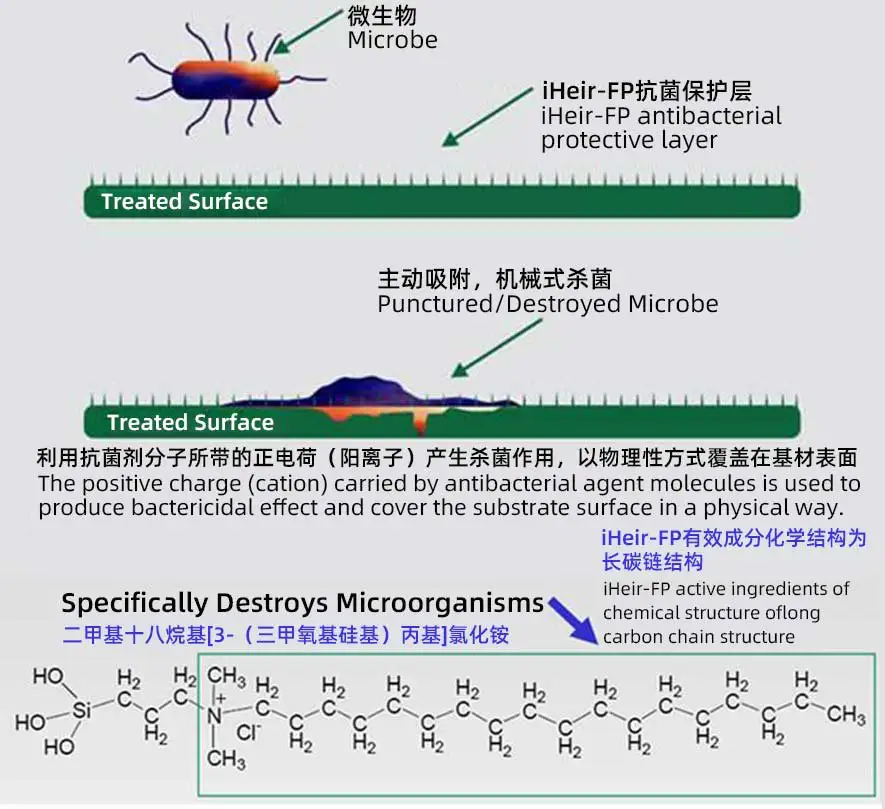
- ② Quaternary ammonium / guanidine (organic family): quats and PHMB (polyhexamethylene biguanide) work by positive-charge adsorption on the bacterial cell membrane and disruption of the membrane structure. Strengths: low cost, broad applicability. Weaknesses: limited wash durability, weaker against some Gram-negative bacteria, needs a fixation step.
- ③ Photocatalytic antibacterial (TiO2 / ZnO): works by generating reactive oxygen species under light to kill bacteria. Strengths: durable, high safety. Weaknesses: needs light to activate; in a shoe the light is weak so the effect drops; mainly a marketing add-on.
For socks, silver-ion is the best overall — durable, broad-spectrum, safe, and compliant with infant textile standards. Quats suit the mid-to-low-end mass market. Photocatalytic is a “marketing point” with limited real antibacterial contribution. The general principle of textile antibacterial finishing is explained in Antibacterial & Anti-Mite Finishing Agents.
3 How to pick the right agent for cotton, sports and synthetic socks
Cotton, sports and synthetic fibers differ hugely in moisture absorption, heat resistance and binding affinity, so the agent cannot be “one size fits all”:
- Cotton socks (cotton content ≥ 70%): cotton absorbs a lot of moisture (regain 8–10%) — it absorbs sweat but also gets moldy. Recommend silver-ion exhaust process together with a softener in the same bath. Silver ion binds well to cotton hydroxyl groups, wash durability above 50 cycles. Note that cotton socks go through many dye-and-finish steps — apply the antimicrobial agent after the final rinse so earlier chemistry does not destroy it.
- Sports socks (polyester / nylon / spandex blends): synthetics absorb little but wick well — sweat is pushed to the outer surface of the sock, and bacteria grow on the fiber surface. Recommend a silver-ion + quat hybrid system for both fast-kill and durability. Synthetic fibers are smooth, so use a crosslinker (citric acid / BTCA) to lock in the antimicrobial agent for wash durability.
- Synthetic socks (polyester / nylon / polypropylene): synthetics barely absorb moisture; sweat “bridges” between fibers and bacteria grow in the inter-fiber space. Recommend silver-ion padding process with curing at 150–160°C for 60–90 seconds for strong bonding. Infant socks must use an OEKO-TEX 100 Class I certified antimicrobial agent.
One more warning: do not use untested “no-name” antimicrobial agents. For EU exports, REACH random checks are common; for domestic e-commerce, random checks are increasing. A legitimate agent supplier should provide an antibacterial test report (GB/T 20944), REACH declaration and skin irritation test (if needed). Textile raw material mold issues are covered in Yarn Mold Prevention.
4 How to run the finishing process? Padding vs exhaust
Two mainstream processes for sock antimicrobial finishing — padding (continuous) and exhaust (batch) — pick by equipment and order type:
- Padding process (continuous, for large volume): socks go through dip tank → padder (pick-up 70%–80%) → curing (150–160°C × 60–90 s) → cooling. Strengths: high efficiency, good uniformity, fits continuous production. Weaknesses: high equipment investment, on cotton socks the agent can migrate during heating, so the heating ramp must be controlled.
- Exhaust process (batch, for small volume): socks go into a dye vessel or tumbler at 40–60°C for 20–30 minutes → hydro-extract → cure at 100–120°C for 5–10 minutes. Strengths: simple equipment, fits small batches and many SKUs, works well on cotton. Weaknesses: batch consistency depends on operator skill, low throughput.
Silver-ion antimicrobial agent is typically dosed at 2–5% o.w.f. (on weight of fiber), adjusted by brand and fiber type. Cure temperature is the key: too low means poor bonding and weak wash durability; too high causes the silver ion to oxidize and yellow, which is critical for light-color socks, so always run a lab dip to confirm shade change first. The finishing logic for webbing and garments is explained in Webbing Anti-Mold Guide and Garment Mold Treatment.
5 How is antibacterial performance tested? GB/T 20944 + AATCC 100
Antibacterial performance cannot rely on customer perception; you need test data. The three most common standards for the sock industry:
- GB/T 20944.3 (Shake flask method, China national standard): shake the sample with bacterial broth and count colony change, ≥70% inhibition is qualified. Strengths: domestic standard, low test cost. Weaknesses: limited simulation of actual wear conditions.
- AATCC 100 (US standard): contact sample with bacterial broth at 37°C for 18–24 hours, count viable cells, ≥95% inhibition is excellent. Strengths: high international recognition. Weaknesses: long cycle, high test cost.
- JIS L 1902 (Japan standard): similar to AATCC 100, absorption method, widely used in the Asian market. Japanese customers often require this specifically.
For Zhuji sock exporters, Southeast Asia, Middle East and Africa customers mostly accept GB/T 20944 reports; EU customers want EN ISO 20743; Japanese customers want JIS L 1902; US customers want AATCC 100. We suggest sock factories use GB/T 20944 as the internal QC standard and add the customer-specific standard for each export order. Infant socks must comply with GB 31701-2015 Safety Technical Specification for Infants and Children Textile Products, with azo dyes, nitrosamines and other restricted substances banned.
6 Export compliance: REACH + OEKO-TEX 100
Two compliance lines are non-negotiable for sock exports:
- REACH declaration (EU): chemical substances in the antimicrobial agent and dye must be within the SVHC Candidate List (updated 1–2 times per year), if above 0.1% it must be declared. Silver-ion antimicrobial agents are usually not on SVHC, but some quats (e.g. DADMAC) and some organic agents contain SVHC substances.
- OEKO-TEX 100 (international): both the sock and the antimicrobial agent must meet OEKO-TEX Standard 100 safety requirements, Class I is the strictest (infant, direct skin contact), Class II is the next level (adult, direct skin contact). We recommend socks factories require the agent supplier to provide an OEKO-TEX certificate or certificate number with each shipment.
In one customer case, a Zhuji sock factory in 2024 used a silver-ion antimicrobial agent without OEKO-TEX certification for a European cotton-sock order. The customer’s third-party SGS inspection on arrival detected formaldehyde at 75 mg/kg, above the 20 mg/kg limit; the entire 18,000-pair batch was rejected and the loss was RMB 260,000. In 2025 the same factory switched to an OEKO-TEX-certified antimicrobial agent, across 5 European customers and 120,000 pairs there was zero compliance return, and the stable anti-odor performance earned annual re-orders from 2 of them. Infant sock factories should treat this as a hard lesson: compliance is not optional, it is the entry ticket to export.
7 FAQ
Q1: How many washes does an antibacterial sock last?
A genuine silver-ion antibacterial sock lasts 50+ washes, some premium products reach 100. Quat-based socks usually last 20–30 washes. Use neutral liquid detergent, avoid chlorine bleach and high-temperature tumble dry, both of which sharply shorten the antibacterial life.
Q2: Can silver-ion antimicrobial agents cause skin allergy?
Agents from qualified suppliers pass skin irritation tests, at standard use concentration (2–5% o.w.f.) they do not cause allergy. A very small minority (<0.1%) is sensitive to silver ions, for infant socks do a small-area wear test first.
Q3: How much more expensive are antibacterial socks?
Silver-ion finishing adds about RMB 0.2–0.5 per pair (depending on fiber and process), and the retail price can be marked up 30%–100%. But the selling point is clear, repeat-purchase is high, and the return rate is low, so overall margin is actually better.
Q4: What are the key points for infant sock antibacterial finishing?
Infant socks are direct skin contact grade, must meet GB 31701-2015 + OEKO-TEX 100 Class I. The antimicrobial agent must be a model that has passed infant safety assessment; azo amines, nitrosamines and degradable carcinogenic dyes are banned. Test every month and keep the reports for at least 3 years.