




 View Count:3
 Date:2026-11-11
Which stage should basketball mould control start from? On a leather-covered ball the mould comes out of the leather, and waxing or spraying the surface afterwards will not hold it. The routine is iHeir-PF leather antimicrobial at 0.05%-0.2% of leather weight in the fatliquor, with the working float at pH 3-8, the wound bladder dried before the panels go on, and one iHeir-D vapour sheet at 0.1-0.2 g of active in the ball box. This article covers the fatliquor, the drying and the packing.

1. Mould sits in the leather, in the wound yarn and in the box, not in the surface finish
Take a leather basketball apart: eight cover panels, a rubber bladder, the wound yarn layer, the valve, the box. What moulds is the leather cover and the box board; the bladder does not mould, but it is where the water comes from.
The leather arrives carrying organisms. Chrome-tanned hide in the wet-blue state moulds very easily, and that is an old problem in tanneries: the hide moves through tanning, retanning, fatliquoring and drying with water in it, and one humid day brings white bloom to the grain. Panels cut without anti-mould treatment simply carry that into the finished ball.
The wound yarn holds water. Winding carries adhesive and water, and panelling a bladder before it dries seals the water between leather and bladder. The ball warms up in play, moisture condenses against the inner face of the leather, mould pushes outwards, and the surface first shows a dull patch before it becomes a sheet.
The box is the last bag. A ball box is closed, with a leaflet and a liner inside. Over a month or two at sea it condenses water, which lands on the leather, and the box opens to a musty smell.
2. Cover, bladder and box are counted on two different bases
The table lines up the cover, the bladder and yarn, the bonding and the box. Leather is counted as a percentage of hide weight, vapour paper in sheets; the two are not convertible.
| Part | Material | Product and level | Stage | Control point |
|---|---|---|---|---|
| Cover panels (eight) | Chrome-tanned cowhide | iHeir-PF 0.05%-0.2% | Fatliquor | Of hide weight, float pH 3-8 |
| Bladder and yarn | Rubber, polyester yarn | Dried after winding | Before panelling | Moisture content under control |
| Panelling and stitching | Adhesive, nylon thread | No added water | Assembly | Shop humidity |
| Ball box | Board, liner | iHeir-D 1 sheet 0.1-0.2 g | Boxing | Lid closed tight |
One boundary. iHeir-PF sits in the hide fibres and keeps working after the ball leaves the plant; drying deals with the water the winding brought in; the vapour sheet covers the volume inside the box. Skip the leather and the sheet only controls the air around it.
3. Dosing the fatliquor at 0.05%-0.2% of hide weight, pH 3-8
The level is 0.05%-0.2% of hide weight. Ordinary orders run 0.05%-0.1%; export, long sea legs and buyers with a mould test go to 0.2%. It is on hide weight, not on float volume, so the amount of water in the drum does not change the percentage.
Why the fatliquor. In leather processing the window where an anti-mould agent can reach the fibre structure is fatliquoring and finishing. During fatliquor the fibres are opened by the oil and the agent goes in with it, which gives the most even distribution. Applied after the finish has filmed over, it stays on the surface and one rub removes it.
How to charge it. iHeir-PF is a brown clear liquid with 30±1% active that forms an emulsion in water. Weigh the dose, dilute it to an emulsion in warm water and add it at the drum door with the drum running. Never pour the neat product in: local concentration leaves oil marks on the grain.
Watch the pH. A 1% solution sits between pH 3 and 8. Outside that window the emulsion breaks, the agent comes out of suspension and dark oil spots appear on the grain. Check the float pH before fatliquoring and bring anything above 8 down first.
Trial first. Take three pieces from the same lot: one with nothing, one at 0.05% and one at 0.2%, and run all three through fatliquor and drying. Check for darkening, for a firmer hand, and for any loss of adhesion in the finish that follows. If all three pass, go to the production drum. Rework sequence for semi-finished leather is in leather jacket fatliquor and cover.
4. Dry the wound bladder before the panels go on
This stage has no product, only sequence, and it is the step ball plants skip most often.
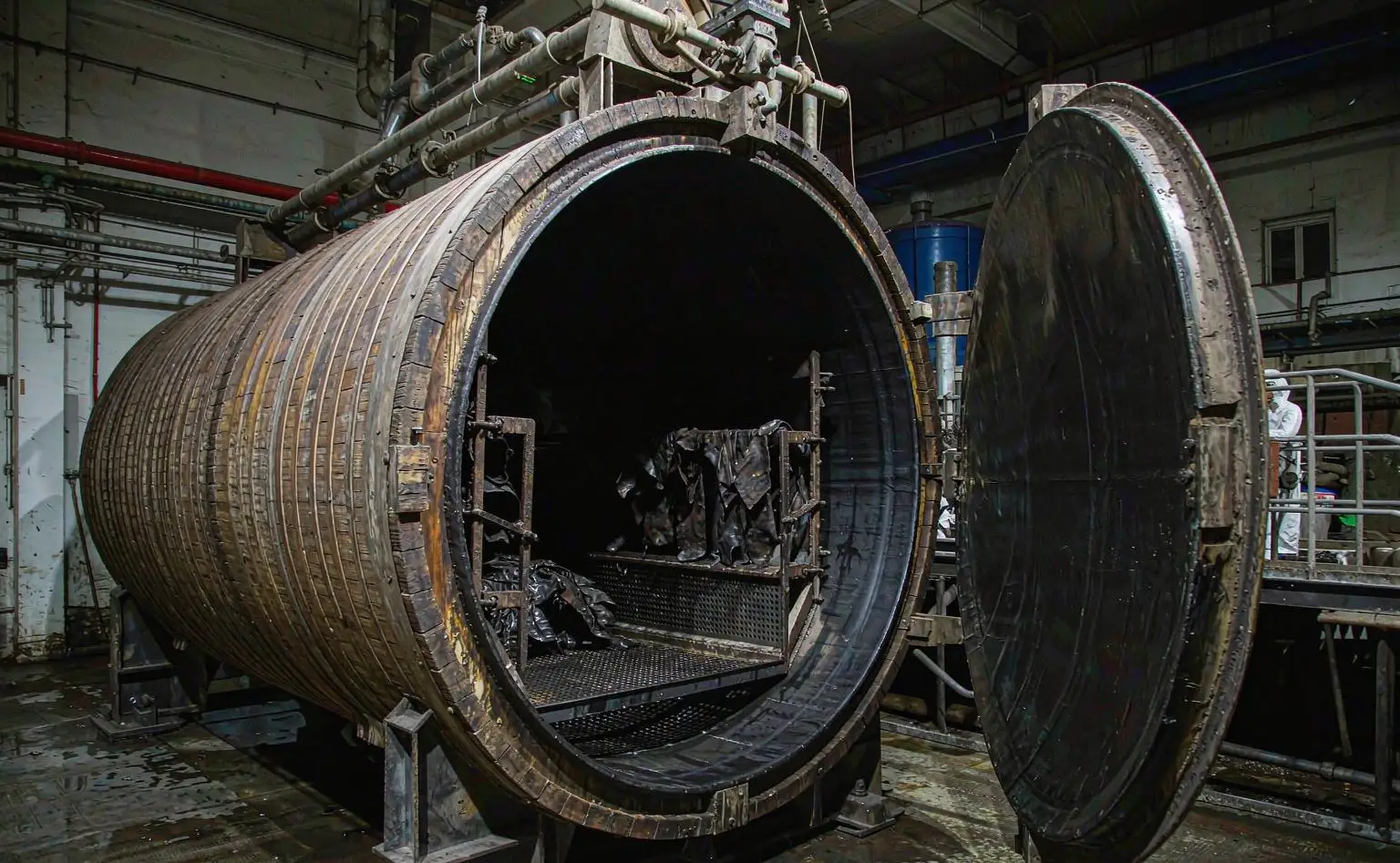
Winding carries water. Yarn passes an adhesive trough and comes out wet. Wound bladders go into a drying room at 50-60C with circulating air to a moisture target; coming out, the yarn layer should feel firm.
Feel it again before panelling. A wound bladder picks up moisture sitting on a rack, especially in the humid season. At the panelling bench, hold the bladder against your cheek: if it feels cool, there is still water in it.
No water in the adhesive. Mix panel adhesive to the supplier ratio and do not thin it with water; water in the glue layer is sealed between leather and bladder and cannot leave.
Shop humidity. Hold panelling, stitching and shaping at 45%-60% RH, run dehumidifiers in the humid season, and cover cut panels with film.
5. One vapour sheet in the ball box, plus the warehouse and the container
At boxing, put one iHeir-D vapour sheet inside at 0.1-0.2 g of active, against the box wall or under the ball, never wrapped around the leather. Close the lid and seal the outer carton, or the concentration will not hold.
Run the compatibility test. Seal a sheet at three times the normal level with a finished ball, add a little water, keep paper between sheet and product, and leave it closed for a few days. Check the leather for darkening, the foil blocking and print for bleeding, and the valve for tackiness. iHeir-D has 70%±5 solids and can attack poor-quality metal under damp conditions, so sets with a metal inflation needle need the test first.
Warehouse. Keep finished goods below 60% RH, cartons on pallets 10 cm off the floor and 10 cm off the wall, and walk the stock before the humid season, opening boxes to check the grain and the seam roots.
Export. Line containers with barrier film and hang desiccant sticks, and check every carton for soft corners before loading. Leather footwear follows the same logic in frame compound and case lining.
6. Questions on synthetic covers, levels and bloom
Q: Can iHeir-PF be used on a PU synthetic cover?
Not under this article. iHeir-PF is a fatliquor and finishing product for leather, and a PU cover has no fatliquor stage at all; it runs through the resin and finishing route with a different selection. Do not put iHeir-PF on synthetic covers.
Q: 0.05% or 0.2%, a factor of four?
Follow the market and the transit time. Domestic, fast turnover takes 0.05%-0.1%; export, sea legs over a month and buyers wanting a mould report take 0.2%. Both are on hide weight.
Q: The grain already shows white bloom. Can the panels still be sewn?
No. Bloom is the visible part and the hyphae are already below the grain; it returns within two days and, once the ball is built, it comes back out at the seam roots. Isolate the lot at the cutting stage rather than mixing it into first quality.
Q: Will the buyer smell the sheet when the box is opened?
At 0.1-0.2 g of active there is no noticeable smell. Overdosing is what smells, so count sheets instead of adding by eye.
Four points: dose iHeir-PF at 0.05%-0.2% of hide weight in the fatliquor, diluted to an emulsion in warm water and added at the drum door, with the float held at pH 3-8 and a three-piece trial for shade, hand and finish adhesion before the production drum; dry wound bladders at 50-60C with circulating air to the moisture target, feel them again at the panelling bench and add no water to the adhesive; put one iHeir-D sheet at 0.1-0.2 g of active in each ball box after a three-times compatibility test; keep the warehouse below 60% RH on pallets off the floor and line and dry containers for export. A kilo of sample goes out first, with MOQ on the iHeir-PF product page.


