




 View Count:3
 Date:2026-10-31
Why does eyewear mould show up on the frames and the case rather than the lenses? A lens is an optical part and does not grow mould; what does is the temple contact surface, the hinge gap and the flocked case lining, all of which either touch skin or hold moisture. The frame compound is dosed with iHeir-IPI001 at 0.8%-1.0% of compound weight, and the case lining takes iHeir-BJ at 2%-3% o.w.f. This article covers where each one goes, the doses and the packing rules.
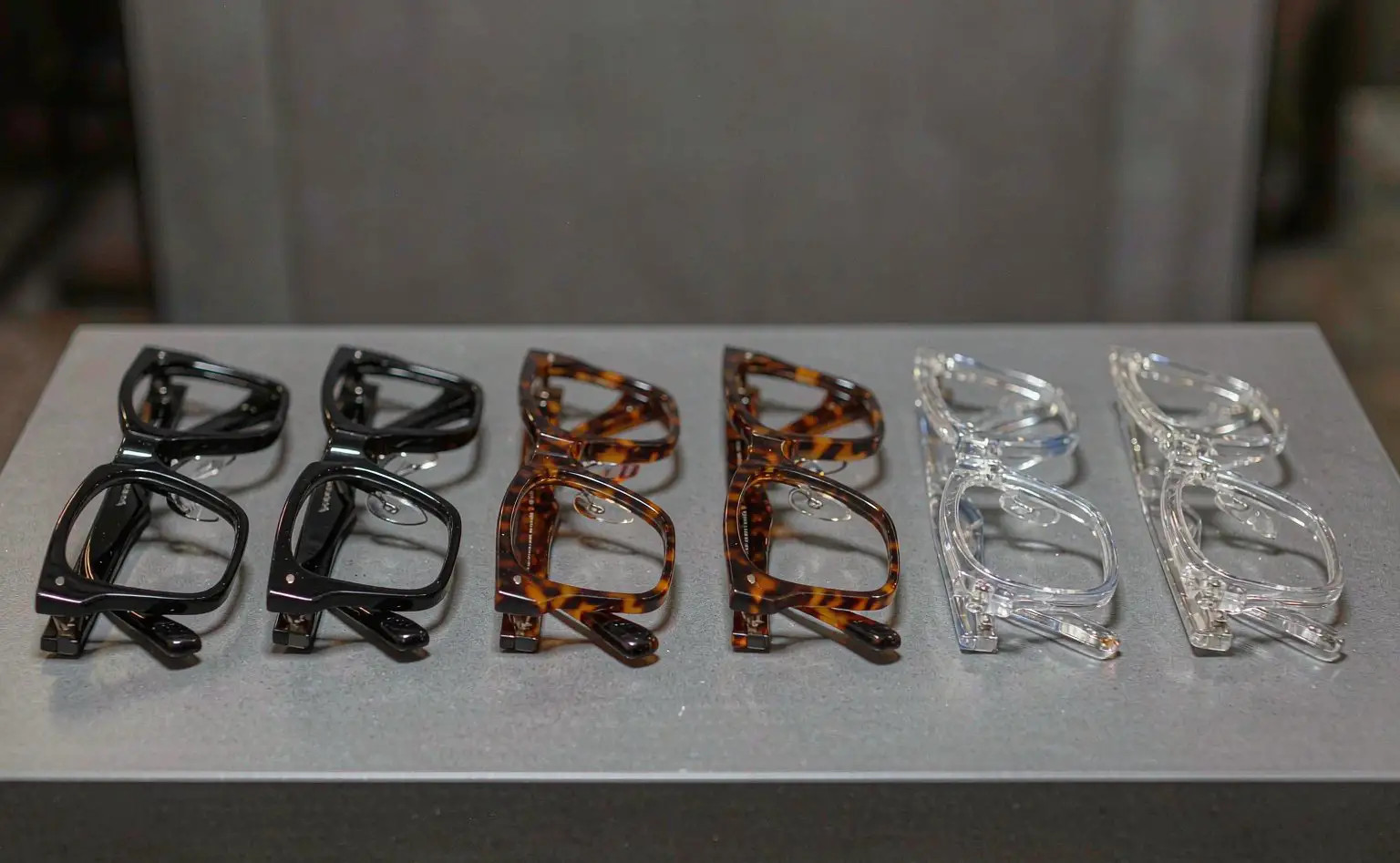
1. Mould starts on the frame contact surfaces and inside the case
A pair of glasses is a mixed build: acetate or TR90 frames, metal hinges and nose pads, acrylic or PC lenses, a board or plastic case with a flocked lining. Lenses and metal do not grow mould; the frame contact surfaces and the case lining do.
The frame fails on sweat and sebum. The inside of a temple and the area around the nose pads sit against skin for hours, leaving salt and oil on the surface, and polishing and waxing press that soil into the micropores. Over a storage period the organics in those pores take up moisture and mould starts from the contact face as dark patches that will not wipe off and can only be re-polished.
The case fails on moisture uptake. Flocked lining, foam pad and board body all absorb water, and once the lid closes it is a semi-sealed volume. Made in a wet season and held for months in an overseas warehouse, the case wall and lining spot first, and the mould then transfers to the frame. The case costs little, but it can downgrade the whole pair.
2. Frame compound and lining run separately
The table lines up the compound, the metal parts, the lining and the outer case. The frame is dosed on compound weight, the lining on fabric weight in o.w.f., and the two figures are not convertible.
| Part | Material | Product and level | Stage | Control point |
|---|---|---|---|---|
| Frame (acetate/TR90) | Acetate, polyamide | iHeir-IPI001 0.8%-1.0% of compound | Mixing or compounding | Clarity trial on clear acetate |
| Hinges and nose pads | Metal, silicone | Outside this article: degrease and dry per part | Before assembly | Degreased and dry at assembly |
| Case lining | Flocked fabric, foam | iHeir-BJ 2%-3% o.w.f. | Finishing bath before lamination | Dry before laminating |
| Outer case and packing | Board, blister | Paper per case, humidity control | Packing, storage | Store below 60% RH |
One boundary. An antimicrobial in the compound does not excuse the case: mould on the lining transfers to the lens and temple, and the case is the first thing a buyer sees. Nor does a good case help if sweat and oil are left on the contact face, because the patches come back. Both stages have to run to cover months of storage and a sea leg.
3. Frame compound: the antimicrobial goes in at mixing
The frame compound takes iHeir-IPI001 inorganic zinc-ion antimicrobial at 0.8%-1.0% of final product weight. It is an inorganic zinc compound with active content above 99%, a white powder, D90 under 3μm, bulk density 1.8-2.4 g/cm³, and it withstands over 380℃, above the melt temperature of acetate extrusion and TR90 moulding, so it does not break down or discolour in process. It is also UV stable, which matters on pale and clear frames.
Where to add it. If compound is made in house, it goes into the high-speed mixer with resin and pigment, then to pelletising or straight to the machine. If compound is bought in, have it blended at the pelletising stage, or run a masterbatch through a twin-screw. Hand-scooping into the hopper is not advisable: the powder is fine, but residence time in the barrel is short, and uneven dispersion leaves pale streaks along the temple.
Three points. Clear parts: trial acrylic and clear acetate for haze and transmission first. Pale parts: ivory and nude shades need their own shade check, since an inorganic powder carries slight opacity. Regrind: batches above thirty percent go to 1.0%, and the cleanliness of that regrind has to be controlled, because oil carried in is food for mould. The general route for moulded plastic parts is in our antimicrobial selection for moulded polymer parts notes.
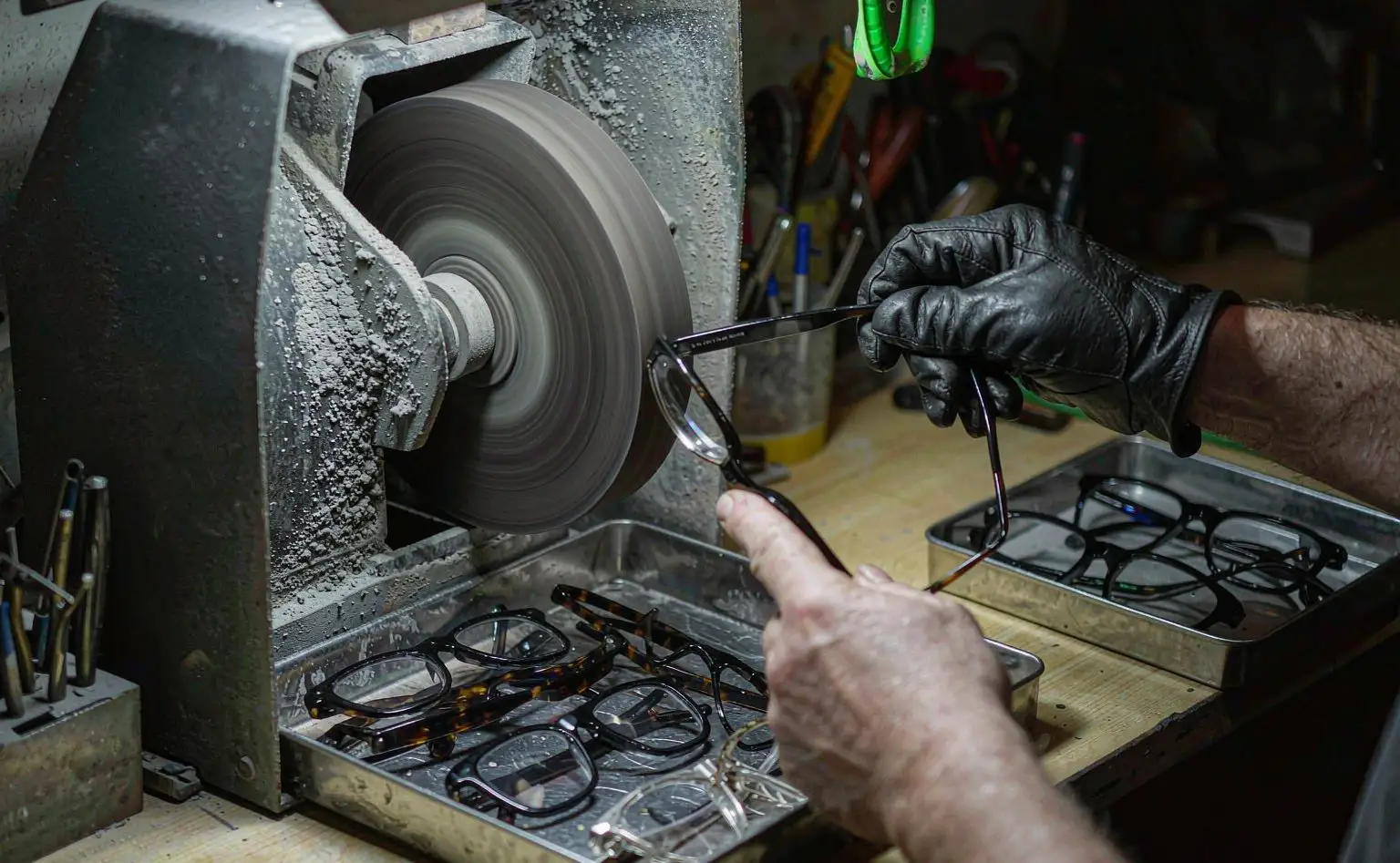
4. Case lining: the flocked fabric gets a finishing bath
The lining takes iHeir-BJ textile anti-mould agent at 2%-3% o.w.f. on fabric weight. The bath runs at 21℃-50℃ and pH 4.5-8.5, ideally near 6, with a 70% wet pick-up; on that basis 3kg treats 100kg of lining. Pre-mix with 9-13 times its water and add in portions.
Two properties of flock fabric to allow for. Thickness: a long pile takes up a lot of water and wets through slowly, so pre-wet the roll and run an extra squeeze after the bath. Compatibility: BJ is cationic and cannot share a bath with anionic auxiliaries, so the softener normally used on lining has to be cationic or non-ionic, otherwise the bath breaks and leaves oily patches that read as bright marks once laminated.
Sequence. Finish before lamination: bath, dry, then laminate to foam and case body. If the laminating adhesive carries water, dry again after lamination. Skipping that step is how a case that feels dry on the surface comes back with mould along the adhesive line, because a closed case is a sealed volume.
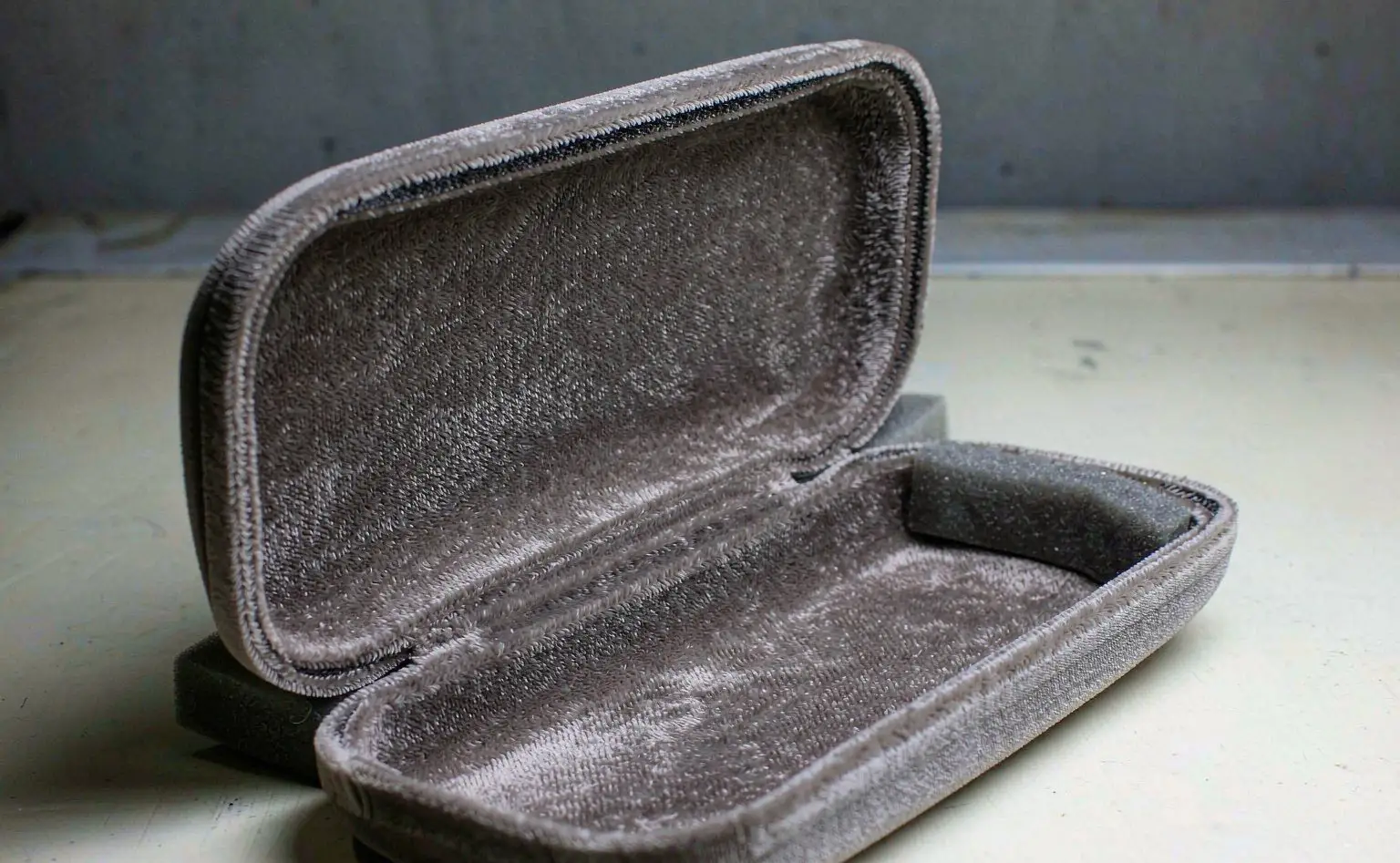
5. Assembly, packing and export
Risk at assembly sits in the hands: frames come off polishing with wax, the bench wipes them with cloth that is itself oily and damp, and they go straight into the case, sealing the soil inside. Change the wiping cloth per shift, run a dehumidifier at the bench, and check each frame’s contact face before it is cased.
At packing, add a sheet of anti-mould paper inside the case, sleeve or blister it, and put cartons on pallets 10cm off the floor and 10cm off the wall below 60% RH. For sea freight, container condensation does more damage than shop humidity, so leave an air path and keep cartons off the wall; see preventing container rain.
Release at three levels: frame compound to ISO 22196 or ASTM G21, sampling one temple and one front; lining to GB/T 24346-2009; complete cases for 30 days at 30℃/85% RH, opening to check lining, foam and the temple contact face.
6. Questions on discolouration, hand feel and spotted lenses
Q: Will the antimicrobial discolour or haze the frame?
IPI001 is inorganic, rated above 380℃ and UV stable, so it does not discolour at normal process temperatures. Clear and pale parts still deserve a trial: half the compound dosed, half not, moulded together and left 7 days, then compare haze and shade.
Q: Does the treated lining feel stiffer?
At 2%-3% the effect on hand feel is small. Stiffness usually means too hot a drying cycle or too much pick-up, so lower the squeeze pressure and dry with more air at lower temperature.
Q: Spots have appeared on the lenses. Can we treat the lens only?
Spots on a lens are normally mould transferred from the case, so wiping the lens treats nothing. Do the lining and the case body, then check the wiping cloth and bench humidity at assembly, or the next lot repeats it.
Four points to take away: dose the frame compound with iHeir-IPI001 at 0.8%-1.0% of compound weight at mixing or compounding, going to 1.0% with heavy regrind and trialling clarity first; run the case lining through iHeir-BJ at 2%-3% o.w.f. with the bath at 21℃-50℃ and pH 4.5-8.5, a 70% pick-up, drying before lamination; change wiping cloth per shift, dehumidify the bench and check contact faces before casing; release complete cases on 30 days at 30℃/85% RH. A 1kg sample of each product can go out for a trial first; MOQ and lead time are on the iHeir-IPI001 product page.


