




 View Count:22
 Date:2026-11-19
Why does binocular mould keep returning to the barrel wall? It does not start on the lens surface but on the grease inside the barrel, the sealant and the damp foam. Keep the grease thin on assembly and wipe the edges, lay one iHeir-D sheet at 0.1-0.2 g in the case, and soak the outer-carton dunnage 1:40 in iHeir-M5. This article covers the grease rule, the sheet layout and export packing.
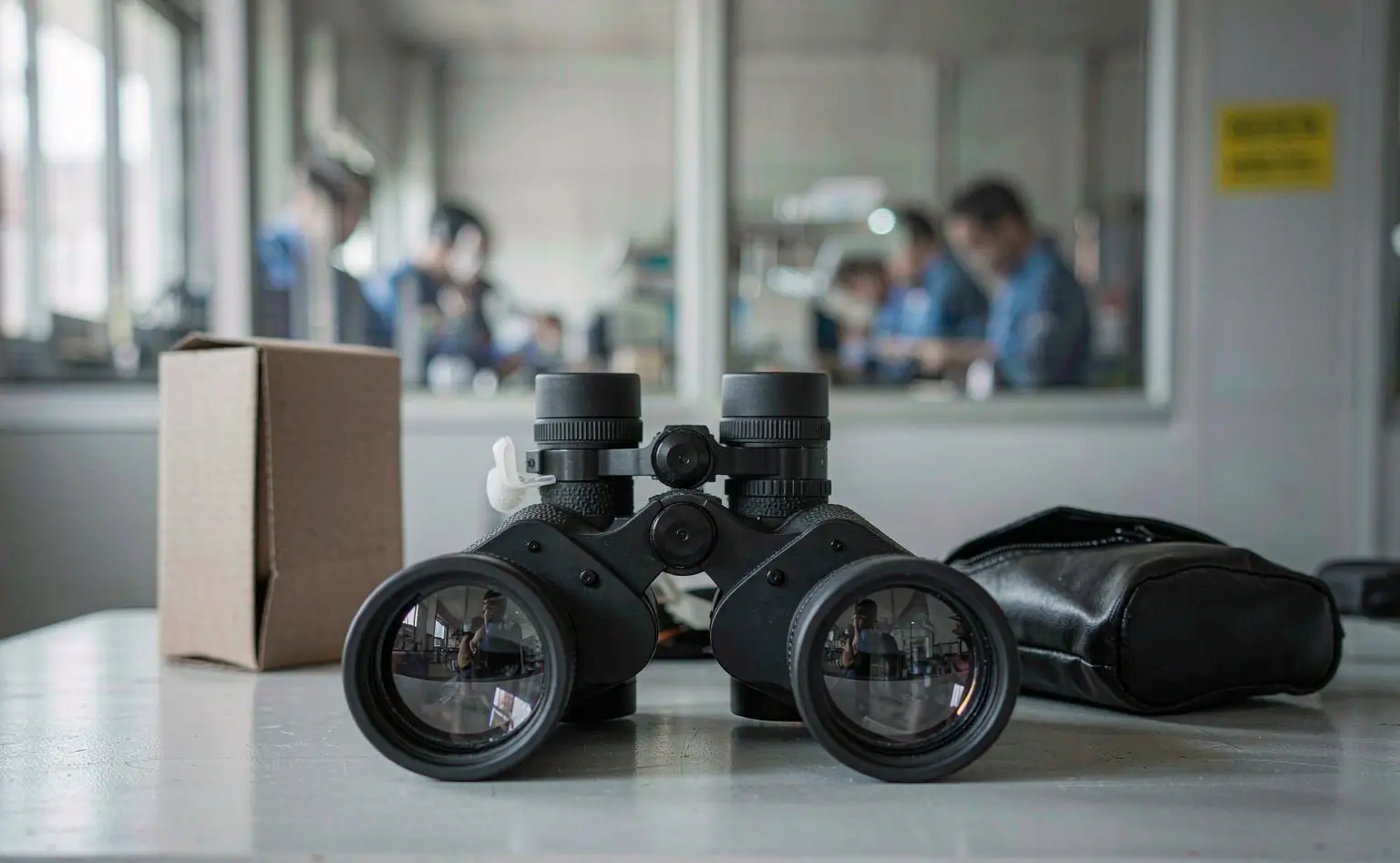
1. Where it comes from: barrel grease, coated glass, case foam
A binocular is a closed optical assembly, which makes mould harder to deal with: what grows inside has to be fixed by opening it up.
Grease on the inner wall comes first. Focus threads, O-ring grooves and prism seats all take grease, and it leaves a film on the inner wall. That film is mineral or synthetic ester, and with still air inside the barrel, hyphae run along it.
Sealant comes second. Barrel ends and the prism housing are sealed with adhesive, and while it cures it releases volatiles that condense on the inner wall; the residue both feeds mould and hazes the glass.
Case foam comes third. Pouch and box foam take up moisture, so a case without a sheet is a small humidor; take the binocular out and the outside mists over, but the inside is still holding water.
So the work splits in two: control grease and volatiles inside, and control the air in the case outside.
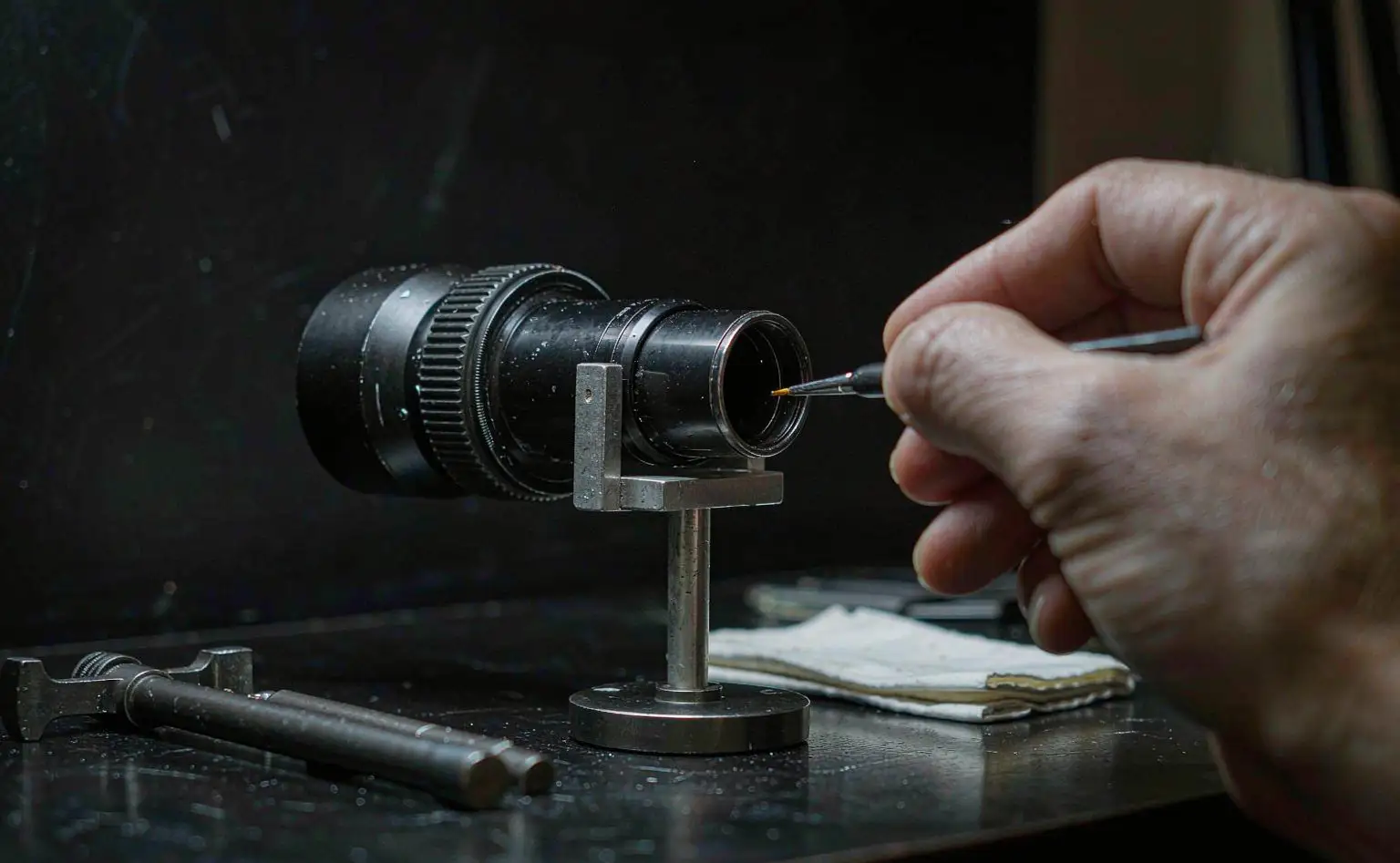
2. Inside the barrel: less grease, wiped edges
Grease only where the drawing says. Focus thread and O-ring groove take it to route; the optical path wall does not. Mark the grease-permitted areas on the assembly drawing and work to the drawing, not to feel.
Thin enough to see, not to smear. A brush or lint-free cloth carries a film you can see but cannot measure. Grease pooled at the thread root or in a prism-seat corner is where mould starts.
Wipe the edges after greasing. Clean the rim and any squeeze-out with a lint-free cloth used once; a cloth used over and over spreads grease across the whole wall.
Let the sealant cure. Cure to the adhesive datasheet before the glass goes in; cured short, volatiles condense on the coating, and no cleaning afterwards removes a haze that has formed under it.
3. Assembly and barrel dryness: humidity is the hidden variable
Hold the assembly area below 55% RH. Run a dehumidifier in the rainy season and log it; assembling in humid air seals the vapour into the barrel.
Let parts equalise. Barrels, lenses and prisms come out of the store and stand in the assembly area for four hours or more; assemble with a temperature difference and the inner wall condenses straight away.
Blow clean before and after. Blow the inner wall with filtered air and close the barrel up promptly instead of leaving it open for half a shift.
Inspect the wall at final test. Light the inner wall with a side torch and look for haze and thread-like points; a batch with haze sends you back to cure time and assembly humidity.
| Part | Material | Product and level | Stage | Control point |
|---|---|---|---|---|
| Barrel inner wall | Aluminium barrel and thread | No additive, grease control | Grease at assembly, wipe edges | Only the permitted areas, thin and even |
| Sealant | End-face and prism adhesive | No additive | Cure after dispensing | Cure time to datasheet |
| Case and pouch | Box body and foam | iHeir-D 0.1-0.2 g per sheet | Sheet in before loading | Foam between sheet and barrel |
| Carton dunnage | Pallet and bearers | iHeir-M5 1:40 | 5-10 min soak, 15%-20% pick-up | Dried through, board to the carton |
| Container | Sea freight | Drying rods and floor board | Placed at loading | Floor and wall moisture |
One boundary. Assembly handles the grease and water in the barrel, the sheet handles the air in the case, M5 handles the organisms in the carton timber. Load the barrel with grease and a sheet only buys time.
4. The case: sheet in the base, under the foam
One per case. Each iHeir-D sheet carries 0.1-0.2 g. One in the box, and one more in the base of the soft pouch.
Between base and foam. Put the sheet on the box floor and the foam on top, so the vapour moves up through the foam. Pressed on top of the foam against the barrel, it blocks the contact face and holds water instead.
Off the glass and the metal. The product page warns of corrosion on poor-quality metal parts under damp conditions, so put foam or a card between sheet and the hinge, eyecup rings and barrel.
Run a compatibility test. Three times the normal rate, a little water, paper in between, closed for a few days, then check the coating for haze and the metal for dulling before the batch runs.
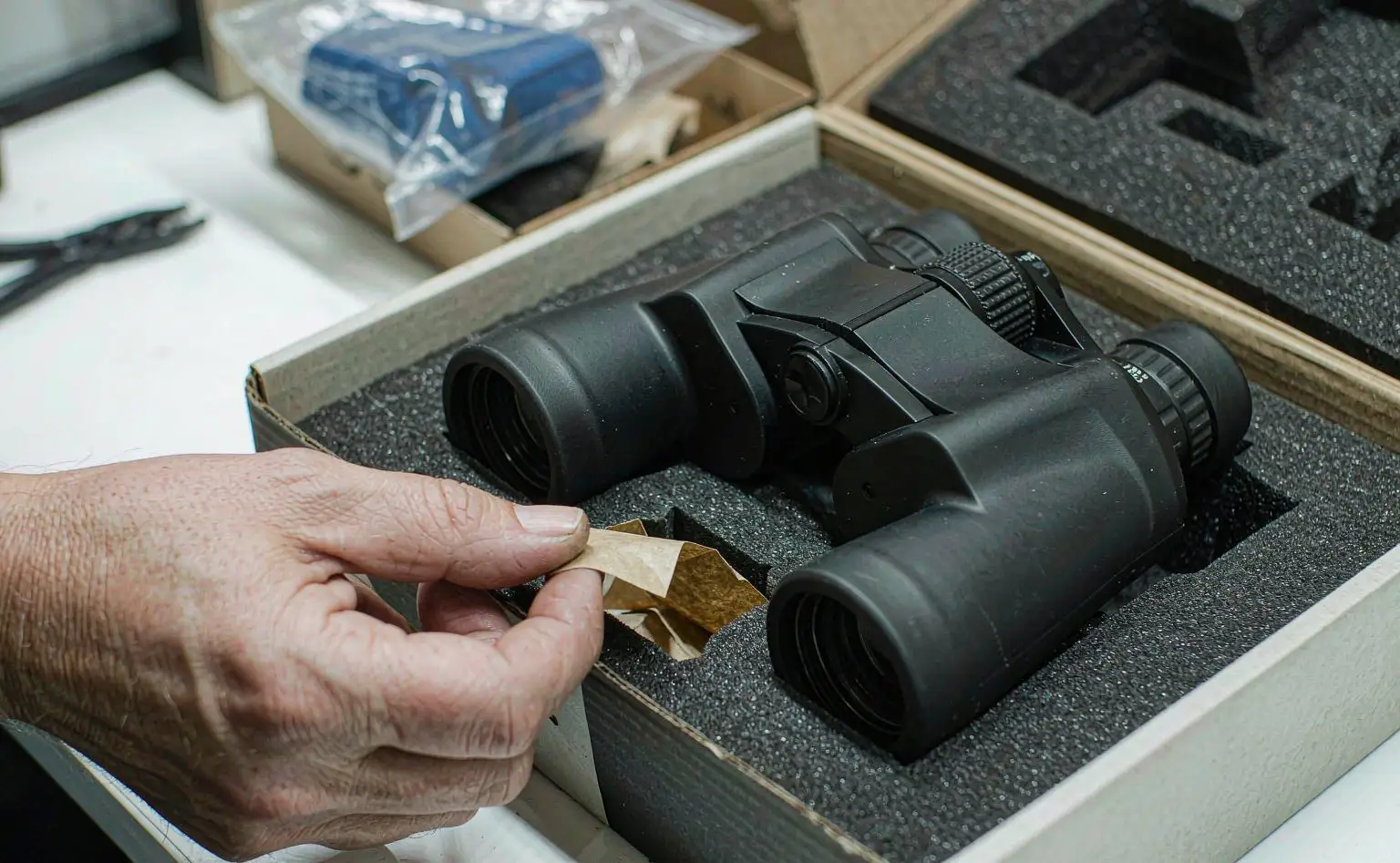
5. Cartons and export: soaked dunnage, dry container
Treat the bearers. Export cartons sit on timber pallets and bearers that often run above 20% moisture. Mix iHeir-M5 at 1:40, soak 5-10 minutes to 15%-20% pick-up, drain and dry right through before use.
Keep the acid away from the goods. M5 is acidic and the product page rules out metal contact, so a neutral board goes between bearer and carton; no residue reaches the box base.
Pack and load. Line the carton with barrier film, put board on the container floor and hang drying rods behind the doors. Over thirty to forty days at sea the wall condensate settles at the bottom, so the lowest layer gets another board.
Three checks on arrival. Haze on the inner wall, whether the case sheet has gone soft, mould on the cut ends of the bearers. Each maps to one stage. Comparable practice on precision parts is in bearings: rust oil and drying rods.
6. Questions from the line
Q: Is wiping the outside of the lens enough?
A: No. The hyphae are on the inner wall and in the prism housing, so the mould keeps growing and eventually etches the coating; opening and rebuilding costs far more than controlling grease at assembly.
Q: Should there be grease in the barrel at all?
A: Yes, but only where the drawing allows: focus thread and O-ring groove. The optical path wall takes none, and the drawing plus the workstation instruction is what enforces it.
Q: Is a desiccant better than a sheet in the case?
A: They do different jobs. Desiccant takes up vapour, the sheet handles organisms in the case air; on humid routes use both, sheet on the floor and sachet in a corner.
Q: Will M5-treated bearers corrode the binoculars?
A: Not if they are handled properly. The bearers have to be dry right through and a neutral board has to sit between bearer and carton, so no residue reaches the barrel.
Grease only the focus thread and O-ring groove, thin and even, and wipe the edges; cure the sealant to its datasheet; hold assembly below 55% RH, let parts equalise four hours and blow the barrel clean; put one iHeir-D sheet at 0.1-0.2 g on the case floor under the foam, off the metal, after a compatibility test; soak bearers 5-10 minutes at 1:40 in iHeir-M5 to 15%-20% pick-up, dry through and put board to the carton; add drying rods and floor board in the container. Mould performance can be verified to GB/T 1741 and ASTM G21, and dosage detail is on the iHeir-D product page.


