




 View Count:18
 Date:2026-11-19
Where does electric toothbrush mould start? Not on the ABS shell, which does not support growth on a clean surface; it starts in the silicone seal under the buttons and the base cap. Work 0.8%-1.0% of the compound weight of iHeir-IPI001 in at the compounding stage, pack the body and the brush head apart, and put iHeir-D sheets at 0.1-0.2 g in the box. This article covers compounding, assembly and packing.
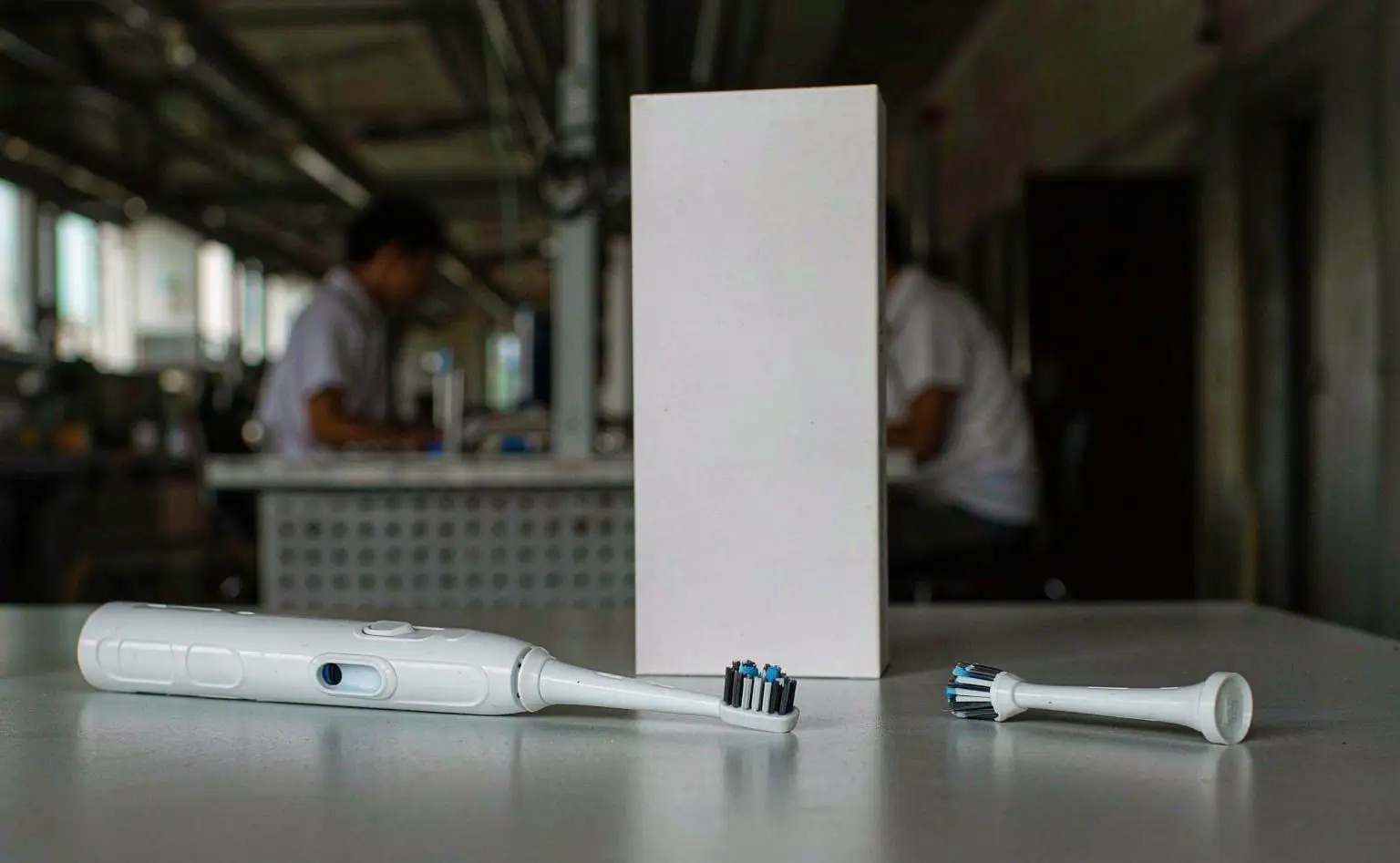
1. Where it starts: shell, silicone seal, brush head
The ABS shell comes last. ABS is smooth and takes up little water, so mould struggles to root on a clean surface; when a shell does fail it is release agent and oil left on it, not the material.
The silicone seal comes first. Button seals and base-cap seals sit in a damp environment, and silicone is a compounded material with plasticiser and curing residues in it. Mould works into the micro-porosity of the surface, and wiping cannot reach the root because the root is in the rubber.
The brush head comes second. There is a gap where the neck meets the metal shaft, and water sits at the base of the bristles. Packed in one box with the body, vapour from the head travels to the body and from there into the electronics bay.
So the work is three things: an additive inside the material, separation at packing, and gas-phase control inside the box.
2. The silicone seal: 0.8%-1.0% at compounding
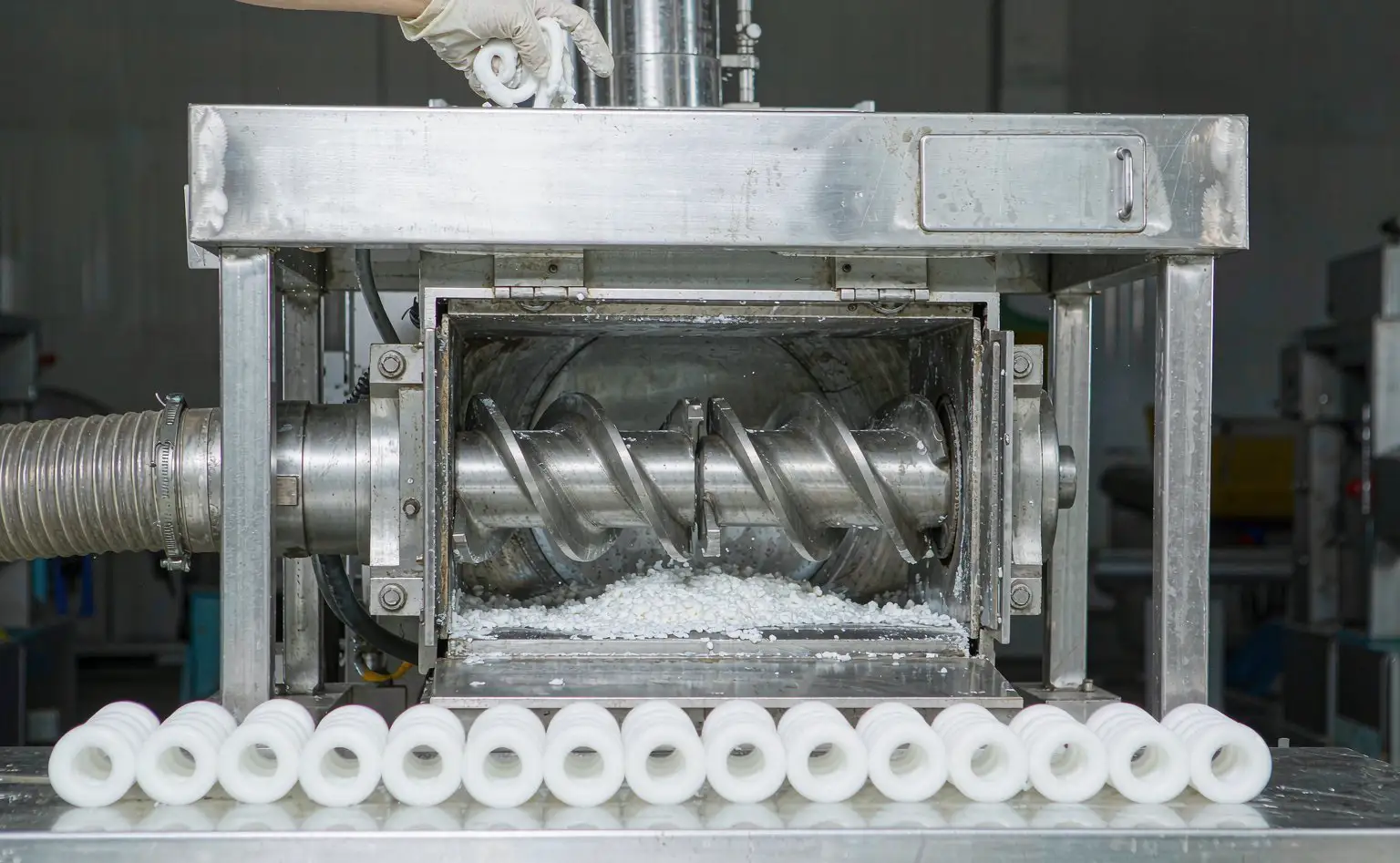
Dose on compound weight. iHeir-IPI001 goes in at 0.8%-1.0% of the total silicone compound, not of the finished part. Pale and translucent rings sit mid-range, dark and thick-section parts can take the upper figure.
Add it early in the mix. Put it in with the filler and the curing agent on the mill or in the internal mixer, then band the sheet 3-5 times so the powder distributes. Added at the end, the powder stays on the surface and wipes off after curing.
Judge dispersion on a sheet. Hold a thin sheet up to the light: white specks mean it has not dispersed, and in a ring with specks the agent sits in the specks while the rest carries nothing.
UV stability and colour. IPI001 is an inorganic zinc-ion system and is UV stable, so pale rings resist yellowing; the powder is white, though, so run a colour match on dark compounds before using the top of the range.
3. Shell and assembly: the gap is the real root
No additive in the shell, but control the residue. Release agent and polishing wax stay in the button slot and the base-cap thread, and both are organic. Wiping the slot with isopropanol before assembly does more than dosing the shell.
Seat the seal properly. A seal that sits crooked or is not compressed lets water through; leak-test at 0.3 bar after assembly and rework the batch that fails, because no additive stops water coming in.
Leave a vent in the electronics bay. A fully sealed body condenses vapour inside when the temperature swings; a vent membrane to the design gives the vapour an exit.
Control assembly humidity. Hold the assembly area below 60% RH and run a dehumidifier in the rainy season; let silicone parts stand four hours in the area before they go on the line.
| Part | Material | Product and level | Stage | Control point |
|---|---|---|---|---|
| Button and base seals | Silicone | iHeir-IPI001 0.8%-1.0% on compound weight | Early in the mix, banded | No specks, colour accepted |
| ABS body | Injection-moulded ABS | No additive | Wipe, assemble | No oil in the button slot |
| Brush head | Head and metal shaft | No additive | Sealed separately | Seal intact, not boxed with the body |
| Packing box | Carton and insert | iHeir-D 0.1-0.2 g per sheet | Sheet in the base before loading | Sheet off the charging contacts |
| Export carton | Outer carton | Sheets by box count | Packing | Barrier film inside |
One boundary. IPI001 handles the organisms in the compound, assembly handles the water in the gaps, gas-phase sheets handle the air in the box. A seal that is not seated defeats all three.
4. Body and head: pack them apart
Seal the head on its own. The head carries bristles and a metal shaft and is the part that holds water; seal it in a foil or laminate pouch with a crimped edge rather than staples.
Let the body breathe in the box. Do not sleeve the body in a closed bag before boxing; a sealed bag locks the vapour in and puts a film on the silicone seal within two days.
Separate compartments. Divide the box so body and head each have a bay; in one bay the head vapour lands straight on the body, and returns usually show mould on the head side first.
Let it settle before boxing. Leave finished units in the packing area for four hours or more so the body reaches room temperature; boxing straight out of the ageing room guarantees condensation.
5. Box sheeting: one per box, clear of the contacts
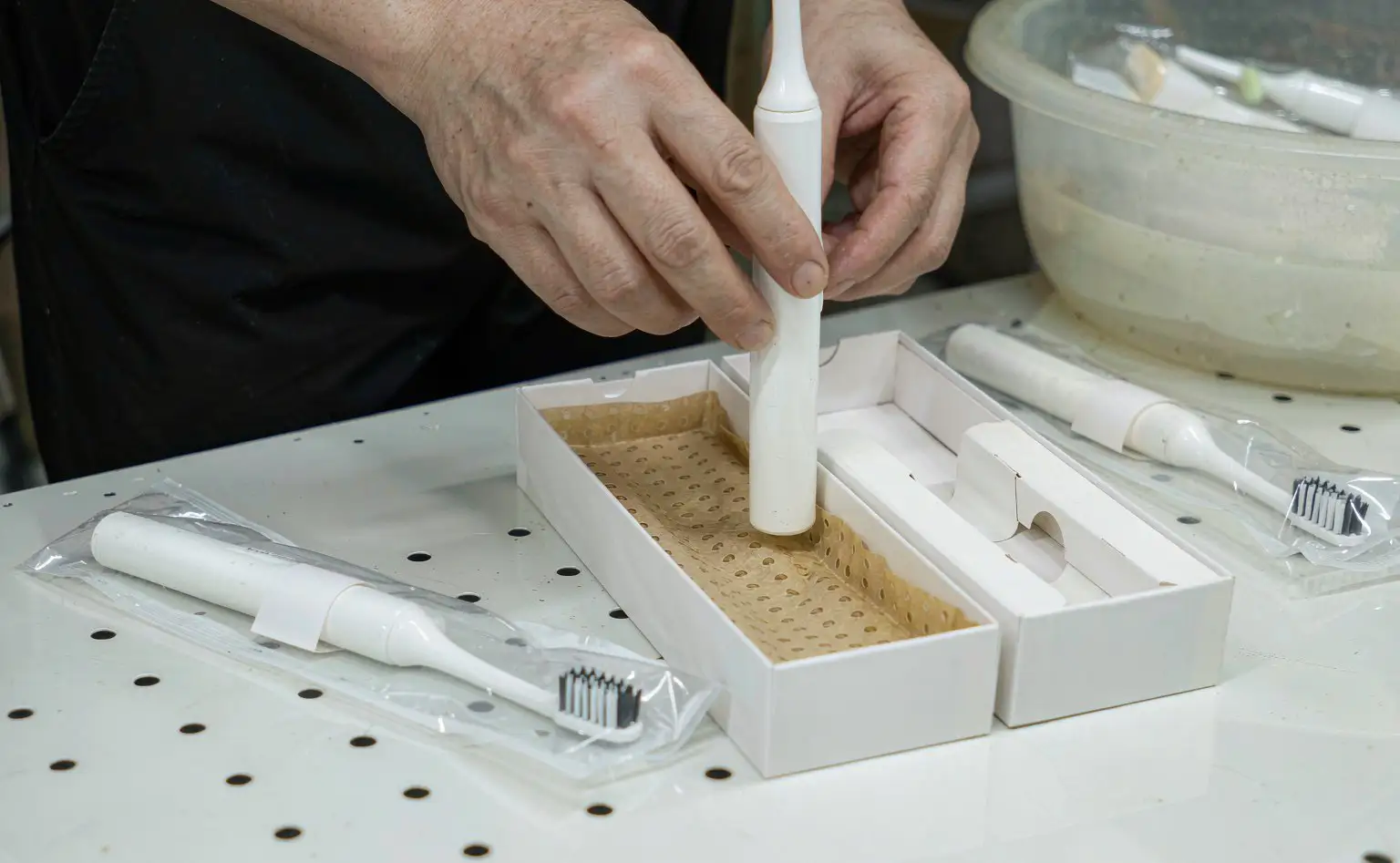
One sheet per box. Each iHeir-D sheet carries 0.1-0.2 g. A box with a large insert tray can take one more in the lid.
Sheet in the base, off the contacts. The charging contacts and the metal shaft sit at the bottom of the body, so put a card between sheet and contacts. The product page warns of corrosion on poor-quality metal parts under damp conditions, and dulled contacts are the first sign.
Run a compatibility test. Three times the normal rate, a little water, paper in between, closed for a few days, then check the silicone for discolouration and the contacts for dulling before the batch runs.
Carton and store. Sheets by box count, barrier film inside the carton, store below 60% RH with pallets 10 cm off the floor. Comparable work is in smart locks: housing and silicone keypad and phone holders: plastic body and silicone pad.
6. Questions from the line
Q: Does the antimicrobial survive washing?
A: IPI001 is an inorganic system dispersed in the compound rather than a surface coating, so normal use and wiping do not strip a layer. Once the rubber itself ages and cracks, performance falls with the structure.
Q: Should the ABS shell be dosed too?
A: Usually not. The shell is dry and takes up little water, and the mould starts at the seals and the gaps; the budget is better spent on the seal and the packing, while the shell needs its release agent removed.
Q: Does sealing the head separately add cost?
A: One more step and one more pack material, usually covered by the drop in returns; start with the mid and upper models and use compartment dividers on the rest.
Q: If there is a desiccant in the box, is the sheet still needed?
A: They do different jobs. Desiccant takes up vapour, the sheet handles organisms in the box air; on high-humidity routes use both, with the sheet in the base and the sachet in a corner.
Add 0.8%-1.0% iHeir-IPI001 on compound weight early in the mix and band 3-5 times until the sheet shows no specks; wipe release agent out of the button slot, leak-test the seals at 0.3 bar and leave a vent membrane in the electronics bay; seal the head separately, pack body and head in separate bays and let units settle four hours; put one iHeir-D sheet at 0.1-0.2 g in each box with a card over the contacts, after a compatibility test. Antimicrobial performance can be verified to ISO 22196 and GB/T 20944.3, and dosage detail is on the iHeir-IPI001 product page.


