




 View Count:11
 Date:2026-11-09
How is bookshelf mould handled? In two places: the shelves have to be soaked through and the back panel has to be dried. A shelf is a load-bearing part and moulds from the core outwards, while the back panel is thin MDF faced with paper, so any water left in it is sealed under the paper. The routine is a 1:40 bath, shelves soaked to 15%-20% weight gain in about 5-10 minutes, and the back panel dried to moisture spec before papering, using iHeir-M5 immersion type bamboo and wood fungicide. This article covers both controls.
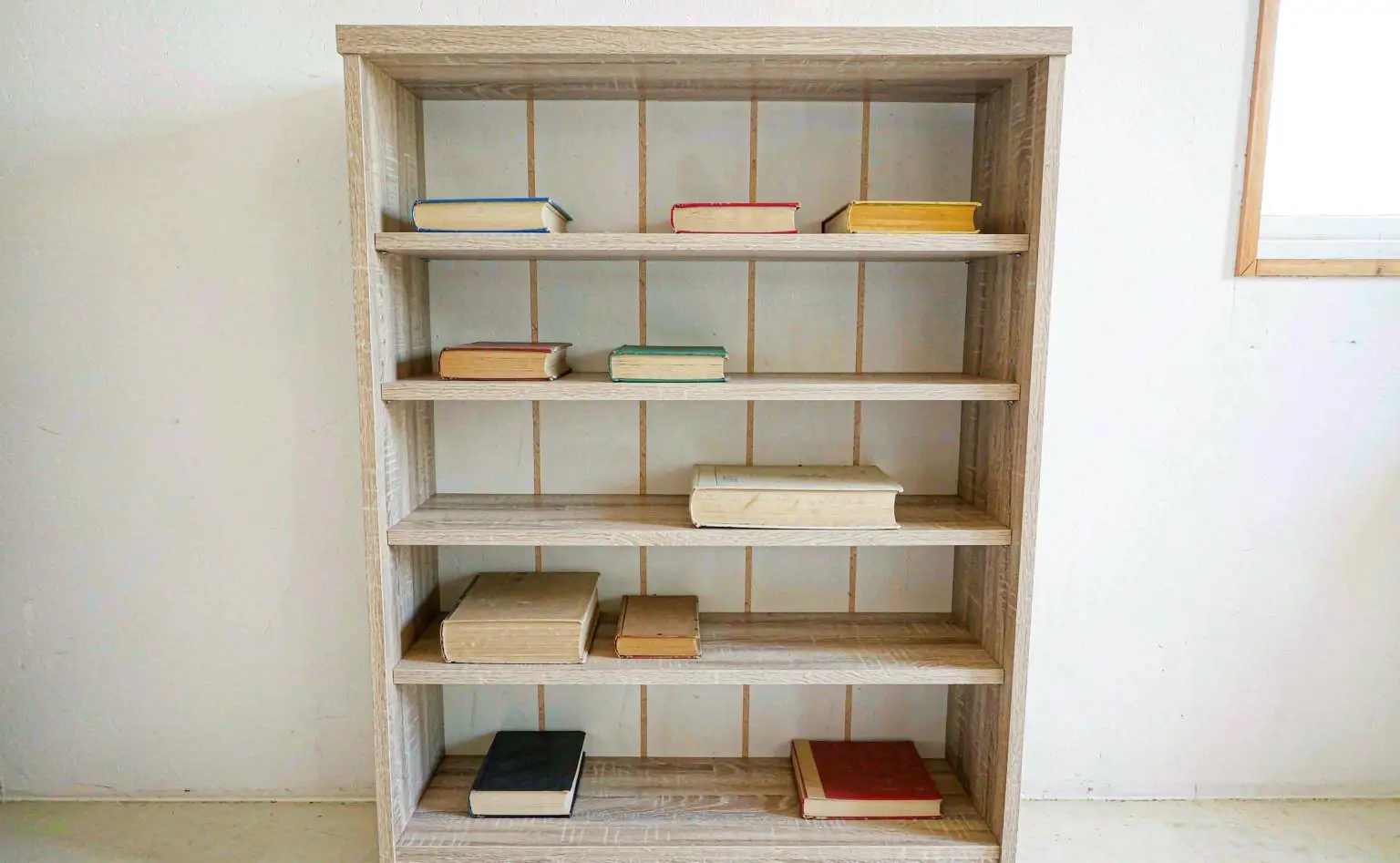
1. The back panel is thin MDF: papered over, it traps its own water
Take a bookshelf apart: shelves, sides, top and bottom, back panel and hardware. Shelves and sides carry the load, the back is a 3-5mm sheet of MDF, and mould behaves differently on the two.
On a shelf it starts in the core. A shelf is thick and load bearing, so moisture inside it escapes slowly. The core can be wet while the face looks dry, and by the time blisters appear on the surface and the edges darken, a whole area inside is gone.
The back panel is a sandwich. Thin MDF gets wood-grain or melamine paper on one face, and under the paper sits a layer of adhesive. Paper a board that is not dry and the water is sealed under paper and glue with nowhere to go. That mould shows as a patchy dark cloud bleeding through the paper, and it does not wipe off.
The back is against the wall. A bookshelf stands a few centimetres off the wall, the least ventilated gap in a room, and damp from the wall goes straight into the panel. That is why the back often spots before the shelves.
2. Shelves, sides and back take different controls
The table lines up the shelves, the sides, the back panel and the packing. Shelves are controlled by soak weight gain, the back by moisture content, with the same product and the same mix but two different measures.
| Part | Material | Treatment | Stage | Control point |
|---|---|---|---|---|
| Shelf | Glued solid wood, plywood | iHeir-M5 1:40 soak, 15%-20% gain | Whole board before cutting | Fully submerged, 5-10 minutes |
| Sides, top, bottom | Same as shelves | Same bath | Before cutting | End grain included |
| Back panel | 3-5mm thin MDF | Brush both faces, dry to moisture spec | Before papering | No long soak, avoid swelling |
| Paper and banding | Wood-grain, melamine paper | Full adhesive coat, no void | Papering, banding | Dry, flat board first |
One boundary. The soak handles the inside of a shelf and the drying handles the water left in a back panel before papering. Soak the shelves only and the back still clouds over; watch the back only and the shelf cores still mould. Do both and the unit lasts years.
3. Soaking the shelves to 15%-20% weight gain at 1:40
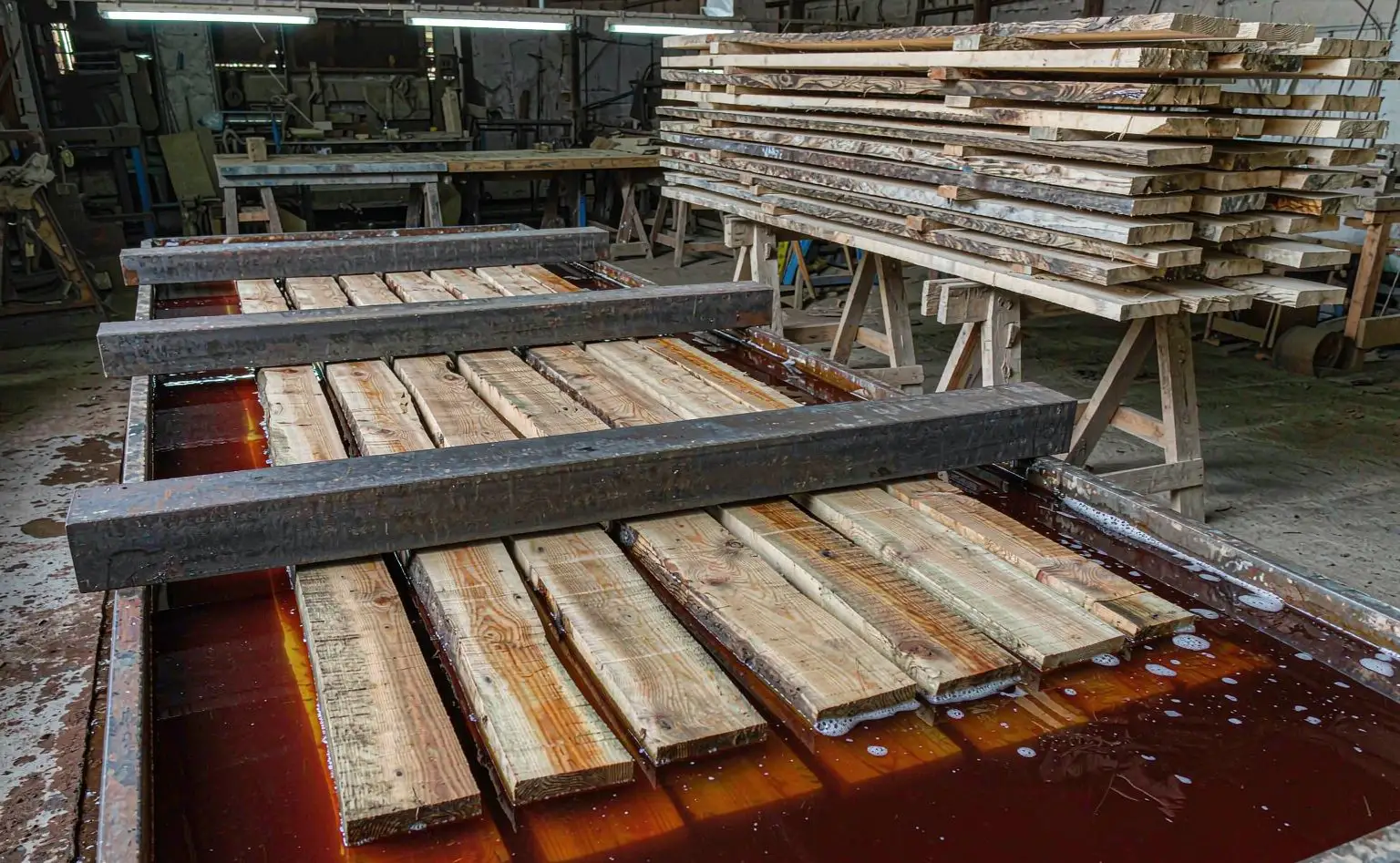
Mix at 1:40, five kilos of concentrate to a hundred kilos of water, and stir. A shelf carries load, so a half-done soak is a problem stored for later; the dosing target is 15%-20% weight gain, usually 5-10 minutes.
How to weigh it. Pick three shelves, weigh them dry, drip-dry after the soak and weigh again. The batch passes when all three land inside the band; if one falls short, extend the soak or check whether it was floating.
Everything has to go under. A board at the surface has an untreated band. Hold the load down with a grille or weight bar and leave space between boards. Shelves are long, so do not overfill the tank, because the middle pieces are the ones that ride up.
What cannot be soaked. Thin MDF and chipboard swell and never return to size, so the back panel and those substrates get both faces brushed instead. What can be soaked is glued solid wood, plywood and blockboard.
Tank and protection. iHeir-M5 is acidic and must not contact metal or be mixed with alkaline materials, so use a plastic tank and no bare steel weights. The concentrate is high in solids and sensitises some skin, so wear rubber gloves at the charging station and shake the drum before use.
4. Dry the back panel to spec before papering
The back panel’s problem is not a lack of treatment, it is papering before it is dry. Thin MDF gives up moisture slowly, and the face can feel dry while the core is still wet.
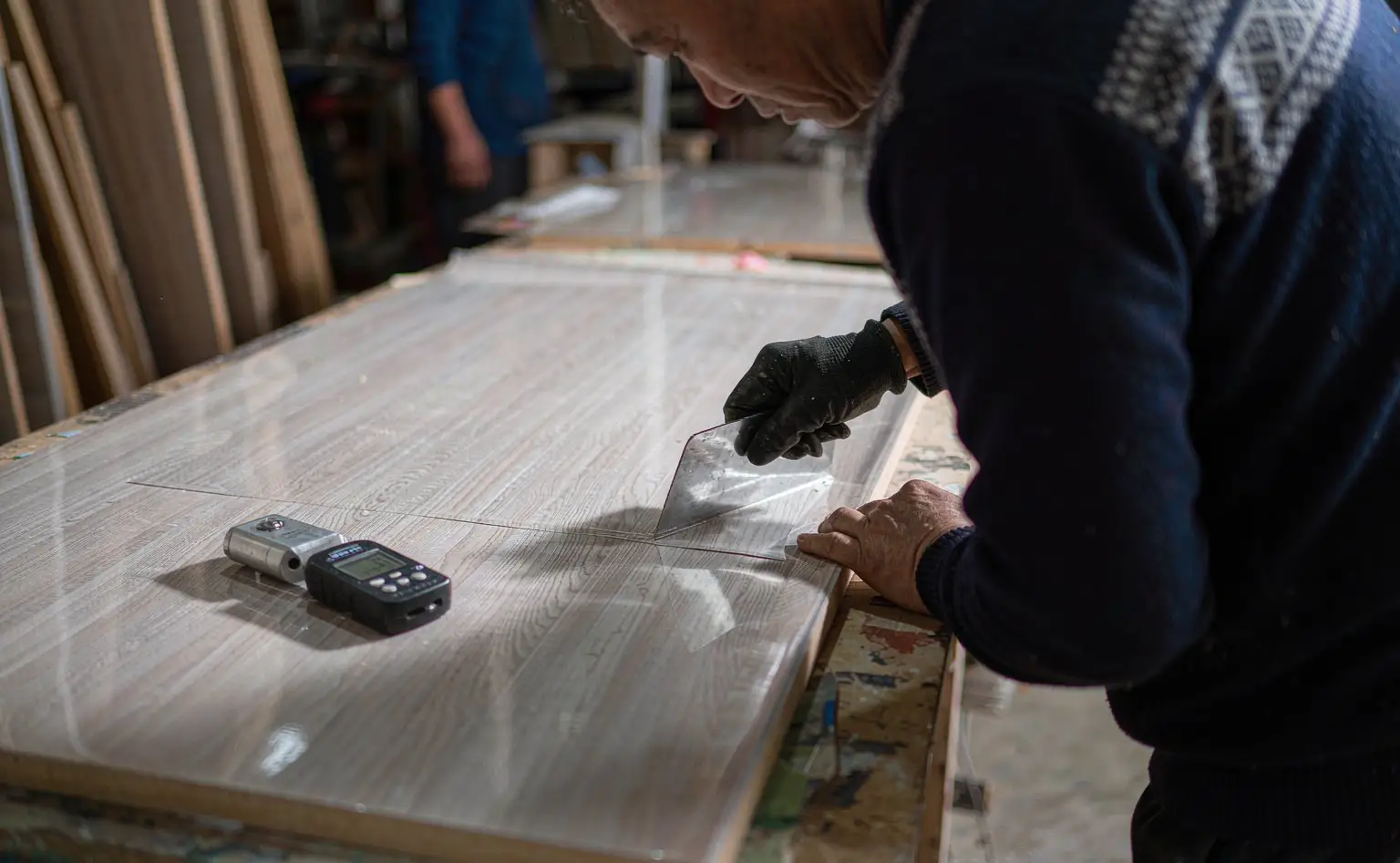
How to call it dry. Take readings with a hand-held meter at several points on both faces, at the edges and in the middle, and take the highest value; where in doubt, check a cut sample by oven method. Set the target by destination market and papering process, and record the batch figures on the route card for a customer audit.
What happens if it is not dry. The papering adhesive is water-borne and the paper itself carries moisture; add a wet board and three sources of water are sealed under one sheet. As the temperature rises the vapour pushes out, the paper blisters and dulls, and mould appears at the paper seams first.
How to dry it. A hot press or a drying room both work; what matters is time and thin stacks. A deep stack dries outside while the middle stays wet, so keep the stack shallow with air channels, let the panels cool after the dryer and only then paper them.
Brushing is an option too. A thin panel cannot be soaked, so brush both faces once with the same liquor and dry to moisture spec before papering. The coat does not need to be heavy, only even, with no pooling.
5. Stacking, storage and export
Stacking decides the outcome: stack tight in a damp corner and everything before it is lost.
Leave air channels. Stack shelves and back panels separately, with stickers aligned vertically, at least 10cm off the floor and 10cm off the wall. Back panels are thin, so do not stack them high enough to bow, because a bowed panel will not fit.
Control store humidity. Hold the finished store below 60% RH and run dehumidifiers through the wet season; on a floor that sweats, put a moisture barrier under the stack.
Export packing. Bookshelves usually ship knocked down with shelves and back panels packed separately. Before packing, check each shelf end and each papered face for darkening or blistering, use dry inserts, line the container and hang desiccant sticks. For panel furniture overall see office furniture that went mouldy, for the board side see treating mouldy boards, and for grading see the GB/T 24346-2009 method.
6. Questions on substrates, drying and cloud patches
Q: Can a chipboard shelf be soaked?
No. Chipboard and MDF swell and never come back to size, so those substrates get the cut edge and groove brushed instead. What can be soaked is glued solid wood, plywood and blockboard.
Q: Does the back panel have to go through a dryer, or can it air-dry?
Thin panels air-dry very slowly and the core stays wet, which is how wet panels get papered when a deadline is close. Use a dryer if you have one; if not, spread the panels with airflow and check moisture content piece by piece before papering.
Q: 15% or 20% weight gain?
Thin shelves, humid climates and long sea routes take 20%; thick boards and domestic work take 15%, verified by measured gain.
Q: The back panel already shows cloud patches. What now?
For light cases, remove the panel, strip the paper, dry it, re-brush and re-paper. If the cloud has reached the core and the panel has gone soft, replace it rather than mixing it into finished goods.
Four points to take away: mix at 1:40 and soak shelves and sides whole to 15%-20% weight gain in about 5-10 minutes, fully submerged, in a plastic tank away from metal and alkaline auxiliaries; brush thin MDF back panels on both faces with the same liquor and check moisture content at several points before papering, confirming doubtful readings by oven method; sticker stacks 10cm off floor and wall, hold the store below 60% RH and do not stack back panels high; grade mould resistance to GB/T 24346-2009 and check furniture to GB/T 3324 at the shelves and the papered faces. A kilogram of concentrate goes out for a trial, with MOQ on the iHeir-M5 product page.


