




 View Count:36
 Date:2026-10-14
Car soundproof cotton mould is hard to deal with because the cotton sits inside door cavities and underbody chambers where damp, once in, barely dries out, and it is the most common source of a musty smell in a finished vehicle. The PET cotton takes iHeir-PG composite nonwoven fabric antimicrobial agent padded at 20-40 g/L at pH 6-8, 70% wet pick-up and 100-170 degrees drying, while the acoustic foam takes iHeir-FP foam antimicrobial agent at 0.5%-1.5% on total foam weight. This article covers where each is dosed and the drying behind it.
1. Where the cotton sits is why it takes on moisture so easily
Soundproof cotton goes into door cavities, underbody chambers and behind the headliner. Those positions share three things: little air movement, steel on every side and a wide temperature swing. The car heats in the sun and cools at night, the steel surfaces condense moisture over and over, and the water works its way along the inner walls into the cotton. Cotton is porous, so once moisture is in, evaporation barely shifts it, and the part sits in a damp microclimate for the rest of its life.
There is more than one material involved. The common ones are PET cotton, a polyester nonwoven made by needling or thermal bonding, and acoustic foam in PU or EVA, and some parts laminate the two together. PET cotton is protected by adsorption onto the fibre, dosed in finishing; acoustic foam is protected by dispersion through the mix, dosed during foaming. They are not the same process, so treating them as one leaves one of the two short.
2. PET cotton and acoustic foam at a glance
The table lines up the material, the operation where the agent goes in, the figure or criterion and the points to watch, as a first draft of a process instruction.
| Material | Where it is dosed | Main measure | Figure or criterion | Points to watch |
|---|---|---|---|---|
| PET cotton, nonwoven | Finishing, by padding or dipping | iHeir-PG made up as a working bath and run on the padder | Padding 20-40 g/L; dipping 2-4% o.w.f. | pH 6-8 at room temperature; 70% pick-up, drying at 100-170 degrees; may be diluted 25-50 times for spraying |
| Acoustic foam | Foam mix preparation | iHeir-FP blended evenly into the mix | 0.5%-1.5% on total foam weight | Stable from pH 1 to 11 and stable to light and heat; stir before foaming |
| Laminating and curing | Laminating line | Humidity control, no additive | Relative humidity below 60% | Leave full curing time for moisture to leave; never roll or stack tight straight away |
| Assembly and vehicle store | Assembly and finished area | Humidity control, off-wall and off-floor stacking | Relative humidity below 60% | Keep the cavity dry and the finished vehicle will not go damp or sour |
The four rows divide cleanly: the first two build protection into the materials, the third handles the moisture of laminating and the fourth looks after the parts off the line. Miss any row and the problem returns.
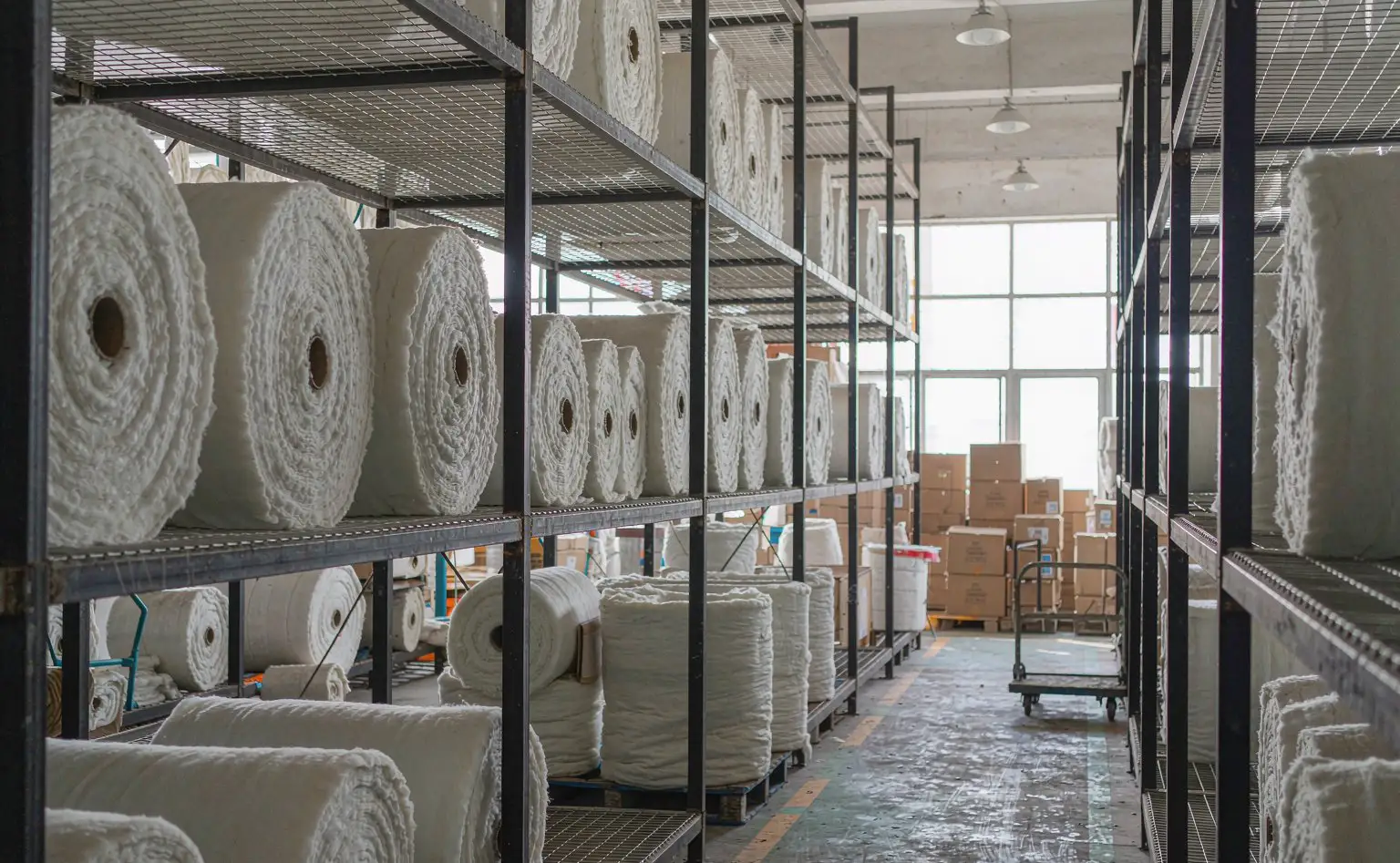
3. PET cotton: padded by concentration, dipped on dry fabric weight
The PET cotton takes iHeir-PG composite nonwoven fabric antimicrobial agent, and either route works. On a padder it is made up by concentration at 20-40 g/L, pH 6-8, padded at room temperature with 70% wet pick-up and dried at 100-170 degrees. In a dip trough it is metered on fabric weight at 2-4% o.w.f., pH 6-8, 50 degrees for 20-30 minutes, then dewatered and dried. Where a padder is not practical on the line, PG can also be diluted 25-50 times and sprayed evenly over the cotton.
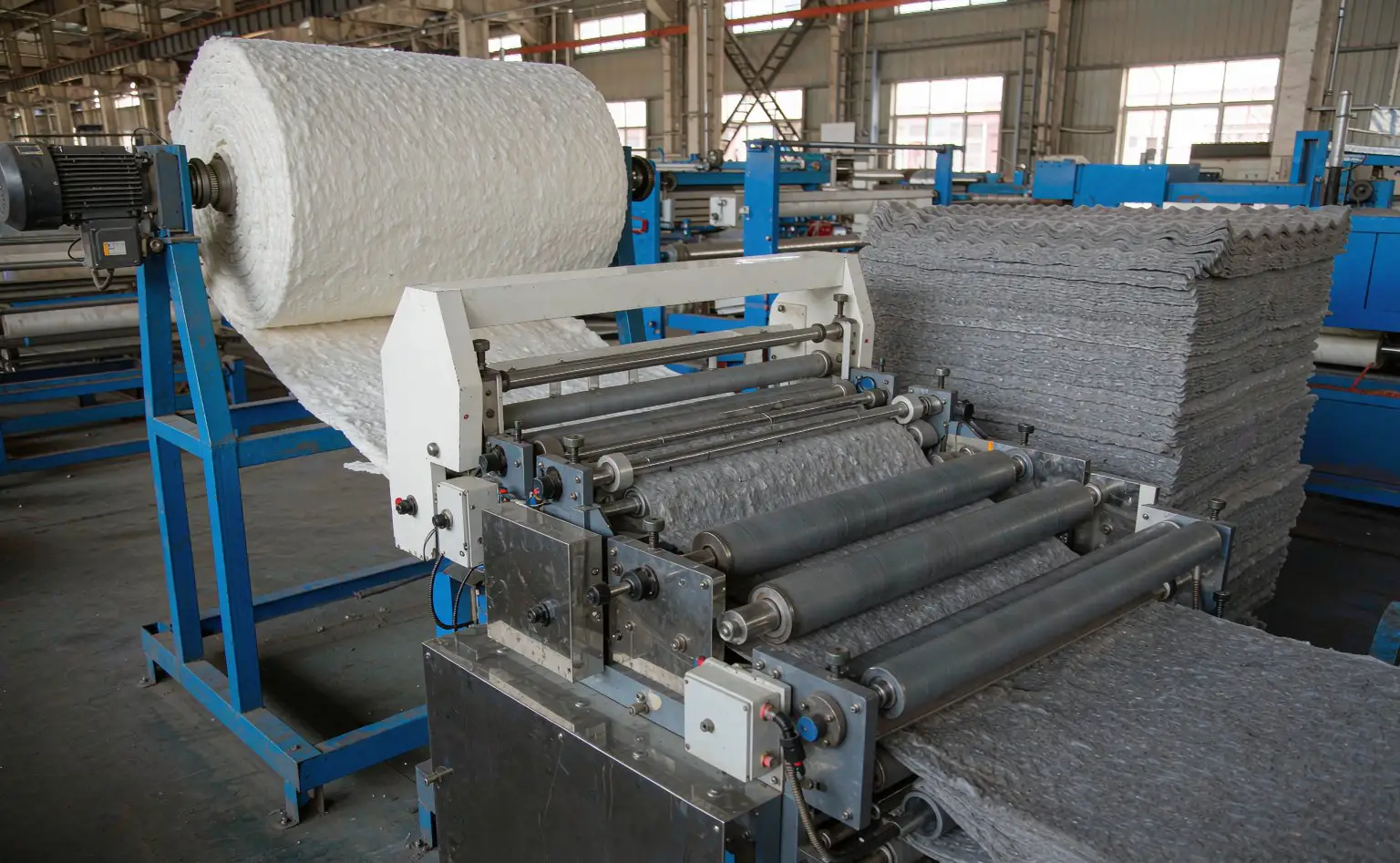
A nonwoven differs from a knitted fabric: the bath travels mainly by penetration rather than along the channels between yarns, so roller pressure and line speed have to be set together. Too little pressure carries too little liquor and the middle of the batt never sees the agent; too much leaves the pick-up so low that the surface is loaded while the interior stays empty. Cut a section to check: penetration should be even through the thickness rather than on the two faces only.
Drying decides the outcome as much as dosing does. PG bonds covalently to hydroxyl and amino groups on the fibre, and that bond is established by drying temperature and time; run it too cool or too fast and the bonding is incomplete, so washing and later processing take the effect away. It has no adverse effect on the whiteness, shade, strength or handle of the fabric, and it stores at room temperature with a shelf life of one year.
4. Acoustic foam: agent in the mix, on total weight
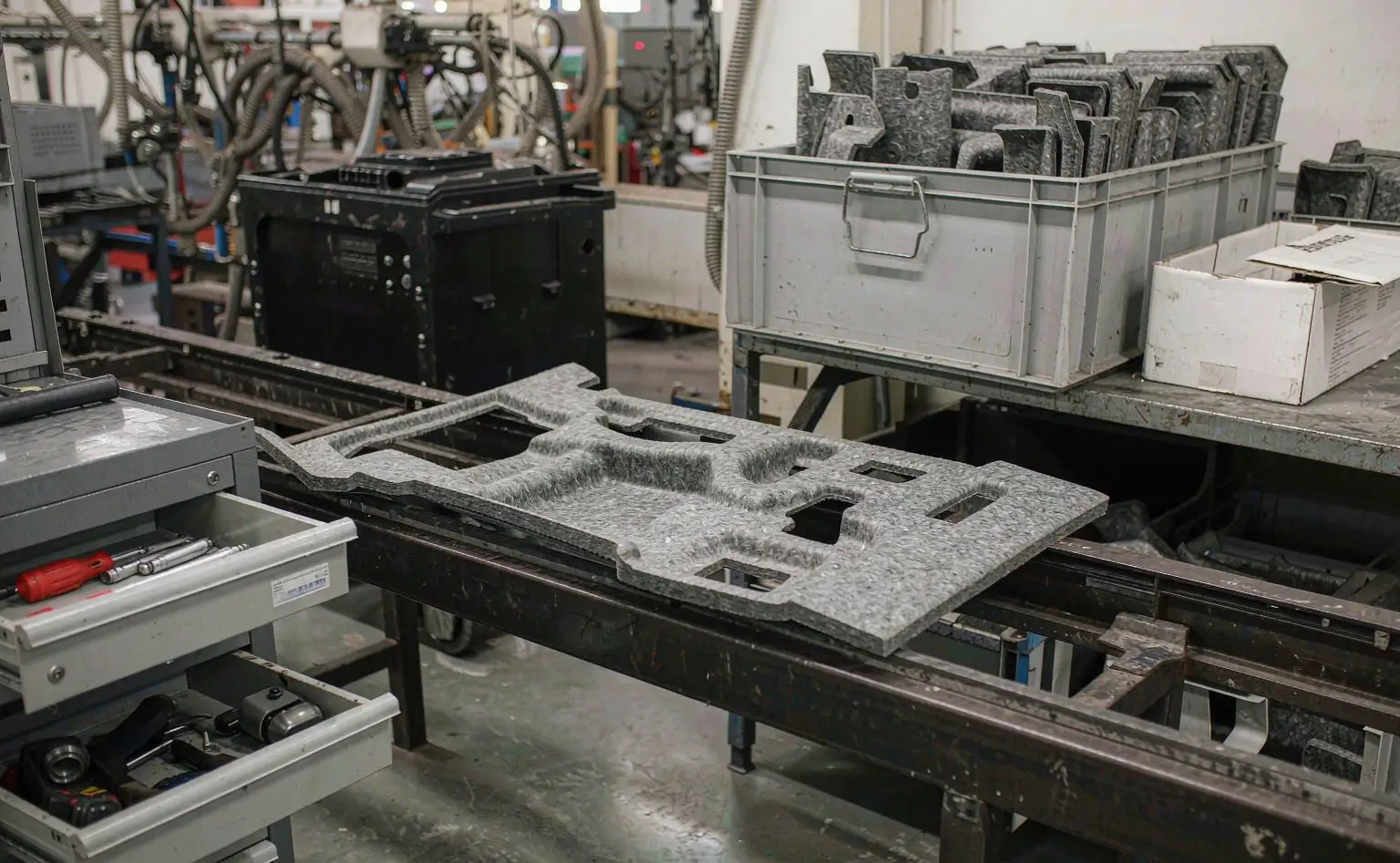
The acoustic foam takes iHeir-FP foam antimicrobial agent at 0.5%-1.5%, calculated on total foam weight. It is stable across pH 1 to 11, stable to light and heat, stores cool and dry, should be resealed promptly after use, and ships in 25 kg packs.
Timing is easier to get wrong than the figure. The right place is the mix preparation stage before foaming, blended with the polyol and the other components and then reacted; add it late and the mix has already started reacting, so the distribution is uneven. Foaming ratios vary, so a figure calculated on total weight has to be rechecked for each formulation rather than carried across part numbers.
Coverage needs headroom on a porous part like this: the internal surface area of a foam is far larger than its outside dimensions suggest, so a loading pressed to the bottom of the range leaves too little coverage for a damp environment. Where a part laminates foam with PET cotton, both stages are required on their own basis.
5. Laminating, assembly and vehicle storage: a wet cavity never dries
Once both stages are dosed, laminating and storage decide the yield. Hold humidity down at the laminating and curing stage. The adhesive carries no additive of its own but is the site most often overlooked, and batches where the cotton passes and the glue moulds first are common. Keep relative humidity in the laminating area below 60%, allow the full curing and drying time in the process, and do not roll or stack parts tight as soon as they come off the line: let moisture leave the adhesive and the cotton before assembly.
Judging whether the moisture has gone is a matter of moisture content, not of feel: sample the cotton parts per batch and keep the reading in the log. Assembly started before the moisture content has come down seals the water inside the cavity. The workshop side of handling rolls is set out in the note on mould on nonwoven rolls in the workshop and the warehouse.
6. Questions that come up: surface spraying only, and washing durability
Is spraying a finished part on the surface enough? Not as the main route. During assembly the part is pressed into the cavity against the steel, so an uncured treatment layer is rubbed off; and the full thickness of the cotton is a working surface, which a surface spray never reaches, so moisture entering from the edges moulds it anyway. Spraying suits a line where a padder is not practical, provided the product is diluted 25-50 times and dried thoroughly.
Does washing take the agent out? No. PG bonds covalently to the fibre rather than working by leaching, so normal washing does not rinse the active ingredient away. Durability still varies with washing conditions and the number of cycles, so a wash-durability test before volume production is worth running to establish the relationship between cycles and performance.
Two points carry the work. The PET cotton takes iHeir-PG composite nonwoven fabric antimicrobial agent padded at 20-40 g/L at pH 6-8 and 70% pick-up with drying at 100-170 degrees, or dipped at 2-4% o.w.f. on fabric weight. The acoustic foam takes iHeir-FP foam antimicrobial agent at 0.5%-1.5% on total foam weight, stirred into the mix before foaming. Laminating and assembly then hold relative humidity below 60%. Samples and TDS are available to check the configuration.


