




 View Count:38
 Date:2026-10-14
Trunk mat mould almost always starts in the middle layer: the fabric face looks clean while the back of the foam has already spotted. The foam takes iHeir-FP foam antimicrobial agent at 0.5%-1.5% on total foam weight, and the fabric face takes iHeir-BJ textile mildew inhibitor at 2-3% o.w.f. on dry fabric weight. This article explains why the two layers are dosed apart, how much each takes, and what to watch in vehicle assembly and in storage.
1. Why a trunk mat starts moulding from the middle layer
The mat is a sandwich: a fabric or suede-like face on top, a rubber-plastic foam in the middle and a non-slip backing underneath. The foam is closed or partly closed cell, so it does not soak up much water directly, but the cells inside breathe as the temperature moves, expanding in the heat of the day and contracting at night and drawing moisture in. Once in, it does not come out easily, because the fabric face above it blocks the way.
The boot of a car is also a good place for damp to build. Wet loads, umbrellas and raincoats put in and out on rainy days, and residual water after washing are all routine, and once the lid is shut the air inside barely moves. The interface between the foam and the fabric is therefore the classic starting point: nothing shows on the outside, and a patch only appears when the mat is lifted.
So the order runs from the foam to the fabric, and the two are dosed in completely different operations: the foam while it is made, relying on even mixing of the liquid components, and the fabric in finishing, relying on fibre adsorption. Mix the two up and the usual outcome is a treated face with an untreated foam core that goes mouldy anyway.
2. Foam layer and fabric face at a glance
The table lines up the layer, the material, the operation where the agent goes in, the figure and the points to watch, as a first draft of a process instruction.
| Layer | Material | Where it is dosed | Figure or criterion | Points to watch |
|---|---|---|---|---|
| Foam layer | PP / PE / EVA / PU foam | Into the foam mix, ahead of foaming | iHeir-FP at 0.5%-1.5% on total foam weight | Stable between pH 1 and 11 and stable to light and heat; stir the mix before foaming |
| Fabric face | Polyester suede / nonwoven face | Finishing bath or padding trough | iHeir-BJ at 2-3% o.w.f. on dry fabric weight | Bath at 21-50 degrees, pH 4.5-8.5; premix with 9-13 times its weight of water and add in portions |
| Laminating and curing | Adhesive layer and composite | Humidity control, no additive | Relative humidity below 60% | The adhesive layer is a mould site too; allow full curing before rolling tight |
| Assembly and storage | Finished mats | Humidity, stacking and packing | Relative humidity below 60% | Finished mats never on the floor or against a wall; carton and container handled separately for exports |
Four rows make the division of work clear: the first two are two different dosing lines, and the last two are the humidity control that holds the result. Miss any row and the problem shows after assembly or when the customer opens the carton.
3. The foam layer: agent into the mix, on total foam weight
The foam layer takes iHeir-FP foam antimicrobial agent at 0.5%-1.5%, calculated on the total weight of the foam plastic rather than on the finished mat. It is a colourless to pale yellow liquid with no odour, stable and active across pH 1 to 11, stable to light and heat, with a peak antimicrobial rate of 99.99%. Store it cool and dry; the pack is 25 kg.
Where it goes in and how well it is stirred decide whether the job is done at all. The correct place is the mix preparation stage, before foaming, blended with the polyol and the blowing agent until even and then foamed. Add it later and the mix has already begun to react, so the agent is unevenly distributed. And do not work to the bottom of the range to save cost: a foam is a closed-cell structure and the agent has to cover the internal cell surfaces, so a low loading leaves too little coverage and fails after a spell in damp conditions.
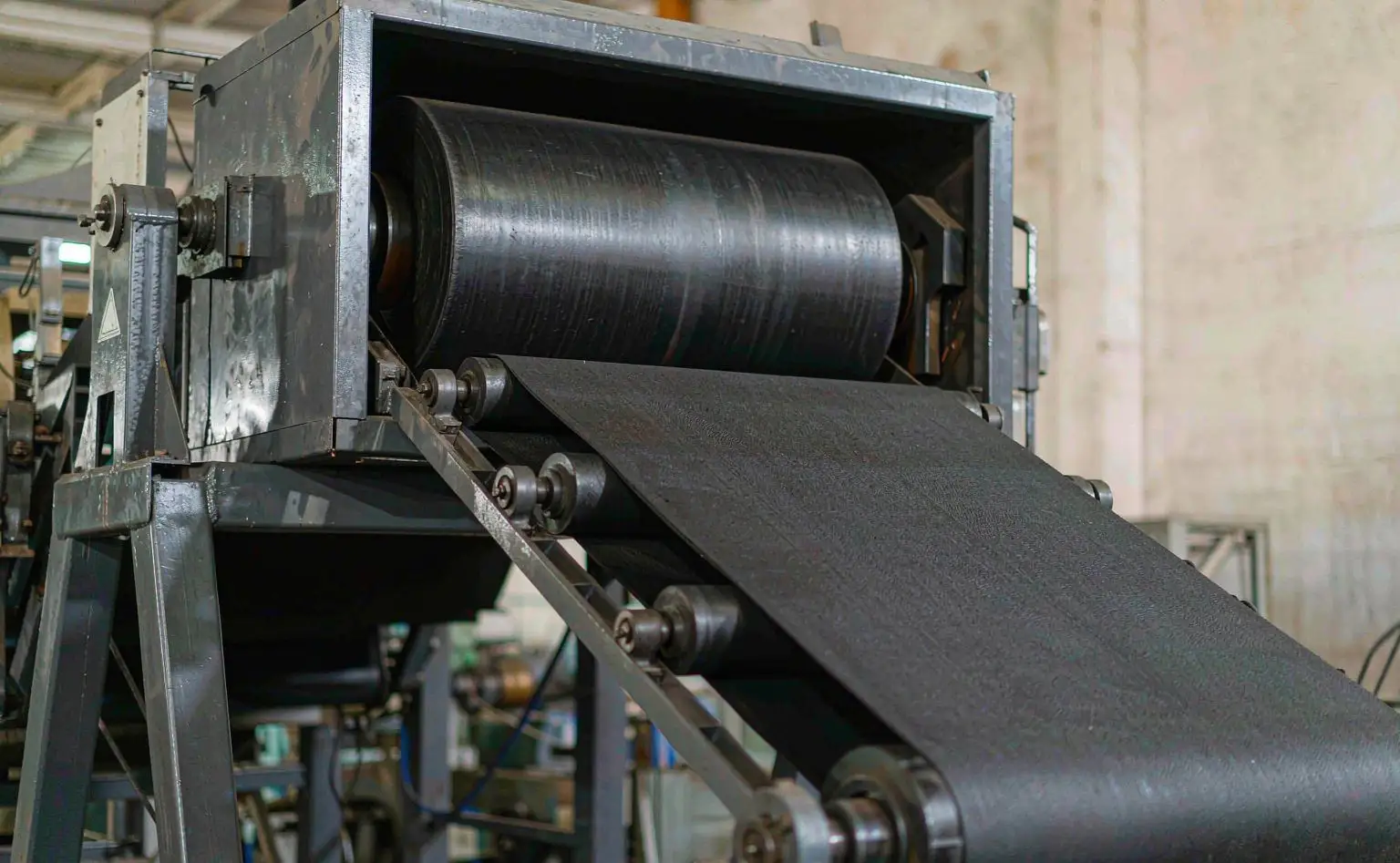
4. The fabric face: BJ on dry fabric weight, in the finishing or padding bath
The fabric face takes iHeir-BJ textile mildew inhibitor at 2-3% o.w.f., calculated on dry fabric weight rather than bath weight. The active content is 8.0% or more, the bath runs between 21 and 50 degrees at pH 4.5 to 8.5, and it is diluted with pure water and added to the finishing bath, or premixed with 9 to 13 times its weight of water and added in portions.
How it is diluted matters particularly here. The product works by adsorption onto the fibre, so tipping a whole drum into the bath at once leaves local concentrations high, the fibre takes it up unevenly, and a single roll comes out with differences in shade or handle. The quantity can be worked back from the ratio: 3 kg of the inhibitor treats 100 kg of fabric at a pick-up of 70%.
Check the ionic character of anything sharing the bath. BJ is a cationic system and must not run in the same bath as anionic auxiliaries. The usual sequence is to prepare the bath in pure water at pH 4 to 6, add 0.1% cationic wetting agent (70 g per 100 kg of water), then add BJ, and load the fabric last.
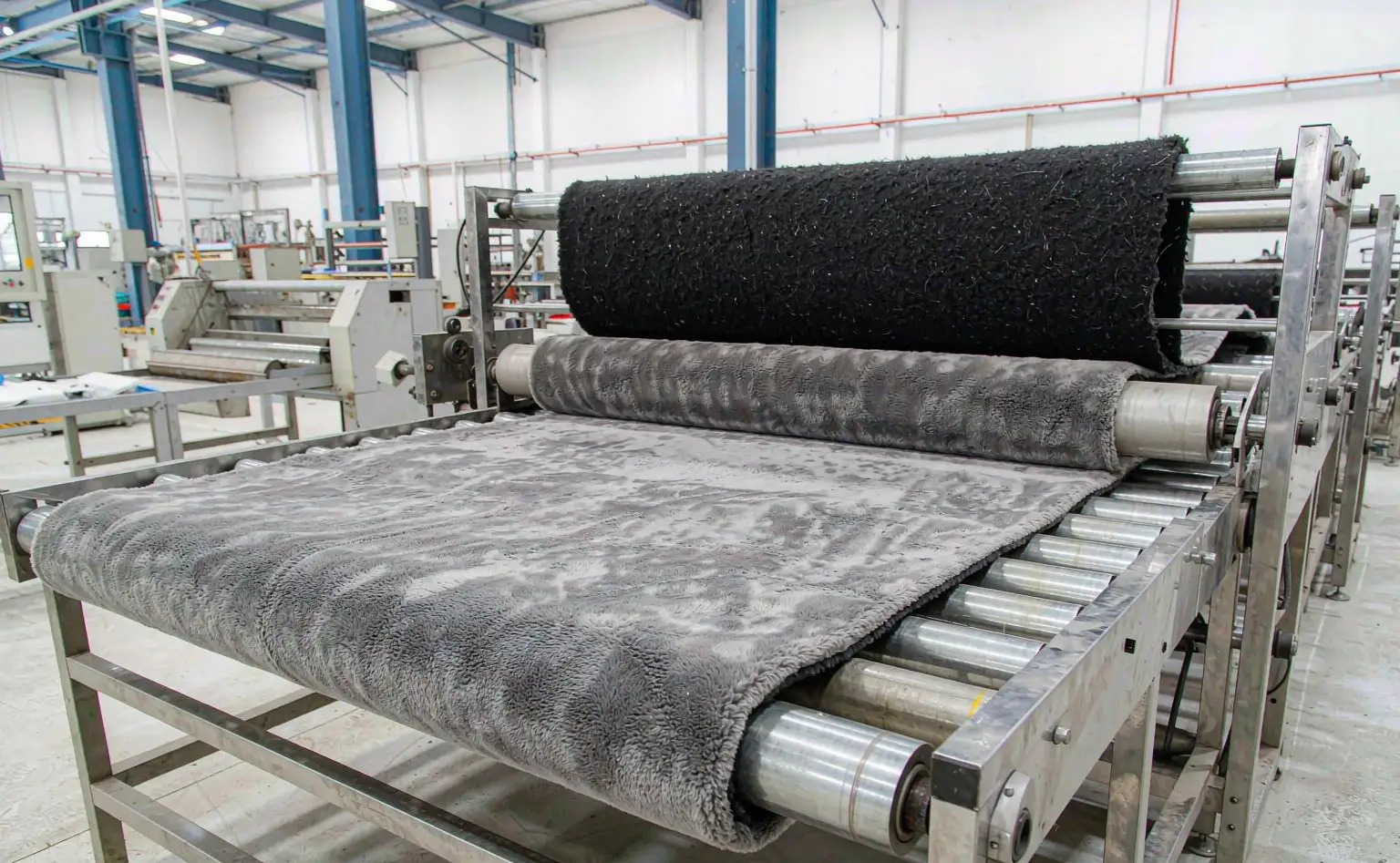
5. Laminating, assembly and storage: keeping the protection in place
Once both layers are dosed, two further operations can waste the work. The first is laminating and curing: the adhesive carries no additive of its own, but the adhesive layer is the mould site most often overlooked, and batches where the fabric passes and the glue moulds first are not rare. Hold relative humidity in the laminating area below 60%, and let the composite cure fully before rolling or stacking it tight. The second is rolling and stacking: finished rolls should not sit on the floor or against a wall, so stack off the wall and off the floor and ship first-in first-out.
Vehicle assembly adds another layer of exposure: once a mat is fitted, the humidity inside the vehicle influences storage and export downstream. For lots that ship as complete vehicles, hold humidity on the assembly line, in the finished-vehicle store and at the packing and container stages together, as set out in the note on mould in automotive interiors, mats and seats.
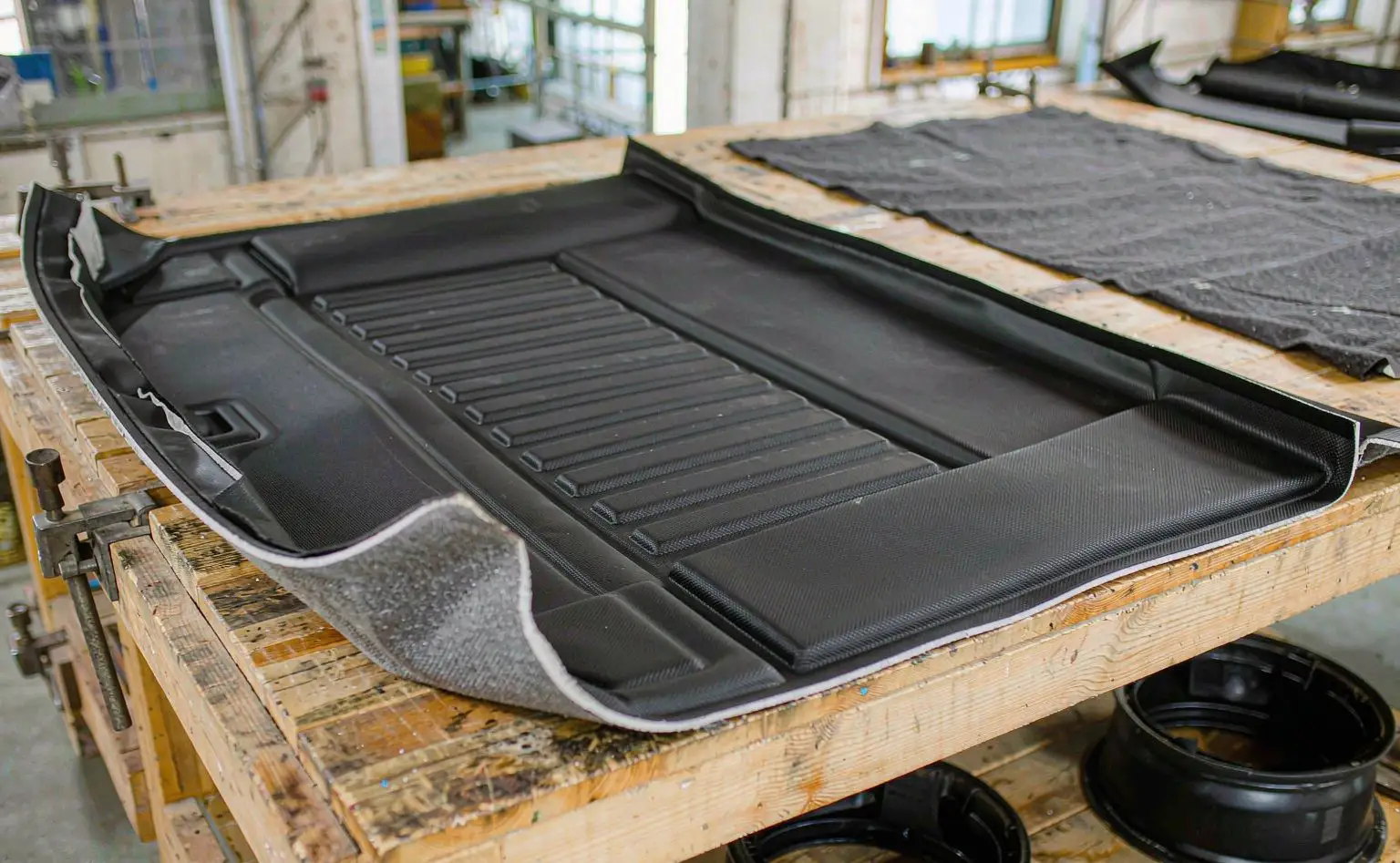
6. Questions that come up: face treatment only, and whether damp mats can be reworked
Is a sprayed treatment on the fabric face enough? Not advisable. A surface spray stays on the outermost layer, and assembly, foot traffic and cleaning take it off quickly, while the foam underneath has no protection and moulds again as soon as it goes damp. The agent belongs in the material, at the foaming stage and in finishing.
Can mats that have already gone damp and spotted be reworked? It depends where the mould is and how deep. Where it is confined to the fabric face, clean it and re-run the finishing treatment on dry fabric weight, then dry it thoroughly. Where it has reached the foam and the adhesive, cleaning only addresses the surface and hyphae remain inside the cells and grow again, so those lots are better isolated and downgraded or scrapped. Reworked parts must be dried right through, or rolling them up again seals the water back in.
Two points carry the work. The foam layer takes iHeir-FP foam antimicrobial agent at 0.5%-1.5% on total foam weight, stirred evenly into the mix before foaming. The fabric face takes iHeir-BJ textile mildew inhibitor at 2-3% o.w.f. on dry fabric weight in a bath at 21-50 degrees and pH 4.5-8.5. Laminating and storage then hold relative humidity below 60%, so the work done at both stages stays in the mat. Samples and TDS are available to check the configuration.


