




 View Count:21
 Date:2026-11-07
How is door mat mould handled? The pile and the rubber backing are two materials, and one pass will not cover the other: the pile takes the water walked into it and the backing seals that water in, so a roll that sits a fortnight smells. The routine is iHeir-BJ textile mildew inhibitor at 2%-3% o.w.f. in the finishing bath, plus iHeir-JS glue mildew inhibitor at 1%-2% of adhesive weight in the backing compound. This article covers both doses, the drying step and the regain limit.
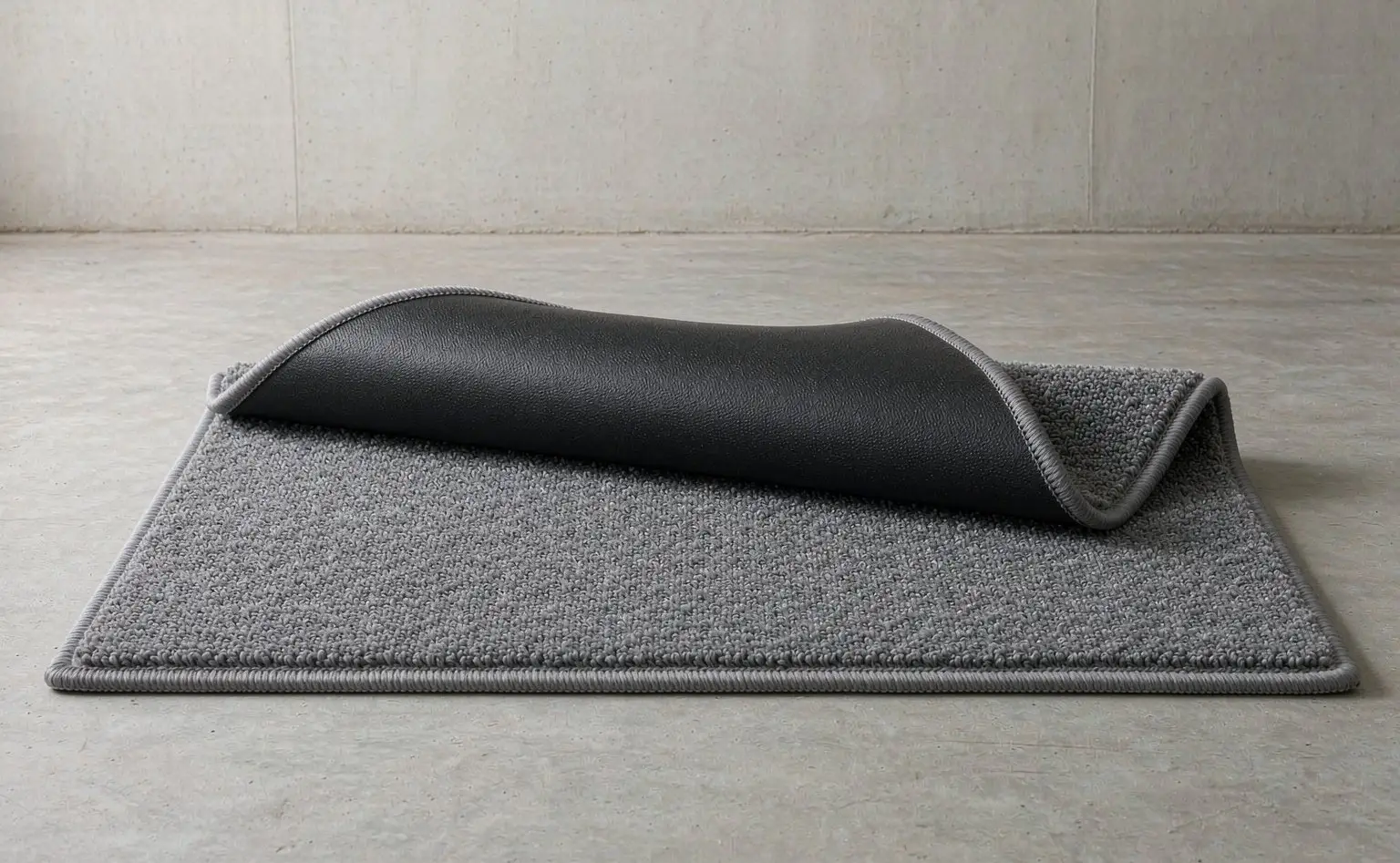
1. The pile takes water, the backing seals it in
Take a door mat apart: pile fibre in polypropylene, polyester or nylon, a backing cloth, the adhesive layer, the anti-slip pattern, the binding. Plastic fibre and rubber do not feed mould; what fails is the dirt and water held between the fibres, and the water-based adhesive in the backing.
The pile is a reservoir. A tufted or needle-punched structure is mostly void, and water walked in or left from washing sits at the fibre roots. In a poorly ventilated store that water takes days to leave, mould starts at the root, and the face still looks clean while the back is black.
The backing is a lid. A water-based adhesive seals the backing cloth once it films, so water goes in from the top and cannot leave from below. Unreacted monomer and auxiliaries in the adhesive then act as nutrients, and the interface between adhesive and cloth fails first.
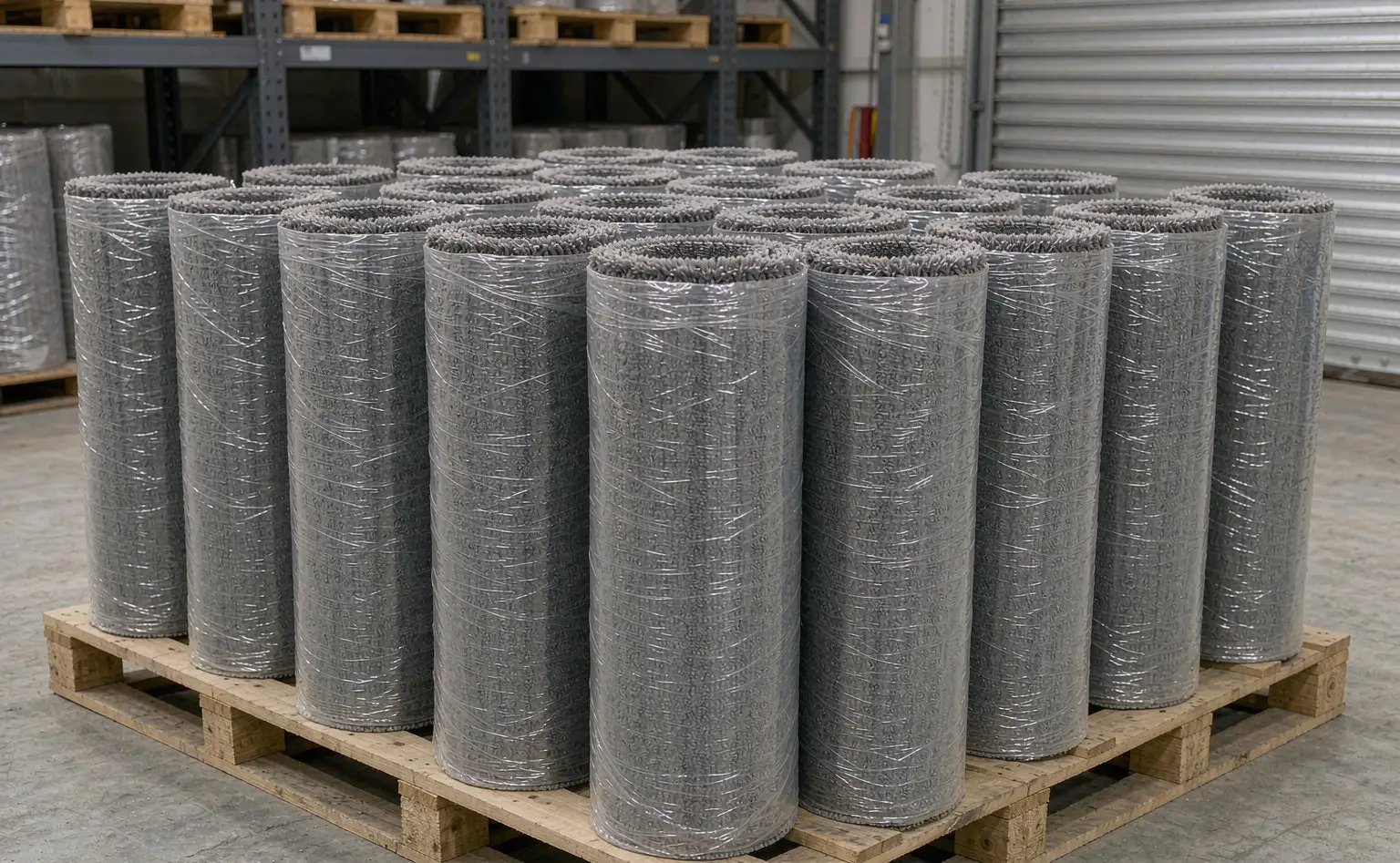
Rolling locks the water in the core. Mats ship rolled, and the middle wraps are the tightest and least ventilated. Roll a mat that is not dry and the water stays in the core until the customer opens it.
2. Pile and adhesive take separate counts
The table lines up the pile, the backing cloth, the adhesive and the roll. Fibre is counted in o.w.f., adhesive as a percentage of adhesive weight, and the two are not interchangeable.
| Part | Material | Product and level | Stage | Control point |
|---|---|---|---|---|
| Pile fibre | PP, polyester, nylon | iHeir-BJ 2%-3% o.w.f. | Finishing bath after dyeing | 21-50℃, pH 4.5-8.5 |
| Backing cloth | Polyester nonwoven | iHeir-BJ in the same bath | Shared bath | Wet pickup held at 70% |
| Water-based adhesive | SBR or natural latex | iHeir-JS 1%-2% of adhesive weight | Compounding, coating | Adhesive pH 6-7 |
| Roll | Finished mat | No anti-mould treatment | Drying, rolling | Regain within spec before rolling |
One boundary. BJ handles the fibre and the backing cloth, JS handles the organisms inside the adhesive. Do the pile only and the adhesive still sours; do the adhesive only and the water at the fibre roots stays.
3. The pile through the bath at 2%-3%
Dyed matting goes into the finishing bath and is padded at 2%-3% o.w.f.. A door mat is walked on wet and washed often, so take the 3% figure; a light indoor mat can run at 2%.
Bath conditions. 21-50℃ and pH 4.5-8.5, ideally 6, in softened water. PP and polyester take up little water, which makes pickup hard to hold, so keep it at 70% and keep mangle pressure and line speed steady.
How to add it. Pre-mix with 9-13 times its own volume of water and add slowly. Matting is usually softened and anti-static treated, and anionic systems cancel BJ in the same bath, so confirm the ionic type and split the baths where needed.
Dry it properly. Matting is heavy and carries a lot of water, so drum temperature and line speed follow the grammage. Measure regain as the mat leaves the dryer, because adhesive laid on damp pile seals that water inside for good.
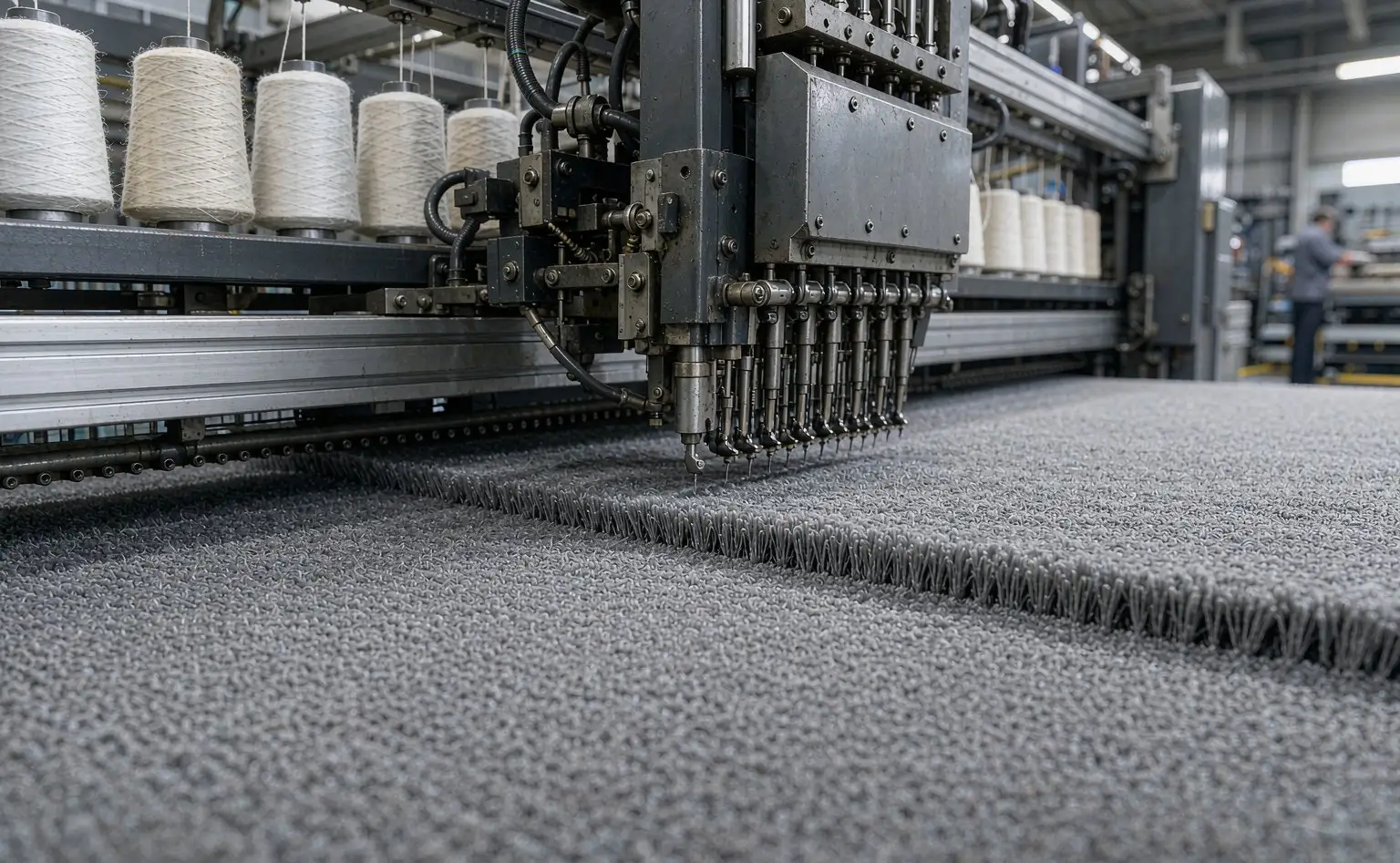
4. JS in the backing adhesive at 1%-2%
Dose iHeir-JS glue mildew inhibitor during adhesive compounding at 1.0%-2.0% of the adhesive weight. It is a broad-spectrum grade that holds bacteria and fungi together, at 45% active matter, pH 6-7 and 3cps viscosity at 25℃, compatible with water-based systems and free of formaldehyde and formaldehyde releasers.
Where in the process. Add after the latex and fillers are dispersed and before coating, with slow agitation for 10-15 minutes. Do not add it alongside a strongly alkaline auxiliary, because a pH above 9 weakens the effect, and keep the adhesive at ambient temperature.
Which level. Standard mats run at 1.0%; a thick backing, a filler-heavy compound or a buyer asking for an antimicrobial claim takes 2.0%. A door mat lives in water, so work at the upper figure instead of iterating in the middle.
Coating and cure. Hold the coat weight to the grammage and cure in the tunnel to the adhesive recipe. An under-cured layer stays tacky, picks up dust and takes water, and no inhibitor will save that.
5. Dry before rolling, and watch the core temperature
A mat has to be dry before it leaves. Measure regain before rolling, with matting generally taken below 8%, and let a roll that has just left the dryer stand until the core is near room temperature before bagging, because a warm roll in a bag condenses.
How to roll. Roll without over-tensioning and leave a little air in the core; an interleaving sheet between the outer wraps helps. Label the roll with the batch and the measured regain so the customer has a number to work from.
Storage. Rolls stand upright rather than stacked flat, the store stays below 60% RH with dehumidifiers in the wet season, and pallets stand 10cm off the floor and off the wall. First in, first out, so no roll sits in a corner through a wet season.
How to verify. Grade mould resistance to GB/T 24346-2009 and hold a whole roll 30 days at 30℃/85% RH before unrolling it. An antimicrobial claim on the adhesive goes to ISO 22196 or GB/T 21866 at the laboratory the buyer names. The pass order for tufted carpet follows the same logic.
6. Questions on pile, adhesive and washing
Q: If the pile is treated, does the adhesive still need it?
Yes. Two materials and two microbiological environments, and the water-based adhesive is itself a nutrient source; untreated, the interface between adhesive and cloth fails first.
Q: Does JS affect bond strength?
At 1%-2% dispersed during compounding the effect is small; over-dosing slows the cure, so run a sample and check peel strength before scaling.
Q: Does the protection survive washing?
A 3% treatment with a proper dry outperforms 2% by a clear margin on wash cycles; the bigger risk is not washing but stacking wet.
Q: What do you do with mould in the core?
Light cases are unrolled, ventilated, brushed, dried and rolled again; spots that have reached the interface with a tacky adhesive are downgraded and never mixed into a good roll.
Four points to take away: pad the pile at 2%-3% o.w.f. of iHeir-BJ at 21-50℃ and pH 4.5-8.5 in soft water, pre-mixed with 9-13 times water, pickup at 70%, anionic auxiliaries split off; dry through and check regain before the coating line; dose iHeir-JS at 1%-2% of adhesive weight during compounding at pH 6-7 and cure the coating properly; keep regain below 8% and let the core reach room temperature before bagging. Grade to GB/T 24346-2009 and hold a roll 30 days at 30℃/85% RH. A kilogram of each product goes out for a trial, with MOQ on the iHeir-JS product page.


