




 View Count:63
 Date:2026-09-28
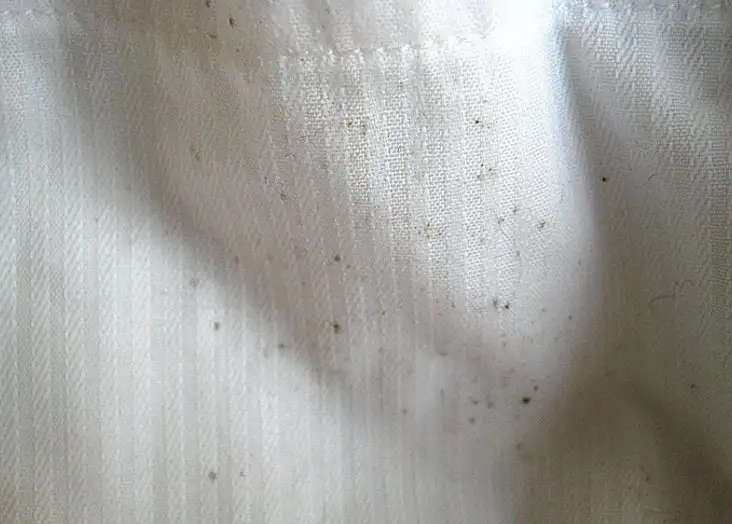
How do you stop carpet mould when the pile, the backing and the container all hold moisture? A carpet that crosses the sea in a closed box comes out with sheets of black and green growth across the pile and the backing, and the batch can only be downgraded. Pad iHeir-PG at 20-40 g/L or immerse at 2-4% o.w.f. on the pile and finishing line, run iHeir-BJ at 2-3% o.w.f. on wool, and dose the backing latex as its own step. This article covers the order of the three stages, the rates, and how to ship the roll.
1. Carpet mould is three separate accounts
The build of a carpet means the problem cannot be handled in one place. The first account is the pile: yarn passes through water repeatedly during dyeing and finishing, so moisture sits inside the fibre and between the filaments, and the size and spin finish on the surface are organic matter. The second is the backing: styrene-butadiene latex and hot-melt adhesive contain starch fillers and emulsifiers, which are exactly what mould feeds on, and the backing sits against the floor with almost no air movement. The third is the roll and the shipment: a roll has a large radius, the layers lie tight against each other, and moisture from storage or the sea passage is trapped between them.
Order is the bigger trap. Mould finishing has to run before the backing is applied; apply the latex first and the finish cannot reach inside the yarn, so it sits on the surface and underperforms. The backing also has to be treated in its own right. Do the pile only and leave the latex alone, and the growth starts in the adhesive and climbs into the pile, which is why a roll can open with a mouldy smell while the visible surface still looks acceptable.
2. The three dosing points at a glance
The table lists the stage, what is treated, the product, the rate and the points to watch, so it can be used as the first draft of a process card.
| Stage | Treated part | Product | Rate | Points to watch |
|---|---|---|---|---|
| Finishing (the critical stage) | Pile, face fibre, full width | iHeir-PG composite antimicrobial agent | Padding at 20-40 g/L, or immersion at 2-4% o.w.f. | pH 6-8, 70% uptake, dry at 100-170 degrees; no heat setting needed |
| Finishing (wool grades) | Wool and wool-blend carpet | iHeir-BJ textile mildew inhibitor | Padding at 2-3% o.w.f. | Bath 21-50 degrees, pH 4.5-8.5, soft water, pre-mix with 9-13 parts water |
| Backing | SBR latex, hot-melt adhesive | Inhibitor selected for the adhesive system | Dosed on total latex weight, by tier | Run as its own pass; if the latex grows mould the pile follows |
| Foam backing and mat bases | PU / EVA / PE foam | iHeir-ECO plastic antimicrobial agent | 0.3-1.0% of part weight | Added at foaming or mixing; avoid windows above 320 degrees |
| Rolling and container | Packaging and container climate | T-1000 container desiccant sticks | 8-10 sticks for 20 ft, 10-12 for 40 ft | Confirm the roll is dry; stand rolls upright and keep the air path clear |
Five rows, one conclusion: carpet protection has four lines — yarn, adhesive, backing and container climate. Treat the pile only and the easiest place for mould to start, the latex, is left to the customer.
3. Pile and finishing: two sets of parameters
Finishing is the critical dosing point. iHeir-PG is used in the finish bath at 20-40 g/L by padding, with the working liquor at pH 6-8, 70% pickup and drying at 100-170 degrees Celsius. One convenience is that it needs no heat setting, so a normal drying line will do. Small batches and odd widths can run immersion at 2-4% o.w.f. for 20-30 minutes at 50 degrees, then dewater and dry as usual. Carpet already formed and difficult to wet out can be sprayed instead, with the working liquor diluted 25-50 times.
Which end of the band to sit at depends on two variables: pile height and service environment. A taller pile with coarser yarn carries more liquor per square metre, so it sits at the lower end; contract carpet and corridor grades in heavy footfall sit at the upper end. Evenness matters more than the headline rate — if one section of a roll picks up too little liquor, mould starts there, so hold the bath level, the roller pressure and the drying temperature together.
4. Wool carpet: run the textile parameters
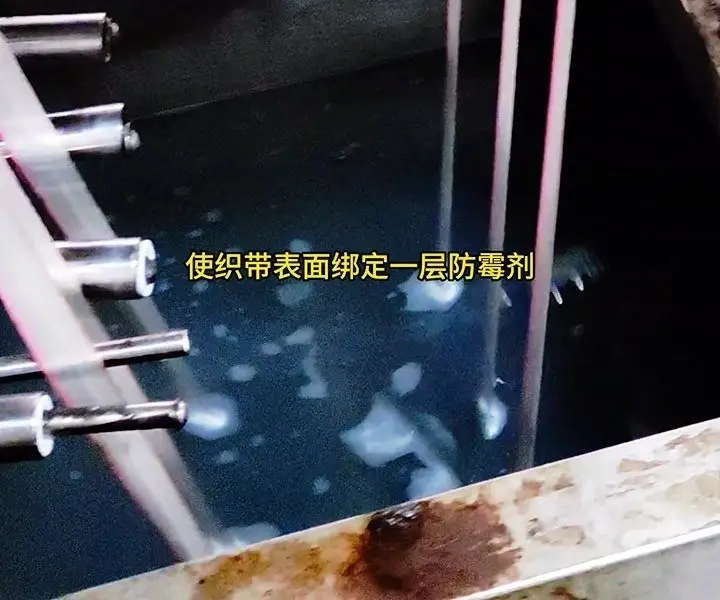
Wool is a protein fibre with high moisture uptake, and it needs insect protection as well as mould protection, so the parameters cannot be copied from synthetic grades. Treat wool carpet on the padding route for iHeir-BJ at 2-3% o.w.f., with the bath at 21-50 degrees Celsius, the working liquor at pH 4.5-8.5 (ideally near 6), soft water throughout, and pre-mixing with 9-13 parts water before the bath. The rate drives the service life: 2% corresponds roughly to a year or more of mould protection, and 3% to two to three years, so pick the tier by the humidity of the destination.
One prohibition belongs on the process card. BJ is cationic and must not be run in the same bath as an anionic auxiliary, and it should not share a stage with anionic softeners or fixing agents either; the two complex in the bath, the agent is lost and marks can appear on the face. On wool grades, place the mould finish before the softening pass and give the carpet a clear rinse in between.
5. Backing, rolling and the container
The backing is the stage most often skipped and the main starting point for growth. The fillers and emulsifiers in SBR latex and hot-melt adhesive are nutrients, and the layer has both the oxygen and the humidity that mould needs, so the adhesive side needs its own inhibitor selected for that system and dosed as an independent pass. Foam backing and mat bases take iHeir-ECO at 0.3-1.0% of part weight at the foaming or mixing stage, staying clear of extreme windows above 320 degrees Celsius.
Before rolling, confirm the carpet is dry. Rolling with the moisture content above specification seals water inside the film. Wrapping the roll in a moisture barrier, keeping stock off the floor and away from the wall, and running dehumidification where needed all do more than adding extra agent. For full-container export, hang desiccant sticks to match the unit: 8-10 for 20 ft and 10-12 for 40 ft. Stand the rolls upright and keep the air path at the container roof clear, or condensation from the ceiling drips straight onto the rolls.
6. Common questions
Q: Can synthetic and wool carpet share one product and one rate? Not advisable. Synthetic grades run the padding or immersion route with PG, wool runs the padding route with BJ, and the bath temperature, pH and pickup figures differ. Wool also needs insect protection, so a single product at a single rate usually leaves one of the two below specification.
Q: Does the anti-mite finish need a separate pass? Yes. iHeir-PG handles mould; mite resistance needs iHeir-F50 (active content 98% or above, pH 3-9) and runs as its own pass. If both agents are cationic they can be run in sequence on the same line, with a clear rinse in between. The choice of finishing agents for the fibre itself is set out in antibacterial and anti-mite finishing agents.
Q: How do you rework carpet that has already gone mouldy? Grade it first. If the spots are only on the pile face and the latex has not taken them in, cleaning plus a fresh finishing pass can work; if the latex has gone black and soft and carries a mould smell, the roll is effectively a downgrade or a write-off. The finishing side of that decision is covered in mould prevention on finished fabric.
Carpet mould control is not hard, but the order has to be right: finish the face first, dose the adhesive in its own pass, treat the backing and mats on the polymer route, and close with roll packing and container humidity control. Samples and minimum order details for iHeir-PG, iHeir-BJ, iHeir-ECO and iHeir-F50 are available on request.


