




 View Count:17
 Date:2026-09-14
Among all plastics, PVC is the most mold-prone – yet the culprit is never the PVC resin itself. It is the twenty to forty phr of plasticizer in the flexible formulation. The same resin that stands mold-free for a decade as a rigid profile can sprout mildew colonies in two months as a hose, flooring sheet or substrate fabric sitting in a damp warehouse. This guide splits PVC into its two personalities: rigid parts need surface antibacterial treatment and attention to soft accessories; flexible parts need anti-mold chemistry and mixing discipline. Both converge on the same testing protocol.
1. Why PVC Attracts Mold: Plasticizers and Lubricants Are the Food Source
Understand the mechanism first and the formulation logic follows. Flexible PVC needs DOP, DOA or TOTM plasticizers to become soft – typically 20-40 phr for general flexible goods, and over 50 phr for synthetic leather and flooring. These plasticizers are small ester molecules, and esters are exactly the carbon source that Penicillium and Aspergillus digest. In humid service or storage, plasticizer migrates continuously to the surface, laying down a feeding film where spores land and colonize. That is why hose inner walls, flooring seams and the backs of substrate fabrics mold first – maximum plasticizer bloom and minimum airflow.
Two accomplices help: stearate lubricants and some metal-soap stabilizers can also feed fungi, and moisture-absorbing calcium carbonate filler keeps the surface microclimate humid. Rigid profiles and pipes, with little or no plasticizer (1-3 phr at most), carry no internal food source, so their mold risk concentrates in soil layers on the surface and in soft accessories – EPDM gaskets and spacers. That distinction dictates two entirely different strategies. For the leather-adjacent branch, see our PU leather and synthetic leather anti-mold guide.
2. Rigid PVC (Profiles and Pipes): Surface Plus Accessories
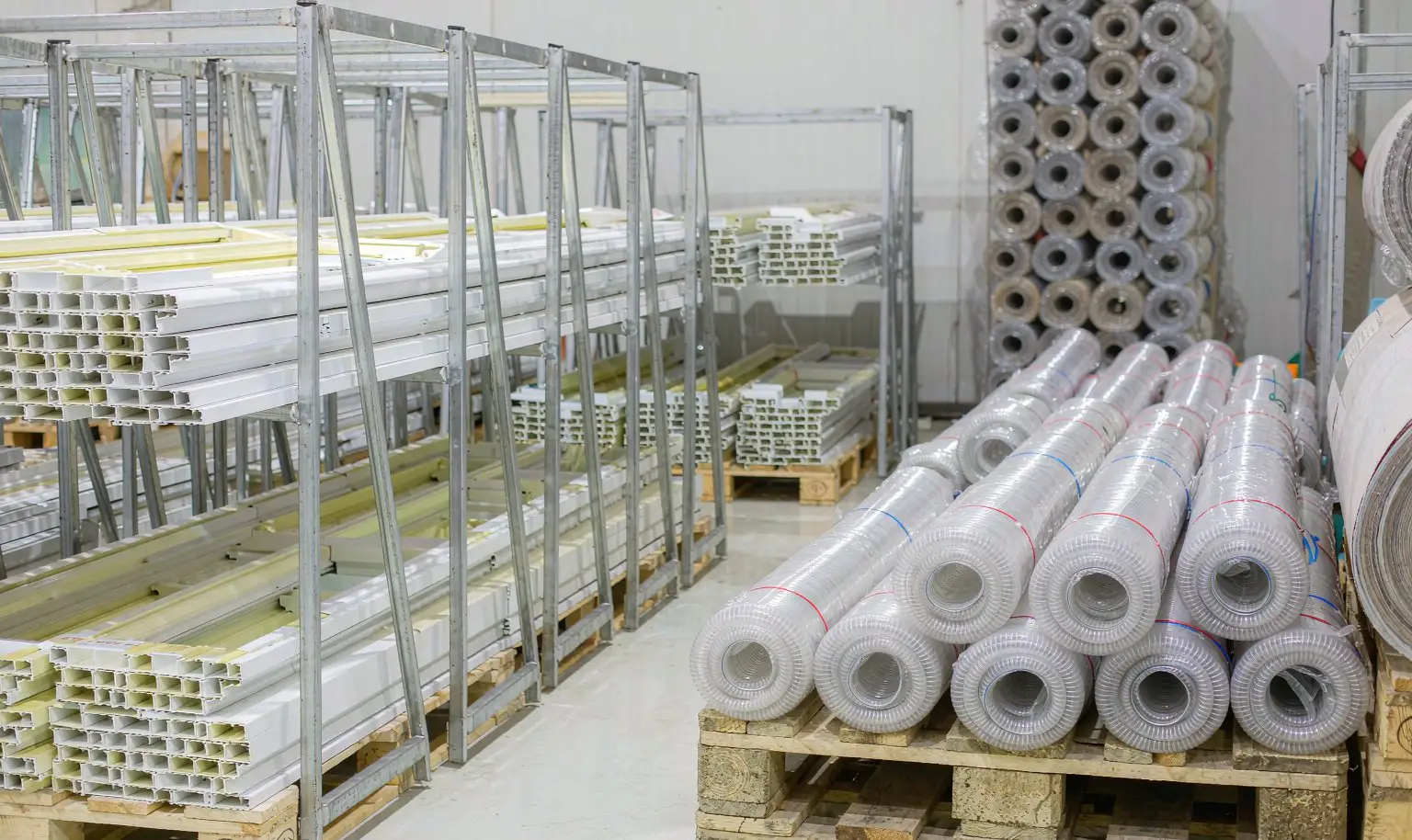
Rigid PVC resists mold on its own, so the plan is “surface + accessories”. For window and door profiles, mold concentrates in drainage chambers, gasket grooves and corner-weld zones – accumulated dust and water combined with bloom from the EPDM seals create local colonies. Counter it on two fronts: an antibacterial surface layer (co-extruded functional layer or post-coating) on the profile, and anti-mold treatment in the gaskets and spacers to the flexible-PVC standard. Treating only the profile and skipping the gasket is the classic half-done job. For pipes, the demand centers on inner biofilm: dosing 0.5-0.8% inorganic antimicrobial such as the silver-zinc iHeir-IPI001 inorganic ion compound antimicrobial turns out an antibacterial pipe – a recognized differentiator for municipal and residential markets. Exterior rainwater pipes carry weak demand; decide by budget.
On formulation compatibility, both lead-salt and calcium-zinc stabilizer systems react neutrally with inorganic antimicrobials, so direct compounding is fine. Use rutile titanium dioxide – the anatase type photocatalyzes chalking outdoors, and it should not take the blame for an antibacterial profile’s weathering failure.
3. Flexible PVC (Hoses, Flooring, Substrate Fabrics): Anti-Mold Selection
Flexible PVC must carry an anti-mold agent – there is no debate. Four selection criteria: compatibility with the plasticizer system through hot mixing and calendering without blooming; heat stability, with decomposition above the 160-200 degree processing window; durability, because plasticizer keeps blooming and the agent must keep working – inorganic-carrier powders outlast pure organic types; and cost efficiency for high-volume goods.
The workhorse approach is direct powder compounding: iHeir-JS117 plastic anti-mildew powder is engineered for PVC, PU, silicone and rubber systems, dosed at 0.8-1.5% in flexible PVC (take the top of the range for synthetic leather and flooring, the bottom for general hoses), added with the plasticizer in the high-speed mixer. For flooring and substrate fabrics running calendering or spread coating, pre-disperse the powder in the plastisol to avoid viscosity drift. PVC shoe soles and footwear materials follow the same logic – see the full export chain in our Dongguan shoe-materials export anti-mold program.
4. Processing Temperature and Stabilizer Synergy
PVC processes at 160-200 degrees C (rigid at the top, flexible at the bottom), which screens anti-mold candidates hard: any active decomposing below 200 degrees fails in rigid formulations, possibly discoloring the compound. The active system in JS117 withstands temperatures above the normal PVC processing range, so one grade covers both rigid and flexible. One mixing detail matters: high-speed mixers discharge at 110-120 degrees C, and the anti-mold powder should go in during hot mixing, after the plasticizer, with another 8-10 minutes of blending so the powder pre-swells and disperses in the plasticizer. Adding it after cold blending leaves dispersion gaps – blind spots where mold can start.
Stabilizer synergy is straightforward: calcium-zinc systems (2-3 phr typical) do not react with anti-mold powder, and lead systems behave the same. The only caution: sulfur-containing stabilizers can discolor silver-based antimicrobials at temperature. PVC mostly runs calcium-zinc or lead; with a sulfur-bearing recipe, run a small color-check sample first.
5. Outdoor Products: Weathering Plus Mold Resistance
Window profiles, outdoor decking and cladding face a triple attack: UV, damp heat and mold. Design in layers. UV and damp heat belong to the formulation layer – rutile TiO2 at 8-12 phr plus antioxidants and light stabilizers at 0.2-0.4% form the anti-chalking, anti-yellowing foundation. Mold belongs to the chemistry layer: outdoor surfaces cycle wet and dry, so dose anti-mold powder at the top of the range and prefer water-extraction-resistant grades. For the wall-system context – efflorescence and mildew around tiles and sealants – the logic is identical to our stone and tile efflorescence guide: water control first, mold chemistry second.
For outdoor acceptance, add one extra test to the routine: run a mold-grade retest after 500 hours of xenon-arc aging. If the rating holds, the durability claim holds – increasingly a tender requirement on large outdoor projects.
6. Testing: Growth Ratings and Acceptance + FAQ
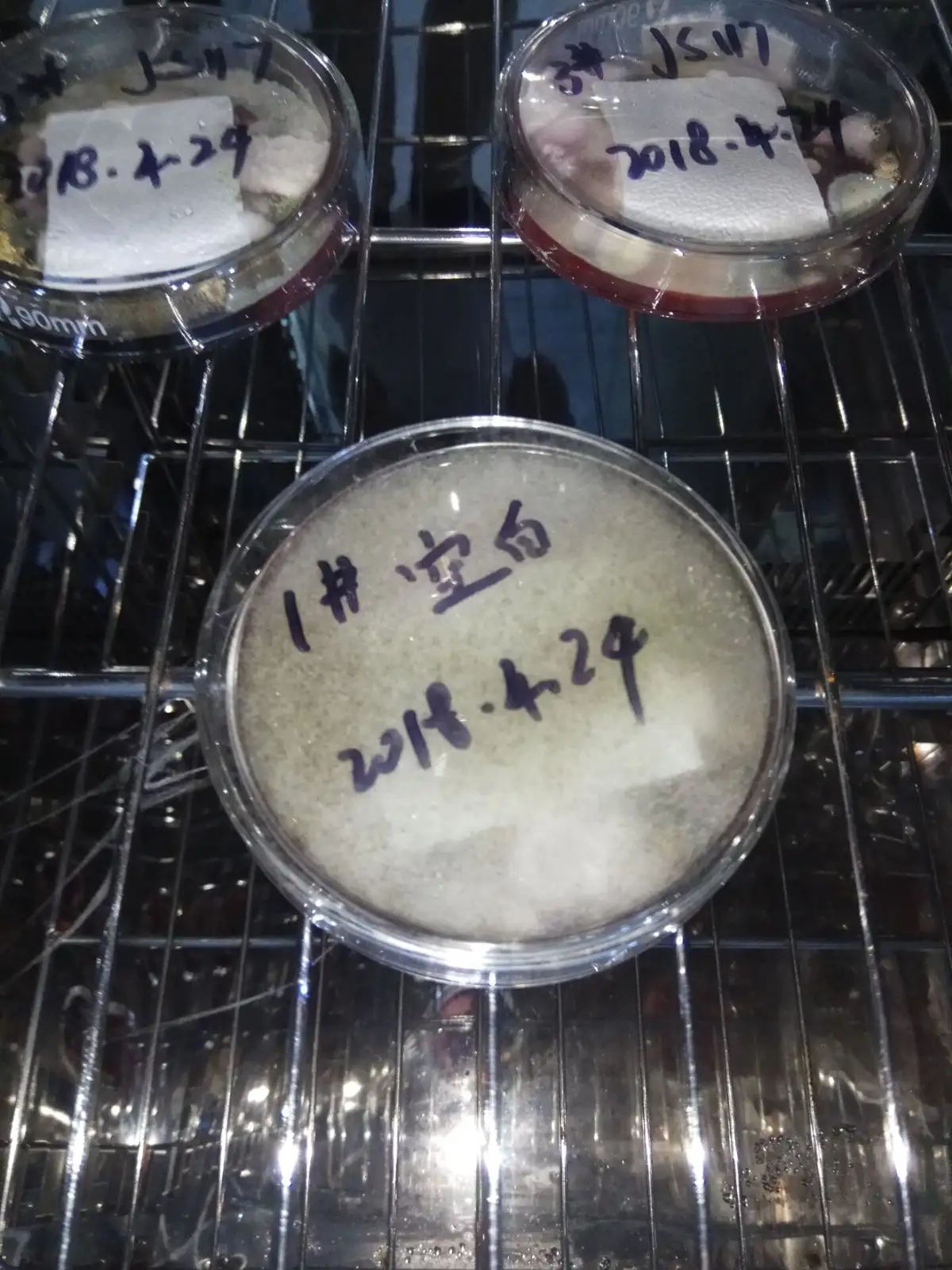
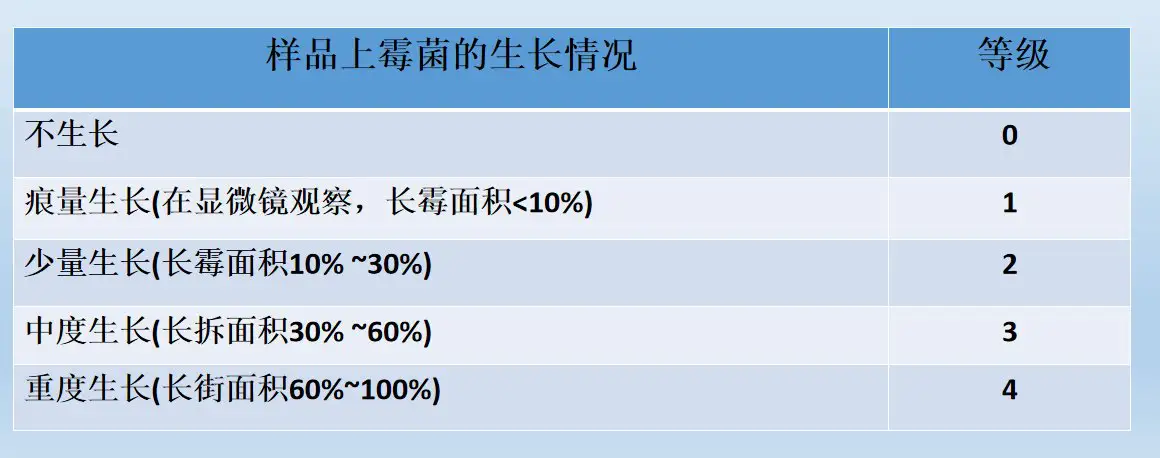
Two rulers cover PVC anti-mold testing: ASTM G21 (resistance of synthetic polymeric materials to fungi, the international reference) and GB/T 2423.16 (the Chinese national mold test). Both inoculate samples with a mixed fungal spore suspension, incubate 28 days at controlled temperature and humidity, then grade by colonized area: grade 0 – no growth (invisible even under magnification); grade 1 – trace growth under 10%; grade 2 – 10-30%; grade 3 – 30-60%; grade 4 – 60-100%. Export contracts typically set grades 0-1 as passing. Antibacterial claims (profile surfaces, antibacterial pipes) additionally run quantitative ISO 22196 with a 90% passing line.
FAQ
Q1: A hose shipment already shows mold – can it be cleaned?
A: Light surface mold wipes off with 75% alcohol or a dedicated mold remover, then rinse and dry. Heavy colonization or growth inside the material means scrap: fungal pigments and odors do not wash out, and recurrence after cleaning is near certain.
Q2: Does anti-mold powder affect the clarity of transparent hoses?
A: Inorganic-carrier powders add a slight haze in high-clarity formulas. Transparent hoses should use a transparent-specific grade at 0.8-1%, confirmed by trial before mass production.
Q3: Why do flooring seams mold first, and how to prevent it?
A: Seams admit moisture, and the adhesive layer adds organics. Leave expansion joints and seal edges properly during installation, and dose the material at the top of the range – attack from both sides.
Q4: Can anti-mold powder run together with flame retardants?
A: No conflict with inorganic ATH/MDH systems. With halogenated retardants, run one small trial to check blooming and color shift before scaling up.
PVC anti-mold in one sentence: for rigid parts, treat the surface and the accessories; for flexible parts, treat the formulation and the mixing – rigid gains a selling point at 0.5-0.8% antibacterial, flexible needs 0.8-1.5% anti-mold powder well dispersed, and acceptance watches for grades 0-1 under ASTM G21. For a formulation review or trial samples, contact us with your product form – profile, hose, sheet or sole – and we will return a specific plan.