




 View Count:30
 Date:2026-11-04
How should dumbbell rubber coating mould be treated? Two months in a finished goods store through the wet season and the coating grows a grey haze, worst around the weight figure on the end, and neither wiping nor spraying brings it back. Blend iHeir-JS117 plastic anti-mould powder into the coating compound at 0.5%-1.0% of weight, derust the iron core before coating, and put iHeir-D vapour sheets in the carton at 0.1-0.2g of active matter each. This article covers the dosing stage, the derusting check and the export packing.
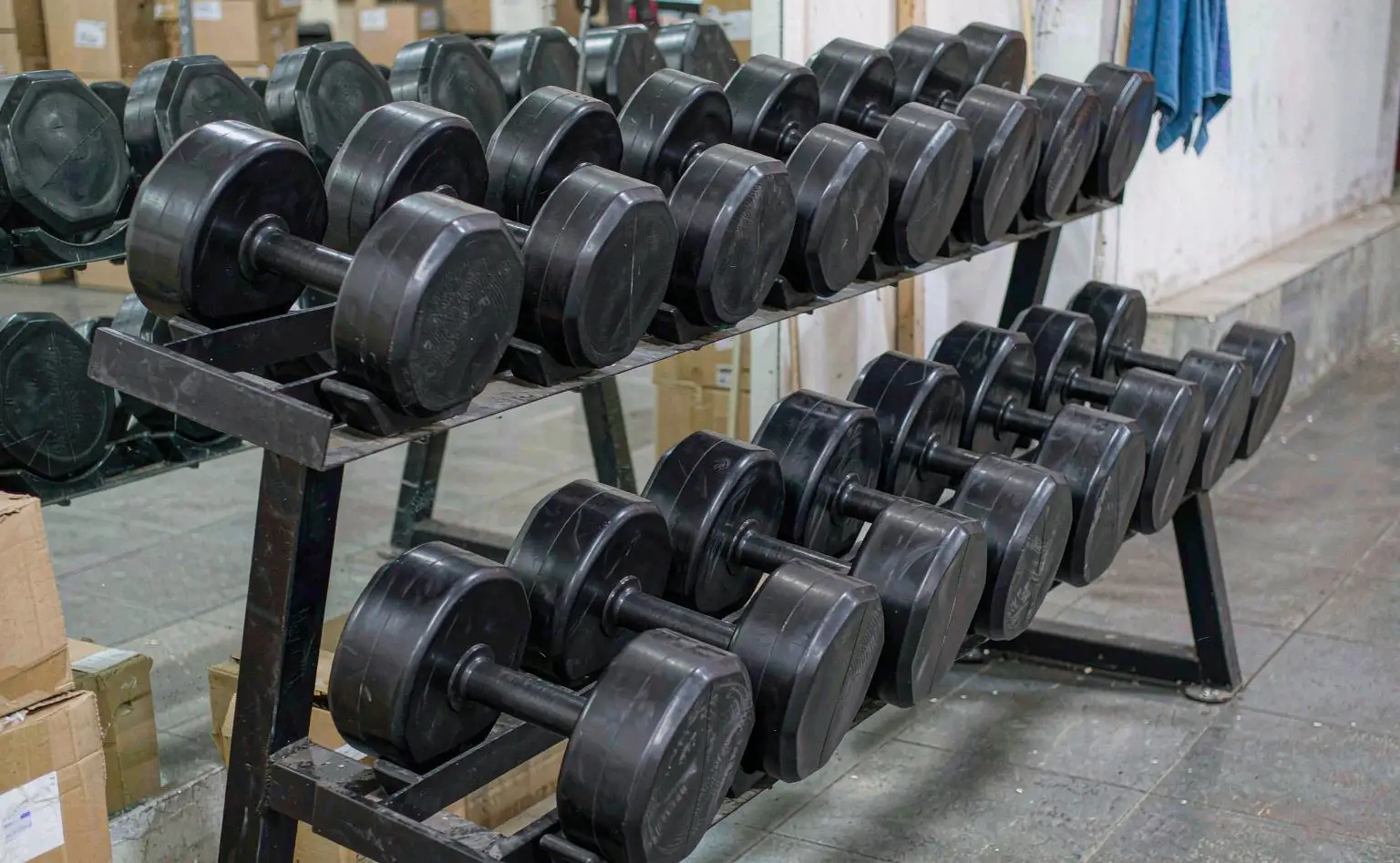
1. Mould on the coating, and at rust spots underneath
Take a coated dumbbell apart: cast iron core, coating (nitrile, EPDM or a natural rubber compound), moulded weight figure, knurled handle. Iron does not mould. What fails is the coating and the rust under it.
The coating fails at the surface. Coated parts leave the mould with release agent and oil, and around the weight figure the ink adds another interface. Dumbbells stack in a warehouse where the contact faces never ventilate and stay damp, so spots appear first round the figure and in the knurling, the two places hardest to wipe.
Rust is the second way in. If the core is not fully derusted before coating, rust stays trapped between rubber and iron; moisture reaches that interface during cure, the rust lifts a small blister in the coating, water follows the blister edge, and mould spreads along the interface. None of it shows from outside until the part is cut.
The carton is the third party. A dumbbell is heavy and ships in five-ply board with dividers, and damp board keeps the humidity inside the box high. A month in a container then spots the walls and divider edges first, and the coating follows.
2. Powder in the coating, a clean core, sheets in the carton
The table lines up the coating, the core, the carton and the printed figure. Compound is dosed on weight, paper on active matter per sheet, and the two are not convertible.
| Part | Material | Product and level | Stage | Control point |
|---|---|---|---|---|
| Coating | NBR or EPDM compound | iHeir-JS117 0.5%-1.0% of compound | Mixing | Added with filler, well thinned |
| Iron core | Cast iron, carbon steel | Derust and prime, no additive | Before coating | Coated within four hours of blasting |
| Carton, divider | Corrugated, moulded pulp | iHeir-D 0.1-0.2g per sheet | Before the carton is sealed | Trial at three times the dose |
| Weight figure | Ink | Treated with the coating | After cure | Ink dry before cartoning |
One boundary. Powder in the compound is leaching-resistant and stays in the rubber, but it never reaches the iron interface or the air in the carton; derusting and sheets do not replace compound treatment either.
3. Mixing: JS117 at 0.5%-1.0%, in with the filler
The coating takes iHeir-JS117 plastic anti-mould powder at 0.5%-1.0% of finished weight. It is a nitrogen heterocycle phenol-alcohol compound with more than 97% active matter, 380 kg/m³ bulk density, 110μm mean particle size, insoluble in water, leaching-resistant and arsenic-free.
Where. Into the internal mixer with carbon black, filler and plasticiser, then thin it on the mill after discharge. Do not sprinkle it onto the mill as the sheet comes off: at 110μm it will not blend, and the coating comes out with specks and a matt patch that cracks first after cure.
Do not rush the cure. Run cure temperature and time for the compound rather than for the output figure. A hot, short cure skins the surface while the inside is undercured, the interface bonds poorly, water enters at the interface, and powder disperses badly in undercured rubber so the protection is reduced as well.
Choosing the level. Run trial sheets at 0.5% and 1.0%, measure tensile strength and elongation to GB/T 528 and hardness to GB/T 531.1 before and after treatment, and hold them 28 days at 30℃/85% RH. A dumbbell is a load-bearing part, so hardness and rebound cannot give way too far for a mould result.
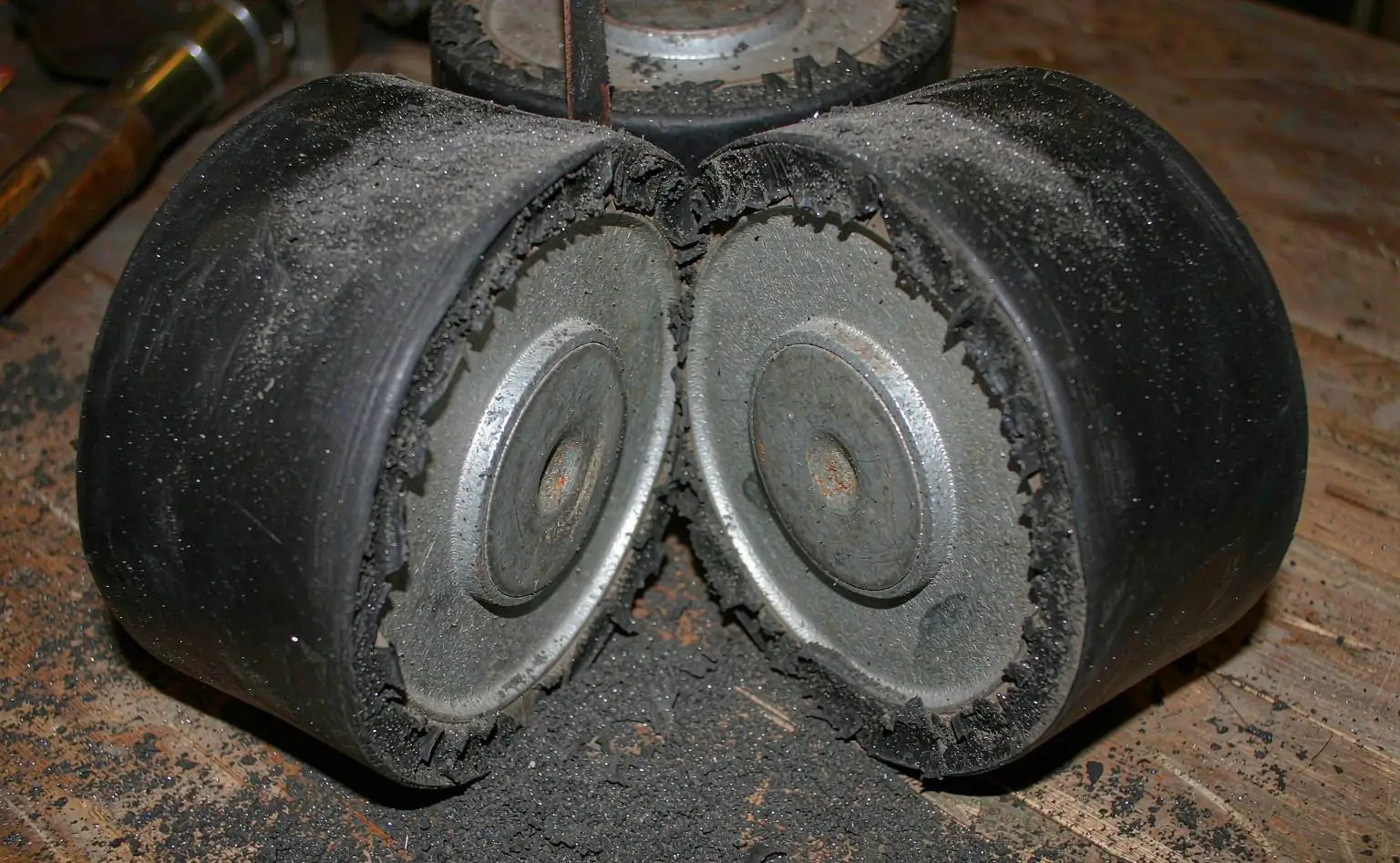
4. Derusting the core and bonding the coating
This is the step a dumbbell plant most often skips. Cast cores arrive with flash rust and moulding sand; coating straight over them looks fine and blisters at the end face or the knurling three to five months later, full of rusty water.
How. Shot-blast or sand-blast the flash rust and sand off to bare metal, then prime and coat within four hours, because the surface re-oxidises after that. Use the adhesive supplier’s matched primer system, dry it before coating, and never take a solvent-wet primer into the mould.
How to judge it. Sample blasted cores by batch: no rust stain or oil left, and a white cloth wiped across should come up without black dust. After coating, run a peel check by batch, cutting the end face to look at the rubber-iron interface; a shiny or rusty interface means it did not bond.
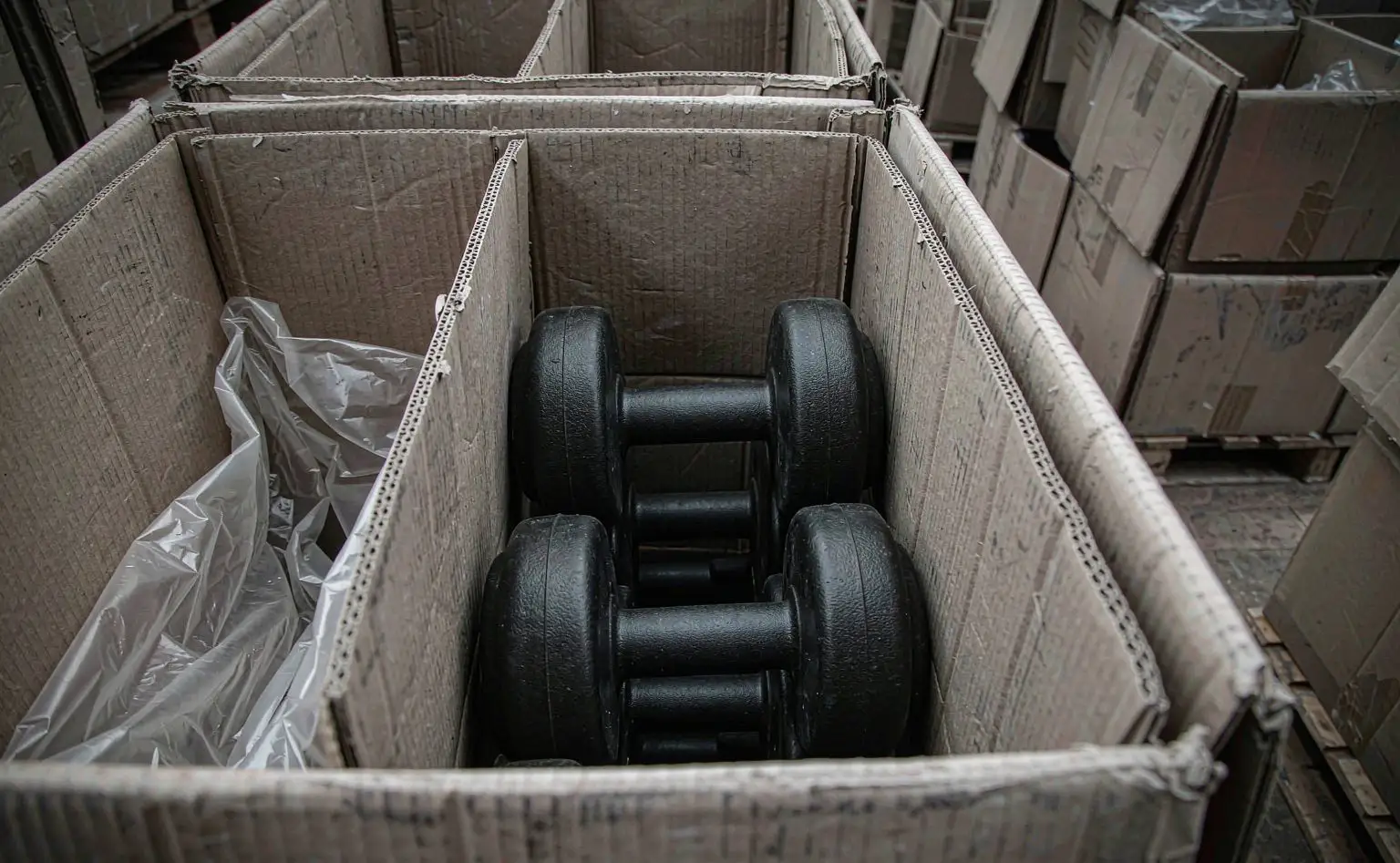
5. Packing, storage and export
The paper stage uses iHeir-D gas-phase anti-mould paper at 0.1-0.2g of active matter per sheet. Dumbbells are heavy and the cartons large, so put one sheet against the wall and one between each divider layer; where a moulded pulp tray is used, add one between tray and wall.
Compatibility trial. Dumbbells carry a printed weight figure, knurling and sometimes chrome parts. Seal three times the normal dose with a finished dumbbell, mist a little water, separate the sheet from the rubber with paper, and inspect after a few days for faded print and dulled chrome. iHeir-D carries 70%±5 solids and under damp conditions it can corrode poor-quality metal, so plated parts get the trial first.
Storage and loading: pallets 10cm off the floor and off the wall, store below 60% RH, and do not stack above the carton’s design layers, because a crushed carton closes the air space inside. At sea, leave an air path and keep cartons off the container wall. Rubber compounding is covered in mouldy rubber compound, and damp board in cartons that mould after shipping.
Release at three levels: coating to ASTM G21, sampling the end face and the knurling; cartons and dividers to GB/T 24346-2009, sampling the wall and the divider; finished dumbbells for 30 days at 30℃/85% RH, cutting open to read the rubber-iron interface. Properties go to GB/T 528 and GB/T 531.1, one set before and one after the change.
6. Questions on rust, hardness and spraying
Q: With powder in the compound, does the core still need derusting?
Yes. Rust sits at the rubber-iron interface where no powder reaches; leave it and both the blister and the mould start there.
Q: Does the powder harden the coating?
Inside 0.5%-1.0% the change is limited, but a dumbbell is a load-bearing part, so measure hardness to GB/T 531.1 and tensile to GB/T 528 before and after treatment rather than trusting the feel.
Q: Can we spray the finished dumbbell instead?
Not advisable. A spray does not enter cured rubber, wipes off in two passes and leaves water marks in the knurling; the additive only works from inside the compound.
Q: How many sheets, and will they dull chrome?
Stay inside 0.1-0.2g per sheet, one against the wall and one per divider layer in a large carton; plated parts react to the vapour, so run the trial at three times the dose with paper between sheet and metal.
Four points to take away: blend iHeir-JS117 into the coating compound at 0.5%-1.0% of weight in the internal mixer, thin and check a sheet to the light, comparing properties to GB/T 528 and GB/T 531.1; blast the core clean and prime and coat within four hours, then cut an end face to read the interface; sheet the carton wall and divider with iHeir-D at 0.1-0.2g of active matter after a trial at three times the dose; keep pallets off the floor, the store below 60% RH and an air path in the container. A 1kg powder sample and a pack of sheets go out for a trial first, with MOQ and lead time on the iHeir-JS117 product page.


