




 View Count:24
 Date:2026-11-05
Can baseball cap mould be prevented? The crown is cotton twill that takes water fast and dries slowly, while the stuffing and hangtag are paper, so one container later the spots appear inside the brim and on the crown, and the buyer rejects the lot at opening. Treat the crown fabric in the finishing bath with iHeir-BJ textile mildew inhibitor at 2%-3% o.w.f., and replace the stuffing and carton paper with iHeir-D vapour sheets at 0.1-0.2g of active matter each. This article covers the bath, the wet pickup and the packing.
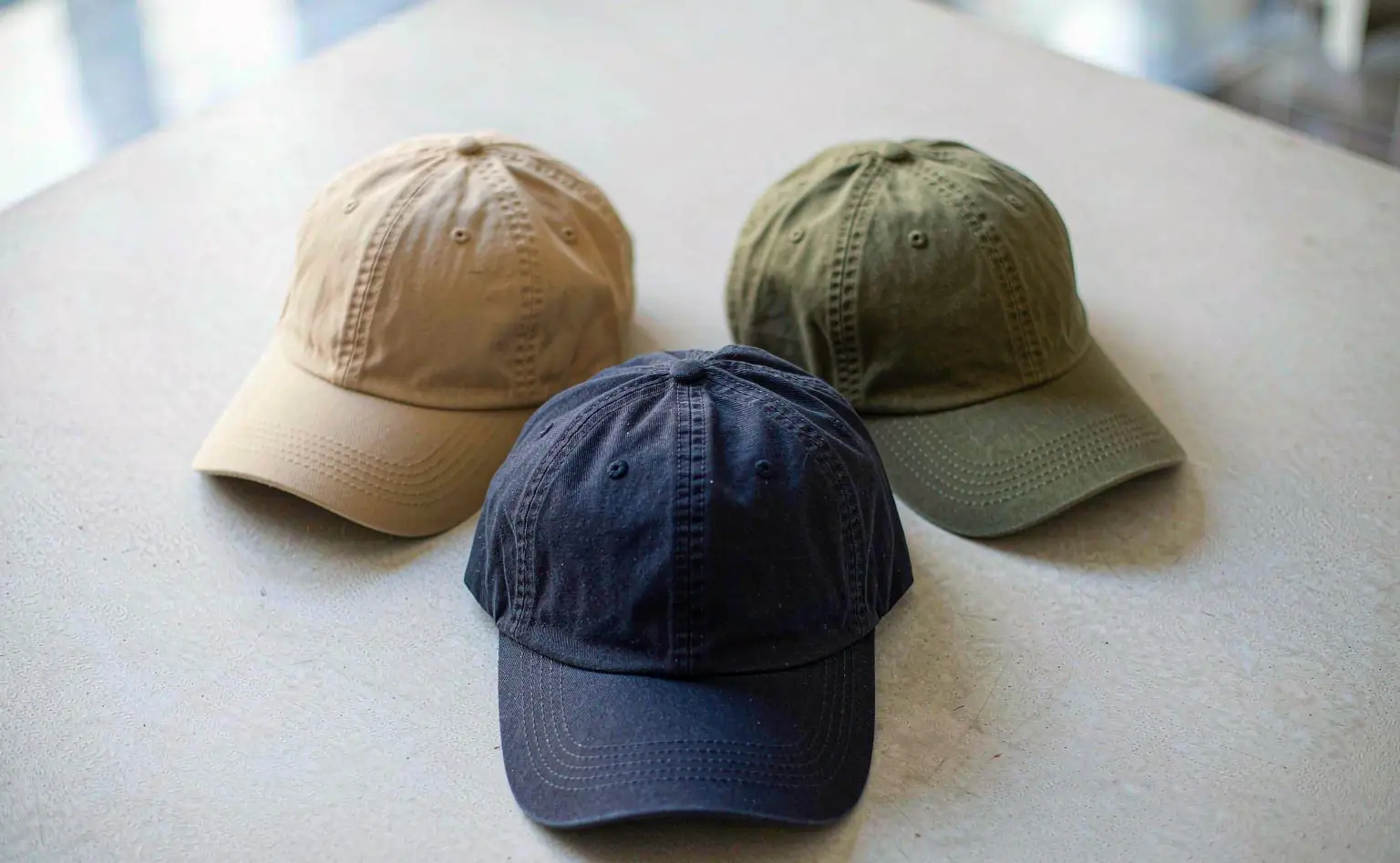
1. The crown takes water, and the stuffing spots first
Take a six-panel cap apart: cotton twill crown, polyester-cotton sweatband, brim core and board, snap and adjuster, embroidery thread, crown stuffing, hangtag and poly bag, carton. Plastic snaps and thread do not mould; the exposure is in the cotton twill crown and in the stuffing, hangtag and carton.
The crown fails at the seams. A six-panel crown is stitched, the brim joins the crown through a seam, and the sweatband is folded over the crown, so all three are double-layer structures that hold water after washing or finishing. Cotton has a high regain, the thread line adds thickness, and the spot starts in the seam and works outward.
The stuffing goes first. Crown stuffing paper takes water faster than anything else in the plant, and a stack left overnight in the shop picks up a good deal of it. Sitting against the inside of the crown, the paper spots first and passes the mould to the lining, so at opening it looks as though the cap moulded itself.
The hangtag and the bag make it worse. The hangtag is coated board and the poly bag does not breathe, so a cap bagged with its tag traps the moisture, which condenses on the inside of the film in a wet season.
2. Fabric in the bath, paper replaced
The table lines up the crown, the sweatband, the stuffing and the carton. Fabric is dosed on weight of goods, paper on active matter per sheet, and the two are not convertible.
| Part | Material | Product and level | Stage | Control point |
|---|---|---|---|---|
| Crown panels | Cotton twill | iHeir-BJ 2%-3% o.w.f. | Finishing bath | 21-50℃, pH 4.5-8.5 |
| Sweatband strip | Polyester-cotton | iHeir-BJ 2%-3% o.w.f. | Same bath as the panels | Wet pickup held at 70% |
| Stuffing, hangtag | Stuffing paper, coated board | iHeir-D 0.1-0.2g per sheet | Shaping, packing | Paper between sheet and embroidery |
| Carton | Corrugated | iHeir-D one sheet on the wall | Before sealing | Trial at three times the dose |
One boundary. The agent in the fabric protects the crown, the vapour in the paper protects the space in the carton. Fabric only leaves the stuffing to mould, and paper only leaves the spots in the seams. Both stages, and the carton opens clean.
3. Running the cotton twill through the same bath
The crown fabric takes iHeir-BJ textile mildew inhibitor at 2%-3% o.w.f. on weight of goods. Choose by the protection period required: 2% gives roughly a year and more, 3% reaches two to three years, so domestic quick-turn stock runs at 2% and an export lot that sits in a container runs at 3%.
Bath conditions. Hold the bath at 21-50℃ and pH 4.5-8.5, ideally 6, and use softened water. Hard water calcium and magnesium react with the agent and waste part of the active matter before it ever reaches the fibre.
How to add it. Dilute it with 9-13 times its volume of water first, then add slowly to the bath rather than pouring the concentrate in. Hold wet pickup at 70%: a 5% drift in pickup is a 5% drift in dose, so mangle pressure and line speed have to be steady. The pickup side of the process is set out in padding and wet pickup.
No anionic auxiliaries in the same bath. Softeners, penetrants and fixing agents are often anionic and cancel the agent. Confirm the ionic type before finishing: use non-ionic or cationic softener, run anionic products in a separate bath, and take the extra rinse rather than dosing everything at once.
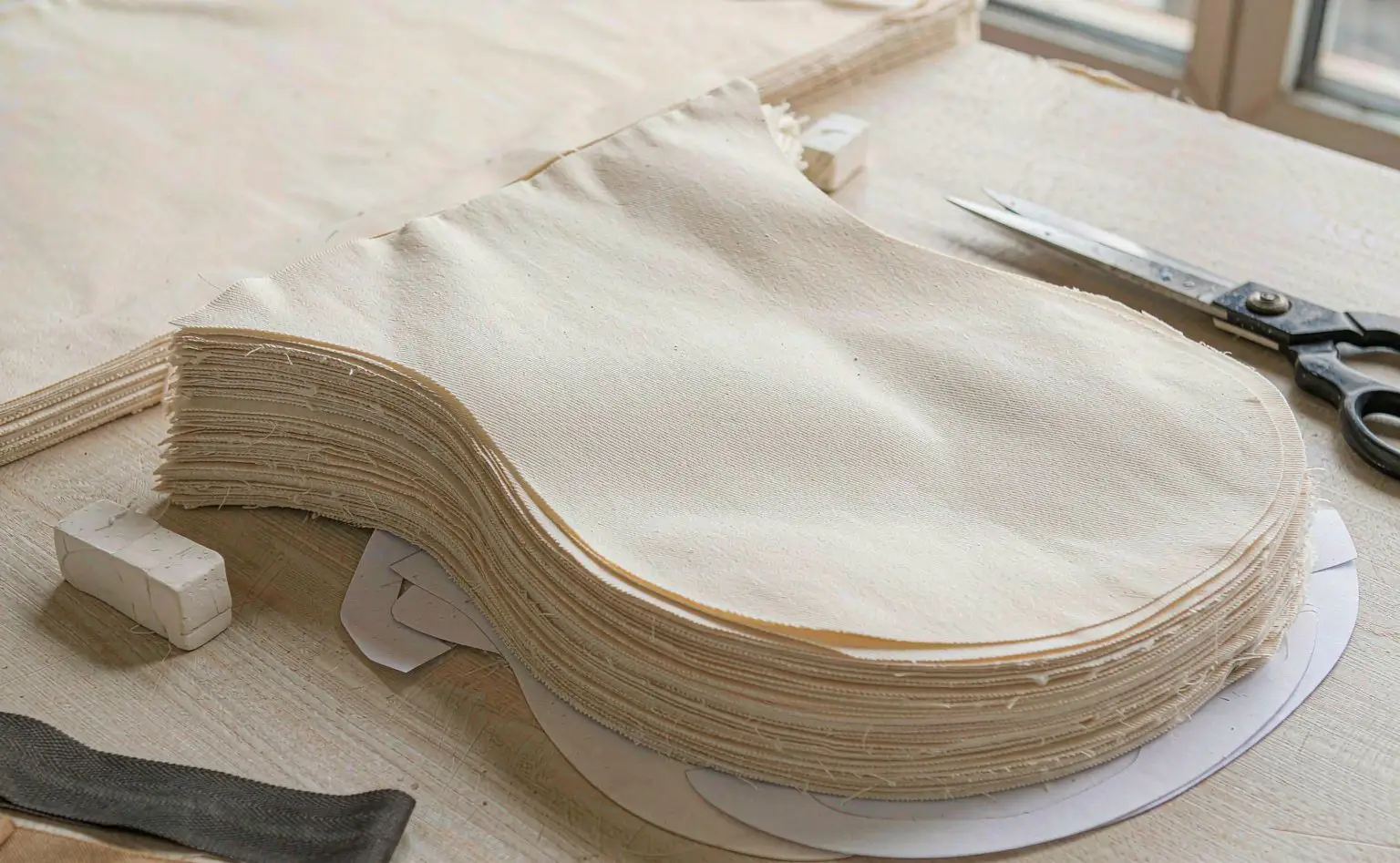
4. Swapping the stuffing for vapour paper, and packing
Replace the crown stuffing with paper that carries a vapour-phase agent, or slip an iHeir-D vapour sheet beside the existing stuffing, at 0.1-0.2g of active matter per sheet. It is an ink-coated paper that works by releasing into a closed volume, so it only does its job once the cap is bagged or boxed.
How many sheets. One per bagged cap; for a multi-cap carton, one against the wall plus one between layers, taking the upper figure for large cartons, many layers or a long sea leg. Keep a sheet of paper between the vapour sheet and the embroidery.
Trial compatibility first. Seal three times the normal dose with a finished cap in a poly bag, mist a little water, separate the paper from the embroidery, and inspect after a few days for faded thread, dulled snaps or a yellowed white crown. iHeir-D carries 70%±5 solids and can corrode poor-quality metal when damp, so caps with metal eyelets get the trial first.
Bags and cartons. Use micro-perforated bags and never vacuum them, because moisture that cannot leave the bag will beat any sheet. Pallets 10cm off floor and wall, store below 60% RH.
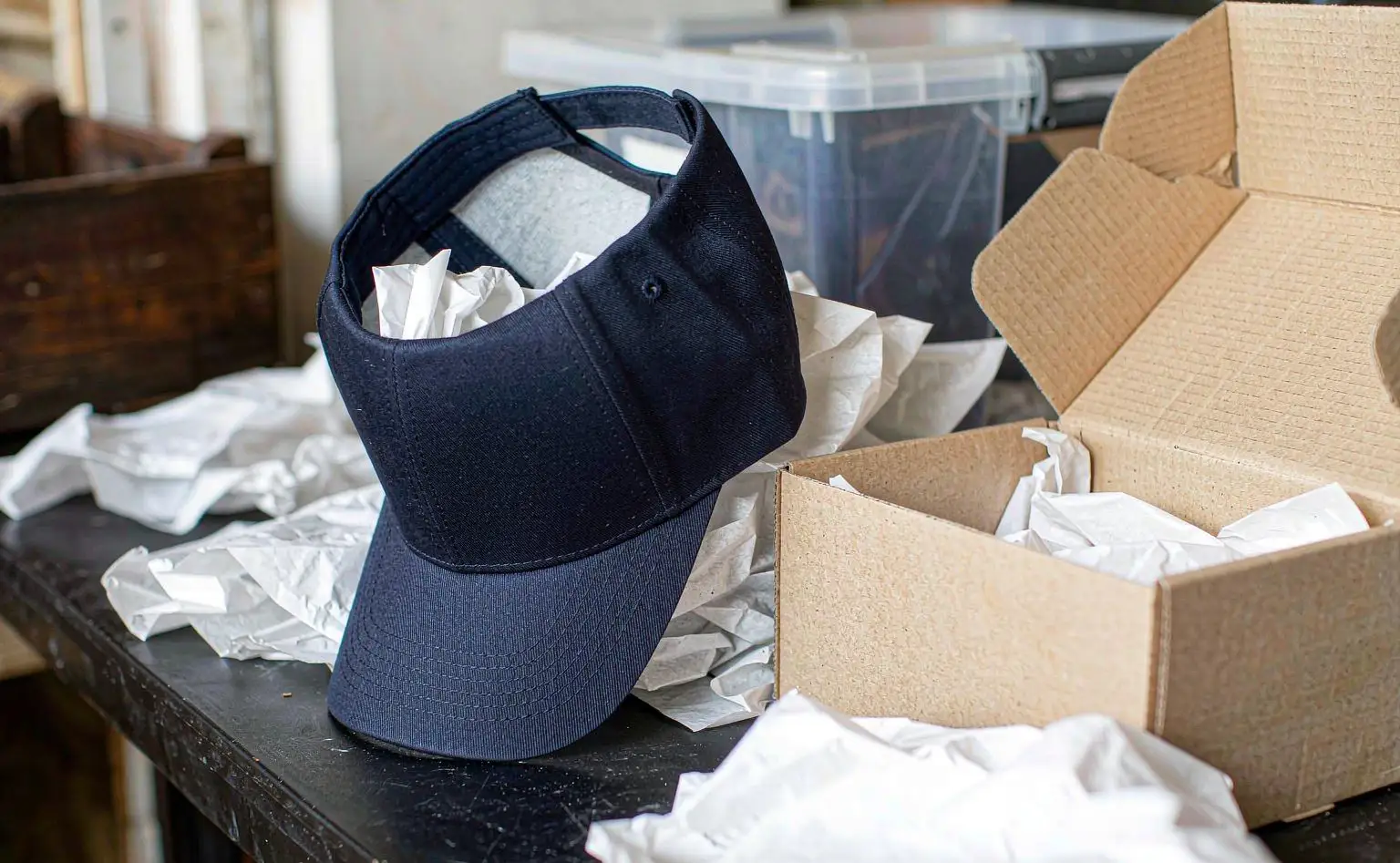
5. Mill audit and release
On the fabric side. Grade to GB/T 24346-2009, sampling a crown panel and a sweatband; colour fastness runs as usual, with water spotting and perspiration as the two items to watch after a mould finish, plus yellowing on a white crown. The grading method is set out in GB/T 24346 grading.
On the finished side. Grade whole caps to ASTM G21 or ISO 846, sampling the crown lining and the brim seam, and grade the paper items, stuffing, hangtag and carton, separately to GB/T 24346-2009. Hold a full carton for 30 days at 30℃/85% RH, then open it to inspect the crown cavity, the inside of the brim and the tags.
Paperwork an auditor asks for. The dosing sheet for the bath, pH and temperature logs, wet pickup checks, and the batch number and count for the vapour sheets. Auditors ask which stage carries the treatment, and not being able to answer is worse than not doing it.
6. Questions on stuffing, softener and shade
Q: The fabric is already treated, so can the stuffing stay as it is?
No. Stuffing takes water fastest and the mould starts there, and the agent in the fabric does not migrate into paper. Replacing the paper costs far less than reworking a carton of caps.
Q: Can the softener go in with iHeir-BJ?
It depends on the ionic type. Non-ionic and cationic systems share the bath, anionic softener needs its own, and where the supplier is unsure, ask for the ionic type in writing rather than working from experience.
Q: 2% or 3%?
By protection period and stock turn. Domestic stock and end-of-season clearance run at 2%; export lots that sit in a container for 30 days or more run at 3%, which costs cents per cap against a rejected carton.
Q: Will the finish yellow a white crown?
At the recommended dose in a neutral bath at pH 6 the risk is low. Overdosing, a hot bath or hard water all push shade shift, so run a white sample comparison before scaling up.
Four points to take away: run the cotton twill crown in the finishing bath at 2%-3% o.w.f. of iHeir-BJ, with the bath at 21-50℃, pH 4.5-8.5, softened water and a 9-13 fold dilution first, holding pickup at 70% and splitting anionic auxiliaries into their own bath; replace the stuffing with vapour paper or slip an iHeir-D sheet beside it at 0.1-0.2g of active matter each, one on the carton wall and one between layers; bag with micro-perforation and seal only at packing; grade fabric to GB/T 24346-2009 and whole caps to ASTM G21. A 1kg sample and a pack of sheets go out for a trial, with MOQ and lead time on the iHeir-BJ product page.


