




 View Count:39
 Date:2026-09-04
“How do I choose a desiccant manufacturer?” is usually asked by exporters and freight forwarders who have already suffered container mold on arrival. Desiccants look like a low-cost consumable, but they are the last gate of moisture control: choose the wrong supplier or type and a USD 30,000 container can quietly spoil over 40 days at sea. A 2025 survey of 40 exporters in the Yangtze River Delta showed 4-6x higher arrival mold rates for containers using cheap off-brand desiccants than for those using proper T-1000 desiccant strips. This guide helps you evaluate suppliers across type, KPIs, testing, dosage and price.
1 Know the Types First: No “Universal Desiccant”
Different manufacturers specialize in different materials — match the type to your cargo:
- Silica gel: 20%-40% moisture uptake (30°C, 90% RH); chemically stable, non-corrosive; suits electronics and precision instruments but has low per-unit uptake.
- Montmorillonite (bentonite): 25%-32% uptake; natural, cheap; fine for ordinary cartons, but slower uptake and re-release risk at high temperature.
- Calcium chloride: up to 200%-300% uptake and fast; must use leak-proof laminated pouches; add VCI vapor-phase anti-rust actives for metal cargo.
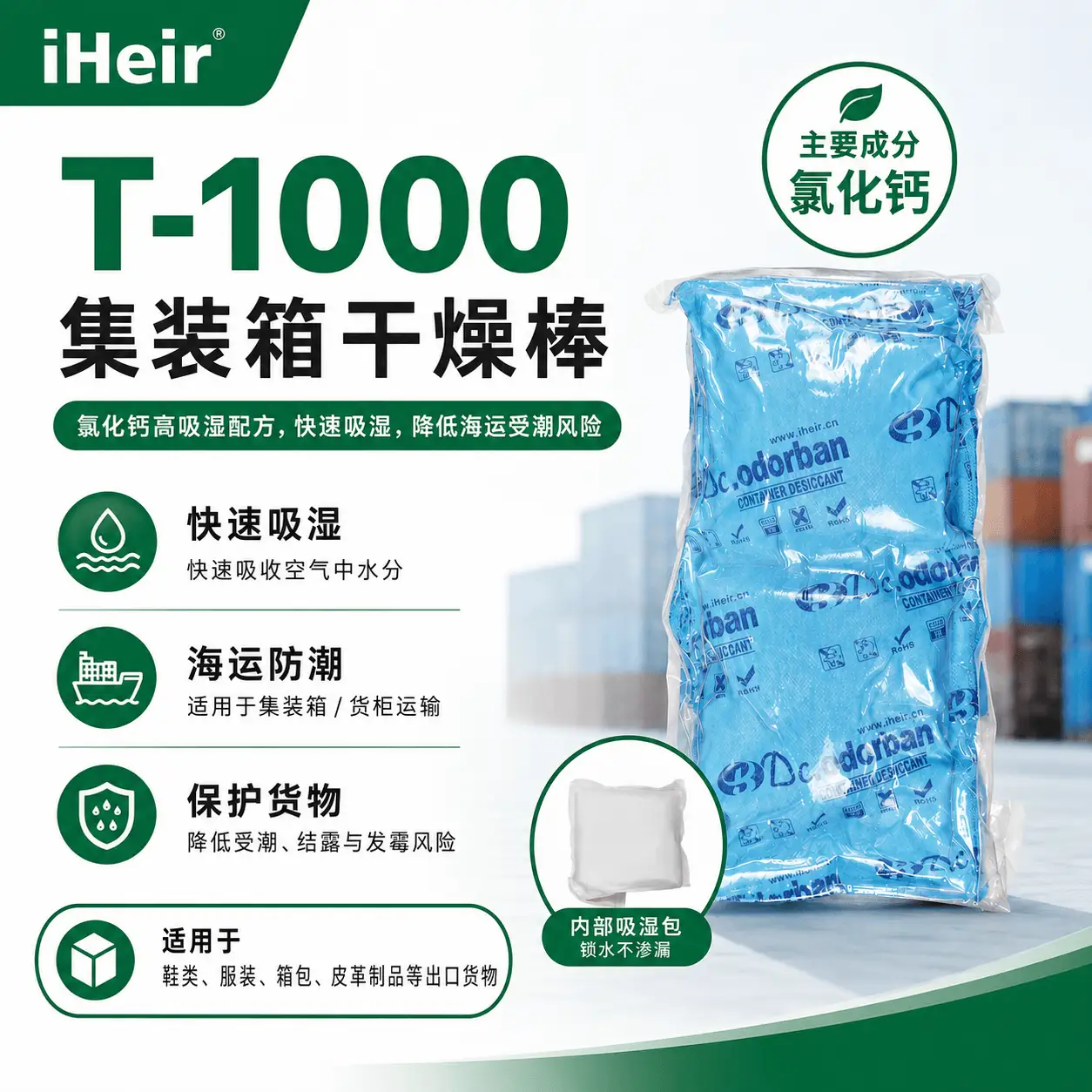
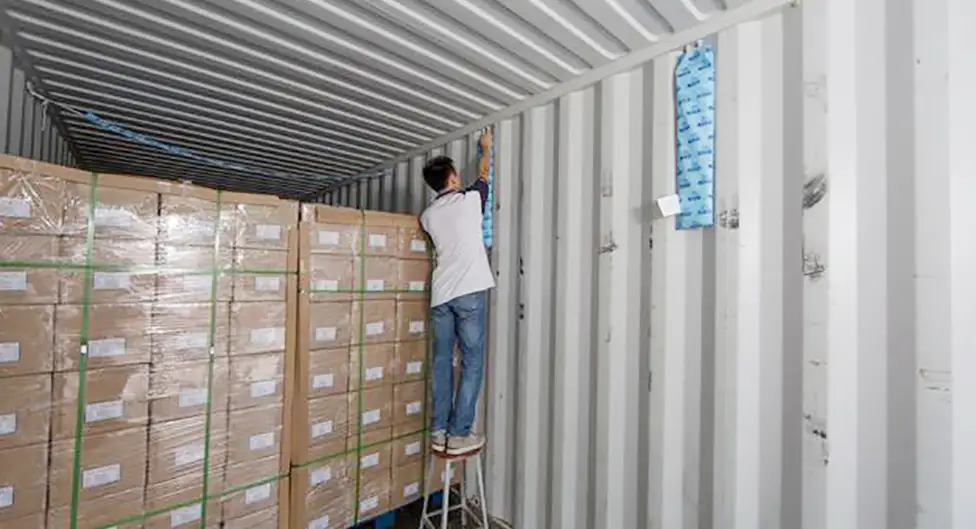
- Desiccant strips/rods (e.g. T-1000): hang in the container ceiling grooves, take no cargo space, absorb up to 3x own weight, designed for 40-60 day sea transit — the mainstream for export containers.
- Multi-function packs (e.g. CH-10): moisture + mold + antibacterial + odor control in one, ideal for odor-sensitive furniture, footwear and pet product containers.
For metal cargo, choose VCI anti-rust desiccants — see How to Choose VCI Desiccants? Anti-Rust Plan.
2 Three Hard KPIs That Expose the Product
No matter the sales pitch, contract and acceptance should rely on three measurable indicators:
KPI 1: Moisture uptake. Ask for a third-party uptake curve: at 30°C, 90% RH over 7 days, silica gel should reach ≥30%, and strip-type products ≥100% of own weight (a 100 g strip absorbs 100 g+). Cheap desiccants commonly deliver only half the declared uptake.
KPI 2: Pouch strength and leak resistance. Container temperatures can hit 50-60°C; poor non-woven pouches tear and leak absorbed water onto cargo — worse than no desiccant at all. Run a drop test: saturate with water, drop from 1 m; the pouch must not tear or leak.

KPI 3: Batch consistency. Require a batch report (moisture content, uptake) with every shipment and support arrival sampling. A Pearl River Delta forwarder once bought 20,000 “bargain” strips; arrival sampling found 1 in 3 failed uptake — 300 containers had to be reworked and re-loaded. Money saved never covers one such claim.
3 Does the Supplier Give You Dosage Plans and Reports?
Dosage is not guesswork: a 20ft container generally takes 5-8 T-1000 strips (or 500-800 g desiccant), a 40ft 10-15 strips; add 30%-50% in the humid season (Jun-Sep) and tropical routes. For the full formula and seasonal factors see How Much Desiccant Goes in a Container?.
A serious supplier hands you a loading table plus placement diagram (hang in ceiling grooves, away from positions that drip onto cargo, one strip every 3-4 m) instead of just a price. Also require: REACH/RoHS declarations (mandatory for EU), MSDS and a third-party uptake report. For the full shipping moisture-control process see Container Rain Prevention.
4 Price on “Effective Moisture Uptake”, Not per Kilo
Never compare desiccants by price per kilo; compare cost per kilogram of water absorbed = price ÷ effective uptake. Supplier A: USD 1.1/kg at 100% uptake; Supplier B: USD 0.6/kg at 30% uptake (often poor bentonite) — on effective uptake B is 67% more expensive.
For hardware and machinery, combine T-1000 strips with anti-rust packaging to cover rust as well as mold — see Hardware Mold & Rust Control.
5 Real Case & Supplier Audit Checklist
Real case: A Ningbo trading company shipped 12 high-cube containers (sanitary ware + furniture) to Europe in 2024 using cheap bulk desiccants with no pouch test report. High in-transit temperatures caused leakage; 8 containers arrived with mold stains — claims and handling exceeded USD 170,000. After switching to proper T-1000 strips plus PowerDryer F-series packs, 20 consecutive containers on the same route arrived mold-free. Final checklist step: ask for 3 verifiable case references from export customers in your industry, and audit by video or on site (production line, warehouse, testing equipment).
FAQ — Desiccant Sourcing Questions
Q1: Is more desiccant always better?
A: No. Excessive desiccant can pull normal moisture from cargo (e.g. wood cracking from over-drying). Follow the supplier’s table: 5-8 strips for 20ft, 10-15 for 40ft, +30%-50% in humid seasons.
Q2: Silica gel or calcium chloride for containers?
A: For sea freight choose desiccant strips (T-1000) or high-uptake packs. Pure calcium chloride absorbs fast but can leak and corrode — confirm the manufacturer applied leak-proof lamination.
Q3: Do desiccants expire?
A: Sealed shelf life is generally 1-2 years. Test moisture content on arrival; above 10% means storage exposure — reject or replace.
Q4: EU requirements for desiccants?
A: REACH compliance and correct MSDS transport declaration; food-contact packaging desiccants need a food-grade statement.
Q5: How to verify supplier reports?
A: Check the third-party lab number is verifiable, the date is current and the sample description matches your product; be wary of “self-inspection only” suppliers with no third-party data.
Choosing desiccants and a supplier for your export containers? Tell us container size, route and cargo type — contact us for a free loading plan and samples.