




 View Count:51
 Date:2026-10-10
Keyboard mould has two ABS parts to deal with, so should the keycaps or the shell be treated first? The keycaps and the shell are both ABS but come from two moulds and two moulding stages, and the spots usually start in the keycap gaps and along the shell edges. Dark keycaps and shells take iHeir-ECO plastic antimicrobial agent at 0.3%-1.0% on part weight, and pale or clear parts switch to iHeir-IPL inorganic plastic antimicrobial agent at 0.8%-1.0%. This article covers the two figures and the test on the finished keyboard.
1. Where the mould comes from: keycaps and shell, two ABS parts
The plastics in a keyboard sit in two places: the keycaps and the shell, meaning the top cover and the base. Both are ABS, but the moulds and the moulding parameters differ, and so do the wall thickness and the surface requirement, so damp reaches them differently and one figure cannot be copied onto the other.
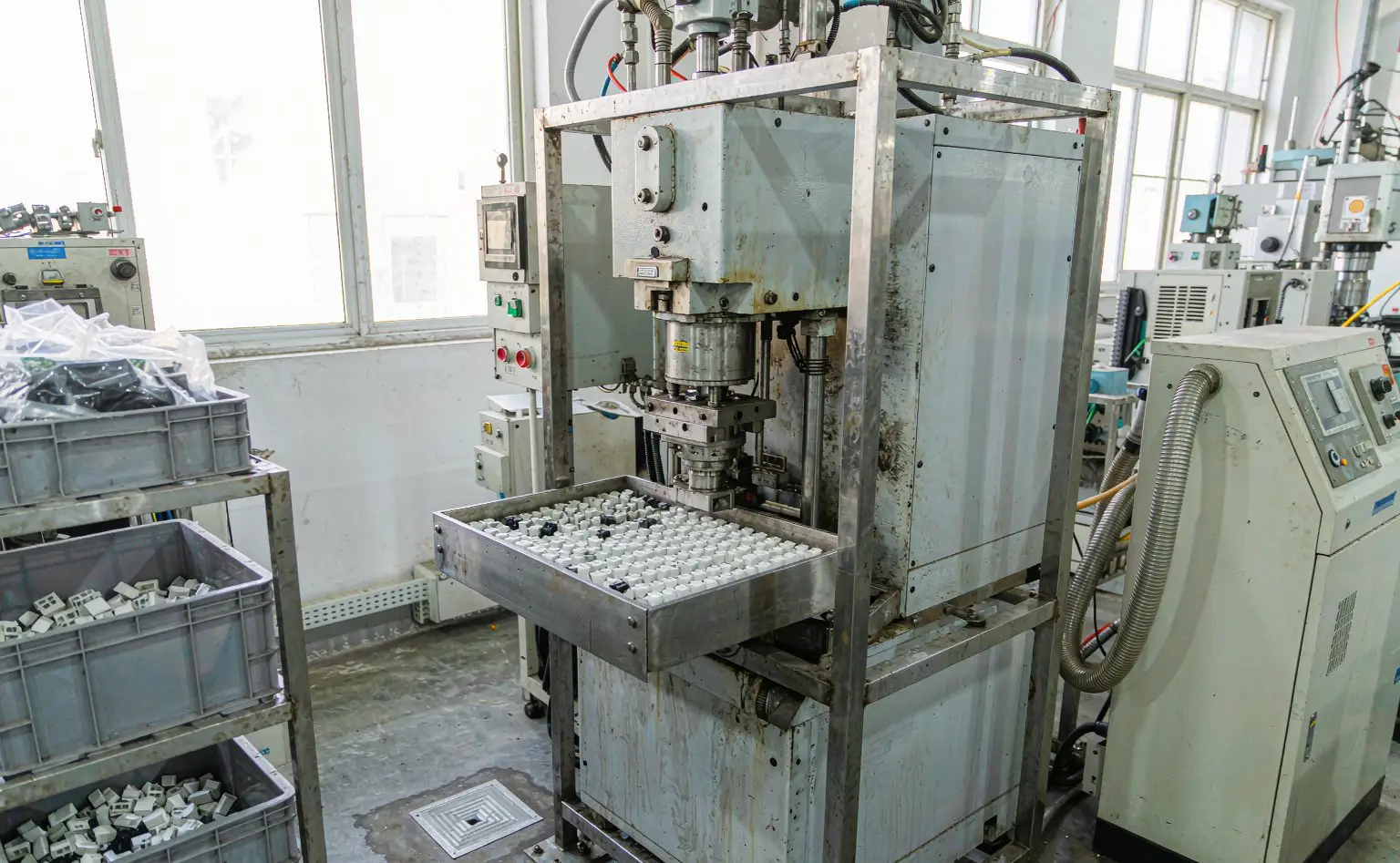
On the keycap line the parts are small and thin with a short cycle, and they land in a bin where gaps collect dust and water; a keycap is also touched by fingers all day, so oil and sweat stay on it and it is the first place to fail. On the shell line the top cover is large with a visible face and often a high regrind ratio, undried pellets carry water, and release agent stays on the surface, so a stack that gets no air turns grey within days.
Colour matters too. Dark parts tolerate shade variation and take a standard plastic antimicrobial agent; pale and clear parts are sensitive to yellowing and haze and need an inorganic grade with high whiteness and a fine particle size, otherwise the additive itself spoils the appearance. This is the point most easily missed on a multi-colour product like a keyboard.
2. The two ABS parts at a glance
The table lines up the part, the colour, the product, the figures and the points to watch, so it can serve as the first draft of a process card.
| Part | Colour | Product | Figures | Points to watch |
|---|---|---|---|---|
| Keycaps and shell, dark | Dark ABS | iHeir-ECO plastic antimicrobial agent | 0.3%-1.0% on part weight | In with the masterbatch or a premix; thermal stability 240 degrees, clear of 320 degrees |
| Keycaps and shell, pale or clear | Pale or clear ABS and PC | iHeir-IPL inorganic plastic antimicrobial agent | 0.8%-1.0% on part weight | Whiteness above 90 and 1-2 micron particle size, holding to 300-320 degrees; run a sample for shade first |
| Keycap gaps and guides | Assembly faces | Damp control only | Below 60% relative humidity | Clean benches and bins on a schedule; blow the gaps clear of dust |
| Finished packing | Liner and paperboard | Damp control only | Below 60% relative humidity | Check the liner moisture before cartoning; add a gas-phase sheet by box |
One conclusion from the four rows: both parts are figured on part weight, but pale and clear parts need a grade that does not yellow, and the gaps and the packing take no agent at all.
3. Dark parts: ECO goes in at mixing and plasticising
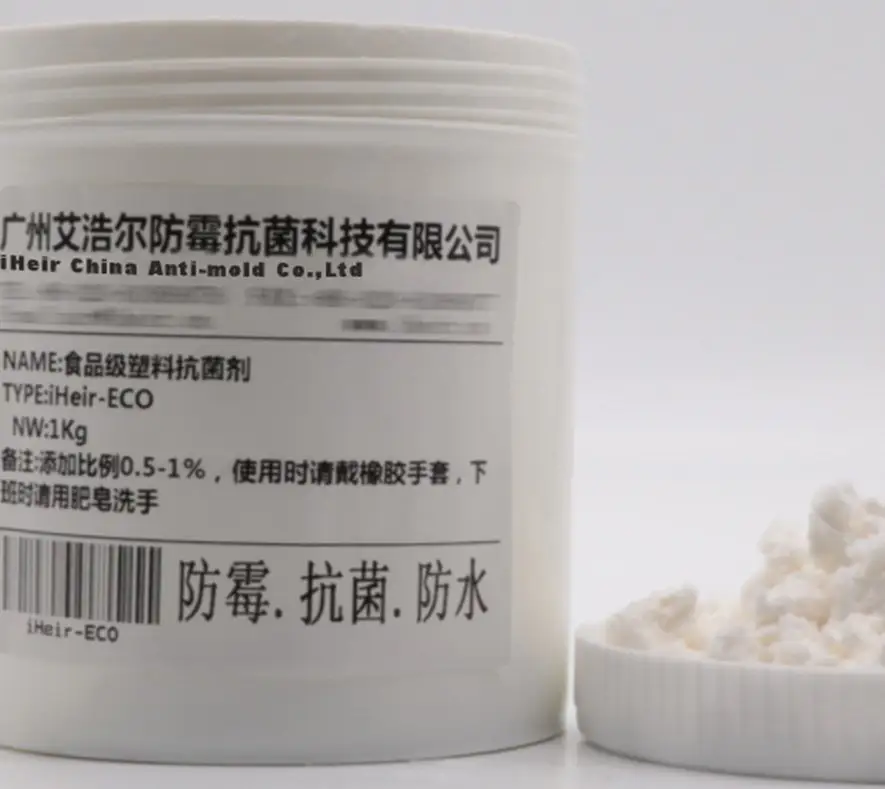
Dark keycaps and shells take iHeir-ECO plastic antimicrobial agent at 0.3%-1.0% on part weight, with general PE and PP at 0.3%-0.5%, premixed with the compound or made into a masterbatch before the barrel. ECO bonds with the resin and is distributed through the whole part rather than sitting on the surface, so the tapping friction on a keycap, washing and wiping will not rub it off; thermal stability reaches 240 degrees and the process temperature should stay clear of 320 degrees.
Three details. First, the figure is on total part weight, regrind included, and since keycaps and shells are often run with regrind, any change in the ratio means recalculating. Second, keycaps are thin and cycle fast, so the additive has to be premixed and dispersed evenly, because powder tipped straight in tends to leave colour specks on a small cap. Third, verify the antibacterial rate by an ISO 22196 method on a swatch, and submit swatches of both the keycap and the shell when the finished keyboard is tested.
4. Pale and clear parts: IPL goes in on part weight
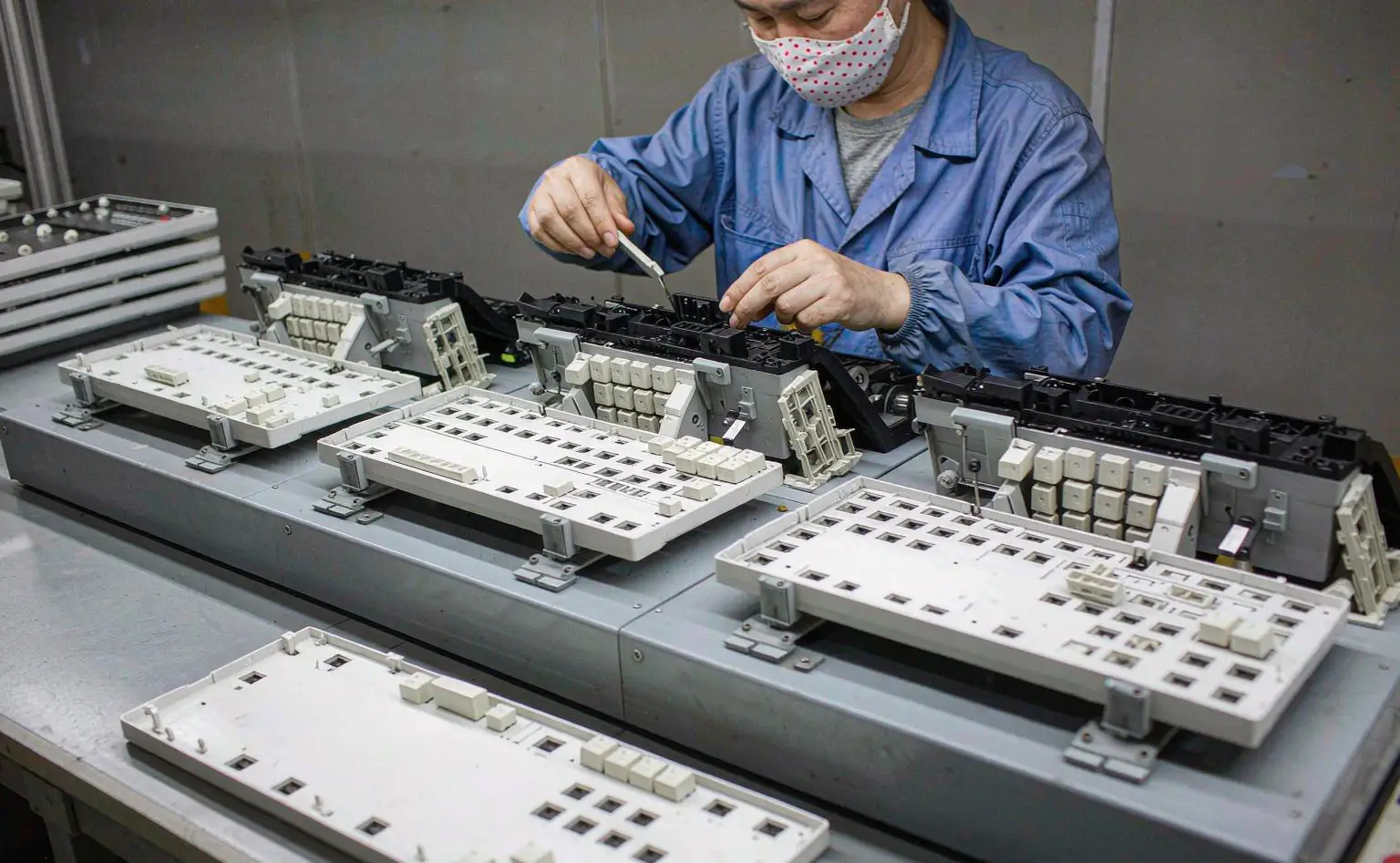
Pale and clear parts switch to iHeir-IPL inorganic plastic antimicrobial agent at 0.8%-1.0% on part weight. Its active core is inorganic, whiteness is above 90 and the particle size is 1-2 microns, so it does not yellow or cloud in pale and clear parts and holds to 300-320 degrees, which suits keycaps and light-effect housings that are sensitive to light transmission and shade. IPL also sits well with resin, so it can be mixed in directly or made into a masterbatch first.
Three details. First, run a small sample on clear parts to check light transmission and shade before a full batch, and do not run a dark-part compound in a clear part. Second, screen the regrind properly, because impurities cloud the shell and pale parts notice it first. Third, clean the barrel and the mould when the colour or the compound changes, since leftover material is the most common source of shade variation on pale parts.
5. Keycap gaps and assembly: damp control and cleaning
Assembly and packing dose no agent and rely on plant and warehouse humidity instead. Hold the assembly line below 60% relative humidity, clean benches and tote boxes on a schedule so dust does not carry spores, and blow the keycap gaps and guides clear before assembly, because the dust and oil that settle in a gap are where mould and bacteria take hold. Measure the liner moisture before cartoning, and do not bag a warm part, because a temperature difference condenses inside the bag first.
Add desiccants by carton type for export, since a sea voyage is long and container condensation is harder to control than a warehouse. Where a keyboard has already spotted, work out first whether the spores came in with the compound or from damp in the store, following masterbatch or powder for plastic antimicrobial, and decide between rework and downgrading rather than scrapping everything.
6. Questions that come up: one product for both, and how to choose for pale parts
Can the keycap and the shell share one product? Yes, but by colour. Dark parts use a standard plastic antimicrobial agent and pale or clear parts move to a grade that does not yellow; both are figured on part weight, so neither the grade nor the figure can be copied across.
Which grade suits a pale keycap? Judge it on whiteness and particle size, choose one that does not yellow and disperses finely, and run a sample for shade and light transmission first; a dark-part compound cannot be used in a pale part, and the two do not lend to each other.
A keyboard has spotted already, is wiping it enough? Work out the source first. Spots from surface damp can be cleaned and dried and the humidity then tightened up; a batch whose spores came in with the compound or with a high regrind ratio will spot again after cleaning, and the answer is to go back to the mixing stage and re-dose.
Two points carry the dosing: dark keycaps and shells go in at the mixing and plasticising stage (iHeir-ECO at 0.3%-1.0% on part weight) and pale or clear parts switch to iHeir-IPL (0.8%-1.0% on part weight), while assembly and packing hold both results with damp control and cleaning. Samples and TDS sheets are available for a trial on your line.


