




 View Count:26
 Date:2026-11-18
Knee pad mould has to be handled at the foam layer first: open-cell foam drinks sweat, and a pad stuffed straight into its bag after a session keeps all of that water between the layers, so a treated sleeve on its own achieves little. Bath the knit sleeve and the liner together at 2%-3% o.w.f. with iHeir-BJ, and put one iHeir-D sheet of 0.1-0.2 g in every outer bag. This article covers the bath, the foam stage and the sheet count.
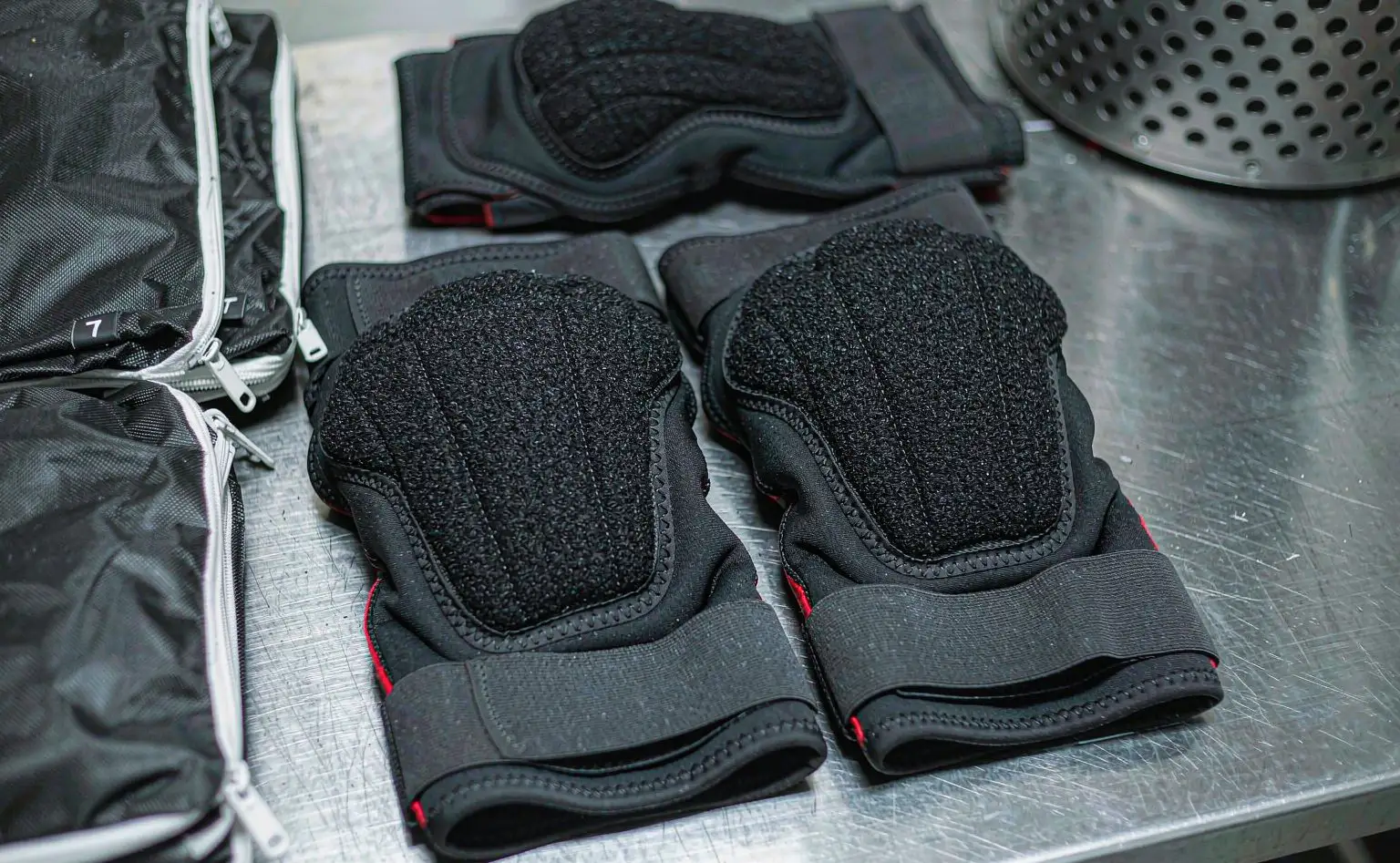
1. Which layer the mould starts in: foam, sleeve, bag
A knee pad is a knit sleeve, an open-cell foam pad and a liner laminated together, then packed in a coated fabric bag. They take up water at very different rates, and mould starts in the one that dries slowest.
The foam holds the most. Open-cell foam has connected pores, sweat runs in and one pad can hold several times its own weight in water. Sealed in a bag straight after use, that water has nowhere to go: two days is enough for a smell and a week for spots on the foam surface.
The sleeve keeps dust out but not moisture. A knit sleeve absorbs sweat and holds water in the gaps between fibres. A bath protects the fabric, but the liquor cannot reach the foam in a pad that is already laminated.
The bag seals it in. Outer bags are coated fabric or laminated film with low breathability; without a vapour source inside, foam moisture circulates in the bag and condenses again.
Three stages, three measures: a bath for the sleeve and liner, process control to take the water out of the foam, and a vapour sheet in the bag. Do only the fabric and the first use brings the damp back.
2. Bathing sleeve and liner: 2%-3% o.w.f. at 21-50℃
Dose on the dry fabric weight. iHeir-BJ goes in at 2%-3% o.w.f. Three kilos treats 100 kilos of fabric; at 70% wet pick-up, pre-mix it with 9-13 kilos of water and add in portions rather than pouring into a concentrated liquor.
Bath conditions. Hold 21℃-50℃ and pH 4.5-8.5. BJ is a cationic system and cannot share a bath with anionic auxiliaries; where an anionic softener or soaping agent ran earlier, confirm there is no carry-over before the fabric goes in.
Sleeve and liner in one bath. The two wet out at different rates, so load the heavy one first and the light one five minutes later; bathed separately, pads from one order come out mismatched in shade and handle.
Dry on the setting range. Do not air-dry at low temperature: fabric that stays wet for hours loses the finish before it fixes. Check shade on dark colours after drying, and rework the lot if it goes pale.
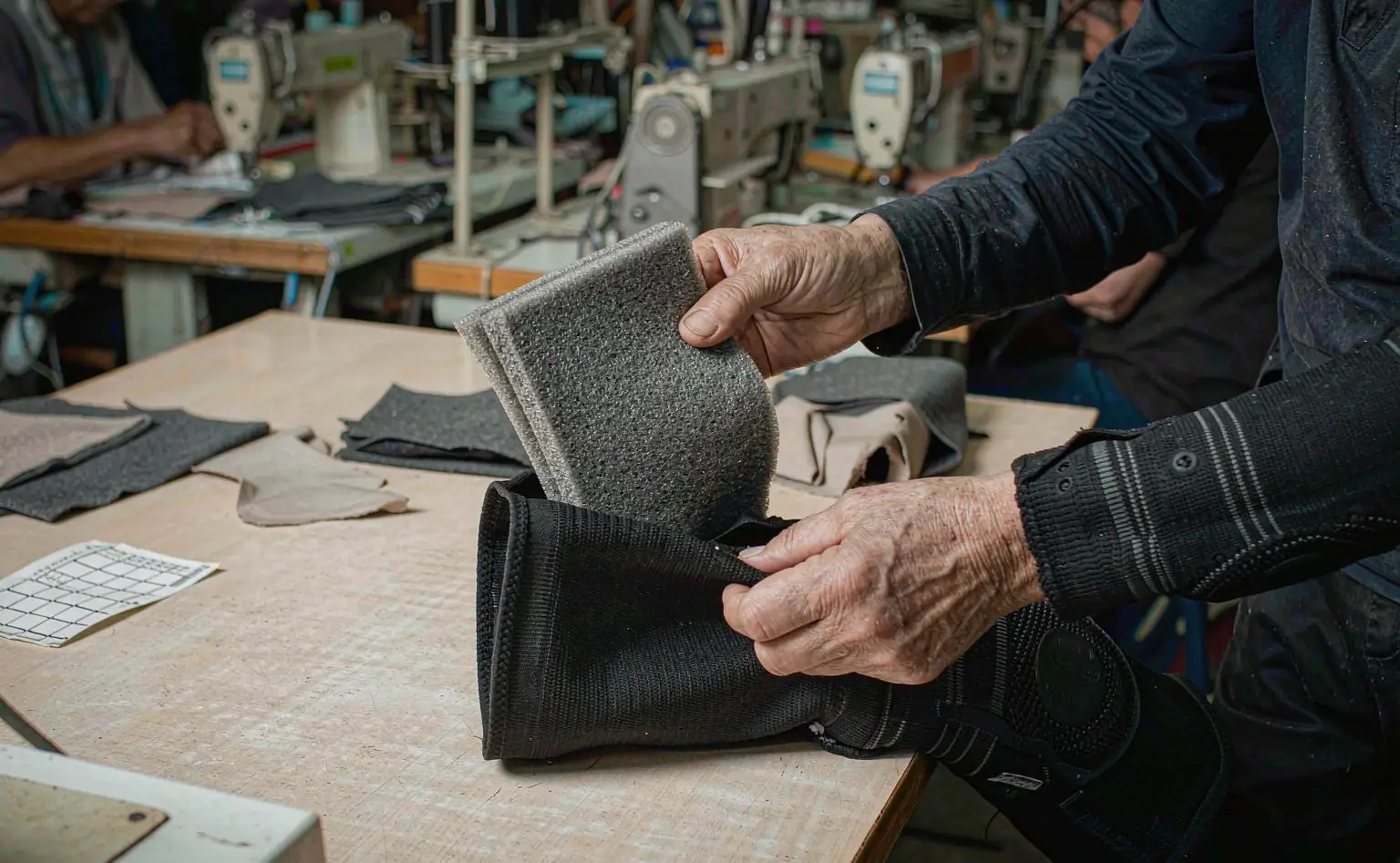
3. The foam stage: cure, punch, blow, never stack wet
The foam never enters the bath. Its problem is that water goes in and does not come out, so this stage is about process rather than dosage.
Cure it fully. Give foam its full cure time after moulding before cutting. Under-cured foam recovers slowly and its cell structure is unstable, and no amount of drying later keeps it from picking moisture back up.
Blow after punching and trimming. Punching and skiving leave swarf and water on the cell walls; blow it out with an air supply that passes a water trap, because wet air does nothing.
Never stack wet. Store cut foam on edge or on racks instead of in a stack overnight; the sheets in the middle cannot dry, and the mould starts in those sheets after lamination.
Check moisture before laminating. Sample the foam before it meets the sleeve. Pieces that feel cool or give off damp when pressed go back to the dryer; once laminated, the water is sealed inside the sandwich.
| Part | Material | Product and level | Stage | Control point |
|---|---|---|---|---|
| Knit sleeve | Polyester or nylon knit | iHeir-BJ at 2%-3% o.w.f. | One-bath finishing | 21-50℃, pH 4.5-8.5 |
| Liner | Mesh or fleece | iHeir-BJ at 2%-3% o.w.f. | Same bath as the sleeve | Heavy first, light five minutes later |
| Foam layer | Open-cell PU foam | No addition | Cure, punch, blow | Moisture checked before lamination |
| Outer bag | Coated fabric or film bag | iHeir-D one sheet per bag at 0.1-0.2 g | Sheet in before the pad | Bag sealed, sheet not crumpled |
| Export carton | Carton | Sheet count follows the bags inside | Packing | No undried goods in the carton |
One boundary. BJ covers the fabric, the process covers the water in the foam, the sheet covers the air in the bag. In series, and no fabric finish saves a pad that goes into the bag wet.
4. The outer bag: one sheet per bag, in before the pad
One sheet, one bag. iHeir-D carries 0.1-0.2 g per sheet, so count sheets by the number of bags. Two pads in one bag means two sheets, and do not stuff both into one corner: the vapour works by diffusion, so a corner protects a corner.
Sheet first, pad second. Lay the sheet in the bag bottom and put the pad on top. Pushed in through the opening afterwards, the sheet crumples against the fabric and loses half its diffusion area.
Seal the bag. Zip or heat-seal the coated bag; a bag left open spends the sheet on room air, so its life counts in days rather than weeks.
Keep the sheet off metal. Where the pad has metal buckles, put fabric between sheet and metal; under damp conditions it can corrode poor-quality parts.
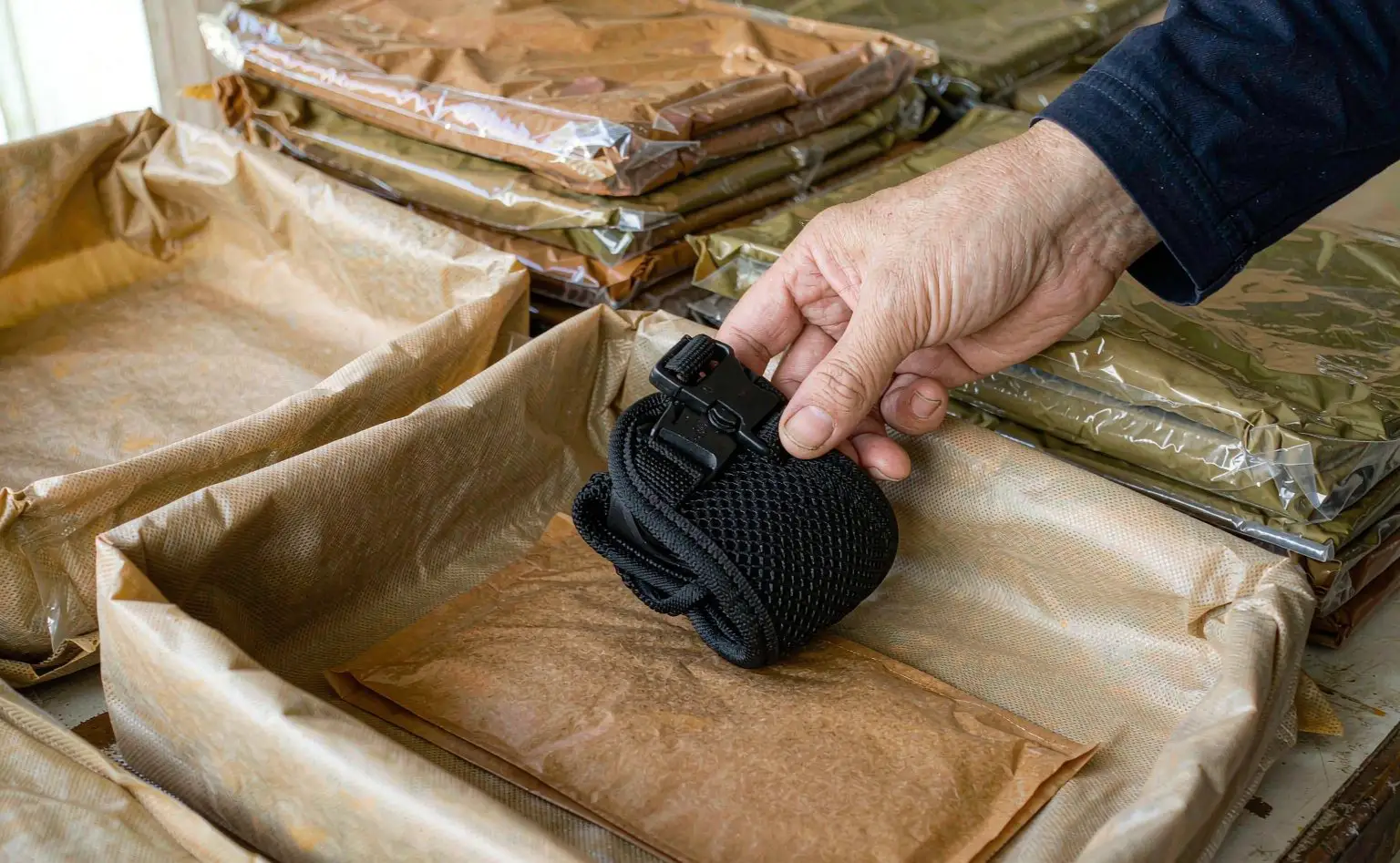
5. Packing, store and container
Confirm dry before cartoning. Leave at least 24 hours between lamination and packing. A pad still warm from the line condenses water as soon as it is bagged.
Line the carton. Put a PE liner in the carton, stack the bagged pads neatly, and never mix undried goods or samples into a carton: one damp pad takes the whole box with it.
Control the store. Hold the finished store below 60%RH and run a dehumidifier in the wet season; pallets 10 cm off the floor, 20 cm off the wall, with gaps between stacks.
Loading the container. Check floor and wall moisture, line the walls with a vapour barrier, put board under the load and hang drying rods inside the doors. Over thirty to forty days at sea the condensate settles at the bottom, so the bottom pallet gets extra board.
Open one bag on arrival. The buyer should open a bag, smell the pad and feel the foam; cool foam or a damp bag points to a sealing or sheet problem, and both belong on the receiving sheet.
6. Questions from buyers
Q: The sleeve is finished, does the foam need its own treatment?
A: The foam never enters a bath; it is handled by process, with a full cure, a blow after punching and a moisture check before lamination. Dosing it leaves liquor in the open cells, harder to dry than water.
Q: Does BJ change the handle or the stretch?
A: Not at 2%-3% o.w.f. Overdosing stiffens the knit and costs stretch, and on dark colours it can go pale, so stay at the middle of the range.
Q: Is one sheet per pad enough?
A: Yes. The space in a bag is small and diffusion is quick, so 0.1-0.2 g per sheet matches one bag; for oversized pads or double bagging, count the pads actually inside.
Q: A customer says the pad went mouldy after one wash, was it treated at all?
A: The finish sits on the fibre and washes out gradually. Dry the pad fully before storing it and never bag it damp; for wash-resistant orders, improve the fixation and test the effect after the specified number of washes.
Bath sleeve and liner together at 2%-3% o.w.f. with iHeir-BJ at 21-50℃ and pH 4.5-8.5, cationic, never with anionic auxiliaries, and dry on the setting range; cure the foam, blow it after punching, check moisture before lamination and never stack it wet; put one iHeir-D sheet of 0.1-0.2 g in each bag before the pad and seal it; leave 24 hours before cartoning and hold the store below 60%RH. Mould resistance can be verified to GB/T 24346 and ASTM G21, and dosage details are on the iHeir-BJ product page.


