




 View Count:22
 Date:2026-11-19
Where does shuttlecock mould start, and how dry must the cork base be before the tube is filled? Feathers are washed and set, so their moisture is under control; the cork base is the real source. Dry the pressed base to 8%-10% moisture before bonding, dose the glue at 1%-2% on its own weight with iHeir-JS, and put one iHeir-D sheet at 0.1-0.2 g in each tube. This article covers the moisture criteria, the ratio and the sheet count.
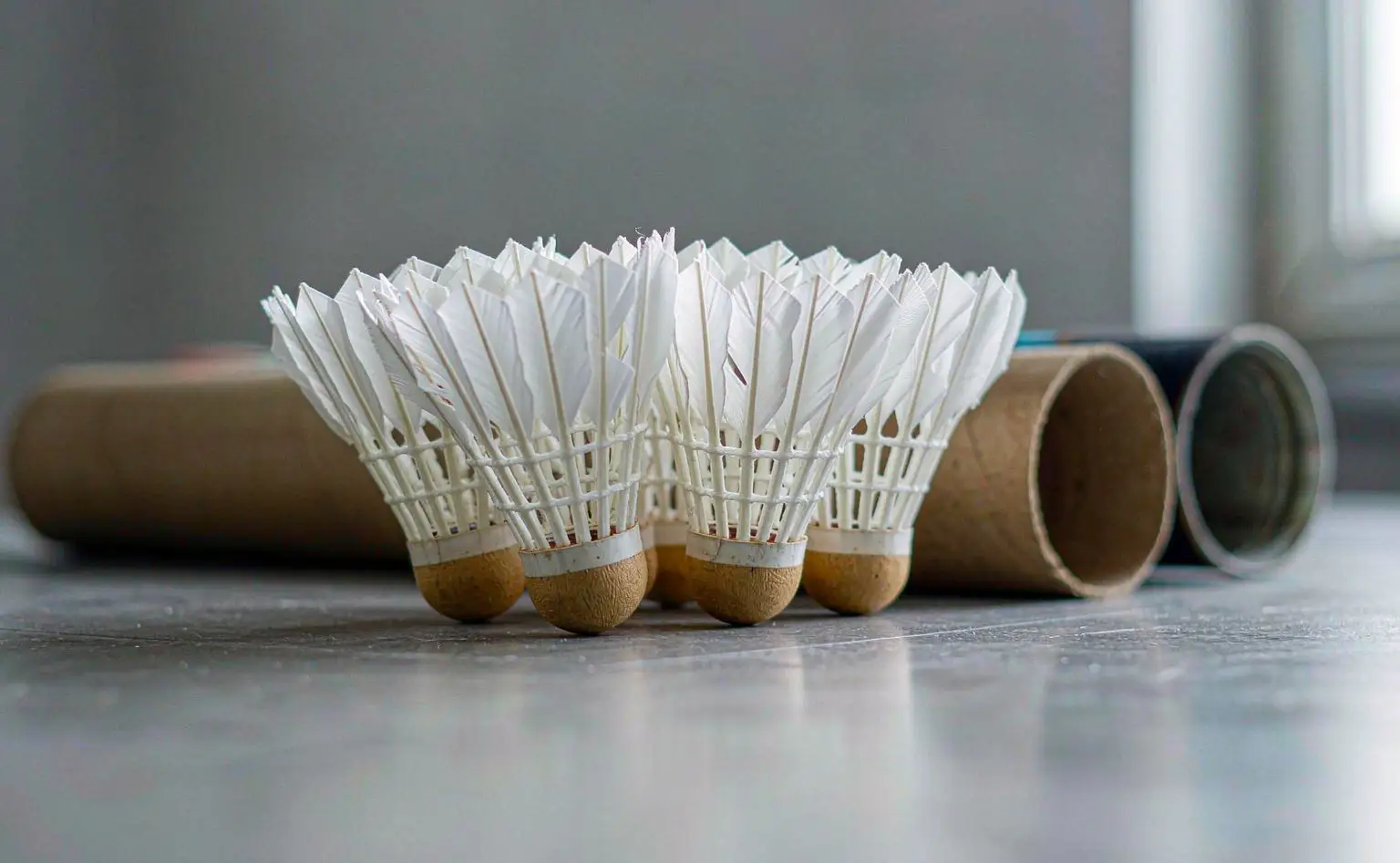
1. Where the mould comes from: base, glue line, tube
A shuttlecock has three parts: feathers, cork base and glue. Mould goes for the last two.
The cork base is the main source. The base is not solid cork but ground granule pressed with adhesive, so there are gaps between particles; the granule carries water in, the glue brings more, and a base that is not dried through keeps it inside. Spots then climb up the base rim.
The glue line comes second. Feathers are fixed into the base with glue, and that glue is starch, protein or resin, which is food in itself. With water in it and no anti-mould component, the glue line shows spots within a week of setting.
The tube seals it in. A paper cap at one end and a plastic cap at the other make the tube close to airtight; the vapour from the base cannot leave and keeps condensing on the base surface.
So the work is three stages: dry the base, dose the glue, sheet the tube. Washing and setting the feathers is a routine stage, not the one that decides whether the tube stays clean.
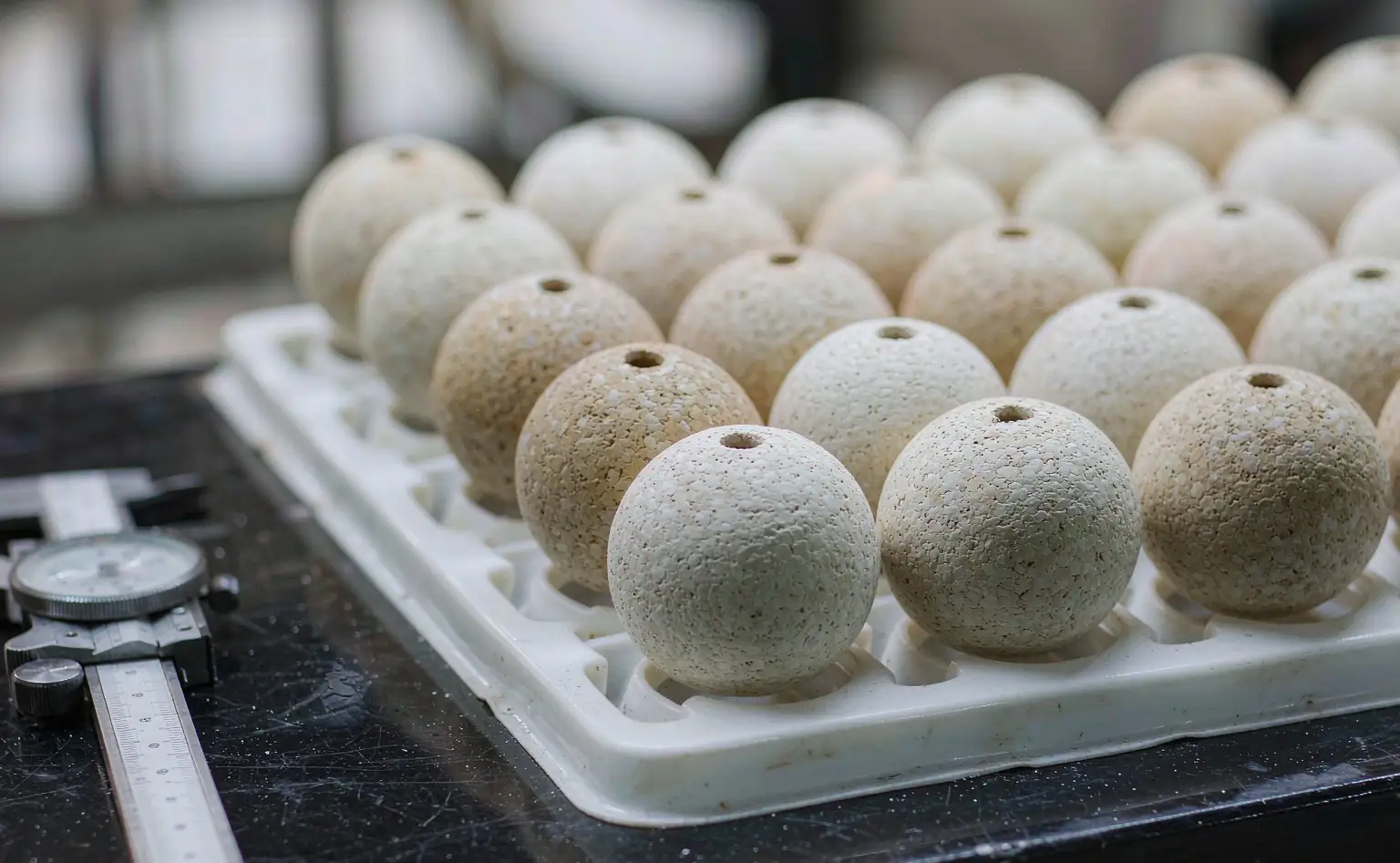
2. The cork base: dry to 8%-10% before bonding
Grade the granule first. Particle size sets how dense the pressed base turns out, and a coarse mix with wide gaps takes up more water. Keeping one grade per batch is what makes the moisture figures stable.
Dry straight after pressing. Bases leave the press wet; run them to 8%-10% in the oven. That band is the bonding and feathering window: wetter and the water is sealed in at bonding, drier and the base turns brittle and cracks when the feathers go in.
Test, do not feel. Sample 5-10 bases per batch on a fast moisture meter and log the reading. A base that feels firm and cool is not necessarily dry, and a dry skin over a wet core is the usual failure.
Keep them out of the damp. Baked bases go into lidded plastic boxes with a desiccant sachet, not left open next to the washing station; two hours of shop air undoes the drying.
3. Bonding: 1%-2% in the glue, pH 6-7
Dose on glue weight. iHeir-JS goes in at 1%-2% of the glue weight, not of the base or the feathers. Take the upper figure for a thick glue line and the middle of the range for a thin one.
Dilute before adding. Thin the agent with a little water and add it along the wall of the mixing tank over ten minutes of stirring. Poured neat into a thick glue, it over-concentrates locally and leaves colour variation and lumps in the line.
Hold pH 6-7. When the acidic granule drags the glue down, bring it back with a buffer rather than a slug of alkali, which breaks the emulsion and costs bond strength.
Use the batch the same day. Dosed glue should not be recycled overnight; starch and protein in it turn at shop temperature, and once it smells sour no dose brings it back.
| Part | Material | Product and level | Stage | Control point |
|---|---|---|---|---|
| Cork base | Pressed cork granule | No additive | Drying after pressing | 8%-10% moisture, logged |
| Glue line | Water-based glue | iHeir-JS 1%-2% on glue weight | Diluted, 10 minutes stirring | pH 6-7, used the same day |
| Feathers | Washed and set feathers | No additive | Wash, set, dry | Regain checked before store |
| Inside the tube | Paper tube and base | iHeir-D 0.1-0.2 g per sheet | Sheet in the base before loading | One per tube, cap pressed home |
| Export carton | Outer carton | Sheets by tube count | Packing | Barrier film inside |
One boundary. Drying takes the water out of the base, JS handles the organisms in the glue, gas-phase sheets handle the air in the tube. In series: a wet base in a sheeted tube only buys time.
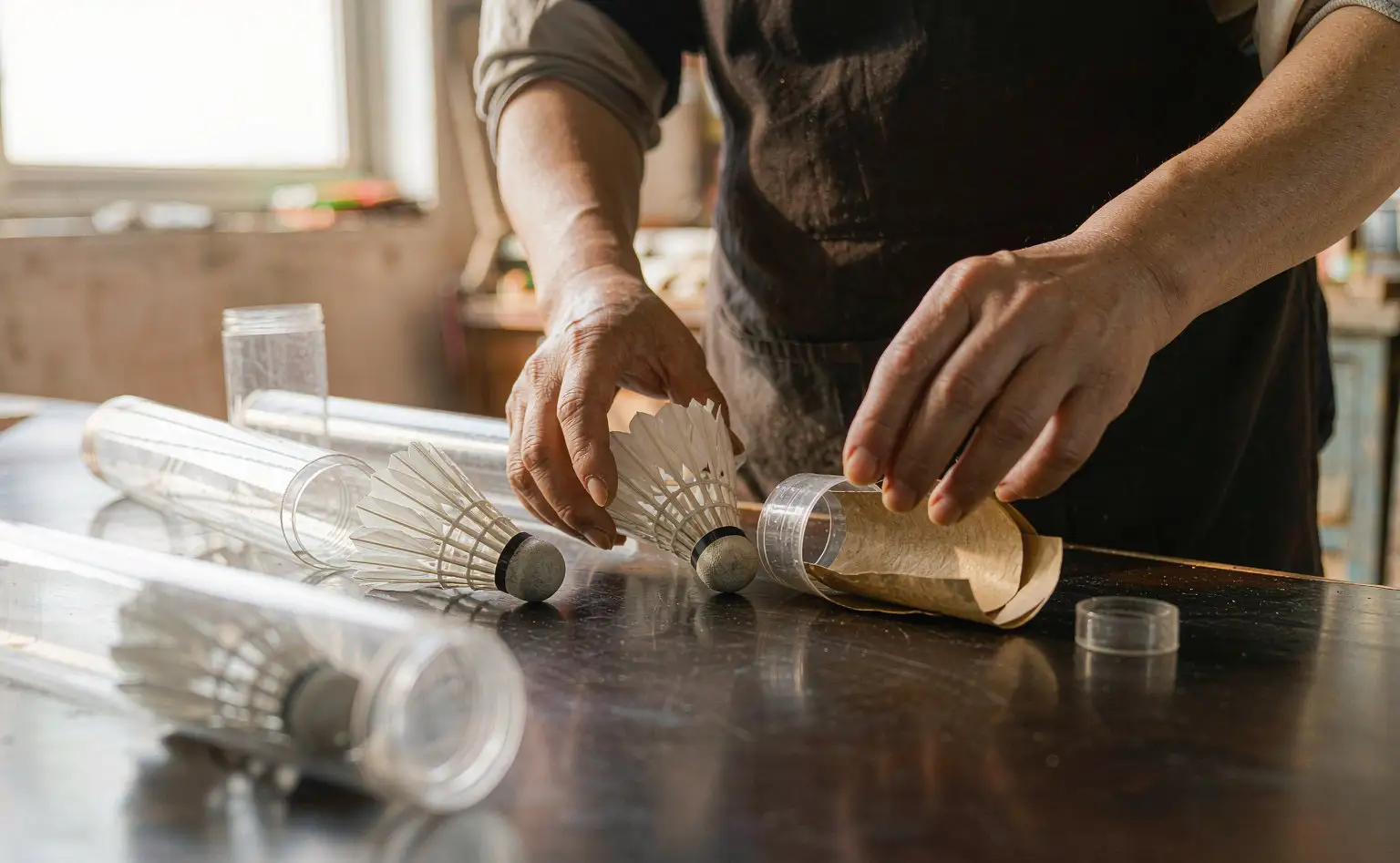
4. Sheeting the tube: one per tube, in the base
Count tubes, not shuttles. Each iHeir-D sheet carries 0.1-0.2 g, and one tube takes one sheet, even a twelve-shuttle tube; the volume is small and the vapour spreads quickly.
Sheet in the base, shuttle on top. Roll the sheet loosely into the tube base before loading and press the first cork onto it. Pushed in at the mouth afterwards, the sheet lies against the feathers and blocks its own spread.
Press the cap home. A paper tube with a plastic cap that is not seated is an open tube; the sheet takes up moisture from the room and its working life drops from weeks to days. Press a few tubes from each lot and listen for the click.
Keep the sheet off the feathers. Leave a little space; a sheet pressed onto feathers picks up their oil and loses effect locally, which is another reason the base is the right place for it.
5. Packing, storage and export
Rest a night before tubing. After bonding and feathering the shuttles still go through setting and inspection; leave them in the shop for twelve hours or more so some of the glue water leaves before the tube closes.
Barrier film and sheets by tube count. Line the outer carton with PE film, add sheets by tube count, and never mix undried goods or samples into a carton; one damp tube takes the carton with it.
Hold the store below 60% RH. Run a dehumidifier in the rainy season, keep pallets 10 cm off the floor and 20 cm off the wall with gaps between stacks, and do not stand tubes directly on the floor.
Container loading. Check floor and wall moisture, line the walls, put board on the floor and hang drying rods behind the doors. For South and Southeast Asia routes, where humidity runs high, add a board layer at the bottom of the stack. Comparable storage practice for cork material is in mouldy cork and storage damp control.
6. Questions from the line
Q: Can surface spots on the base simply be wiped off?
A: No. The hyphae are already between the granules, and the spots return within days in a closed tube. Sort and downgrade the lot, and go back to base moisture and glue dosing.
Q: Does the anti-mould agent in the glue weaken the bond?
A: Not at 1%-2%. Overdosing thickens the glue and cuts wetting, so the glue does not climb the feather and the shuttle sheds feathers; stay mid-range and pull-test the bond.
Q: Would a desiccant sachet do the same job in the tube?
A: It takes up vapour but does nothing about organisms already on the base and the glue line. Gas-phase sheets handle organisms, desiccant handles water, and in a small tube the sheet is the more direct control.
Q: Do the feathers themselves grow mould?
A: They can, but rarely. They are washed, degreased and set, so surface oil and moisture are controlled; the base and the glue line fail first, which is where the effort belongs.
Dry pressed bases to 8%-10% moisture and log the tests, store them lidded with a desiccant; dose glue at 1%-2% iHeir-JS on glue weight, diluted, at pH 6-7, and use it the same day; put one iHeir-D sheet at 0.1-0.2 g in each tube base and press the cap home; rest twelve hours before tubing and hold the store below 60% RH. Mould performance can be verified to GB/T 24346 and ASTM G21, and dosage detail is on the iHeir-JS product page.


