




 View Count:8
 Date:2026-11-10
What does lantern mould control take before the season? Festive stock is built half a year ahead, the starch paste under the paper skin feeds mould, and one humid season leaves white growth inside the carton. The routine is a 1:40 iHeir-M5 immersion-type bamboo and wood fungicide dip to 15%-20% weight gain on the bamboo frame, plus one iHeir-D vapour sheet at 0.1-0.2g of active matter per lantern in the carton. This article gives the dip, the pasting and the cartoning figures.
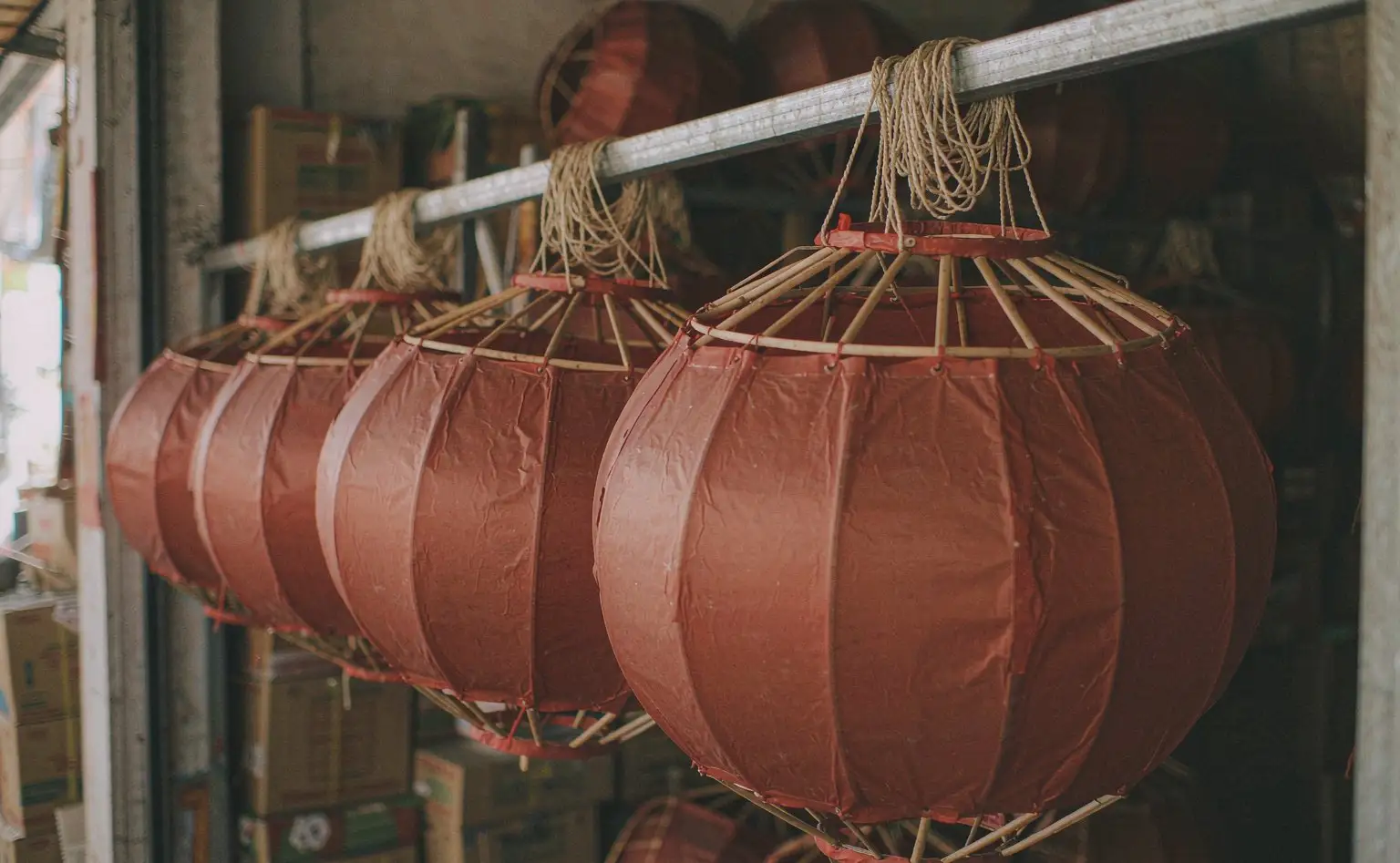
1. Mould shows on the paper and the paste, the cause sits in the frame
Take one paper lantern apart: bamboo frame, paper pasted over it, starch paste, rings, hanging ring and lamp holder. What moulds is the paper and the paste; the water comes from the frame and the paste.
The paste is starch. Paper is laid onto the frame with a starch paste, and starch is a carbon source. The layer is thin and dries fast, so it looks fine, but it forms a film that softens as soon as it takes moisture, and mould starts at the top and bottom seams.
The frame carries water. Bamboo strip holds more moisture than paper, and once a batch is boxed the water in the strip migrates outward into the paper. The paper softens, wrinkles, and spots appear along the line of the frame.
The stock period is long. Festive goods are made half a year early and sit in the warehouse until the season. That half year crosses the humid season, store humidity passes 80% RH, and an unprotected lantern spots within three months.
2. Frame, paste and carton are counted separately
The table lines up the frame, the paper, the paste and the cartoning. The dip is counted as a weight gain, the vapour sheet in sheets; the two are not convertible.
| Part | Material | Product and level | Stage | Control point |
|---|---|---|---|---|
| Bamboo frame and rings | Split bamboo, strip | iHeir-M5 at 1:40 | After frame assembly, before pasting | 15%-20% gain, about 5-10 min |
| Paper skin and paste | Rice paper, starch paste | Moisture control and drying | Pasting, drying | Fully dry before the next step |
| Hanging ring and holder | Wire, lamp socket | Fitted afterwards, no liquor | Assembly | An acidic system, no metal contact |
| Carton | Carton, interleaving | iHeir-D one per lantern, 0.1-0.2g | Cartoning | Only works with the carton sealed |
One boundary. The dip handles the mould and water inside the bamboo, the vapour sheet handles the volume inside the carton. Skip the dip and no amount of paper does more than delay the spots; dip only and the sea freight still wets the load.
3. How long to soak the frame: 1:40, and 15%-20% gain in about 5-10 minutes
Mix one part agent to forty parts water (1:40), for example 5kg of agent into 200kg of water. Submerge the frame completely with nothing above the surface, hold 5-10 minutes and pull it at 15%-20% weight gain.
Why gain rather than time. Thin strip with a thin wall takes water fast, a thick ring slowly, and a factor of two inside one tank is normal. Weigh samples: split the batch into two or three groups by diameter, give each a time band, and accept only the pieces that land between 15% and 20%.
Drain before pasting. Drain the frame, then air-dry or sun-dry before the paper goes on. Pasting onto a wet frame makes a thin, weak bond and seals the water inside the paper, which is a greenhouse for mould.
Metal goes on afterwards. iHeir-M5 is acidic and must not contact or be mixed with metal or alkaline materials. Hanging rings, lamp holders and wire ties are fitted after the dip; on a frame that already carries wire, dip or brush only the bamboo.
Looking after the bath. A continuously used bath loses strength and collects bamboo dust: top it up per shift, change it every two days, and use a plastic or plastic-lined tank. Shake the drum before mixing; it ships in 25kg drums and keeps for a year.
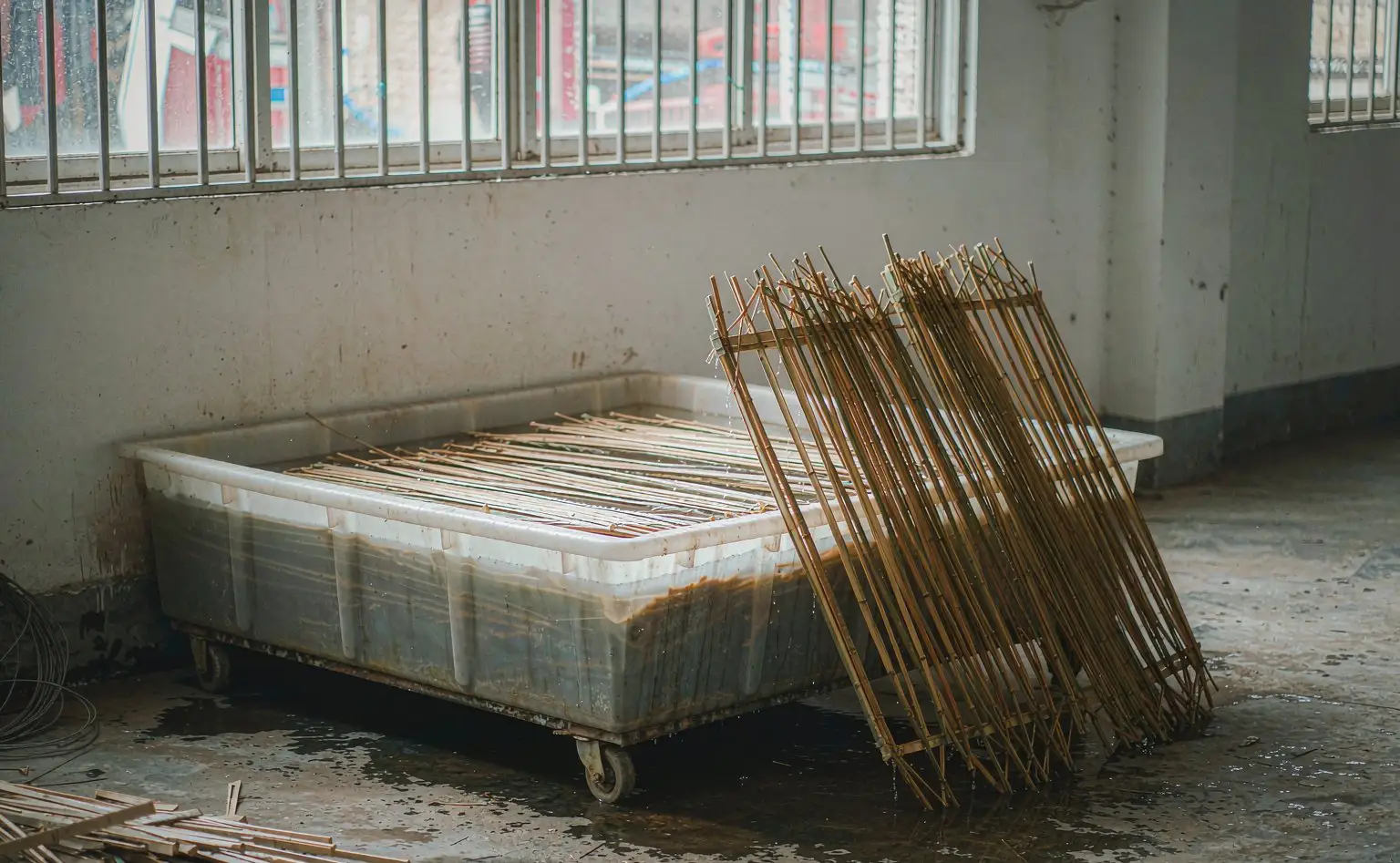
4. Pasting and drying: the water in the paper has to leave
With the frame treated, this stage is about drying the water out, not about adding anything else.
Do not make the paste thin. A thin paste loads the paper with water, dries slowly and leaves a weak layer; set consistency so it hangs on the brush without running.
Dry in two stages. Set at low temperature to take most of the water out, then raise the temperature to dry through. A single hot pass dries the paper while the frame stays wet, and once the batch leaves the dryer the water migrates back into the paper, which wrinkles and spots. Check regain at the dryer exit and only move on below 12% for both paper and frame.
Do not stack them hot. Spread finished lanterns to cool before cartoning; boxed hot, they condense water inside and all of this is wasted.
Shop humidity. Hold pasting and assembly at 55%-65% RH with dehumidifiers through the humid season, and re-test any bamboo material that has stood on the floor for more than a day.
5. Placing the vapour sheets: one per lantern, carton sealed
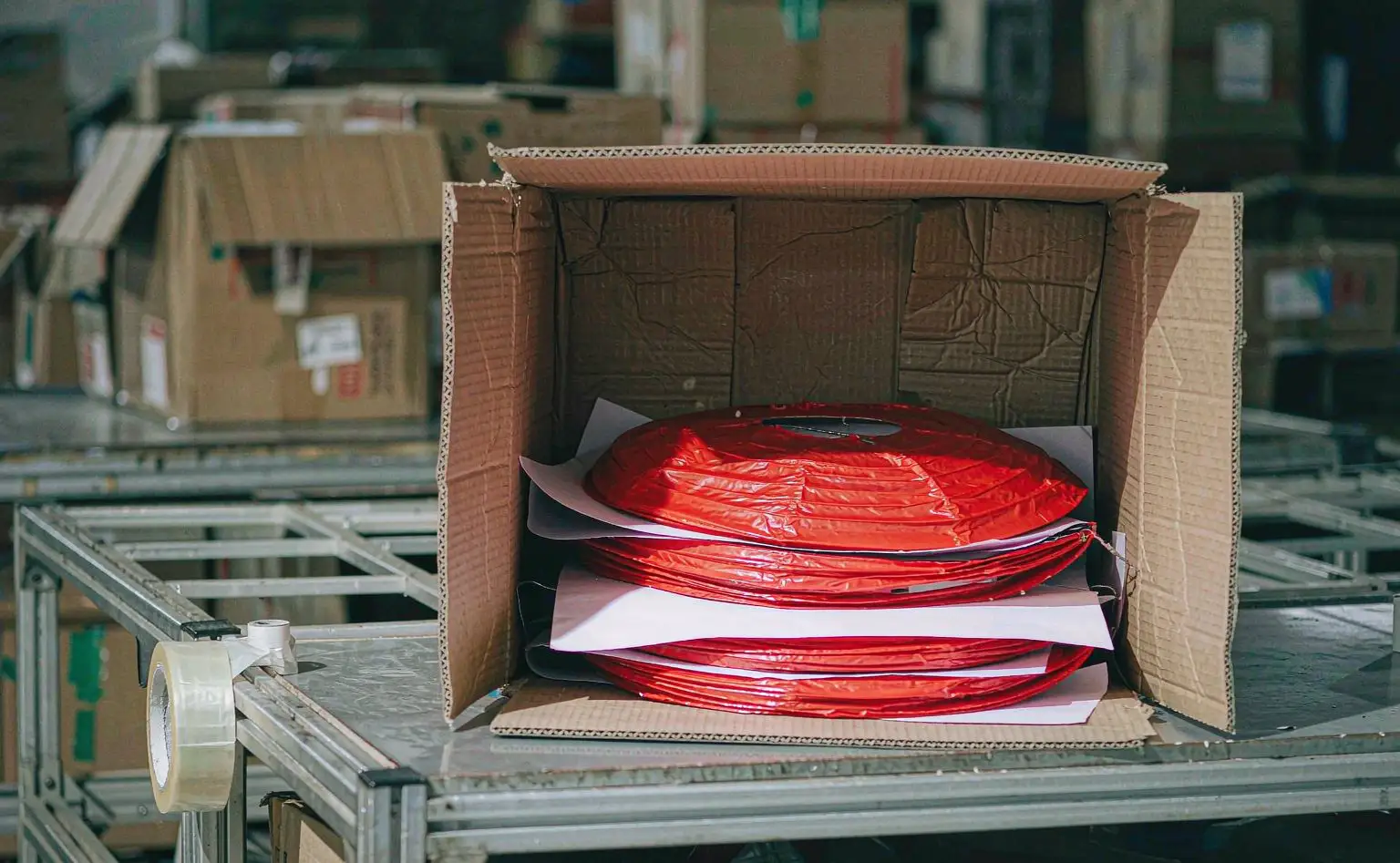
Put one iHeir-D vapour sheet in with each lantern, at 0.1-0.2g of active matter per sheet. For flattened lanterns, one sheet between each pair; for whole ones, lay it above the piece or tuck it into the cavity rather than pressing it onto the paper.
Match the carton volume. A carton of six gets six sheets; a large one of twelve or more gets one per four to six pieces. One sheet at the mouth covers nothing in the corners.
Seal the carton. The sheet works by release, so an unsealed lid and two strips of tape simply vent it. Tape the full seam, press the staples home and avoid repeated inspection openings in storage.
Trial compatibility first. Seal three times the normal dose with one lantern, mist a little water, separate with paper and inspect after a few days for fading paper, a dulled gold stamp or a darkened wire ring. iHeir-D carries 70%±5 solids and can corrode poor-quality metal when damp, so styles with metal parts get the trial first.
Storage and export. Keep the finished store below 60% RH and cartons on pallets at least 10cm off the floor; for full containers, hang desiccant sticks and line the floor with barrier film. A comparable dip routine sits in rattan basket dipping, and the family-wide method in cane dip and brush-on.
6. Questions on dipping, wire frames and spotted stock
Q: With the frame dipped, does the paper need anything?
No additive on the paper; the work there is drying and carton humidity. A spray blooms the red print and dulls the gold stamp, so the three steps are: knock the mould down in the frame, dry the water out, put a sheet in the carton.
Q: What is the difference between five and ten minutes?
The gain. Thin strip reaches 15% in five minutes while a thick ring may need ten. Work to gain rather than one flat time for the whole tank.
Q: How do we treat a lantern with a wire frame?
The wire is not dipped. Dip or brush the bamboo only and rely on drying plus the carton sheet for the metal side. iHeir-M5 is an acidic system: it corrodes iron parts and the agent itself is spent in the process.
Q: Can spotted lanterns still ship?
It depends where. A few spots at a paste seam can be treated and the piece downgraded to a domestic order; paper covered in growth and a blackened frame means scrap the lot.
Four points: dip the bamboo frame in iHeir-M5 at 1:40, fully submerged, to 15%-20% gain (about 5-10 minutes), drain, keep wire and alkaline materials out of an acidic bath and use a plastic tank; dry in two stages so paper and frame both fall below 12% regain before cartoning; put one iHeir-D sheet at 0.1-0.2g of active matter with each lantern, one per four to six pieces in large cartons, seal the carton fully and trial at three times the dose; keep the finished store below 60% RH and hang desiccant sticks in export containers. A kilogram of agent and a pack of sheets go out for a trial, with MOQ on the iHeir-M5 product page.


