




 View Count:7
 Date:2026-11-10
How do you deal with thermos flask mould? It usually starts on the lid gasket and in the water film left inside the liner, and a gasket refitted while still damp spots within a week. The routine is iHeir-IPL inorganic plastic antimicrobial at 0.8%-1.0% of compound weight in the gasket, a wiped-dry liner before assembly, and one iHeir-D vapour sheet at 0.1-0.2g of active matter in the colour box. This article covers the compound, the drying and the packing.
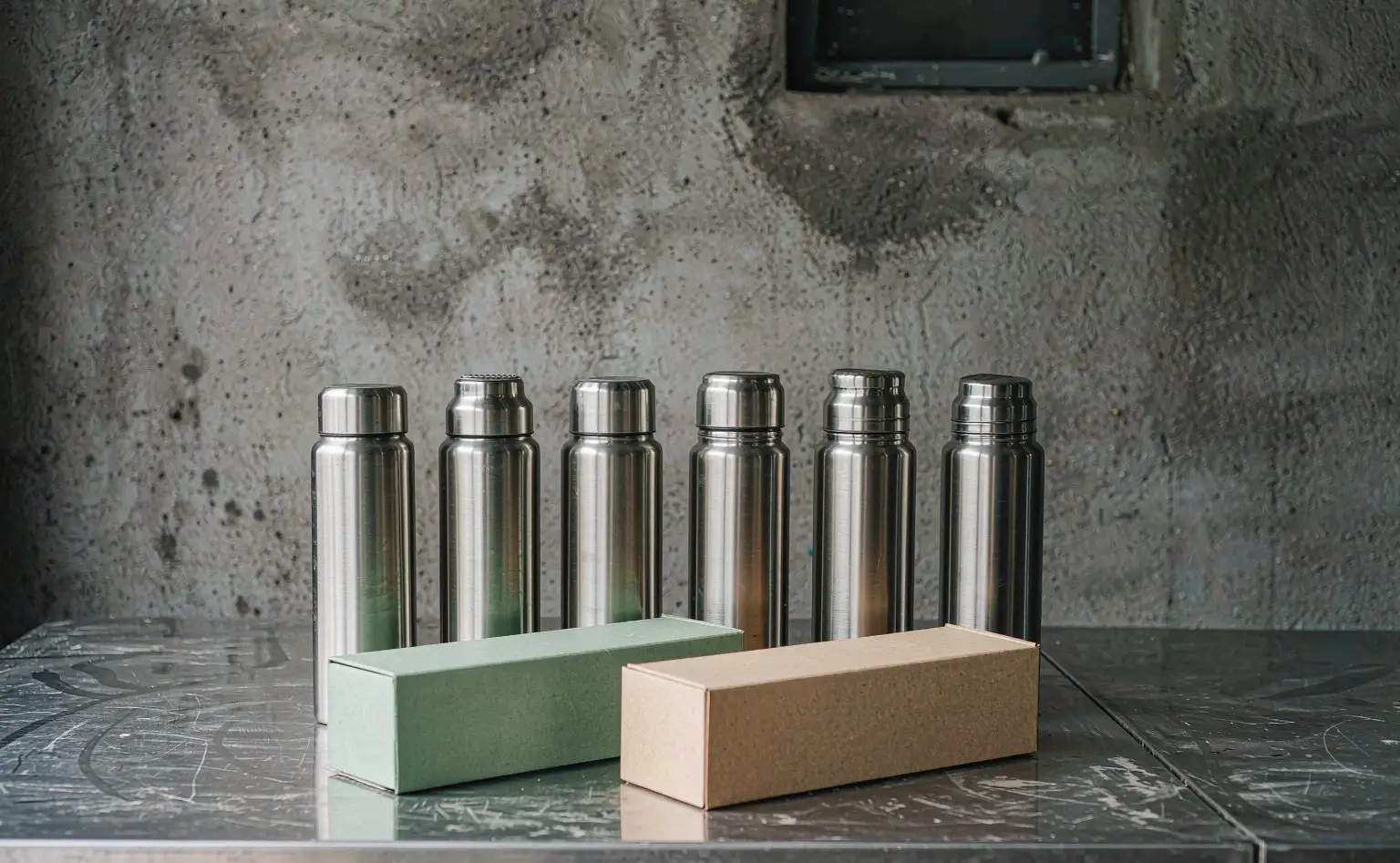
1. Mould starts on the lid gasket and in the liner film, not on the body
Take a flask apart: stainless liner, outer shell, lid, the gasket seated in the lid, the spout and the colour box. What moulds is the gasket and the water film inside the liner; the outer shell is the least likely part to fail.
The gasket holds water. It sits in a groove in the lid, pressed against the spout, and the bottom of that groove is a closed cavity. After washing the lid, water collects in the groove; wipe the surface and it looks fine, lift the gasket and the bottom is still wet. Screw the lid back on and the water is sealed in, spots appear within a week and a musty smell follows.
The liner carries a film. The inside is polished, so water spreads into a thin film that looks dry while the back of a hand still feels it cool. Left to air-dry it takes far longer than a wipe, and with a narrow neck there is no airflow inside.
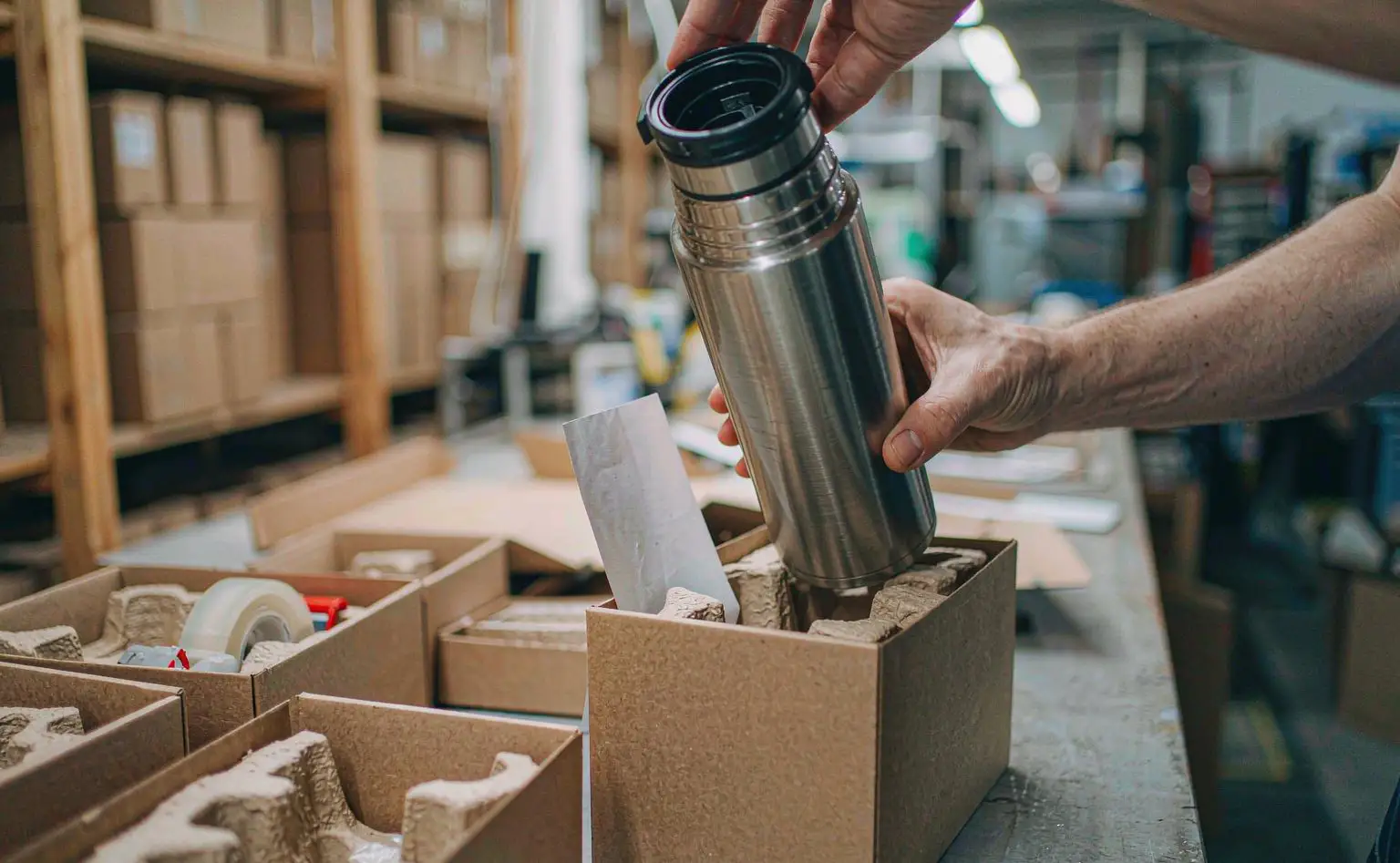
The colour box is the last stretch. It is closed, and it holds a leaflet and a foam pad. Over a long storage period the moisture cannot leave, mould starts at the gasket and spout and then spreads to the body.
2. Gasket compound, liner and colour box are counted separately
The table lines up the gasket, the liner, the spout and the colour box. The gasket is counted as a percentage of compound weight, the vapour sheet in sheets; the two are not convertible.
| Part | Material | Product and level | Stage | Control point |
|---|---|---|---|---|
| Lid gasket | TPE, silicone | iHeir-IPL 0.8%-1.0% | Gasket compounding | Of compound weight, shade trial on light parts |
| Liner and spout | 304 / 316 stainless | Wiped dry, no film left | Before assembly | Wall and spout both wiped |
| Lid assembly | PP, stainless | Dried, then refitted | Assembly | Groove dry before the gasket goes back |
| Colour box | Board, leaflet | iHeir-D one sheet per box, 0.1-0.2g | Cartoning | Only works with the box closed |
One boundary. iHeir-IPL works inside the gasket so that it stops being a source; the wiping and drying handle the water carried in at assembly; the vapour sheet handles the volume inside the box. Slacken any one of the three and the other two cannot cover it.
3. Compounding the gasket at 0.8%-1.0%
The level is 0.8%-1.0% of compound weight. Domestic orders and light-coloured parts take the lower figure; export, humid markets and orders with an antimicrobial acceptance test take the upper. iHeir-IPL is a white powder with whiteness above 90 and a mean particle size of 1-2μm, so it does not visibly change light and translucent gaskets.
How to add it. Add at the compounding stage and mix through with the rubber before moulding. iHeir-IPL withstands 300-320C and TPE and silicone mould far below that, so there is no decomposition risk in the process. Dose and dispersion are two different things: the right amount, badly mixed, leaves parts of the gasket with no protection at all.
Three checks on the trial. First shade, which light gaskets show worst, checked against a colour plaque; second hardness and rebound, tested to GB/T 531.1 for hardness and GB/T 528 for tensile at the 1% level; third sealing, with compression set run to GB/T 7759.1, because a gasket that takes a set cannot go on the line.
It is not a cure-all. iHeir-IPL is an antimicrobial: it deals with organisms on and in the gasket, it does not absorb water or dry anything. Water in the lid groove still has to leave by drying, and one does not replace the other.
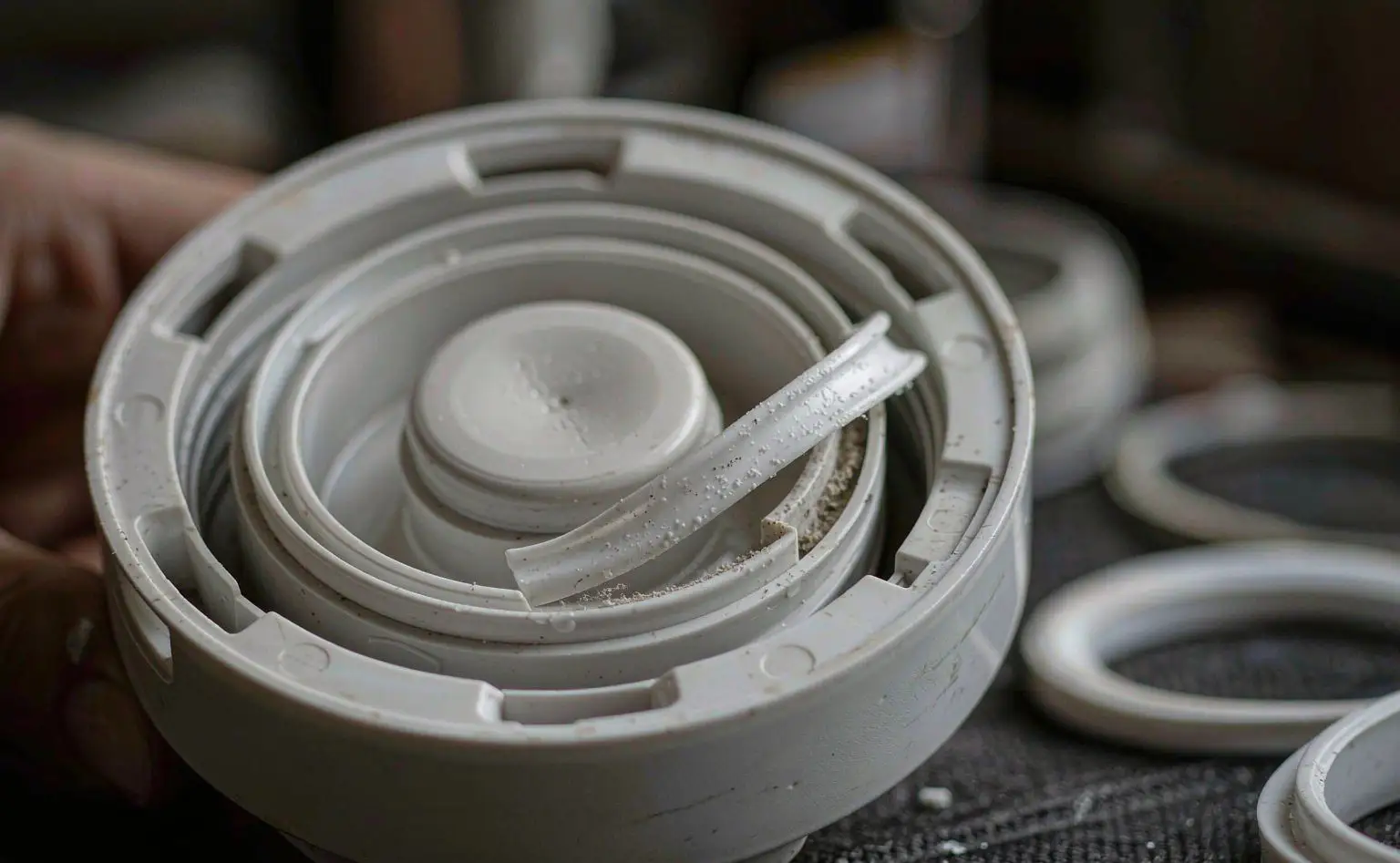
4. Wiping the liner beats air-drying, and assembly needs it dry
There is no product in this section, only process, and it is the step most often skipped.
Wiping beats waiting. A polished liner with a narrow neck takes hours to air-dry and the base never dries at all. One pass with a clean lint-free cloth or a purpose-made wipe rod over the wall, the base and the spout is more thorough than a day on a rack.
Open the groove. The gasket does not have to come out every wash, but after washing the lid, shake the water out of the groove and work a cloth corner into it. It should feel dry before refitting; a slightly tacky feel means water is still there.
Drying figures. For batch drying, run 50-60C forced-air for 30-60 minutes and let the parts come back to near shop temperature before assembly; too hot and the gasket ages and deforms, which loses the seal you were protecting.
Shop humidity. Hold assembly at 55%-65% RH with dehumidifiers in the humid season, and do not put an open-air walkway between the lid-washing station and assembly, because semi-finished parts take moisture on the way.
5. One vapour sheet in the colour box, storage and export
Put one iHeir-D vapour sheet in the colour box at packing, 0.1-0.2g of active matter per sheet, laid against the inner wall or under the base, never dropped into the liner. Close the box and tape the shipper fully, or the vapour simply leaves.
Trial compatibility first. Seal three times the normal dose with a finished flask, mist a little water, separate with paper and inspect after a few days for a dulled stainless finish, a shift in the printed box or a hardened gasket. iHeir-D carries 70%±5 solids and can corrode poor-quality metal when damp, so thin-wall or polished parts get the trial first.
Storage. Keep the finished store below 60% RH and cartons on pallets 10cm off the floor and away from the wall; before the humid season, turn the stock over, open samples and check gaskets and spouts, isolating any lot that smells musty.
Export. For full containers, line the floor with barrier film and hang desiccant sticks at 8-10 per 20ft; check every box for damp before loading. A comparable stainless routine sits in stainless sink sealing, and the carton side in carton grading.
6. Questions on gaskets, liners and boxed stock
Q: With antimicrobial in the gasket, can we skip the drying?
No. The antimicrobial suppresses organisms on the gasket; the water in the groove is still there and still makes the flask smell musty. Compounding and drying are two separate jobs, and both are needed.
Q: Does iHeir-IPL conflict with a stainless liner?
No. It is compounded into the gasket and never touches the inside of the liner; the liner section is washing and wiping only, with no additive at all.
Q: A gasket already has spots – can it be washed and reused?
Surface growth washes off, but the root is usually inside the rubber and returns within a week. Replace gaskets on production stock rather than letting reworked units back into good cartons.
Q: Will a vapour sheet in the box be smelled when the customer opens it?
At 0.1-0.2g of active matter per sheet there is no noticeable smell on opening. Overdosing is what smells, so count sheets rather than adding by feel.
Four points: compound iHeir-IPL at 0.8%-1.0% of compound weight into the lid gasket, mixed through before moulding, with trials on shade, hardness and compression set; wipe the liner, base and spout dry before assembly, work a cloth into the gasket groove, and where batch drying is needed run 50-60C for 30-60 minutes before cooling; put one iHeir-D sheet at 0.1-0.2g of active matter in each colour box and close it, after a three-times-dose compatibility trial; keep the finished store below 60% RH and hang desiccant sticks in export containers. A kilogram of antimicrobial and a pack of sheets go out for a trial, with MOQ on the iHeir-IPL product page.


