




 View Count:32
 Date:2026-11-14
Is quilt core mould preventable? It is, but the growth almost always appears after the core is compressed and bagged: the water never left the batting, and the bag, the vacuum and the pallet give it nowhere to go. Spray iHeir-333 textile antimicrobial agent at 2%-3% o.w.f. into the filling as it opens on the card, and run the shell through the finishing trough with iHeir-BJ textile mildew inhibitor before the coating goes on. This article gives the liquor make-up, the spray level and the regain test before packing.
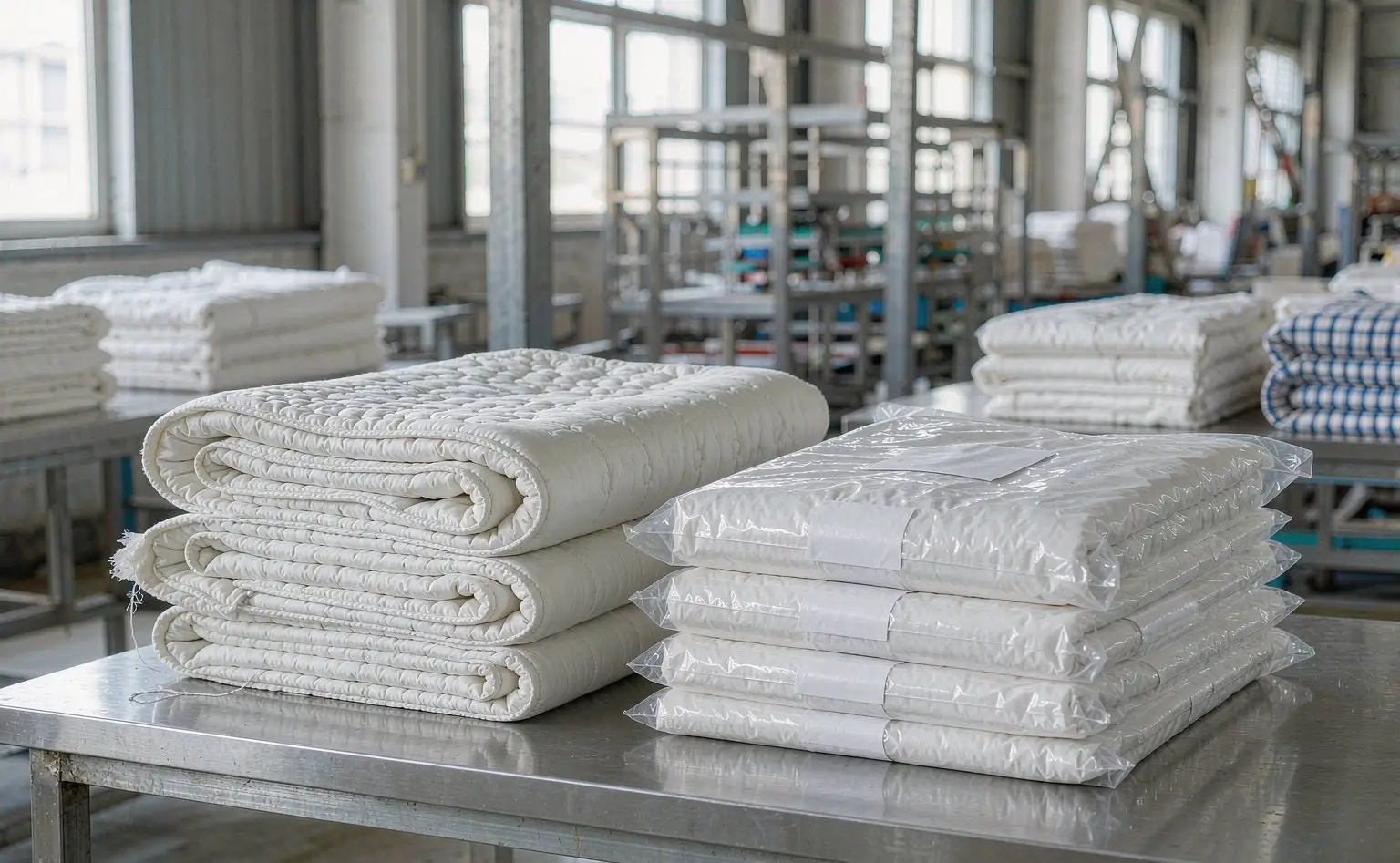
1. Why quilt core mould always shows up after compression
A quilt core is two shell fabrics with a mass of filling between them, sewn round the edges, then compressed and cased. It is the hardest item in home textiles to dry: large volume, thick batting, no ventilation inside.
The batting is a reservoir. Hollow polyester and microfibre do not absorb much on their own, but the gaps between fibres are large, and once the opening room humidity climbs the batting carries a film of water nobody can see. Dry outside and wet inside is the worst case: it feels dry to the hand and weighs 2%-3% over the standard.
The shell is the second entry. Most shells are coated for water or down resistance, which cuts breathability further; water entering at a seam hole stays between shell and batting.
Compression and vacuum finish it. Compression pushes moisture onto the fibre surfaces, and a vacuum bag leaves almost no air exchange, which is a constant-humidity chamber. The factory test passes and the smell arrives two weeks after the carton is opened.
2. The filling: one spray at the opener, and how 2%-3% o.w.f. is counted
Filling can only be treated between opening and blowing; once the seam is closed, treating it means opening the core again at double the cost.
o.w.f. means on the weight of fibre. On 100 kg of filling, 2% is 2 kg of iHeir-333 and 3% is 3 kg. Do not convert from liquor weight or finished weight, because that mistake is out by an order of magnitude.
Making up the liquor. The datasheet ratio is 67 kg of pure water to 3 kg of the agent, stirred before spraying; use soft water, hold pH at 4.5-8.5 and the bath at 21°C-50°C. Below 20°C the agent disperses slowly and lands on the batting in lumps.
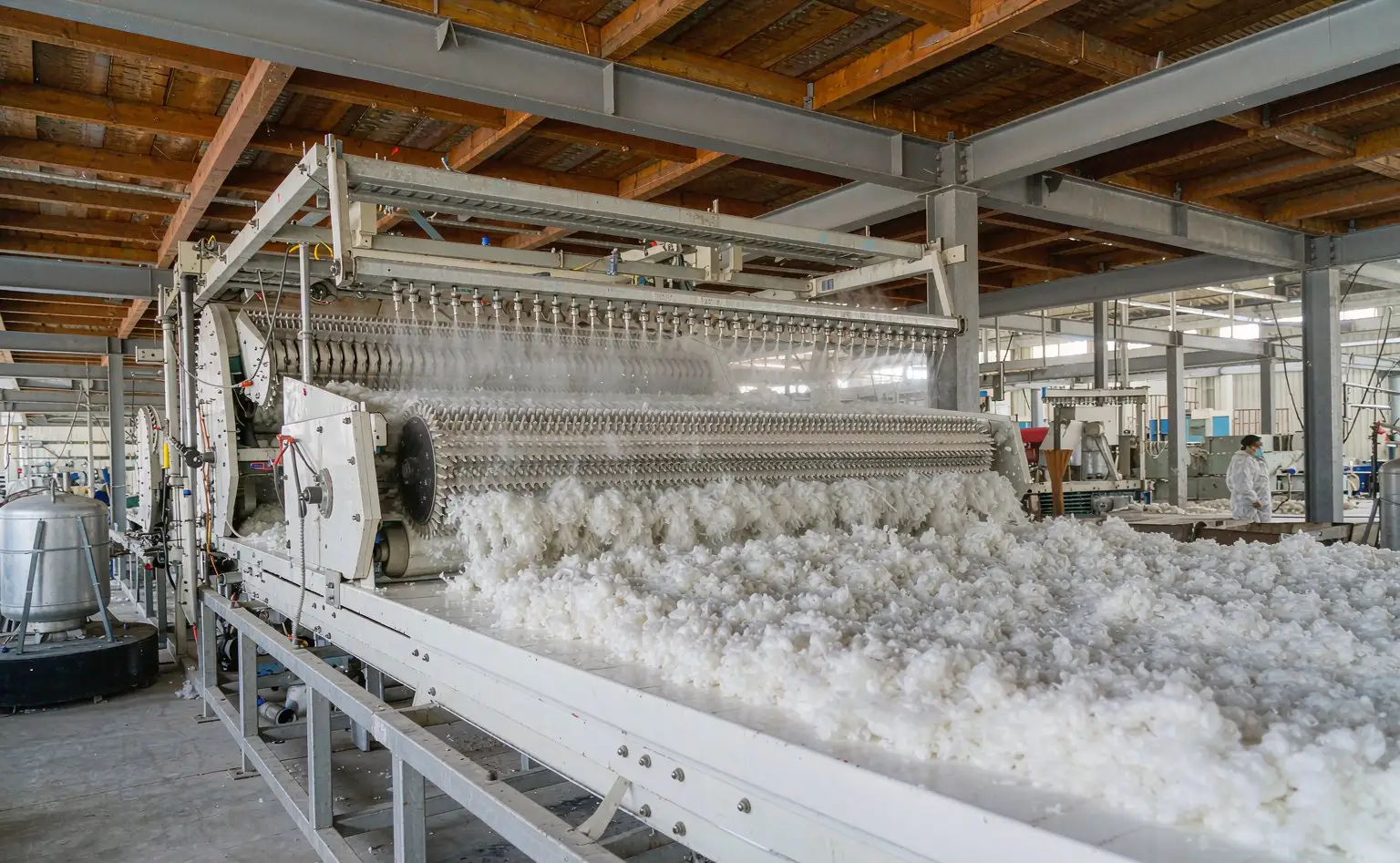
Where to spray. Fit atomising nozzles above the web at the opener outlet, where thickness is even, and pass the web over a beater afterwards so the agent travels through. Keep the pressure low: clumped batting blows unevenly.
How much. Work back from the web weight so the fibre carries 2%-3% o.w.f., then verify by weighing: take a 1 kg sample, weigh before and after spraying, and divide the difference by the dry weight. If it falls short, add nozzles or slow the line.
| Part | Material | Product and level | Stage | Control point |
|---|---|---|---|---|
| Filling | Hollow polyester, microfibre | iHeir-333 2%-3% o.w.f. | Spray at opener outlet | Soft water, pH 4.5-8.5, 21-50°C |
| Shell | Poly-cotton, cotton | iHeir-BJ 2%-3% o.w.f. | Finishing trough before coating | Premix with 9-13 parts water, 70% pick-up |
| Thread and binding | Poly-cotton thread | Carried in the same bath | With the shell finishing | Trial first for shade |
| Packing | PE bag, woven sack | Bag only when dry | Compression | Regain on spec, bag sealed |
One boundary. iHeir-333 covers the bacteria and mites on the fibres and stays with the core; it does not stop mould on the shell surface, and it does not deal with moisture inside the bag. Two lines, one stage each, and whichever stage is skipped is where the problem appears.
3. The shell: finishing has to sit before the coating
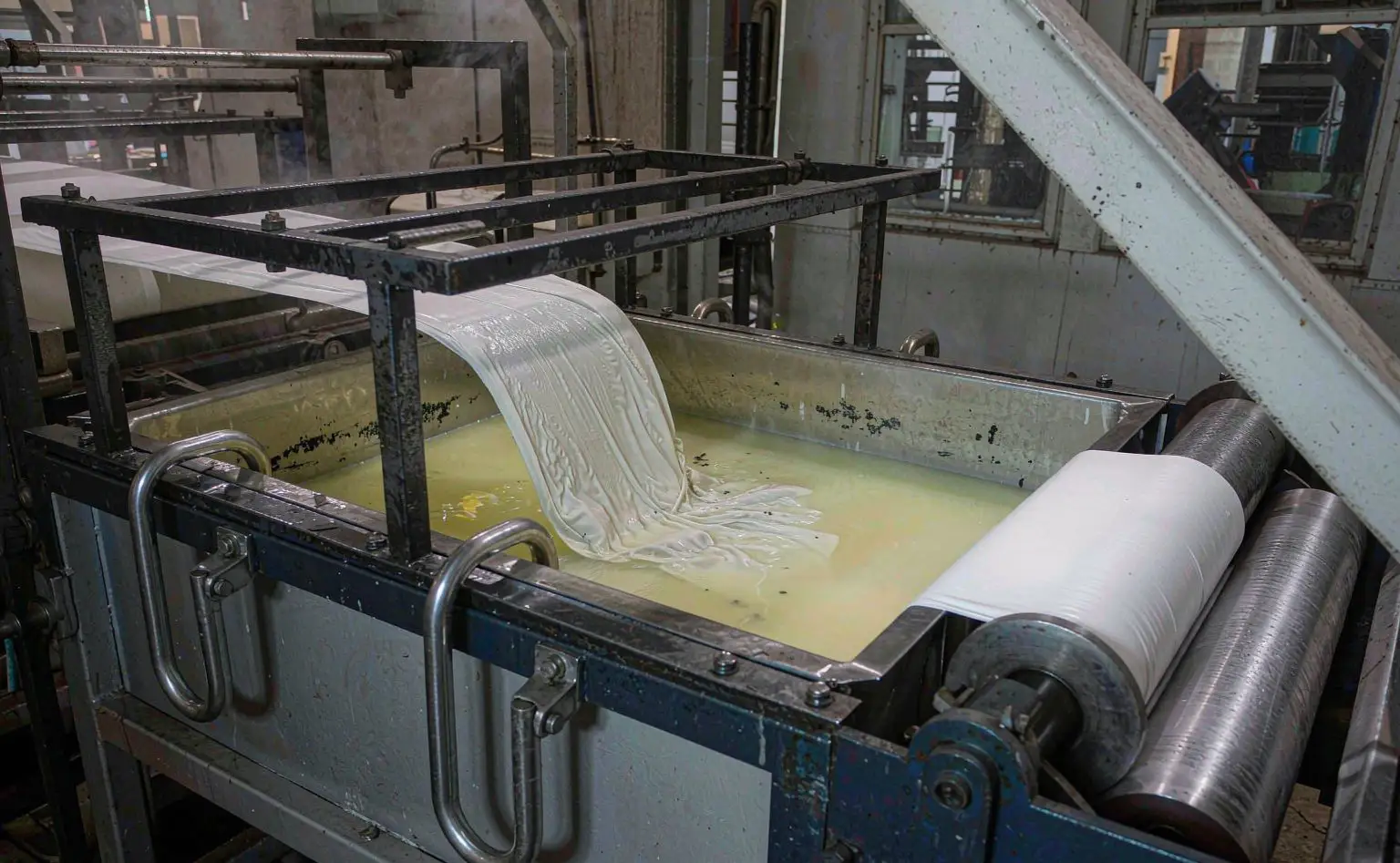
Most quilt shells are coated for water or down resistance, and once the coating is on, the back of the fabric is sealed and the liquor cannot penetrate. So finishing has to be done before coating, in the stenter trough at the dyehouse.
Level and make-up. iHeir-BJ at 2%-3% o.w.f., premixed with 9-13 parts of clear water and added to the trough in portions; bath at 21°C-50°C, pH 4.5-8.5 (run at about 6), pick-up 70%.
Watch the cationic system. iHeir-BJ is cationic and cannot share a bath with an anionic softener. If the softener is anionic, run two passes or switch to a non-ionic grade; in one bath the result ranges from a weakened effect to oil spots on the face.
Put it in the purchase order. Write “anti-mould finishing before coating, sample retained per batch” into the fabric order; fabric arriving without it can only be rejected.
How to verify. Test finished fabric to GB/T 24346 or AATCC 30 for mould rating and to GB/T 20944.3 for antibacterial; on the filling, a bromophenol blue water test shows in two minutes whether the agent landed on the fibre.
4. Drying and compression: pass the regain test first
This stage gets skipped most often, because the batting “feels dry”. The judgement has to sit on a number.
Regain and weight. Weigh cores of the same spec against the standard; more than 2% over means the batting is carrying water. Hold the batting below 8% with a portable meter before compression, and work to the upper limit in the rainy season.
How to dry. A through-flow chamber beats surface drying because the air passes through the batting; keep polyester blends in the middle band and lengthen the time with thickness. Do not compress straight out of the dryer: equalise for 2-4 hours at 45%-65%RH.
Compression and vacuum. Bring the ratio down in two passes rather than one; check there is no condensate in the bag before vacuum, and no mist on the film afterwards. Batches that go wrong usually pour water out when the bag is cut.
Control the packing room. Hold it below 55%RH, no hosing of the floor, pallets off the ground. One damp packing room undoes everything before it.
5. Bag and store: closing the last stretch
Bag choice. Use PE film of 0.05 mm or more, heat-sealed at the mouth; woven sacks breathe, so they are an outer layer only. On vacuum bags check the valve.
Storage. Keep the store below 60%RH, stand the cores rather than stacking high, pallets 10 cm off the floor and 30 cm off the wall, and keep stock away from the roller door.
Export containers. Line the container, and in the rainy season hang desiccant sticks inside the door; when cores ship with pillows, size the dose on container volume, not on piece count. The same two-line logic in home textiles is in plush fabric pile and filling and sleeping bag filling and shell fabric.
6. Questions from the line
Q: The filling is sprayed, does the shell still need finishing?
A: Yes. The batting covers bacteria and mites on the fibre, the shell covers mould on the face; run only one and the other fails first.
Q: 2% or 3%?
A: Short cycles and dry regions run 2%; export containers and rainy-season production run 3%, with a retained sample from the batch.
Q: The shell is already coated, can we finish it now?
A: No. The coating seals the back of the fabric; for coated fabric, work on moisture control in the bag instead.
Q: How do we tell quickly whether the batting holds water?
A: Weigh it. More than 2% over the standard on the same spec, treat it as wet and dry before compressing.
Four closing points: spray iHeir-333 at 2%-3% o.w.f. at the opener outlet, made up as 67 kg of pure water to 3 kg of agent, soft water, pH 4.5-8.5, bath 21-50°C, and check the pick-up by weighing; run the shell through the finishing trough before coating with iHeir-BJ at 2%-3% o.w.f., premixed with 9-13 parts water and added in portions, pH around 6, 70% pick-up, never with an anionic softener; dry the core to 8% moisture in the batting and no more than 2% over weight, equalise 2-4 hours at 45%-65%RH and compress in two passes, packing room below 55%RH; test to GB/T 24346 or AATCC 30 for mould and GB/T 20944.3 for antibacterial, a one-kilogram sample can be sent ahead, and lead times are on the iHeir-BJ product page.


